

Universitas Negeri Semarang (UNNES) reaffirms its strong commitment to creating an academic and professional environment that is safe, fair, and free from all forms of discrimination. As a conservation-minded university, UNNES ensures that every member of its academic community is protected from the risk of disadvantage in academic or professional relations. For any party who feels aggrieved, UNNES provides various accessible reporting channels.
For UNNES, issues of discrimination within professional and academic relations remain a challenge across higher education institutions. Recognizing this, the university has established a comprehensive protection system to ensure that both reporters and victims of discrimination can obtain justice. This protection system is grounded in regulations, institutionally reinforced, and practically implemented.
Regulatory Framework for Protection
As part of its institutional commitment, UNNES enacted Rector’s Regulation of Universitas Negeri Semarang Number 30 of 2017 on the Reporting System for Violations at Universitas Negeri Semarang. This regulation serves as the legal foundation for implementing reporting mechanisms and protecting whistleblowers, guaranteeing the confidentiality of their identity and ensuring they are free from any form of intimidation or retaliation.
Building upon this earlier framework for integrity and protection, UNNES further strengthened its commitment to a safe and inclusive environment through the issuance of UNNES issued Rector’s Regulation Number 24 of 2021 on the Prevention and Handling of Sexual Violence at Universitas Negeri Semarang.
Through this policy, the university established the Task Force for the Prevention and Handling of Violence (PPK), which actively receives reports, provides assistance, and ensures protection for both reporters and victims.
UNNES also offers multiple accessible complaint channels through its official website, https://unnes.ac.id/pengaduan/. The university’s reporting system is integrated with Lapor.go.id, a national complaint system managed by the central government. This integration ensures that every report is handled transparently and accountably.
Meanwhile, reports concerning financial violations are managed directly by the Internal Audit Unit (Satuan Pengawas Internal or SPI) to uphold clean, transparent, and integrity-based university governance.
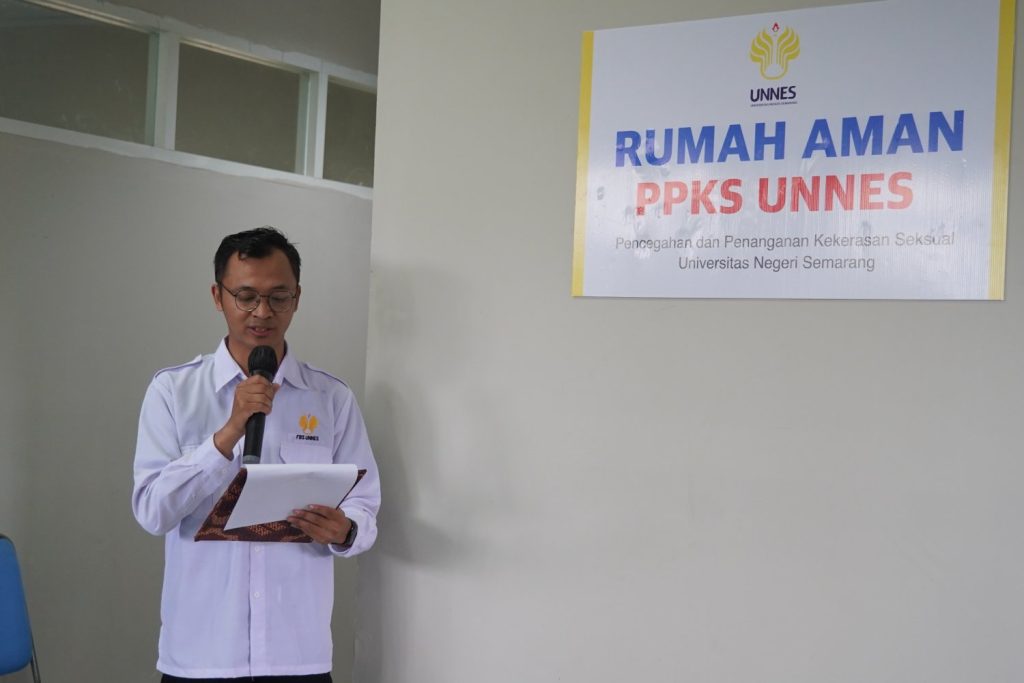
Safe House for Protection
As an additional layer of protection, UNNES also provides a safe house for reporters and victims of sexual violence. This facility serves as a temporary shelter that offers a secure environment, psychological support, and legal assistance when necessary.
Through these policies and protective infrastructures, UNNES demonstrates its firm dedication to ensuring that every member of the university community has an equal right to feel safe, be heard, and be protected from all forms of discrimination and violence.
Procedures for Reporting Abuse of Authority by the University
Based on Rector’s Regulation Number 10 of 2024 concerning the Violation Reporting System, the public may submit complaints regarding alleged abuse of authority committed by the university through several official reporting channels provided by Universitas Negeri Semarang (UNNES).
Violation reports can be submitted through two mechanisms: (a) direct mechanism and (b) indirect mechanism.
- Direct Mechanism
- The reporter submits an allegation of violation directly to the Governance Supervision and Enforcement Team (TP3).
- If the report to TP3 does not receive adequate follow-up, the reporter may escalate the report to the Rector and/or the Vice Rector for General Affairs and Finance.
- Indirect Mechanism
- The reporter may submit the report to TP3 via letter, email, telephone, or online system.
- This mechanism is used if the reporter believes that internal resolution is inadequate, there is a risk of intimidation, potential destruction of evidence, or if the reported issue is considered serious.
If both mechanisms do not result in sufficient follow-up, the reporter may file the report to the relevant Ministry or other authorized institutions.
Technically, reporting can be conducted through several official channels provided by UNNES, namely the Whistleblowing System, PPKS Task Force (Sexual Violence Prevention and Handling Unit), Lapor.go.id, and UNNES official email.