An institutional circular promotes sustainably produced food on campus, supported by EcoFarm’s recorded harvests and activities connecting food production, consumption and environmental education.
SEMARANG, Indonesia — Universitas Negeri Semarang (UNNES) has established an institutional policy to promote sustainable food sourcing through Circular Letter No. B/28480/UN37/RT.03.03.00/2024 on Sustainable Food Source Optimisation at UNNES. The circular provides a university-wide framework for encouraging environmentally responsible food provision and supporting sustainable agricultural and fisheries practices. The policy is listed in the university’s official legal documentation system.
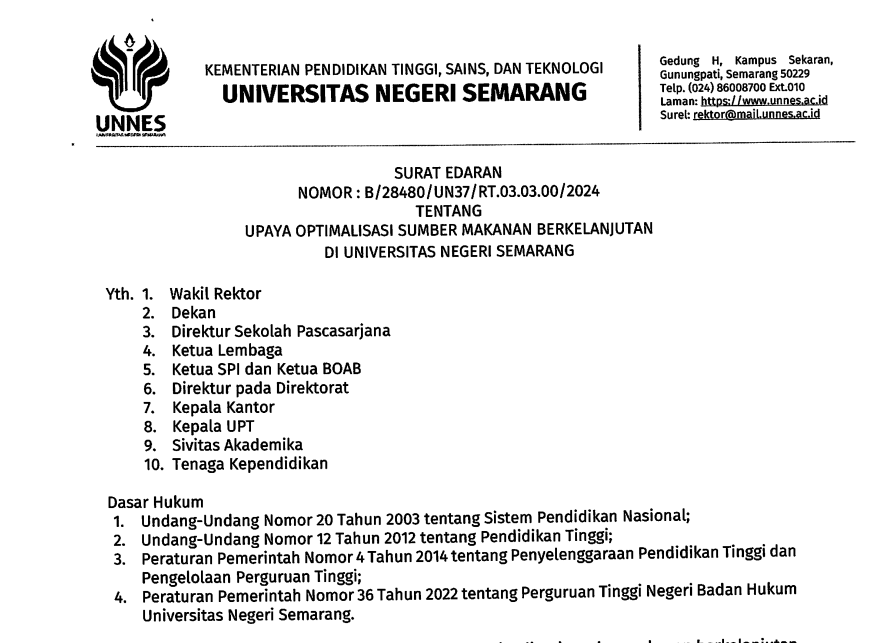
The policy encourages campus canteens to offer healthy and diverse food, prioritise organic sources, purchase from local producers and distributors, and adopt environmentally friendly packaging. These provisions establish the university’s expectations for food sourcing and service delivery.
An Institutional Framework for Sustainable Campus Food
The circular connects food provision with the way ingredients are produced, sourced and packaged. Its emphasis on organic food sources and sustainable farming places agricultural practices within the university’s approach to campus consumption. Local procurement is also encouraged as a means of strengthening links with nearby producers.
For campus canteens, these provisions establish a policy direction for purchasing decisions. Implementation involves translating that direction into supplier selection, ingredient purchases and food-service practices. The existence of the circular demonstrates institutional commitment; procurement records are a separate measure of how those provisions are applied.
EcoFarm Records 1,140 Kilograms of Vegetable Production in 2025
UNNES EcoFarm provides practical support for the university’s sustainable food agenda through campus-based cultivation. Its reported production figures for 2025 totalled 1,140 kilograms of vegetables, comprising bok choy, mustard greens, water spinach and spinach.
| Vegetable | Reported production in 2025 |
|---|---|
| Bok choy | 543 kg |
| Mustard greens | 224 kg |
| Water spinach | 5 kg |
| Spinach | 368 kg |
| Total | 1,140 kg |
These figures document EcoFarm’s production output and demonstrate the availability of produce grown close to campus consumers. They represent harvest quantities, rather than the quantities purchased by campus canteens or the proportion of university food procurement supplied by EcoFarm.
EcoFarm’s location creates opportunities to connect cultivation with local consumption. Its contribution to the university’s food system is supported by both production records and documented activities involving harvesting and access to produce.
Documented Harvesting and Access to Produce
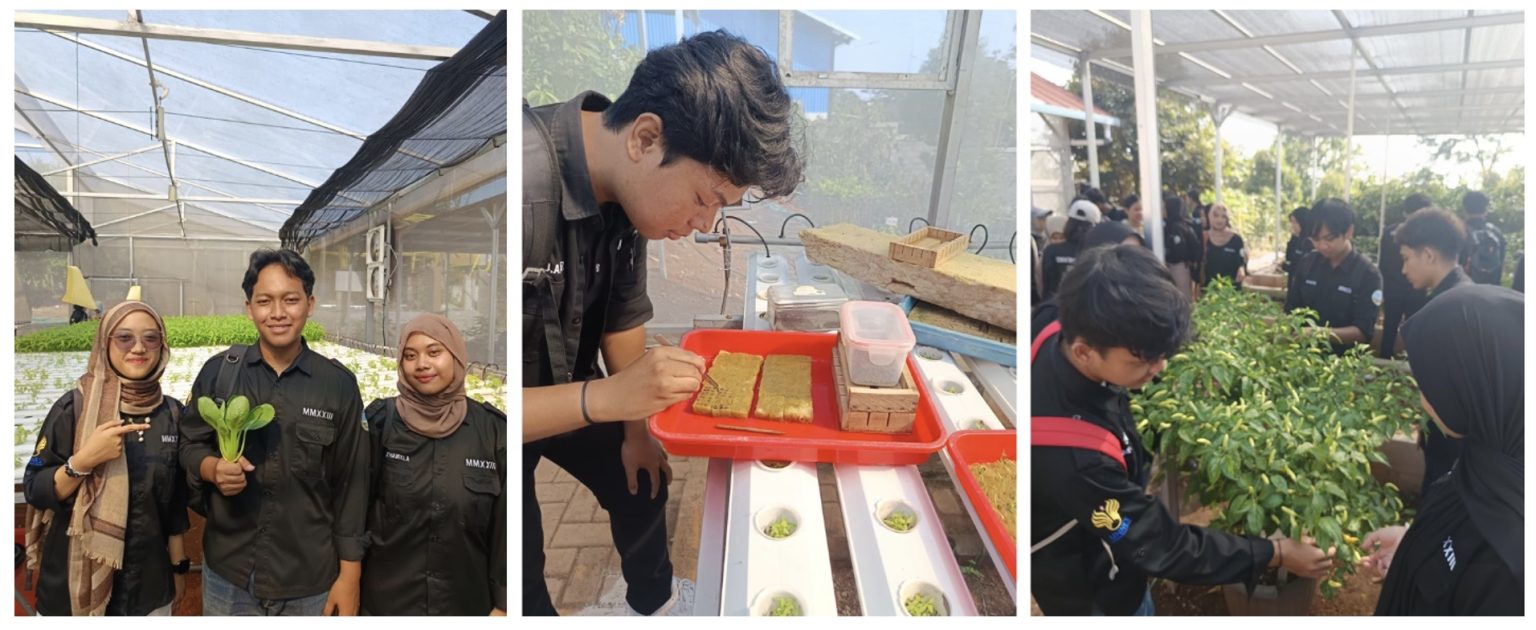
On 13 June 2025, 15 students from the Master’s Programme in Economics Education, accompanied by three lecturers, visited EcoFarm behind the Faculty of Sports Science building. Participants observed organic cultivation and hydroponic growing practices and took part in harvesting vegetables, including bok choy and mustard greens.
The university’s official report states that harvested vegetables were available for purchase at affordable prices. This documents a practical channel through which EcoFarm produce was made available to consumers, alongside its educational role. The report does not specify quantities sold or deliveries to individual campus canteens. Universitas Negeri Semarang
EcoFarm is also reported as a source of food for UNNES staff. This connects campus cultivation with consumption within the university community, while remaining distinct from evidence of routine institutional or canteen procurement.
Integrating Food Production with Organic Waste Management
EcoFarm combines cultivation with activities that demonstrate resource recovery, including maggot cultivation and composting. These practices create opportunities to process organic waste and return useful materials to production systems.
A further activity on 24 June 2025 brought Environmental Science students to EcoFarm as part of the Food Security and Global Challenges course. Supported by the UNNES Conservation Sub-Directorate, the visit introduced hydroponics, organic waste processing using maggots for fish feed, composting, and the cultivation of fruit and ornamental plants. Students also learned about rare-plant conservation.
These documented activities show how EcoFarm combines food production with learning about integrated agriculture and the circular economy. They support the practical development of sustainable production knowledge without treating hydroponic cultivation alone as proof of organic certification or measured environmental savings.
Connecting Campus Production with Local Farming Communities
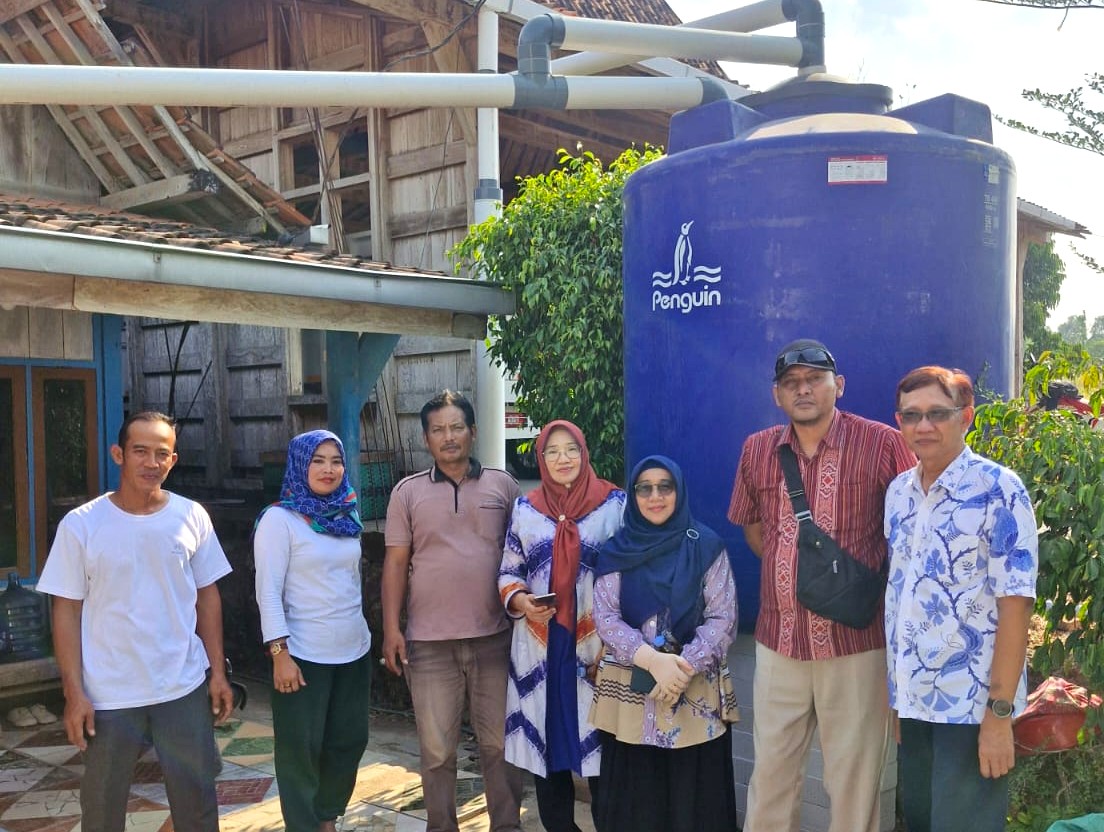
UNNES’s reported partnerships include the Bangkong, Wonolopo, Tambakrejo, Siroto and Ngesrepbalong Farmers’ Groups. Collaborating organisations also include CDK3, Dharma Wanita UNNES, PLN Peduli, Saka Energi Muriah Limited, the Agriculture Office and the Fisheries Office.
These relationships support cooperation around cultivation, environmental management and local agricultural development. They complement the circular’s emphasis on local producers by connecting university expertise with farming communities and relevant institutions.
The partnerships provide a foundation for sustainable food-system development. Their role in cultivation and community engagement is distinct from formal supplier arrangements, which would establish the specific products and quantities purchased for campus food services.
Connecting Policy with Demonstrated Practice
Circular Letter No. B/28480/UN37/RT.03.03.00/2024 remains the central evidence of UNNES’s institutional policy on sustainable food sourcing. EcoFarm’s 2025 production figures, documented harvesting activities and availability of produce for purchase provide supporting evidence of practical activity aligned with that policy.
The available documentation establishes campus food production and consumer access, while the extent of implementation across individual canteens has not been quantified. Together, the policy and documented EcoFarm activities show how UNNES is connecting its commitment to sustainably farmed food with cultivation, learning and local partnerships.