An institutional assessment provides evidence to inform sustainability education across academic disciplines.
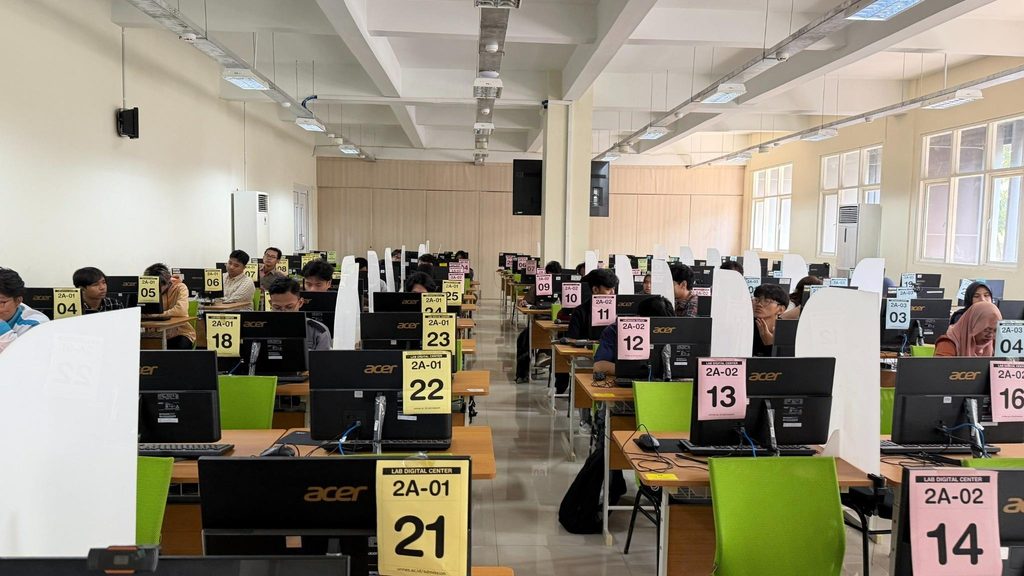
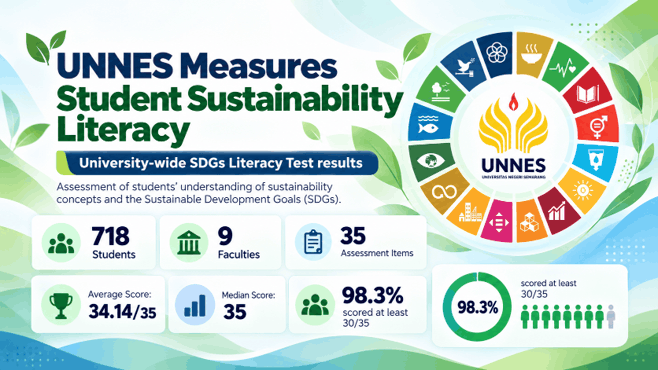
SEMARANG, Indonesia — Universitas Negeri Semarang (UNNES) assessed the sustainability knowledge of 718 students from nine faculties through its SDGs Literacy Test, an assessment instrument developed in 2025.
Administered through an online form, the test comprised 35 scored items covering sustainability concepts and their application in everyday life and society. Topics included quality education, responsible consumption, climate action and partnerships.
Respondents achieved an average score of 34.14 out of 35, with 98.3 per cent scoring at least 30. The results provide a record of sustainability knowledge among participating students across different academic disciplines.
Using Assessment to Inform Education
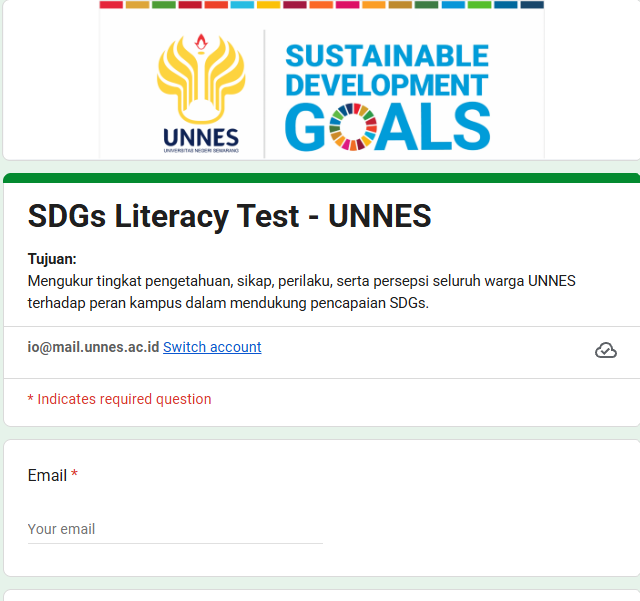
The test gives UNNES a structured mechanism for reviewing students’ understanding of sustainable development. Its findings can inform the review of learning outcomes and help identify topics requiring further attention in teaching and learning.
Participation across nine faculties enabled the university to gather evidence beyond a single study programme. The findings describe the students who completed the assessment and provide a basis for further monitoring.
Conservation Education as a Foundation for Sustainability Learning
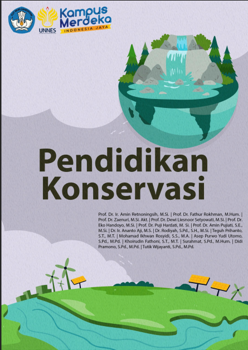
Conservation Education is a compulsory general course that provides students with a structured foundation for sustainability learning at UNNES. The UNNES Conservation Education Book serves as a learning reference, supporting students’ understanding of conservation values, environmental responsibility, and sustainable practices. Through this course, conservation principles form part of students’ university education across academic disciplines.
Sustainability learning also begins during students’ transition into university life. In 2025, UNNES introduced sustainability and conservation values through PKKMB, its new-student orientation programme. This university-wide introduction helps familiarise incoming students with UNNES’s conservation identity and their role in practising responsible resource use and environmental care.

From Sustainability Literacy to Conservation Action
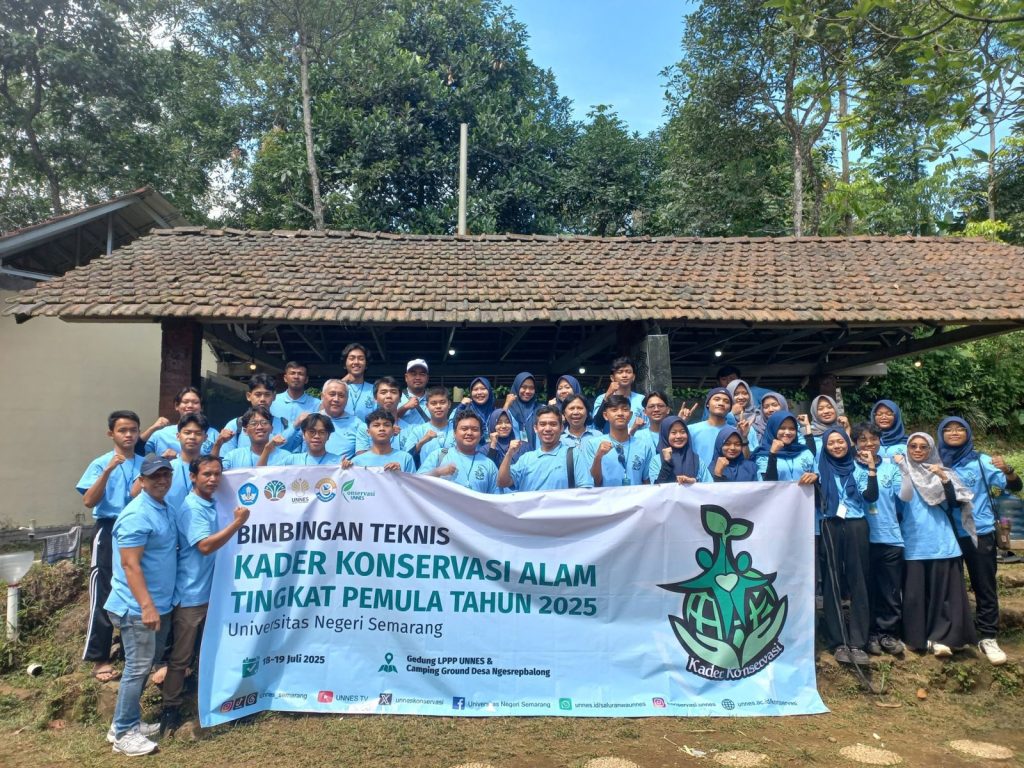
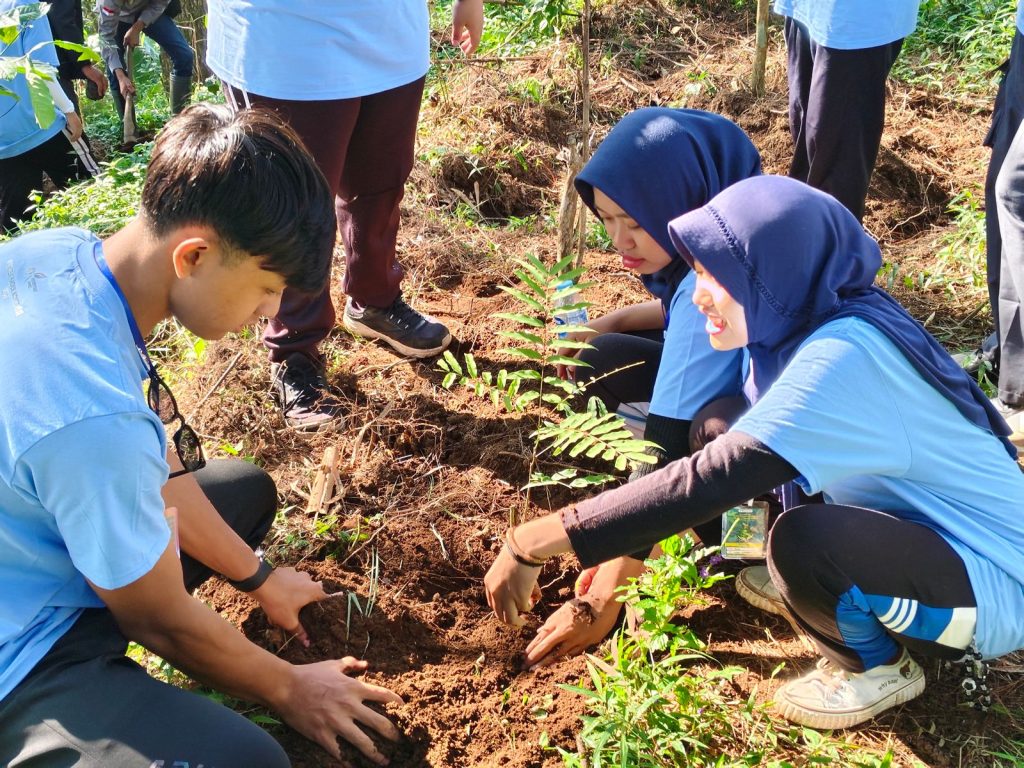
UNNES complements classroom learning with practical training that connects sustainability knowledge with environmental action. On 18–19 July 2025, the university held the Beginner-Level Nature Conservation Cadre Technical Training (Bimbingan Teknis Kader Konservasi Alam Tingkat Pemula), involving students from different faculties and student organisations.
The programme combined conservation knowledge with field practice, helping participants develop practical skills and preparing them to become conservation advocates within the university and wider community. It provided opportunities for students to apply their learning beyond the classroom and participate in collective environmental responsibility.
Connecting Learning, Practice, and Assessment
Together, Conservation Education, new-student orientation, and practical conservation training provide complementary opportunities to learn about sustainability and put it into practice. The SDGs Literacy Test adds a measurement component by documenting participating students’ understanding of sustainability concepts.
This combination provides a basis for reviewing sustainability education and identifying areas for further development. While the assessment records students’ knowledge, practical activities create opportunities to apply that knowledge. Further monitoring can help UNNES examine how sustainability learning translates into continued participation and everyday conservation practices.