

A dedicated species-protection circular, conservation regulations, and a 2025 tree inventory connect university policy with the identification and care of plants of conservation concern.
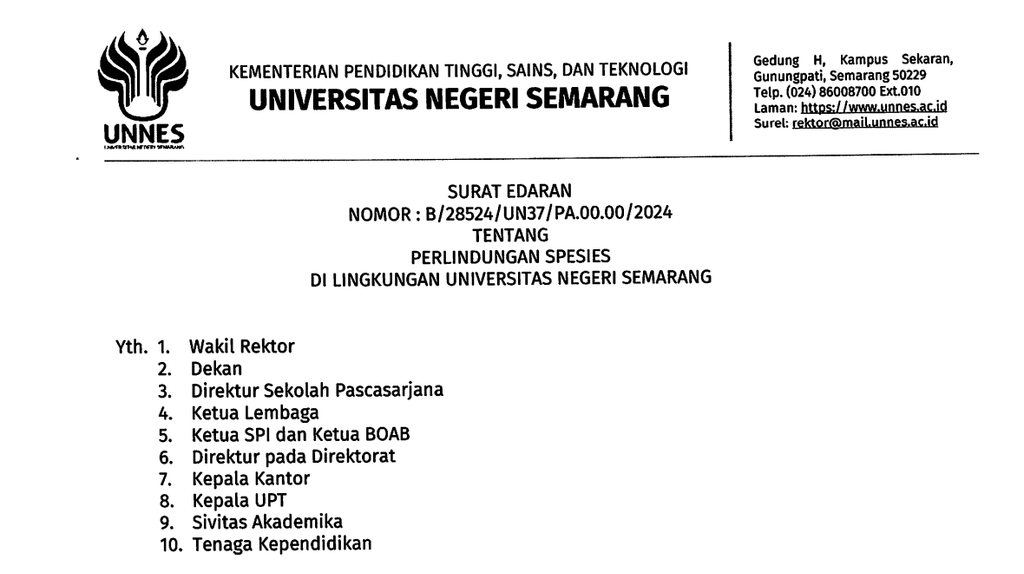
Semarang, Indonesia — Universitas Negeri Semarang (UNNES) has established an institutional policy addressing the protection of species on the IUCN Red List and species protected under Indonesian regulations within the university environment.
Circular Letter No. B/28524/UN37/PA.00.00/2024 on Species Protection at Universitas Negeri Semarang explicitly refers to both categories. Addressed to university leaders, academic units, the academic community, and education staff, the circular provides a specific policy commitment alongside UNNES’s broader conservation framework.
A Dedicated Policy for Species Protection
The 2024 circular identifies the conservation of plants and animals as a responsibility of higher education institutions. It refers to the national protected-species framework under Minister of Environment and Forestry Regulation No. P.20/MENLHK/SETJEN/KUM.1/6/2018, connecting university-level protection with Indonesia’s conservation regulations.
The circular also cites Rector Regulation No. 27 of 2012 on Conservation-Based Campus Governance among its institutional foundations. Together, the documents establish a general biodiversity-management framework and a more specific commitment to species of conservation concern.
Responsibilities for Monitoring and Conservation
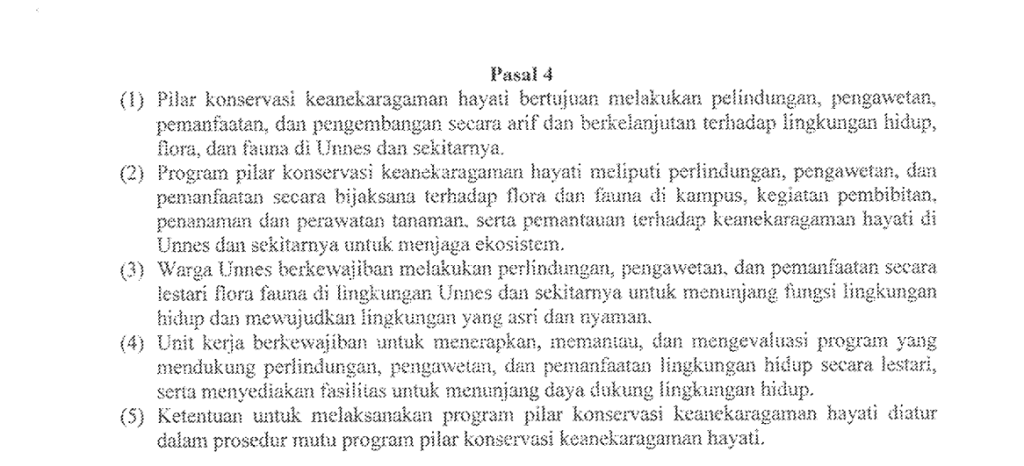
Rector Regulation No. 27 of 2012 establishes biodiversity conservation as a university governance responsibility. Article 4 covers the protection, preservation, and sustainable use of flora and fauna within UNNES and surrounding areas.
Its provisions include plant propagation, planting, maintenance, and biodiversity monitoring. University units are required to implement, monitor, and evaluate conservation programmes and provide supporting facilities.
These requirements establish the institutional basis for monitoring biodiversity and maintaining vegetation in areas used for university activities. They also connect conservation responsibilities with the work of faculties and other operational units.
Identifying Campus Trees and Their Conservation Status
A field survey conducted in May 2025 provided a documented example of species identification within the Faculty of Mathematics and Natural Sciences (FMIPA) at UNNES’s Sekaran campus.
Researchers surveyed the faculty’s tree-covered areas, identified trees using local and scientific names, and counted individuals. The inventory recorded 318 trees belonging to 58 species, with a Shannon–Wiener diversity index of 2.95.
The study used IUCN Red List information to assess conservation status. It recorded 11 angsana trees (Pterocarpus indicus), classified in the study as Endangered, and 76 mahogany trees (Swietenia mahagoni), classified as Near Threatened.
The inventory provides a baseline for understanding species composition and identifying trees of conservation concern within an operational campus area. Its coverage is specific to FMIPA and does not represent a complete university-wide inventory.
Connecting Research with Campus Vegetation Management
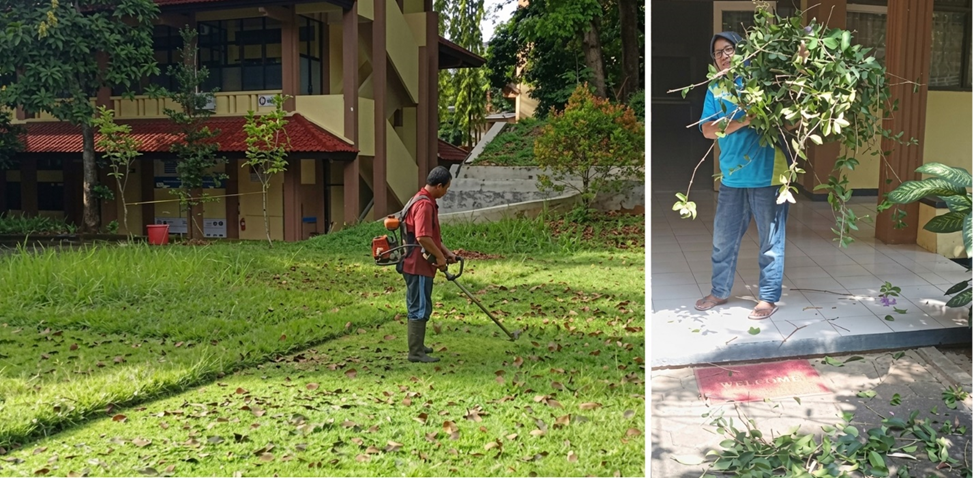
In an official report published on 25 November 2025, FMIPA linked the inventory findings with the management of its green spaces. The faculty reported routine vegetation maintenance, plant care, and landscape management while retaining trees of conservation value as campus facilities develop.
This provides a practical connection between species identification and protection in areas affected by university operations. The trees occur within a landscape used for teaching, research, pedestrian access, and other campus activities.
FMIPA also uses its vegetation as a living learning environment for plant identification, biodiversity studies, and ecosystem management. The documented maintenance activities complement the inventory, although the available records do not establish a repeated species-by-species population monitoring series.
Plant Propagation Supports Conservation Capacity
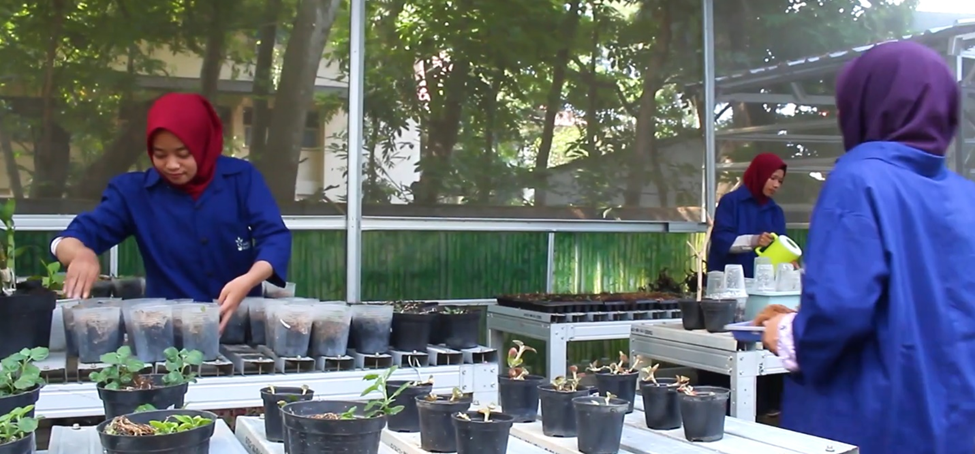
UNNES’s plant conservation capacity also includes the Plant Tissue Culture Laboratory and Sasana Kultura within FMIPA’s Biology programme. An official university report published in May 2025 describes facilities for plant propagation, research, teaching, and community engagement, alongside tissue culture training and consultation.
These facilities support technical expertise relevant to plant conservation. Their role complements campus vegetation management, while the conservation status of individual propagated plants must be distinguished from the general availability of propagation facilities.
UNNES’s documented approach combines an explicit policy covering IUCN-listed and nationally protected species with institutional monitoring responsibilities, campus species identification, and vegetation care. The strongest implementation evidence presented here concerns FMIPA’s tree inventory and subsequent landscape management; it does not establish that the recorded trees are nationally protected or that all university-managed habitats have been surveyed.