


Universitas Negeri Semarang (UNNES) demonstrates its institutional commitment to preventing corruption, bribery, and misconduct through the development of Integrity Zones (Zona Integritas) toward achieving Corruption-Free Zones (WBK) and Clean and Serving Bureaucratic Zones (WBBM).
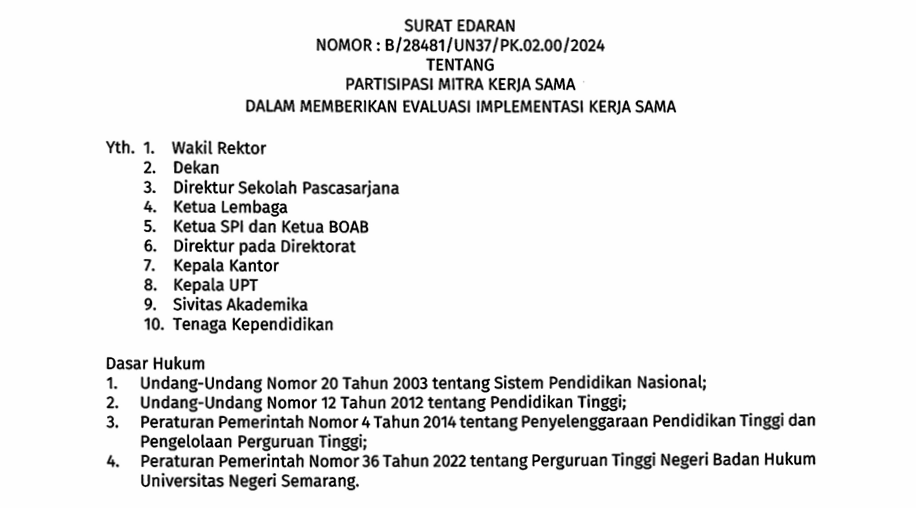
This commitment is further strengthened through the establishment of the Gratification Control Team under Rector’s Decree No. B/3641/UN37/HK.02/2024, reflecting the university’s efforts to establish transparent, accountable, and integrity-driven governance.
University-Wide Implementation of Integrity Zones
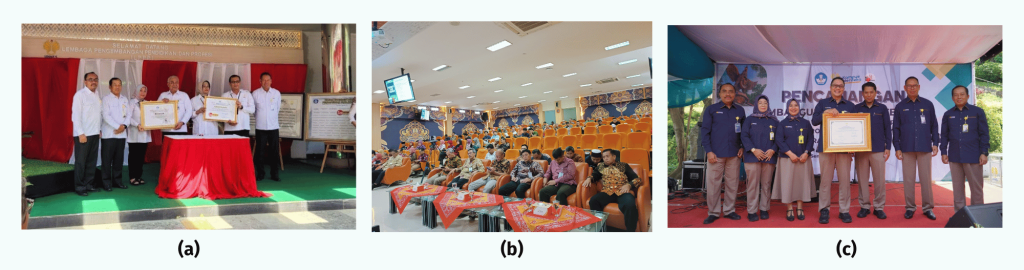
UNNES has progressively expanded its Integrity Zone initiatives across faculties and institutional units through public declarations, integrity commitments, and anti-corruption awareness activities. These include the Faculty of Engineering (FT) in April 2021, Faculty of Economics and Business (FEB) in 2021, Faculty of Law (FH) in October 2022, Faculty of Social and Political Sciences (FISIP) on January 27, 2023, Faculty of Education (FIP) on February 28, 2023, and Faculty of Languages and Arts (FBS) on March 7, 2023. The initiative continued with the Institute for Educational and Professional Development (LPPP) and the Institute for Research and Community Service (LPPM) on August 5, 2024, followed by the Faculty of Medicine (FK) on January 20, 2025. These institutional declarations reflect UNNES’s continued efforts to promote corruption prevention, professional ethics, and service-oriented administration across university units.
Beyond formal declarations, UNNES has strengthened anti-corruption awareness through educational and institutional development activities. On April 16, 2025, FT UNNES organized an Integrity Zone Socialization session to improve faculty members’ understanding of corruption prevention, effective supervision, and public service standards. Meanwhile, FISIP UNNES publicly communicates its Integrity Zone principles through its official website, outlining six areas of bureaucratic reform: change management, procedural improvement, human resource management, accountability, supervision, and public service quality.
Strengthening Accountability through Service Charters and Institutional Oversight
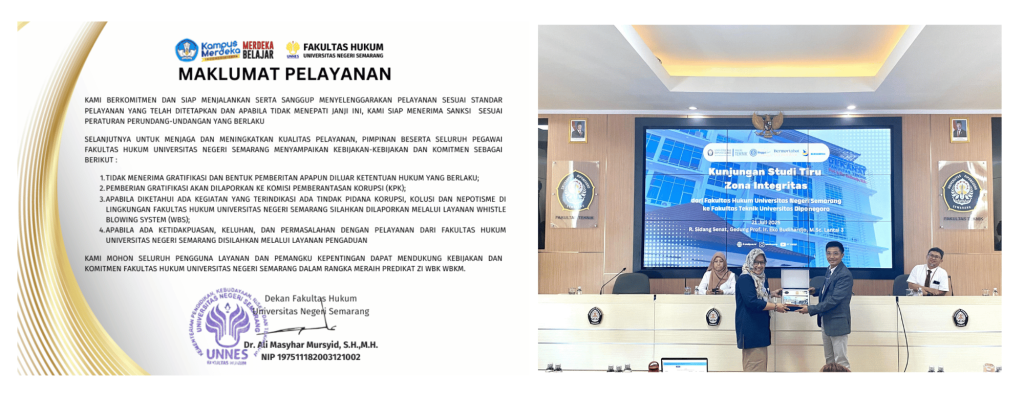
A notable initiative is the publication of the Service Charter (Maklumat Pelayanan), which establishes public service commitments and emphasizes the prohibition of unauthorized gratuities. The charter also promotes reporting suspected corruption, collusion, and nepotism through appropriate reporting mechanisms, including the Whistleblowing System (WBS). Unlike ceremonial declarations, this publicly available document communicates specific standards of conduct, institutional responsibilities, and complaint procedures, reinforcing accountability in university services.
Institutional oversight has also been strengthened through formal Integrity Pacts. On August 5, 2024, the leadership and staff of LPPP and LPPM signed Integrity Pacts witnessed by the Rector, Vice Rector, Internal Supervisory Unit (SPI), and an Integrity Zone Assessor. Furthermore, on July 21, 2025, the Faculty of Law conducted an Integrity Zone Benchmarking Visit to the Faculty of Engineering at Universitas Diponegoro (UNDIP), learning from its WBBM implementation, particularly in accountability, change management, digital service innovation, and public service improvement.
Public Transparency and Institutional Commitment
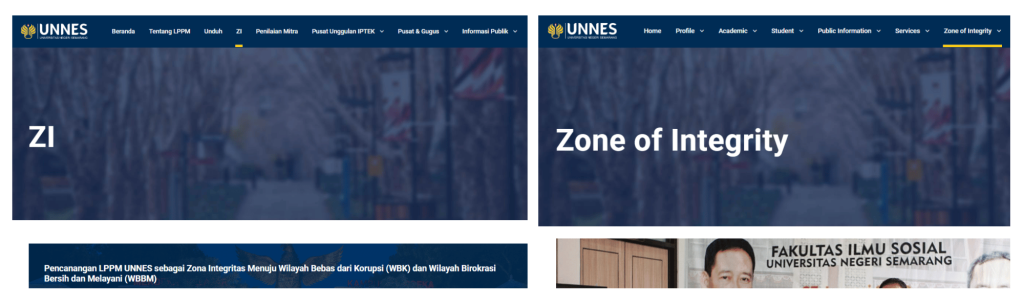
UNNES reinforces these initiatives by publicly disseminating its Integrity Zone declarations, service charters, institutional commitments, and related activities through official university platforms, including the UNNES Integrity Zone Portal (LPPM), the FISIP Integrity Zone Portal, and faculty news publications. These resources provide public access to the university’s anti-corruption principles and institutional reform commitments.
Through the integration of publicly declared commitments, internal oversight, staff awareness activities, service standards, and institutional collaboration, UNNES demonstrates a coordinated approach to corruption prevention and bureaucratic reform. These measures reinforce the university’s commitment to maintaining ethical conduct, strengthening accountability, and delivering transparent, responsible, and high-quality services to its academic community and the wider public.