

Institutional water conservation policies, pollution-prevention guidance, and pond monitoring support the protection of water resources and surrounding environments.
Semarang, Indonesia — Universitas Negeri Semarang (UNNES) has established institutional guidelines for water conservation and pollution prevention to support the responsible management of campus wastewater. The framework connects water-resource management with the protection of ecosystems, wildlife, and communities that depend on receiving waters.
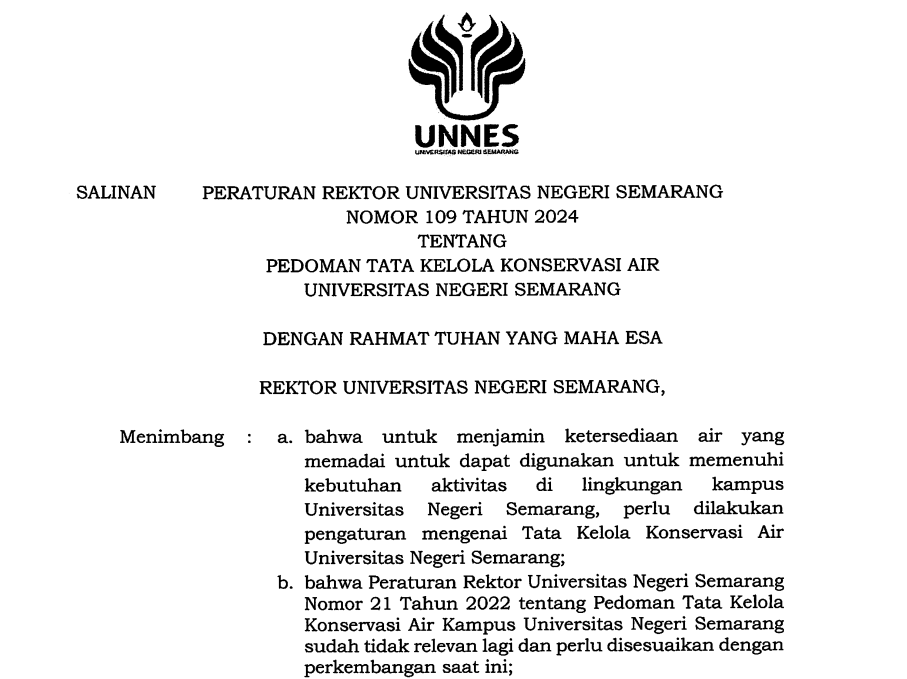
The university’s principal policy is Rector Regulation No. 109 of 2024 on Guidelines for Water Conservation Governance, which replaces Rector Regulation No. 21 of 2022. The updated regulation provides a university-level framework for managing water resources and recognises wastewater generated by campus activities as a potential source of environmental contamination.
Institutional Guidance for Pollution Prevention
UNNES reinforces its water-management framework through Circular Letter No. B/28475/UN37/PA.00.00/2024 on the Protection and Prevention of Pollution in Aquatic and Terrestrial Environments, adopted on 3 December 2024. The document establishes pollution prevention as an institutional concern across the university.
The guidance described in the university’s supporting documentation calls for environmental cleanliness, prevention of waste disposal into waterways and drainage channels, effective operation of wastewater treatment installations (IPAL), and appropriate handling of laboratory chemicals.
These measures address pollution at its source. Separating hazardous chemicals from domestic waste streams and treating wastewater before release are important components of protecting campus drainage systems and receiving waters.
Managing Wastewater before Discharge
The operational approach outlined in the supporting material covers waste identification, segregation, containment, temporary storage, treatment, and documentation. It distinguishes domestic waste from hazardous and toxic materials, including laboratory chemicals requiring specialised handling.
For liquid waste, treatment and discharge assessment serve different purposes. Treatment reduces pollutant loads, while testing at the relevant discharge point determines whether treated wastewater meets the applicable effluent limits.
A formal assessment therefore requires the identification of the wastewater source, the applicable discharge standard, the sampling location, and the testing results. Pond measurements provide complementary environmental information, but do not substitute for testing wastewater at an IPAL outlet or another regulated discharge point.
Monitoring Water Conditions in Campus Ponds
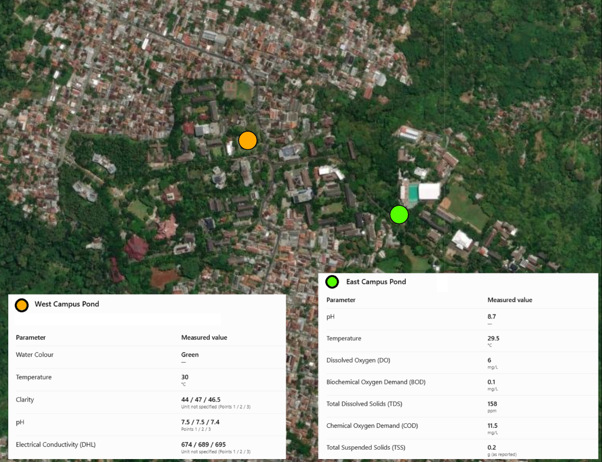
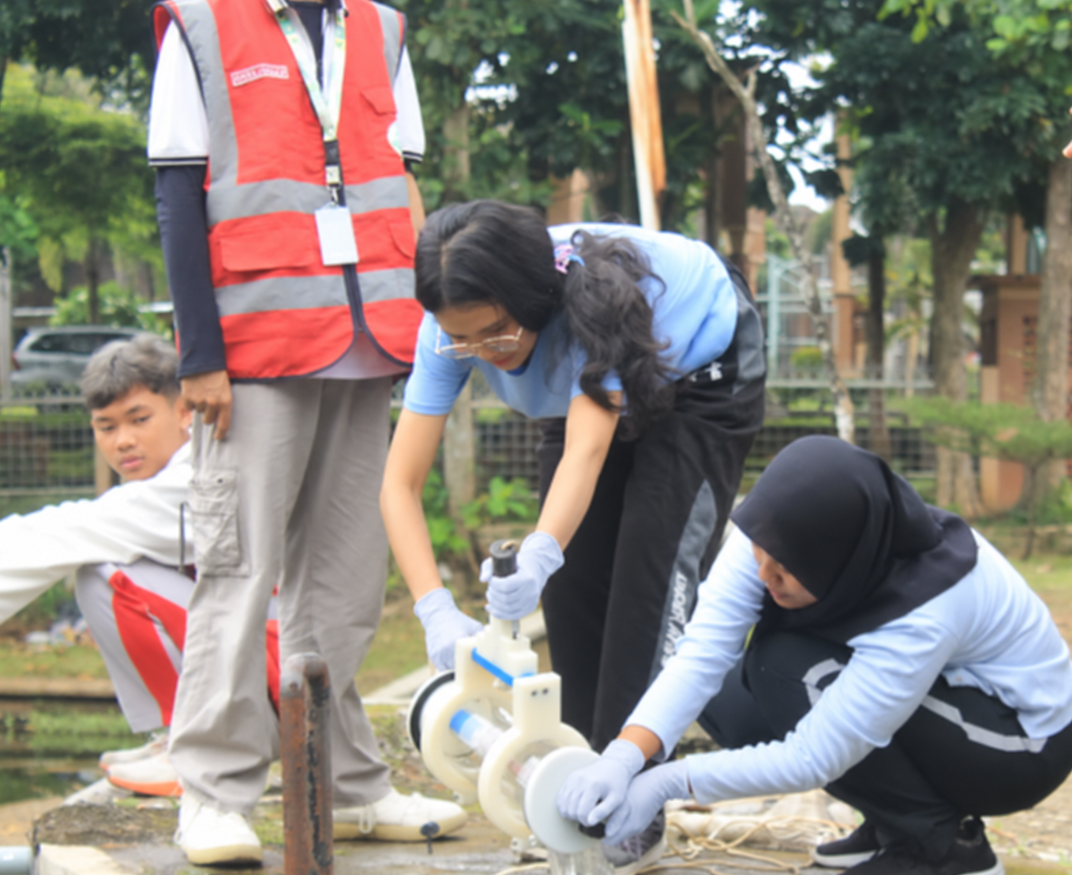
The university’s supporting records include measurements from the East Campus Pond and West Campus Pond, which receive drainage from their respective campus areas. Monitoring these locations provides information about water conditions within the campus drainage network.
The reported measurements are summarised below.
| Parameter | East Campus Pond | West Campus Pond |
|---|---|---|
| Temperature | 29.5°C | 30°C at all three sampling points |
| pH | 8.7 | 7.4–7.5 |
| Dissolved oxygen | 6 mg/L | Not reported |
| Total dissolved solids | 158 ppm | Not reported |
| Biochemical oxygen demand | 0.1 mg/L | Not reported |
| Chemical oxygen demand | 11.5 mg/L | Not reported |
Additional records include an East Campus Pond suspended-solids value of 0.2 g, West Campus Pond clarity readings of 44, 47, and 46.5, and electrical conductivity readings of 674, 689, and 695. Their units, reporting basis, and measurement methods require clarification before comparison with formal criteria.
The measurements document selected water conditions at the time of sampling. Without sampling dates and repeated observations, they do not establish trends or demonstrate sustained water quality.
Distinguishing Receiving-Water Criteria from Discharge Standards
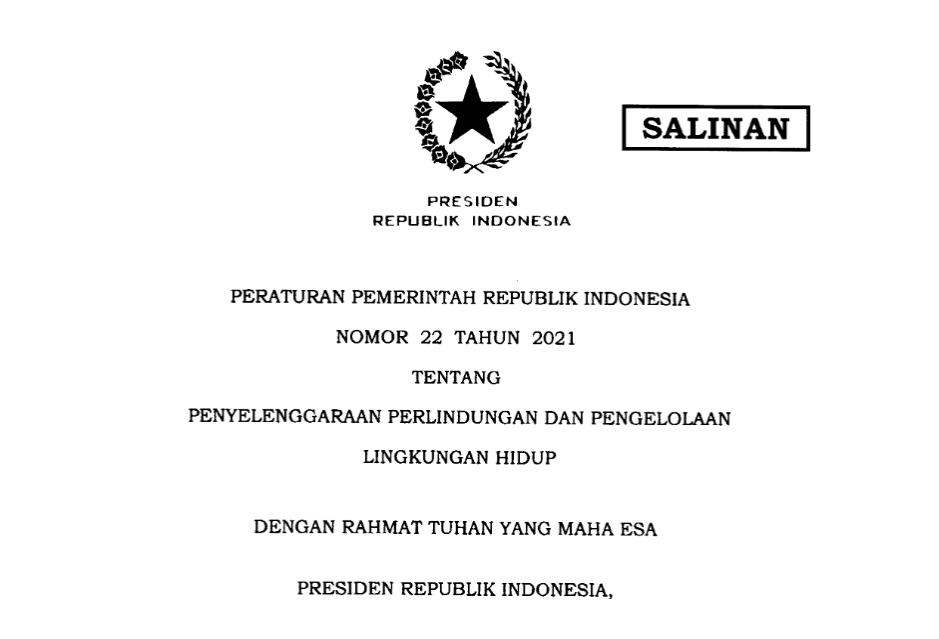
Government Regulation No. 22 of 2021 provides Indonesia’s environmental protection and management framework, including national water-quality provisions.
The draft assessment uses Class II criteria in Appendix VI as a preliminary reference for selected pond measurements. However, receiving-water criteria describe the desired condition of a water body; effluent standards regulate wastewater released from a particular source. The two must be applied separately.
Consequently, a favourable comparison between selected pond measurements and Class II criteria would not establish that campus wastewater discharges comply with their applicable limits. Such a conclusion requires confirmation of the relevant standards, sampling procedures, complete parameter coverage, and results from designated discharge points.
Protecting Ecosystems and Community Welfare
UNNES’s institutional policies provide a foundation for preventing pollutants from entering drainage channels and surrounding environments. Wastewater treatment, appropriate chemical handling, and water-quality monitoring support this objective by addressing pollution sources and documenting environmental conditions.
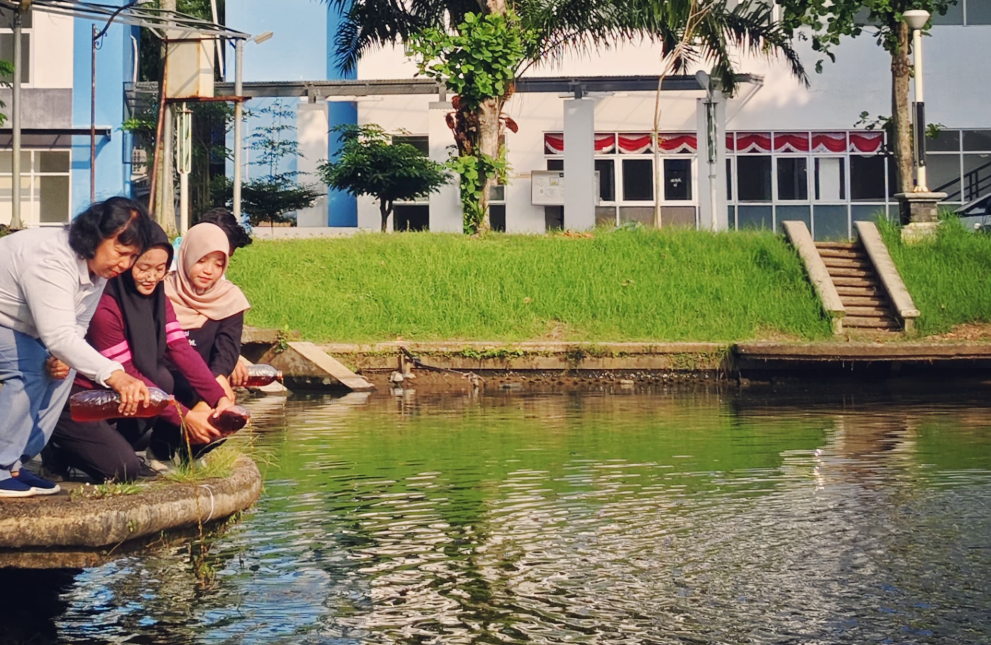
Pond maintenance, including the eco-enzyme application described in the supporting material, represents a separate management activity. Its effectiveness cannot be inferred without before-and-after measurements, and it does not replace wastewater treatment or discharge testing.
The documented framework demonstrates UNNES’s commitment to water conservation and pollution-prevention guidance. The pond records provide supporting monitoring evidence, while verification of compliance with specific wastewater discharge standards remains dependent on the relevant effluent requirements and outlet-testing documentation.