A university-wide regulation defines smoking restrictions, prohibits tobacco promotion, and establishes sanctions and monitoring responsibilities, supported by a campus campaign in 2025.

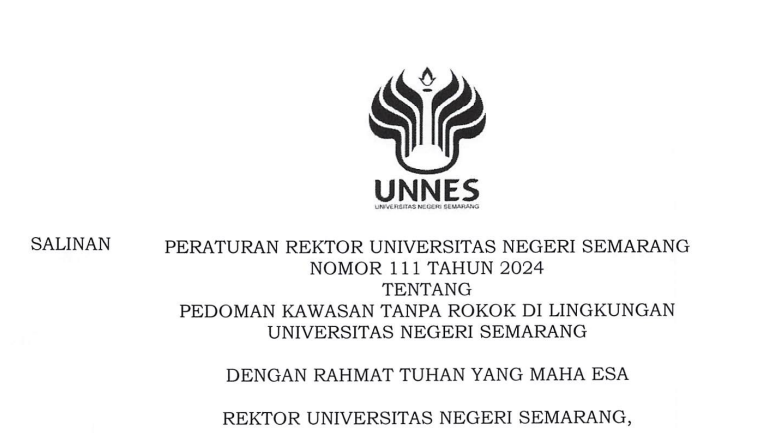
SEMARANG, Indonesia — Universitas Negeri Semarang (UNNES) has a formal smoke-free policy under Rector Regulation No. 111 of 2024 on Guidelines for Smoke-Free Areas within Universitas Negeri Semarang, adopted on 29 October 2024. The regulation provides an institutional framework for protecting the campus community from tobacco smoke and promoting a healthier learning and working environment.
UNNES reinforced this commitment on 31 May 2025, marking World No Tobacco Day with a university-wide Kawasan Tanpa Rokok (KTR) campaign. The activity called on lecturers, education staff, and students to participate in creating a cleaner campus and reducing or stopping smoking.
A University-Wide Policy Covering Smoking and Vaping
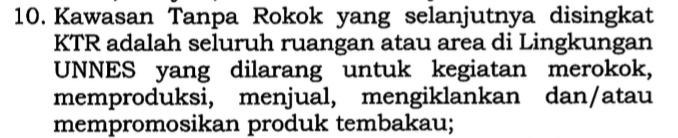
The regulation covers land managed by UNNES. Its definition of regulated products includes conventional cigarettes, cigars, electronic cigarettes, vaping products, shisha, and chewing tobacco.
Article 4 prohibits smoking or using these products in smoke-free areas, alongside their production, sale, promotion, advertising, and tobacco-sponsored activities. It also explicitly provides an exception to the smoking prohibition for existing designated smoking rooms. The policy therefore establishes campus-wide restrictions with a specified smoking-room exception.
Defined Responsibilities for Supervision and Enforcement
The regulation assigns oversight to the Smoke-Free Area Supervisory Team (Tim PKTR). Faculties may establish their own teams through dean’s decisions.
Violations may receive verbal warnings, written warnings, and/or administrative fines of up to Rp250,000, depending on their severity. These provisions establish an enforcement mechanism; they do not, by themselves, demonstrate how many sanctions have been imposed.
Signage, Reporting, and Semester-Based Evaluation
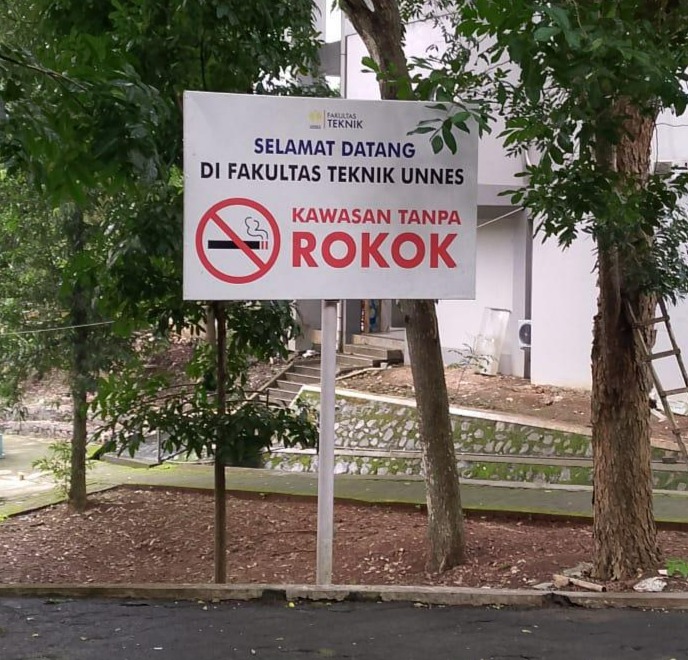
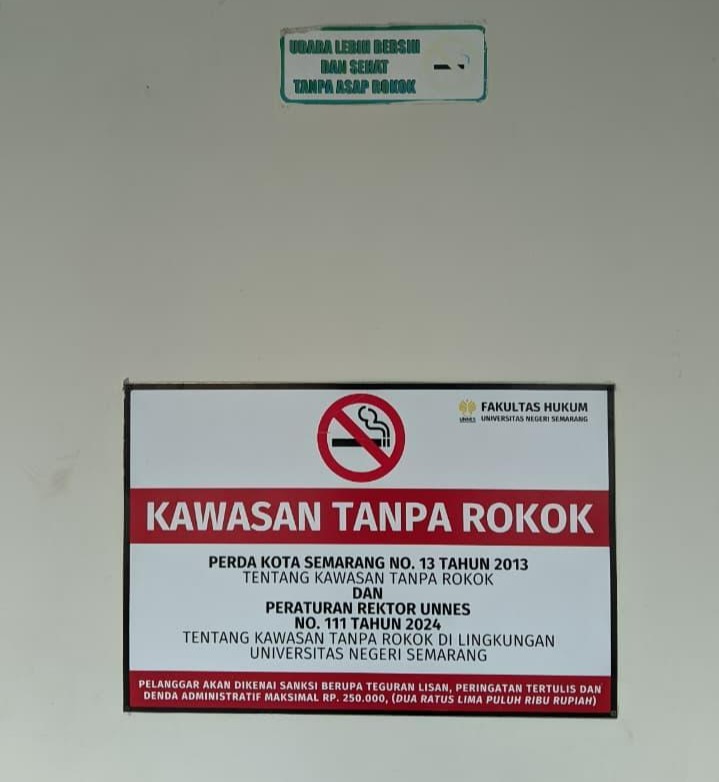
The policy requires clearly visible warnings at strategic locations, including building or courtyard entrances. It also provides for reporting violations to Tim PKTR.
Article 11 requires monitoring and evaluation every semester, with findings reported to the Rector and used to improve compliance. These requirements connect the smoking restrictions with ongoing institutional oversight.
World No Tobacco Day Campaign Strengthens Awareness in 2025
The 31 May 2025 campaign, reported in UNNES’s official article “Gerakan Anti Rokok, UNNES Serukan Gaya Hidup Sehat di Lingkungan Kampus,” brought the policy into a public university message.
Rector Prof. Dr. S. Martono, M.Si., emphasised the importance of clean air in educational settings and encouraged the university community to support the smoke-free movement. His appeal connected individual behaviour with shared responsibility for maintaining healthy spaces for study and work.
The official report explicitly identified Rector Regulation No. 111 of 2024 as the campaign’s formal foundation. It also included UNNES TV coverage concerning World No Tobacco Day and dissemination of the regulation, extending the policy’s communication through university media.
Faculty Communication Supports Implementation
At the faculty level, the Faculty of Law (FH) reports supporting the regulation through education, dissemination, information materials, and efforts to strengthen compliance. Its official account explains that the policy provides a common reference for university units in maintaining a healthier academic environment.
This faculty-level communication illustrates how a university regulation can be translated into messages directed at students, lecturers, education staff, and visitors. It reinforces the expectation that maintaining smoke-free areas is a shared responsibility across the institution.
UNNES’s documented approach combines a formal smoking-restriction policy with supervisory responsibilities, administrative sanctions, warning requirements, reporting procedures, and periodic evaluation. The 2025 campaign reinforced public awareness of that framework and encouraged the university community to take part in its implementation.