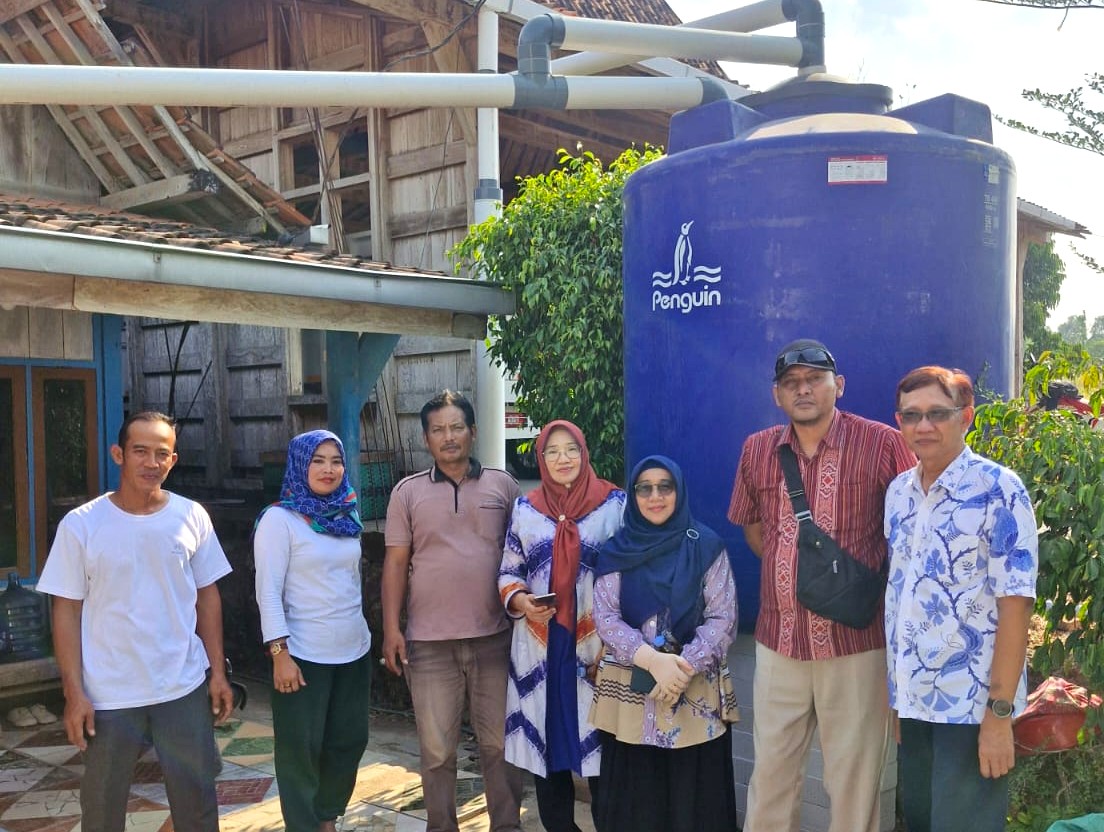
Community education documented in 2025 connects agroforestry, organic fertilizer production, agricultural waste utilization, and responsible farming practices with the needs of local communities in Central Java.
Semarang, Indonesia — Universitas Negeri Semarang (UNNES) provides educational programs and community outreach on sustainable agricultural land management through faculty-led community service, student engagement, and partnerships with agricultural extension services and farmer groups. The university brings practical agricultural learning to local communities, covering agroforestry, organic fertilizer production, productive land use, and agricultural resource management.
Programs documented in 2025 reached communities in Peron, Kendal; Branjang, Semarang Regency; and Sendangsari, Purworejo. Through community consultation, practical training, demonstrations, and mentoring, UNNES connected academic knowledge with farming activities and locally available resources.
Ecofarm and Community-Based Agricultural Education
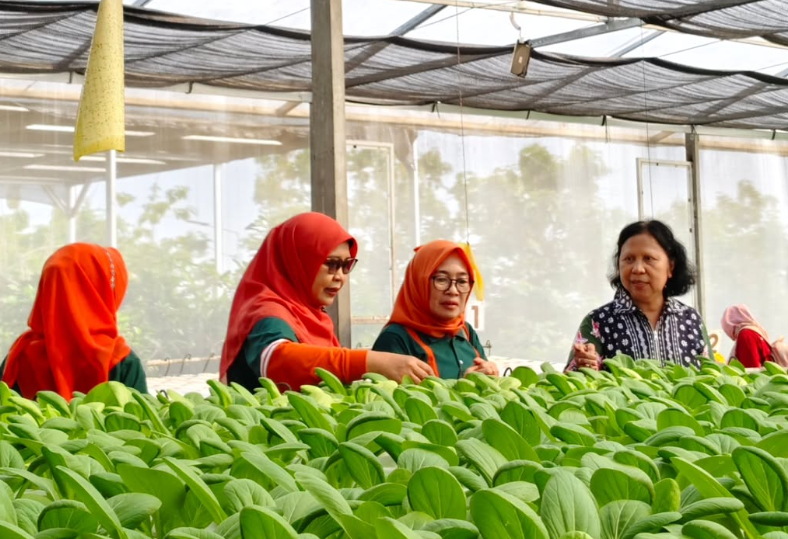
UNNES Ecofarm serves as a practical learning facility for sustainable agriculture. Its educational activities introduce hydroponics, composting, organic waste processing, and integrated cultivation.
On 24 June 2025, Environmental Science students visited Ecofarm with lecturers and support from the UNNES Conservation Sub-Directorate. Learning covered the use of maggots to process organic waste into fish feed, compost production, and the cultivation of fruit and ornamental plants. The visit provided practical examples of how agricultural production can be connected with resource recovery and environmental management.
Beyond campus, UNNES delivers agricultural education directly to community members through village-based programs. Partnerships with farmer groups and extension officers help connect the training with local crops, agricultural materials, and everyday land-management needs.
Agroforestry Education and Resource Utilization in Peron Village
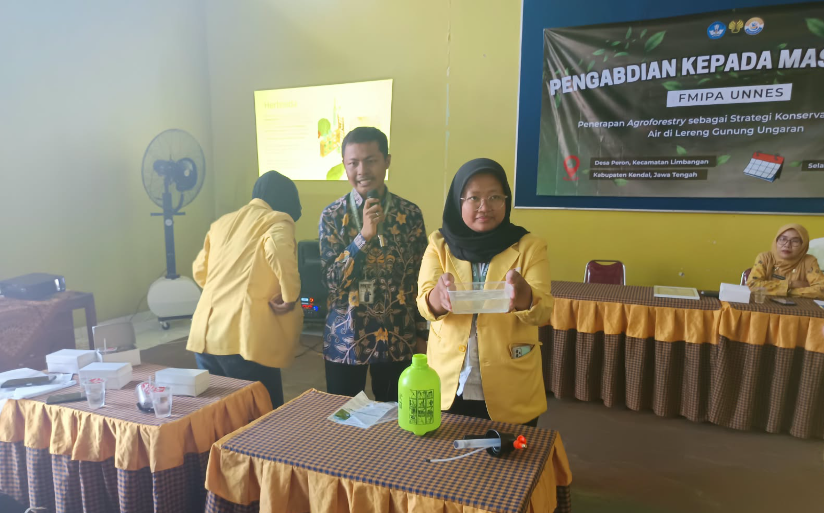
In Peron Village, Limbangan District, Kendal Regency, the Natural Sciences and Environment Student Association of FMIPA UNNES implemented a PPK Ormawa community empowerment program from July to October 2025. The opening took place on 29 July 2025, with participation from university representatives and the village government.
The program focused on zero-waste agroforestry and used Participatory Rural Appraisal to identify activities together with residents. Under Z-Agroforestrypreneur, community members learned about liquid organic fertilizer production, coffee processing, and the utilization of coffee-processing by-products.
Agricultural learning was complemented by AGROSIAGA, which included conservation training, tree planting, and disaster-mitigation education. The activities connected the use of local agricultural and forest resources with environmental protection in the upper Bodri River watershed.
UNNES students coordinated the program with academic guidance and village support, creating opportunities for residents to learn practical resource-management skills while participating in local conservation activities.
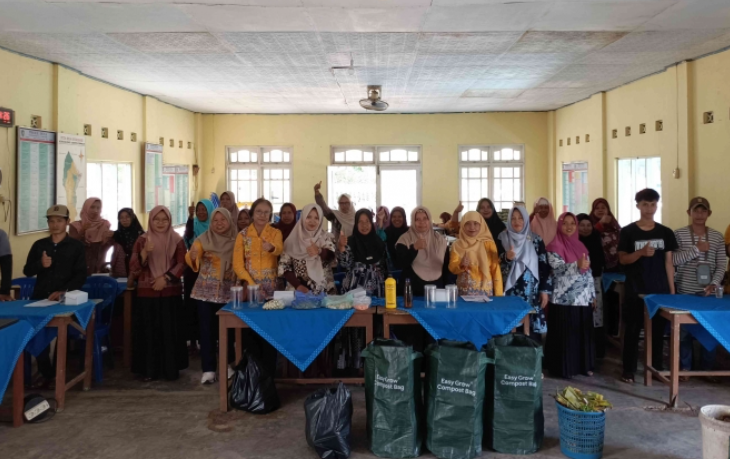
Organic Fertilizer Training with Farmers in Branjang Village
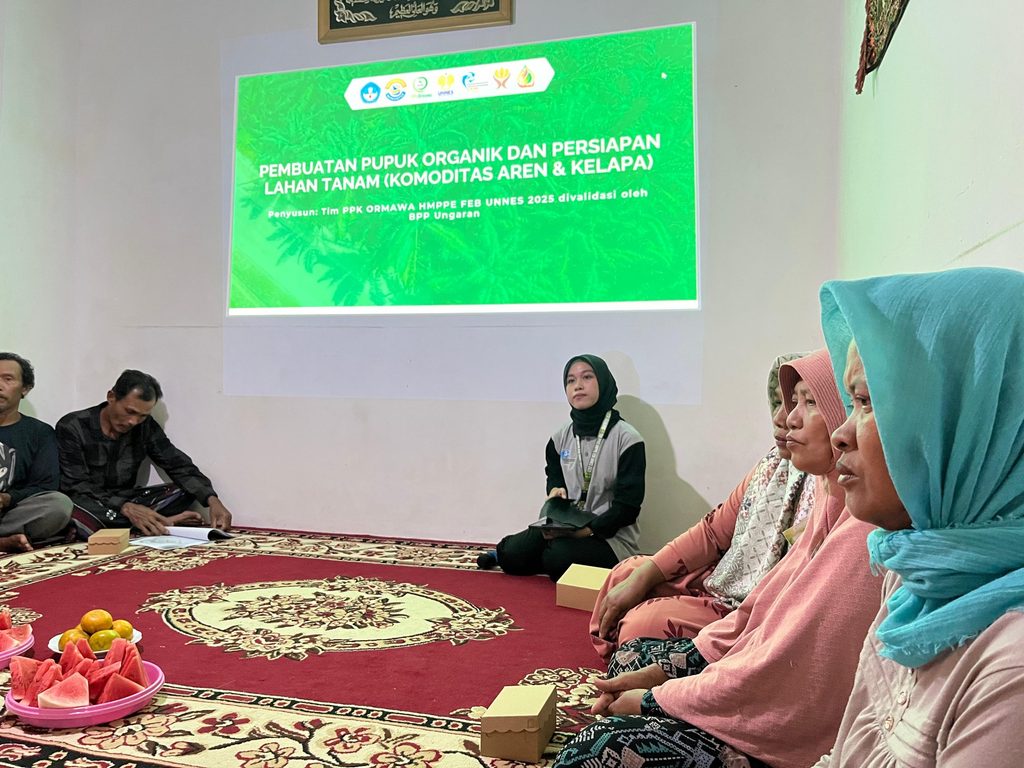
On 29 August 2025, the PPK Ormawa team of the Economics Education Student Association, Faculty of Economics and Business (HMPPE FEB UNNES), collaborated with the Gading Mayang Farmers Studio and the West Ungaran Agricultural Extension Centre (BPP) to provide organic fertilizer training in Branjang Village, Semarang Regency.
The activity took place in Cemanggah Kidul Hamlet, where participants practised processing cattle manure into organic fertilizer. Training focused on appropriate preparation and composting techniques, demonstrating how livestock waste could be reused as an agricultural input.
Muhadi, S.Tr.P., an agricultural extension officer, provided technical instruction on fertilizer production and its relevance to the nutrient needs of sugar palm and coconut plants. Teguh Hardi Raharjo, M.Pd., the UNNES faculty adviser, accompanied the learning process.
The collaboration brought together university coordination, extension-service expertise, and farmers’ practical experience. Participants gained direct experience in preparing organic fertilizer from materials available within their community.
Sustainable Farming and Organic Waste Utilization in Sendangsari
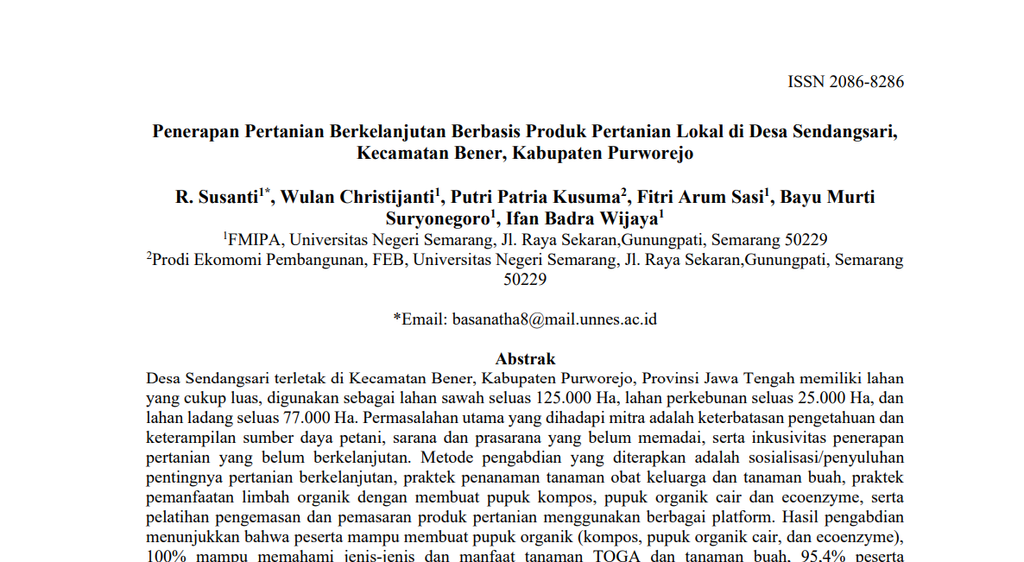
In Sendangsari Village, Bener District, Purworejo Regency, UNNES community service combined sustainable agriculture education with practical activities involving medicinal plants, fruit plants, and organic waste utilization. The program was documented in a community service report published in October 2025.
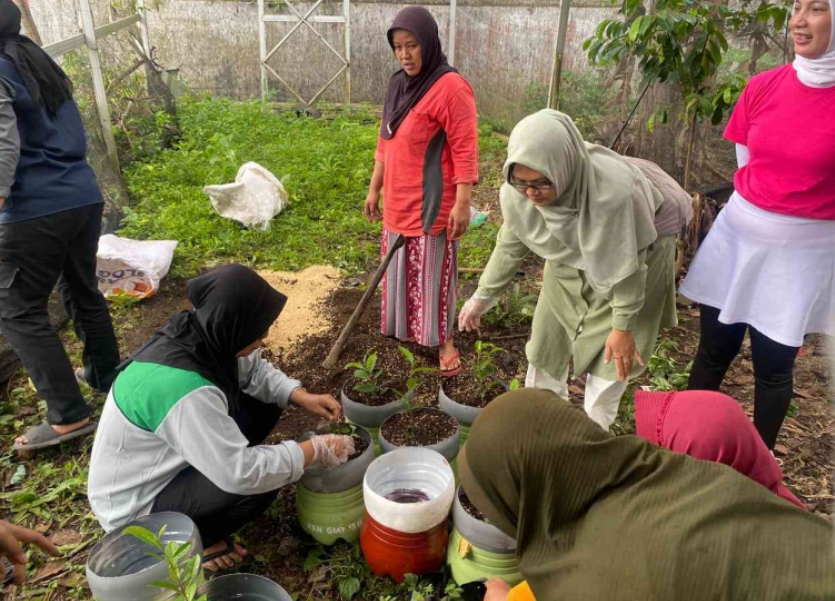
Participants practised producing compost and liquid organic fertilizer, preparing eco-enzyme, and cultivating useful plants. The program also introduced agricultural product packaging and marketing, connecting cultivation skills with the wider management of local agricultural products.
The report recorded participants’ ability to produce organic fertilizers and found that 95.4% understood the types, preparation, and use of organic fertilizers. These reported learning outcomes demonstrate the educational contribution of the program, particularly in helping residents understand how locally available organic materials can be used in cultivation.
Research Supports Responsible Pesticide Education in Brebes
UNNES also contributes knowledge relevant to responsible pesticide management. In 2025, the Faculty of Medicine supported research on pesticide exposure among shallot farmers in Tegalwulung Village, Jatibarang District, Brebes Regency.
Using the Dermal Risk Exposure Assessment Method (DREAM), the study identified pesticide spraying as the activity with the highest exposure score, at 110.30, classified as high exposure. The findings provided a basis for educational recommendations concerning suitable personal protective equipment, safer pesticide preparation and spraying, and awareness of the body areas most exposed during agricultural work.
This research complements agricultural outreach by identifying practices that require attention when developing farmer education. Its documented contribution is the assessment of exposure and the identification of educational priorities for more responsible pesticide handling.
Strengthening Local Capacity for Sustainable Agriculture
UNNES’s village-based programs provide direct educational opportunities for farmers and residents to learn about sustainable agricultural resource management. Peron’s agroforestry program connects agricultural production with conservation, Branjang’s training demonstrates livestock-waste utilization, and Sendangsari’s outreach combines organic fertilizer production with practical cultivation.
Through collaboration with village governments, extension officers, and community groups, UNNES makes agricultural knowledge accessible beyond campus. Practical training and mentoring give residents opportunities to develop skills relevant to soil management, resource efficiency, and the productive use of local agricultural land.