Global health research, climate data work in Timor-Leste and wildlife assessments connect UNNES expertise with evidence used to understand sustainable-development challenges.
SEMARANG, Indonesia — Universitas Negeri Semarang (UNNES) contributed to international collaboration on sustainability-related data in 2025 through participation in Global Burden of Disease (GBD) research and climate vulnerability assessment work in Timor-Leste. These activities complemented the university’s biodiversity surveys and scientific involvement in Indonesia’s wildlife quota-setting process.
The contributions span different types of evidence: comparable estimates of disease and injury burden, information on community vulnerability to climate change, and field measurements of wildlife populations. They demonstrate how university researchers and students participate in producing, managing and interpreting information for public decision-making.
Global Health Measurement through the Global Burden of Disease Study
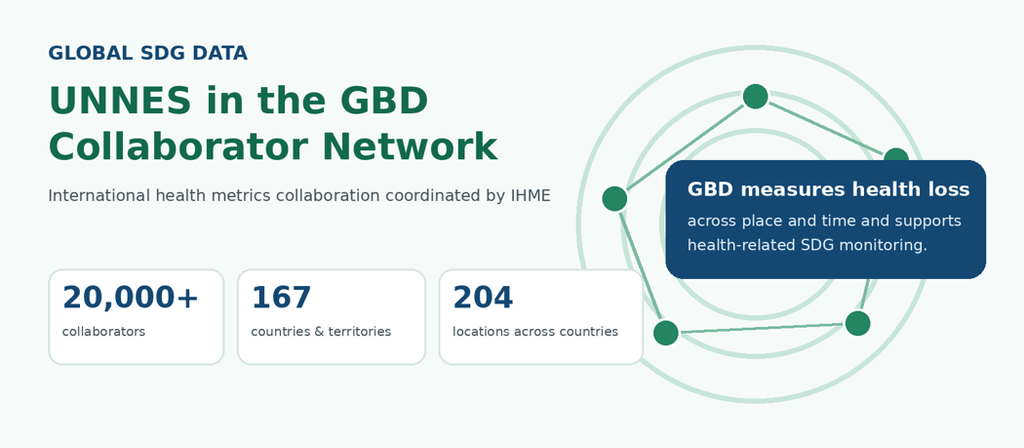
UNNES’s participation in international health research includes contributions by Dr. Dina Nur Anggraini Ningrum, a university researcher named among collaborators in GBD studies published in 2025.
She was listed among the collaborators in two studies in The Lancet Public Health examining the burden of smoking and injuries in countries of the Association of Southeast Asian Nations (ASEAN). Both studies analysed the period 1990–2021, demonstrating how publications released in 2025 drew on historical data to assess long-term health patterns.
The smoking study examined smoking prevalence and attributable disease burden across ten ASEAN member states by age and sex. The injury study estimated incidence, cause-specific mortality, years of life lost, years lived with disability and disability-adjusted life-years. These measures allow researchers to examine health loss across populations and over time.
Dr. Ningrum was also named among the collaborators in a 2025 GBD 2023 study published in The Lancet, covering 375 diseases and injuries, 88 risk factors, and 204 countries and territories, including 660 subnational locations. The study assessed disease and injury burden, health loss attributable to risk factors and healthy life expectancy over the period 1990–2023.
These publications document her participation in international research that produces comparable health measurements. Their scope connects UNNES research expertise with a collaborative effort to understand population health across national boundaries.
An International Network for Comparable Health Evidence
Coordinated by the Institute for Health Metrics and Evaluation (IHME), the GBD study brings together researchers to develop and assess estimates of health outcomes and risks. IHME’s current overview reports a network of more than 20,000 collaborators from 167 countries and territories involved in vetting data sources and estimates. These figures describe the network as currently reported, rather than its size specifically in 2025.
For UNNES, the documented contribution is participation in collaborative scientific publications that measure health burden. This provides a concrete connection to international data analysis and measurement relevant to sustainable development, including the assessment of health inequalities, preventable risks and population well-being.
Working with Timor-Leste on Climate Vulnerability Data
In January 2025, Josue Willian Alwyn, a student in the Environmental Science Study Program at UNNES’s Faculty of Mathematics and Natural Sciences (FMIPA), undertook an internship at the National Directorate of Climate Change of Timor-Leste.
During the placement, Josue entered physical data for the Integrated Vulnerability Assessment (IVA) and prepared a draft IVA report on community vulnerability to climate change and disaster risks.
The information formed part of a national database used to assess community vulnerability and support evidence-based adaptation planning and policymaking in Timor-Leste. His work contributed to the organisation and reporting of information needed to understand climate-related risks and community resilience.
Through this initiative, FMIPA UNNES participated in international collaboration on environmental data management with an overseas government institution. The contribution involved identifiable tasks and outputs: entering assessment data and preparing a draft vulnerability report.
The placement also connected environmental science education with practical assessment work, giving the student experience in how vulnerability information is managed and used within a government institution.
Sharing Regional Perspectives on Climate Resilience
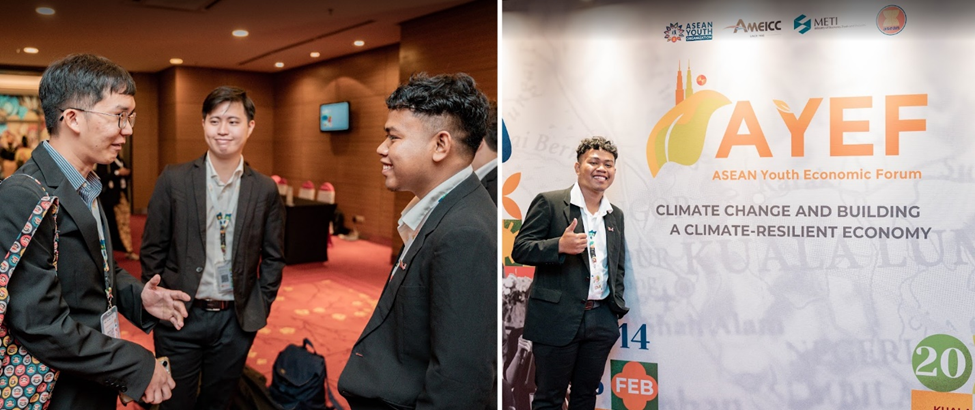
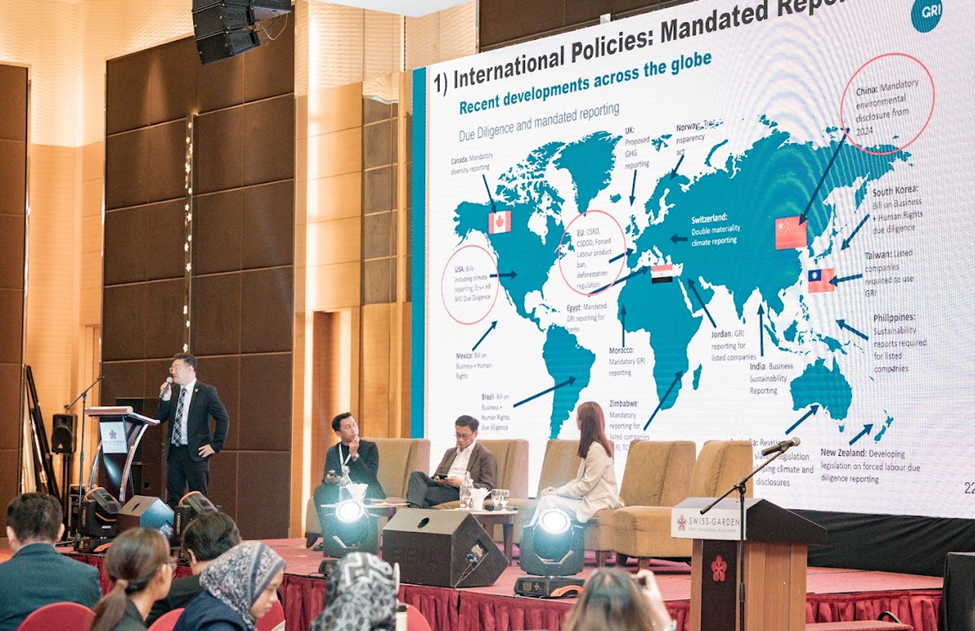
Following the internship, Josue participated in the ASEAN Youth Economic Forum (AYEF) in Kuala Lumpur, Malaysia, in February 2025.
Jointly organised by the ASEAN–Mekong Economic Cooperation Institute (AMEICC) and the ASEAN Youth Organization (AYO), the forum explored the theme “Climate Change and Building a Climate-Resilient Economy.”
Participants exchanged ideas and experiences on responding to climate change and building resilient economies. The discussions complemented Josue’s internship by placing climate vulnerability assessment within a wider regional conversation about adaptation and sustainable development.
The two activities served connected purposes: the internship involved practical data management and reporting, while the forum provided opportunities for international learning and knowledge exchange.
Biodiversity Measurement in Central Java
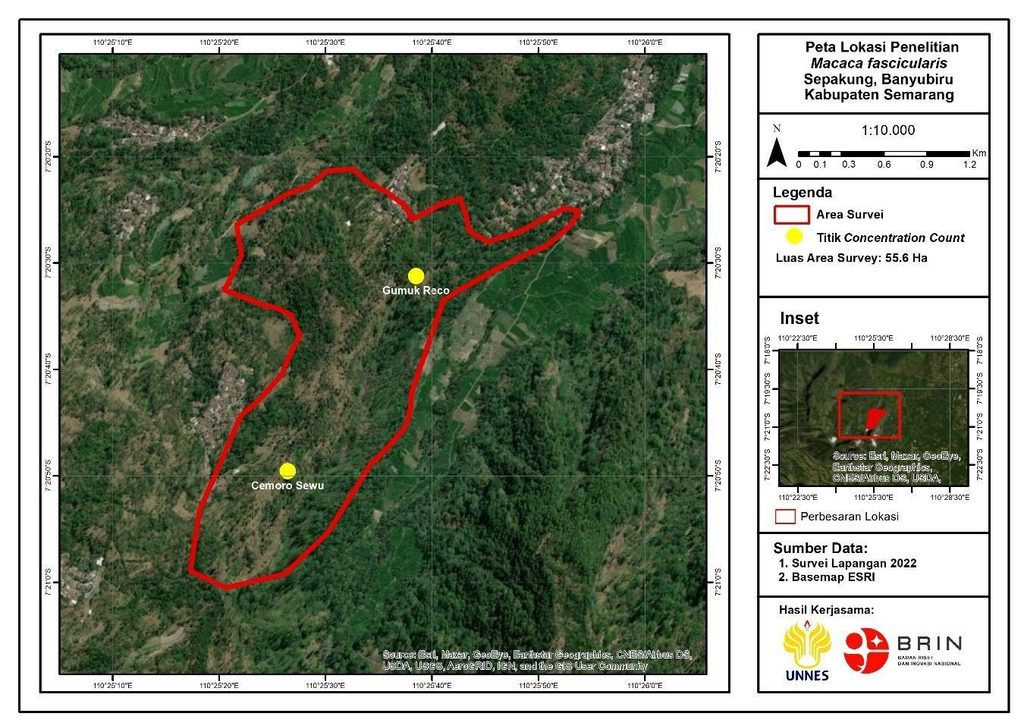
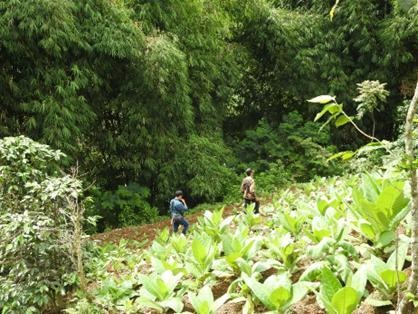
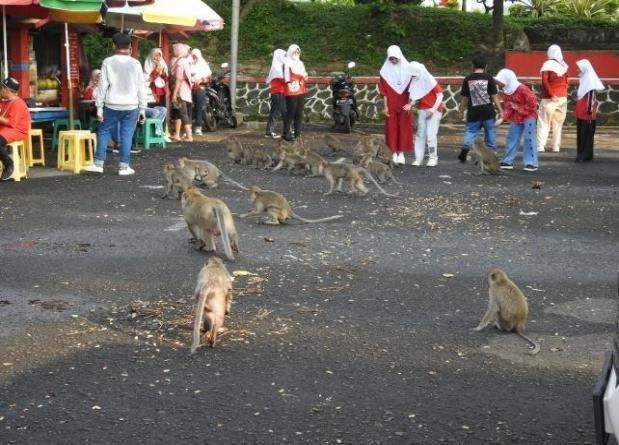
UNNES’s biodiversity research adds another dimension to its environmental evidence base. From 28 May to 11 June 2023, a university research team surveyed long-tailed macaques (Macaca fascicularis) across nine regencies and cities in Central Java.
The survey covered Semarang Regency, Magelang Regency, Temanggung Regency, Pemalang Regency, Boyolali Regency, Karanganyar Regency, Sukoharjo Regency, Wonogiri Regency and Semarang City.
Researchers recorded 814 individuals across a combined survey area of 331.07 hectares. The highest observed count among the surveyed locations was at Goa Kreo in Semarang City, where 164 individuals were documented.
Using a concentration-count approach, the team conducted repeated observations in the morning and afternoon. Records included population counts, encounter times, age structure, sex, behaviour, habitat type, geographic coordinates, elevation and relevant environmental conditions.
The dataset also included local information on human–wildlife interactions. Together, these records provide a reference for assessing conditions at the surveyed sites and supporting subsequent monitoring.

Building a Reference for Biodiversity Monitoring
The researchers used a concentration-count approach, conducting repeated observations in the morning and afternoon to improve the reliability of field records.
Combining population counts with demographic, habitat and spatial information produced a dataset that can support assessment of the surveyed sites and provide a reference for subsequent monitoring.
The records help researchers examine where macaques occur, the composition of their populations and the environmental conditions surrounding them. Information on interactions with people also helps identify management issues requiring further investigation.
The survey provides a documented example of UNNES’s capacity to gather and measure biodiversity data. Its findings describe the surveyed locations and period, establishing a basis for future comparison.
Contributing Scientific Expertise to the 2025 Wildlife Assessment Process
UNNES’s scientific engagement continued through the appointment of Prof. Dr. Margareta Rahayuningsih, M.Si., of the Department of Biology, Faculty of Mathematics and Natural Sciences, to the Mammal Taxon Group under the National Research and Innovation Agency’s (BRIN) Secretariat of Scientific Authority for Biodiversity.
The appointment concerned the national process for setting 2025 wildlife utilisation quotas. The scientific team was responsible for inventorying utilised wild species, collecting reports and supporting evidence, reviewing population and genetic studies, and preparing scientifically based quota recommendations.
The team’s remit covered wild plants, wildlife and selected fish species, including taxa listed in the appendices of the Convention on International Trade in Endangered Species of Wild Fauna and Flora (CITES). Recommendations are submitted through the Scientific Authority process to support management decisions.
Through this appointment, UNNES contributed academic expertise to the review and interpretation of biodiversity evidence within a national scientific mechanism connected to international wildlife governance.
Connecting Research and Learning with Data Use
The three activities illustrate complementary contributions to sustainability-related evidence. GBD publications document participation in international health measurement. The Timor-Leste internship demonstrates operational involvement in an overseas climate vulnerability database and reporting process. Biodiversity research and BRIN engagement contribute field measurements and scientific expertise to wildlife management.
Across these activities, UNNES connects academic knowledge with institutions that analyse health risks, assess community vulnerability and review conservation evidence. The contributions show practical involvement in data analysis, management, measurement and interpretation that can inform responses to sustainable-development challenges.