

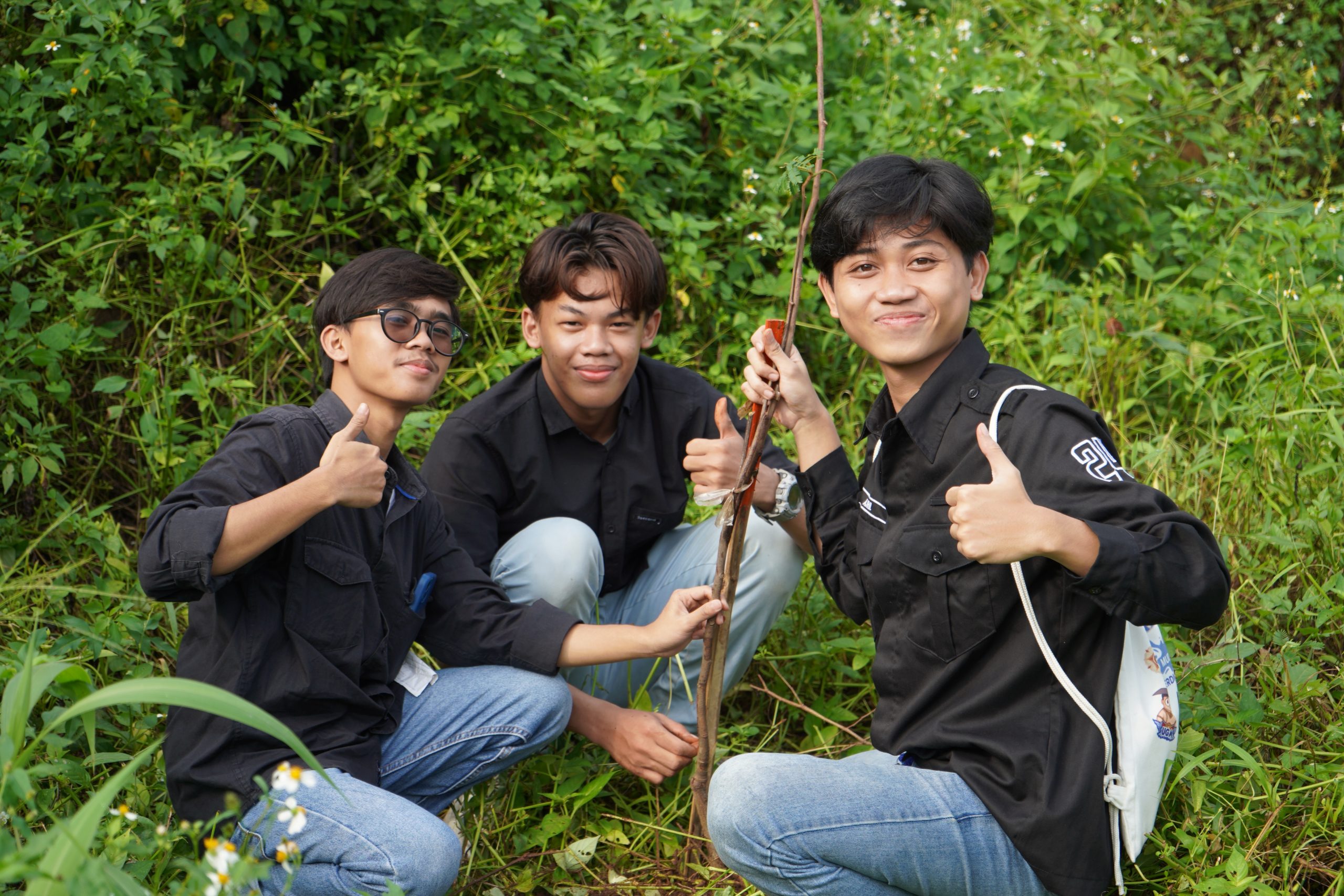
Tree planting documented through SIOMON, organised campus events and community conservation education demonstrate UNNES’s support for protecting terrestrial ecosystems and promoting sustainable land use.
SEMARANG, Indonesia — Universitas Negeri Semarang (UNNES) organised and supported tree-planting and conservation activities throughout 2025, connecting student participation with environmental education and community engagement. According to the university’s SIOMON records, 6,176 trees were planted during the year, providing a documented measure of participation in its institutional planting programme.
Planting took place predominantly in Java, particularly Central Java, while also extending to locations across Indonesia, from Aceh to Papua. Activities covered residential areas, mountain slopes and coastal locations, including mangrove planting to support coastal ecosystem restoration.
Connecting Tree Planting with Documentation and Continued Care
UNNES requires students to participate in tree planting and document their activities through SIOMON or the MyUNNES-Student platform. The programme links conservation participation with academic progression and encourages responsibility for trees beyond the initial planting activity.
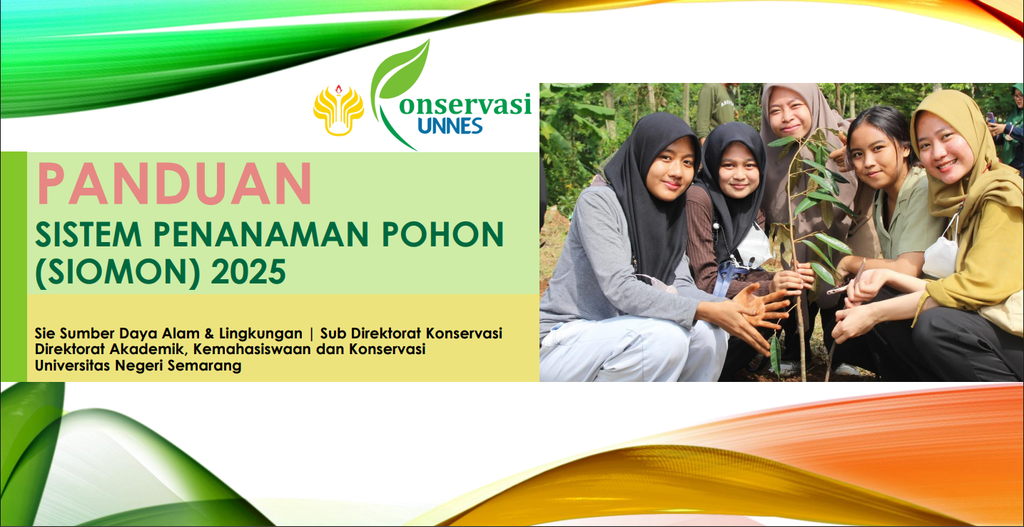
The university’s 2025 SIOMON guide explains how students record planting information and submit subsequent maintenance records. Issued by the Conservation Sub-Directorate, the guide covers seedling preparation, planting locations, digital reporting and periodic tree care before graduation. This provides an institutional mechanism for documenting planting and following up on maintenance.
The annual planting total records trees planted; continued maintenance entries provide a separate basis for following their condition over time.
900 Students Plant 300 Trees at Sekaran Campus
A documented example of university-organised conservation took place on 28 February 2025, when 900 new students from seven faculties planted 300 seedlings at UNNES Sekaran Campus. Planting covered the West Campus, East Campus and new women’s student residence.
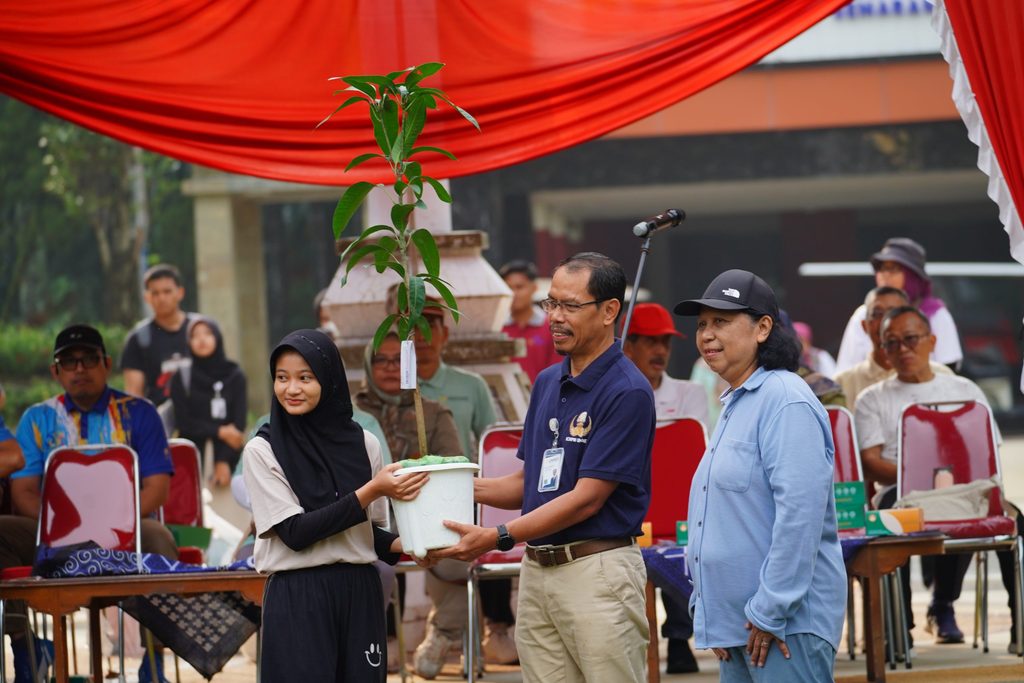
UNNES organised the activity in collaboration with Djarum Foundation Bakti Lingkungan. The event was opened by the Head of the Conservation Sub-Directorate, Prof. Dr. Nana Kariada Tri Martuti, M.Si., and included a ceremonial seedling handover by the Director of Academic Affairs, Student Affairs and Conservation.
The activity combined campus greening with practical conservation education, involving students directly in caring for the university environment. Official UNNES coverage includes photographs of the event and seedling handover, documenting the university’s role and student participation.
Faculty Activities Reinforce Conservation Participation
On 7 November 2025, the Faculty of Social Sciences and Political Science (FISIP) held another planting activity involving 219 first-semester students. Participants planted 50 seedlings—30 mango trees and 20 petai trees—within the campus environment.
The activity brought conservation into students’ early university experience. Participants also expressed their intention to revisit the trees and observe their growth, connecting planting with continued care and an interest in the future benefits of productive trees. The faculty’s published documentation records the date, participation, species and planting output.
| Documented activity | Date | Location | Participants | Planting output |
|---|---|---|---|---|
| UNNES planting programme with Djarum Foundation Bakti Lingkungan | 28 February 2025 | West Campus, East Campus and new women’s student residence, Sekaran | 900 students | 300 seedlings |
| FISIP student planting activity | 7 November 2025 | FISIP campus environment | 219 students | 50 seedlings |
The event figures describe individual activities and are presented separately from the annual SIOMON total.
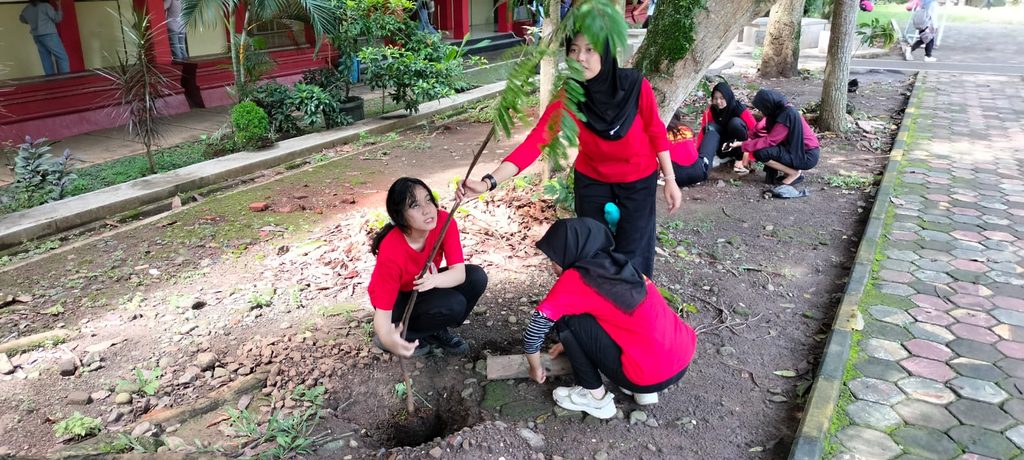
FISIP students plant mango and petai seedlings during a campus conservation activity on 7 November 2025.
Extending Conservation Education to Mount Ungaran Communities
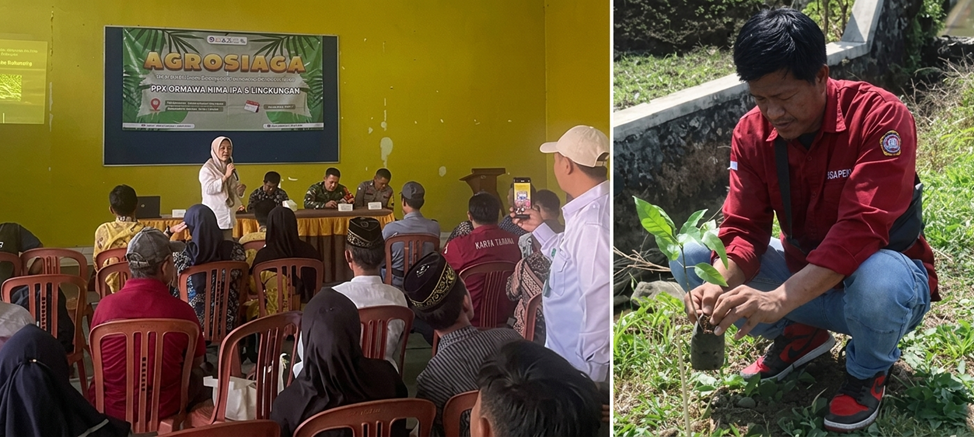
UNNES’s conservation activities also reached communities around Mount Ungaran. On 23 September 2025, the PPK Ormawa team of HIMA IPA dan Lingkungan organised an educational session on local rare flora, fauna and conservation at Peron Village Hall, Limbangan District, Kendal Regency.
The activity involved the Central Java Natural Resources Conservation Agency (BKSDA) and introduced residents to habitat protection, causes of biodiversity decline and responsible coexistence with wildlife. Participants also learned about Peron’s position in the upper Bodri watershed and the importance of protecting vegetation and maintaining upstream ecological functions.
Through this community event, UNNES connected conservation knowledge with practical concerns about wildlife, water resources and land management. The activity forms part of FMIPA’s wider work with village governments, community groups and conservation partners around Mount Ungaran.
Developing a Forest Base for Education and Conservation
UNNES’s longer-term forest conservation work includes preparations to manage a Special Purpose Forest Area (KHDTK) on the slopes of Mount Ungaran. Approximately 68 hectares were entrusted to the university for education and training under Ministerial Decree No. 1134/MENLHK/2024, with LPPM assigned management responsibilities through Rector’s Decree No. 1427/UN37/HK/2024.
The Research and Community Service center report describes preparations for forest management, boundary demarcation and the development of programmes in ecology, conservation, social forestry, climate change and sustainable natural-resource management. It also outlines opportunities for community environmental education and agroforestry training.
The KHDTK provides an institutional foundation for future forest-based learning. The report describes planned activities and management preparations, while the campus planting events and Peron outreach provide direct documentation of conservation activities carried out in 2025.
Biodiversity Research Adds Context for Sustainable Nature-Based Learning
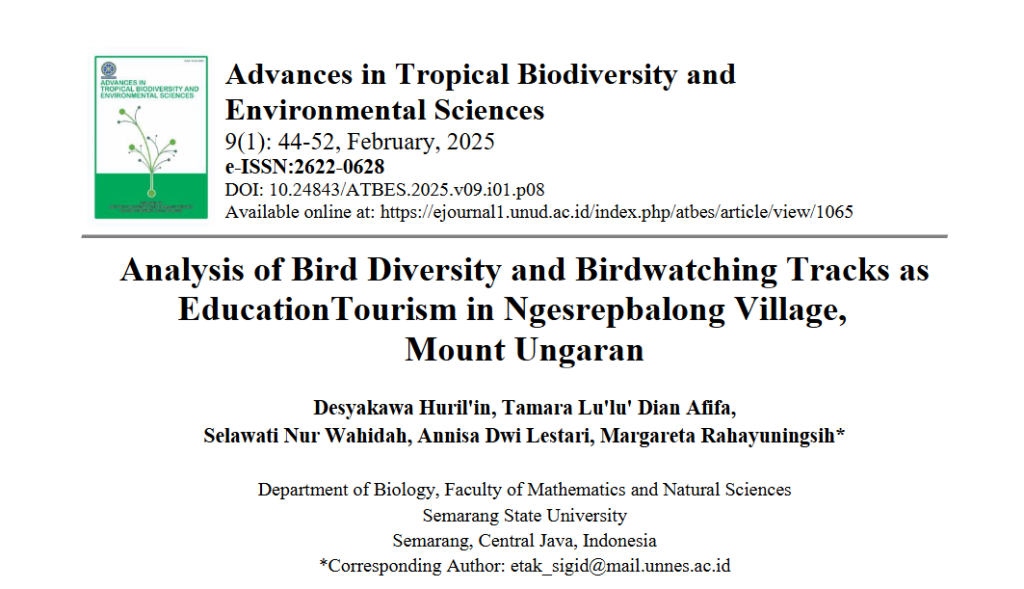
UNNES research published in 2025 adds scientific context to conservation education around Mount Ungaran. The study “Analysis of Bird Diversity and Birdwatching Tracks as Education Tourism in Ngesrepbalong Village, Mount Ungaran” assessed four potential birdwatching routes and reported an average bird diversity index of 2.635.
The findings identify opportunities for educational tourism that introduces visitors to local biodiversity and supports conservation-oriented livelihood development. They establish the potential of birdwatching routes, rather than documenting the delivery of a tourism or training event.
A second publication, “On the arrow-tailed flying squirrel (Hylopetes sagitta) from Mt. Ungaran, Java,” documents observations made during biodiversity monitoring on 5–6 October 2024, with the findings published in 2025. The paper contributes information about the species’ distribution and notes its Data Deficient classification in the IUCN assessment cited by the authors, highlighting gaps in knowledge about its population and ecology.
These studies complement the university’s conservation activities by documenting the biodiversity of the surrounding landscape. UNNES’s direct contribution in 2025 is demonstrated most clearly through its recorded planting programme, organised student events and community education on habitat protection and responsible use of natural resources.