

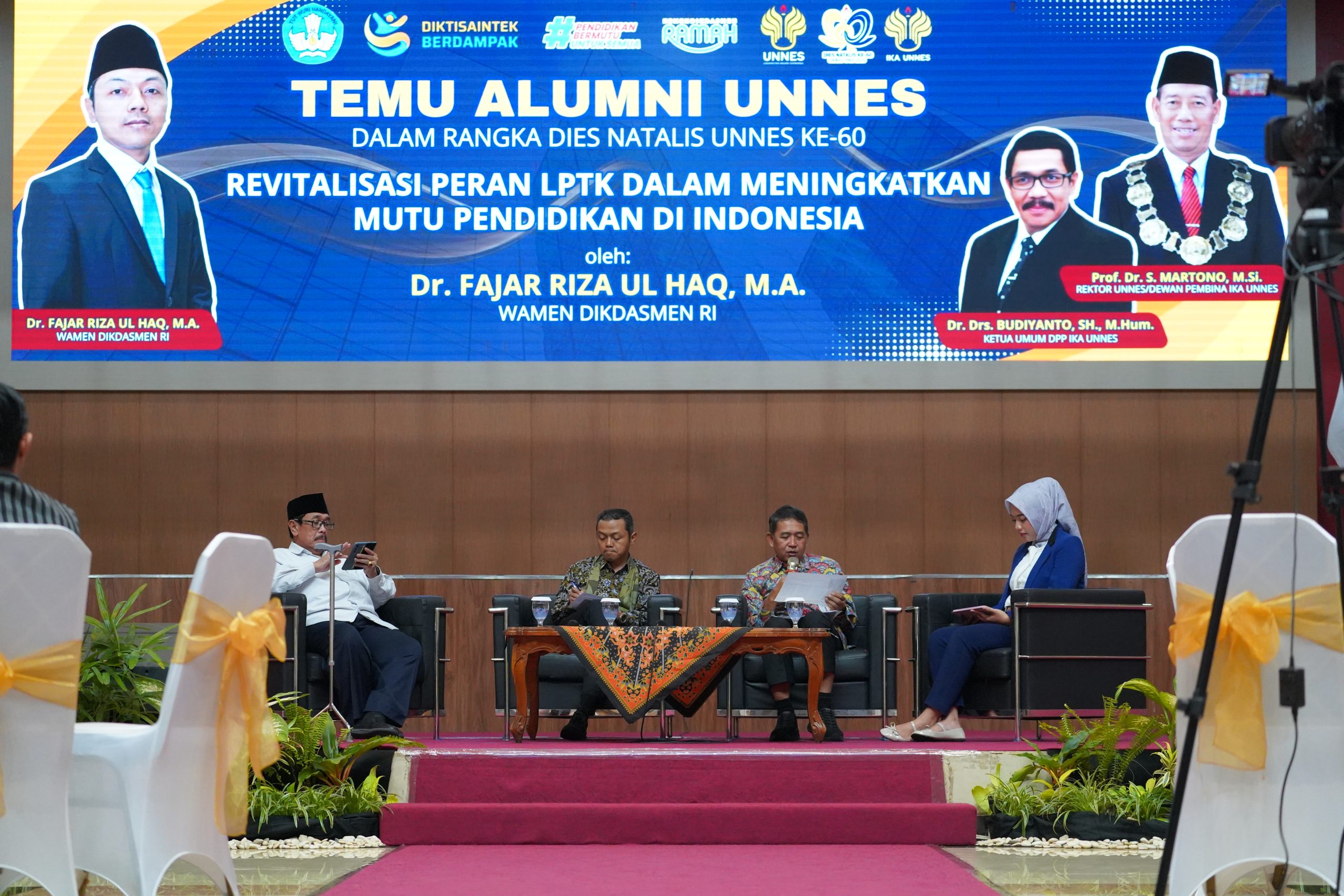
Universitas Negeri Semarang (UNNES) reaffirms its commitment to providing a neutral and safe platform for political stakeholders, policymakers, and civil society to engage in open, constructive dialogue. This initiative reflects the university’s dedication to upholding academic freedom, freedom of expression, and scientific autonomy core principles that define a democratic and inclusive academic environment.
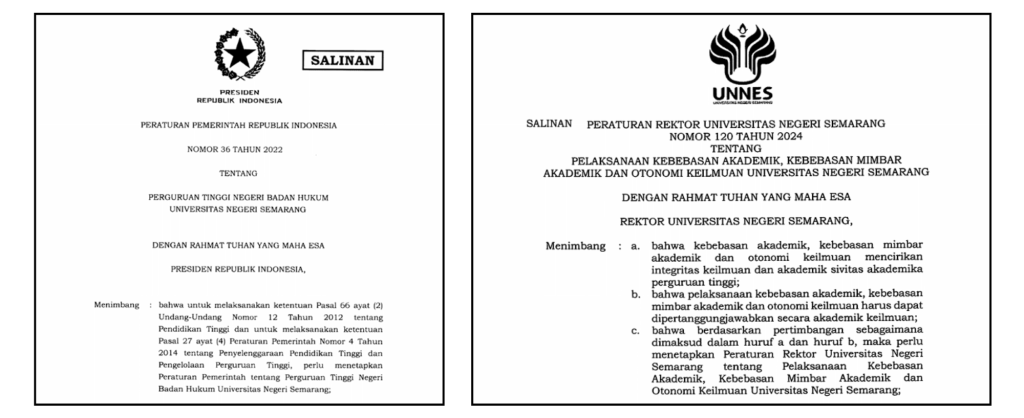
The legal foundation for this commitment is established in Government Regulation No. 36 of 2022 on UNNES as a State University with Legal Entity Status, particularly Article 24, Section Five, which explicitly guarantees academic freedom and scientific autonomy for all members of the academic community. This provision is further reinforced by Rector Regulation No. 120 of 2024 on the Implementation of Academic Freedom, Freedom of Academic Expression, and Scientific Autonomy, which emphasizes that such freedoms must be grounded in the principles of scientific truth, integrity, justice, utility, virtue, and responsibility.
Through these legal instruments, UNNES ensures that the campus serves as a “safe space” for open public discourse where diverse viewpoints can be expressed without fear or bias. The university maintains strict neutrality and independence especially during politically sensitive periods such as national election demonstrating its role as a trusted intellectual partner in democratic processes.
On January 29, 2024, UNNES reaffirmed its commitment to political neutrality and democratic integrity ahead of Indonesia’s 2024 General Election. During a university assembly attended by university leaders, lecturers, and administrative staff, Vice Rector III Prof. Dr. Ngabiyanto, M.Si., emphasized the importance of ensuring a fair, honest, and peaceful electoral process. He specifically reminded civil servants (ASN) to maintain political neutrality in accordance with Law No. 5 of 2014, while encouraging the academic community and wider public to exercise their voting rights responsibly.
Through this institutional statement, UNNES demonstrated its commitment to maintaining a politically impartial academic environment while promoting democratic participation and mutual respect. The university emphasized that electoral participation should uphold national unity, fairness, and peaceful political engagement, regardless of individual political preferences. By encouraging professional neutrality among university personnel and responsible civic participation, UNNES reinforces the institutional conditions necessary for open, inclusive, and respectful dialogue among individuals with diverse political perspectives, complementing its broader initiatives to facilitate democratic discussions and constructive public discourse.
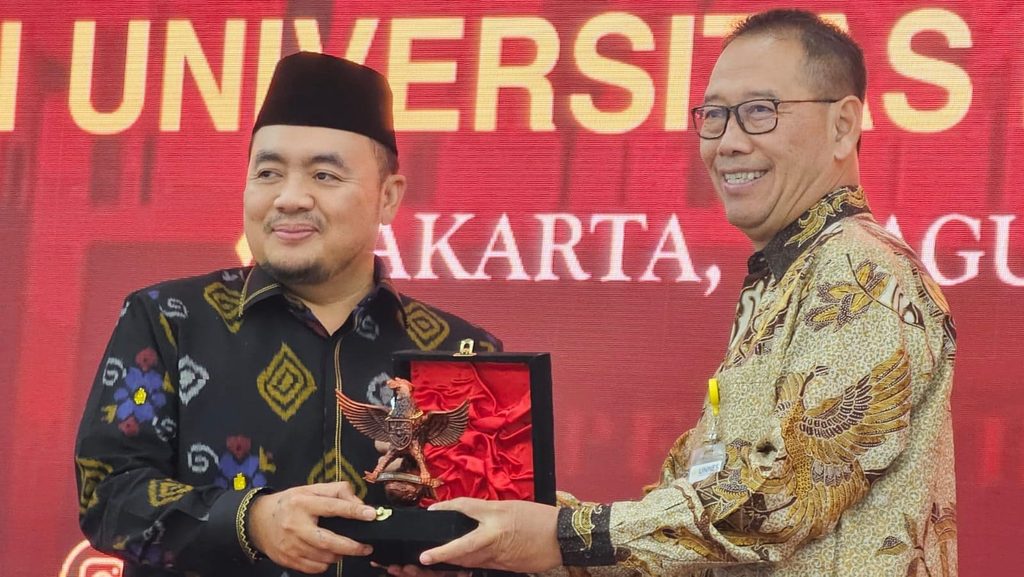
UNNES and KPU RI Sign a Memorandum of Understanding (MoU). Source: Perkuat Pendidikan Demokrasi, UNNES dan KPU RI Tandatangani MoU – Universitas Negeri Semarang
On August 31, 2024, UNNES also formalized its collaboration with the General Elections Commission of the Republic of Indonesia (KPU RI) through the signing of a Memorandum of Understanding (MoU) in Jakarta. The agreement, signed by UNNES Rector Prof. Dr. S. Martono, M.Si., and KPU Chairman Mochammad Afifuddin, focuses on strengthening democratic education, electoral literacy, and academic engagement in electoral processes. Through this partnership, UNNES promotes civic awareness and participatory election monitoring, including its campus-based Pojok Pengawasan (Election Monitoring Corner), which provides opportunities for the academic community to learn about electoral processes and democratic responsibilities.
The collaboration also highlights the importance of universities as academically independent spaces for discussing political and electoral issues. During the meeting, the KPU Chairman addressed Constitutional Court Decision No. 65/PUU-XXI/2023 concerning campaign activities in educational institutions and government facilities, highlighting the legal framework governing political engagement in academic environments. By facilitating cooperation with an independent electoral institution and promoting nonpartisan political education, UNNES strengthens its capacity to support informed discussions on democratic challenges, electoral regulations, and civic participation. This initiative complements the university’s broader commitment to providing an inclusive and politically neutral academic environment where diverse perspectives can be examined through constructive and evidence-based dialogue.
In addition, the Central Java Provincial Election Commission conducted an audience visit to UNNES to encourage students to actively support peaceful and transparent elections. On July 22, 2022, UNNES welcomed representatives of the Central Java Provincial General Elections Commission (KPU) to discuss potential collaboration in supporting Indonesia’s 2024 General Election. During the meeting, UNNES Vice Rector for Academic Affairs Prof. Dr. Zaenuri, M.Si., expressed the university’s readiness to involve students and academic experts in electoral education, research, and community engagement. The discussions emphasized encouraging student participation in electoral processes, promoting responsible voting, and preventing the spread of misinformation. Both institutions also explored interdisciplinary collaboration involving political, social, economic, psychological, and technical aspects of election administration. This engagement reflects UNNES’s commitment to providing a neutral academic platform for constructive dialogue with electoral institutions while strengthening democratic awareness and informed civic participation.
On October 6, 2016, the Faculty of Law at Universitas Negeri Semarang (UNNES), in collaboration with the People’s Consultative Assembly of the Republic of Indonesia (MPR RI), organized a Focus Group Discussion (FGD) on restructuring the authority of the Regional Representative Council (DPD RI). The forum brought together diverse stakeholders, including representatives from the Central Java General Elections Commission (KPU), Election Supervisory Agency (Bawaslu), Semarang City Regional House of Representatives (DPRD), religious organizations, civil society groups, and academics from several universities. Discussions addressed the importance of strengthening regional representation, legislative authority, budgeting, and oversight functions within Indonesia’s democratic system. Speakers presented different perspectives on the DPD’s institutional effectiveness and potential constitutional reforms, encouraging constructive exchanges on national governance challenges. Through this multi-stakeholder forum, UNNES demonstrated its role as a neutral academic platform for open political dialogue, facilitating the exchange of diverse viewpoints and promoting inclusive, evidence-informed discussions on democratic governance and constitutional development.
UNNES Rector Prof. Dr. S. Martono, M.Si. emphasized that the university serves as a safe home for diverse perspectives and open criticism.
“UNNES is committed to being a shared intellectual home where all opinions are respected. In the academic tradition, differences are not sources of conflict, but pathways to collective wisdom and scientific truth,” he stated.
This commitment to open and participatory governance was demonstrated through a dialogue session held on May 5, 2014, during which then UNNES Rector Prof. Dr. Fathur Rokhman, M.Hum., invited administrative staff to share their perspectives, suggestions, and constructive criticism regarding university management. He emphasized that institutional policies should be shaped by collective input, academic knowledge, and evidence-based considerations rather than personal assumptions. The discussion also addressed the upcoming Rector Election, encouraging university members to respect democratic procedures while exercising their right to express opinions and provide recommendations. By creating opportunities for open communication and respectful disagreement, UNNES demonstrated its commitment to fostering an inclusive academic environment where diverse perspectives are valued and constructive dialogue contributes to transparent and participatory decision-making.
With a strong legal framework, enduring partnerships with national institutions, and a culture of open academic dialogue, UNNES continues to uphold its role as a conservation and impact university one that not only educates but also safeguards democratic values and civil discourse within Indonesia’s academic landscape.