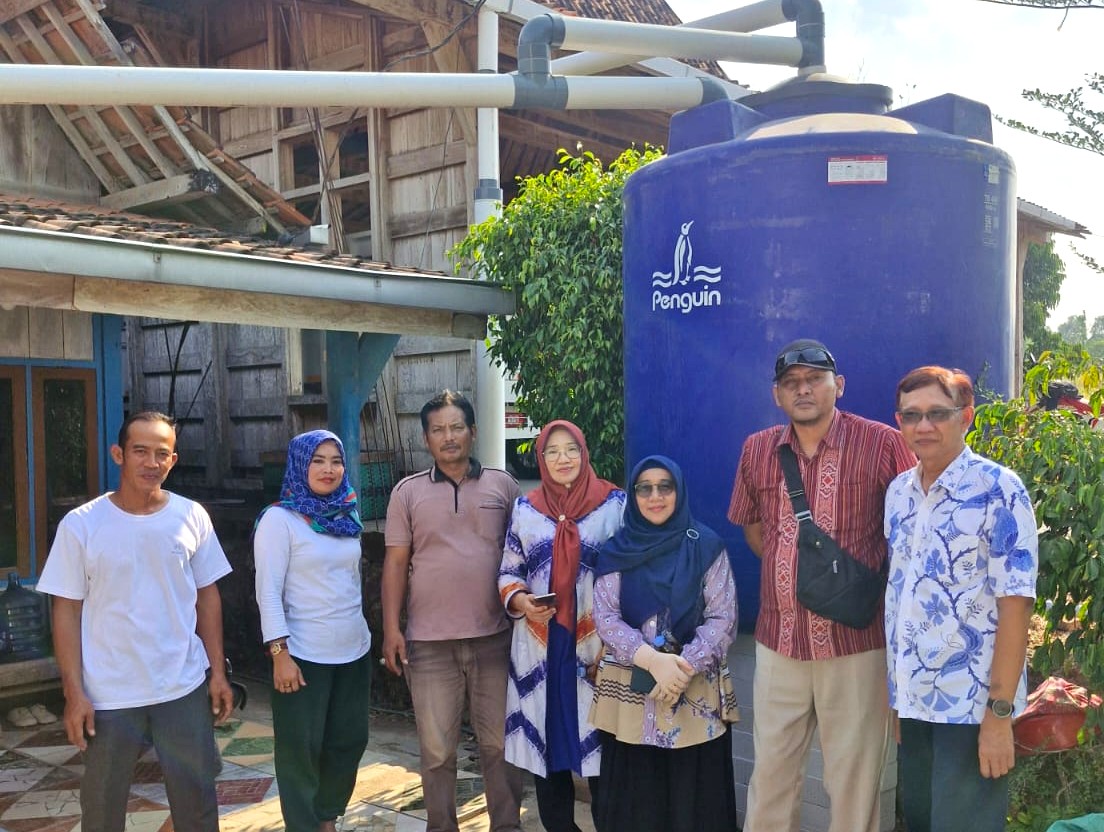
Universitas Negeri Semarang (UNNES) promotes sustainable water extraction through technological innovation, scientific research, and environmental monitoring on and beyond its campus. These initiatives combine alternative water production technology with the assessment and protection of groundwater sources to support long-term water availability for the university and surrounding communities.
Atmospheric Water Maker: An Alternative Water Source
One of UNNES’s technological innovations is the Atmospheric Water Maker (AWM), developed by Prof. Samsudin Anis, S.T., M.T., Ph.D., from the Faculty of Engineering. The technology produces clean water by extracting moisture from the atmosphere through filtration and condensation.
The process begins by filtering incoming air and cooling it to condense atmospheric moisture into water. The collected water is subsequently purified through additional treatment to produce clean water suitable for consumption. The system incorporates technologies including an Electrostatic Precipitator (ESP), Reverse Osmosis (RO), and ultraviolet (UV) treatment.
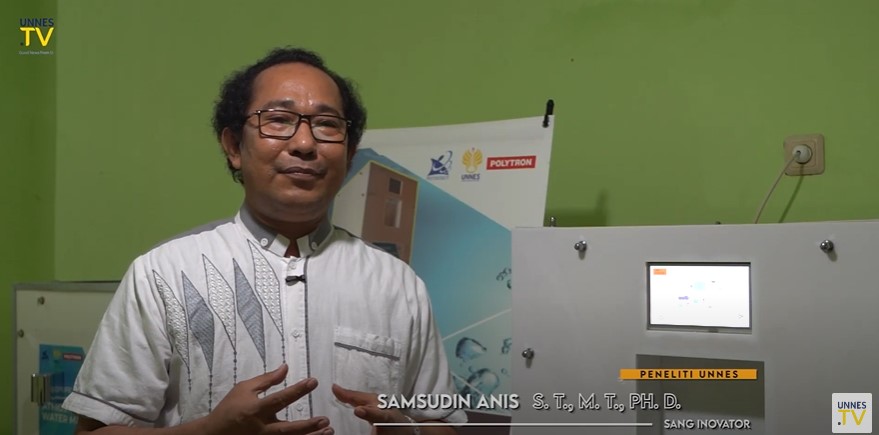
[image: Prof. Samsudin Anis presents the Atmospheric Water Maker (AWM), an innovative technology developed at UNNES to produce clean drinking water from atmospheric moisture through filtration and condensation]
Unlike conventional groundwater extraction, AWM provides an alternative water source without directly drawing water from aquifers, rivers, or lakes. The innovation was developed in response to water scarcity and recurring droughts, particularly in southern Java and eastern Indonesia, where communities face challenges in accessing clean drinking water.
The technology has potential applications in households, offices, public facilities, and healthcare institutions. Through this innovation, UNNES contributes to developing alternative water supply solutions while supporting the conservation of conventional water resources. Universitas Negeri Semarang+2
Satellite-Based Monitoring for Groundwater and Spring Conservation
Beyond technological innovation, UNNES also applies scientific monitoring to support sustainable water extraction in communities surrounding its Gunungpati Campus. Through the Faculty of Mathematics and Natural Sciences (FMIPA), Environmental Science students conduct field-based projects focusing on spring conservation and sustainable water resource management.
On June 2, 2025, FMIPA UNNES reported a field project involving the identification and assessment of springs around the campus. The activities included mapping land-cover changes in groundwater recharge areas using satellite imagery, assessing spring water quality and quantity, and evaluating community-based water supply and distribution systems.
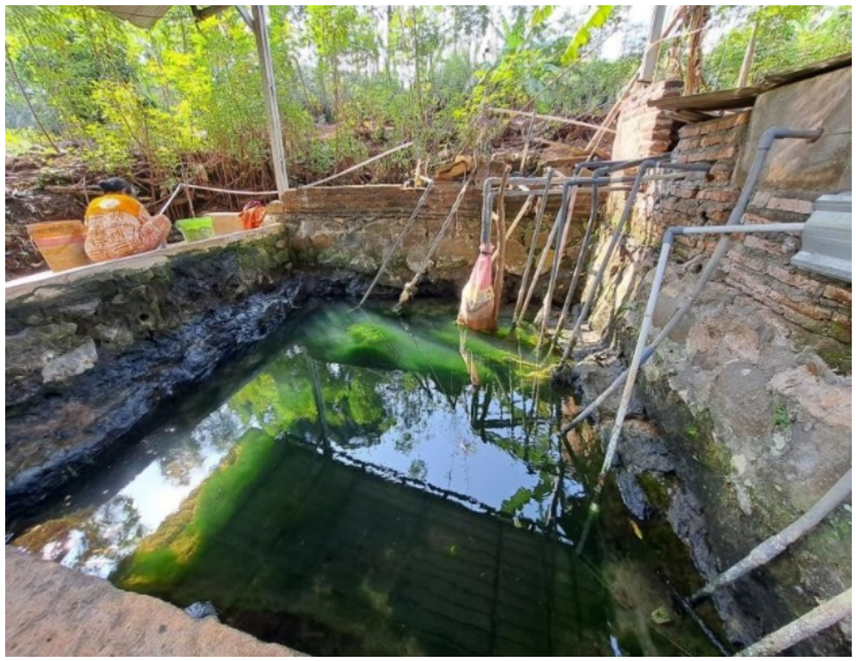
[image: A spring water collection site equipped with a storage pond and piping system near the UNNES Gunungpati Campus]
The monitoring activities focused on Jurang Spring 1, Jurang Spring 2, and Jurang Spring 3. These springs are important sources of clean water for communities surrounding the university. Satellite-based land-cover mapping helps identify changes in vegetation and land use within recharge areas, providing information to support the protection of groundwater replenishment zones.
In addition, students examined the environmental, social, technical, economic, and institutional aspects of community-based water management. Water quality and quantity assessments provide information about the condition of local water sources, while evaluations of distribution systems help identify opportunities to improve the sustainability of water abstraction and supply.
The project also emphasizes protecting spring buffer zones, maintaining surrounding vegetation, and preserving local knowledge related to water conservation. These measures help ensure that water extraction can continue without compromising the ecological functions of spring ecosystems and groundwater recharge areas. Faculty of Mathematics and Natural Sciences.
Supporting Sustainable Water Resource Management
Through the development of AWM and FMIPA’s groundwater monitoring activities, UNNES demonstrates its contribution to sustainable water resource management through both technological innovation and scientific assessment.
These initiatives support efforts to reduce pressure on conventional water sources, improve understanding of groundwater conditions, and encourage responsible water use. They also strengthen the university’s role in extending research-based solutions beyond campus boundaries to benefit surrounding communities.
The initiatives contribute particularly to SDG 6 (Clean Water and Sanitation) by promoting alternative water sources, protecting groundwater recharge areas, and supporting sustainable water management practices.