

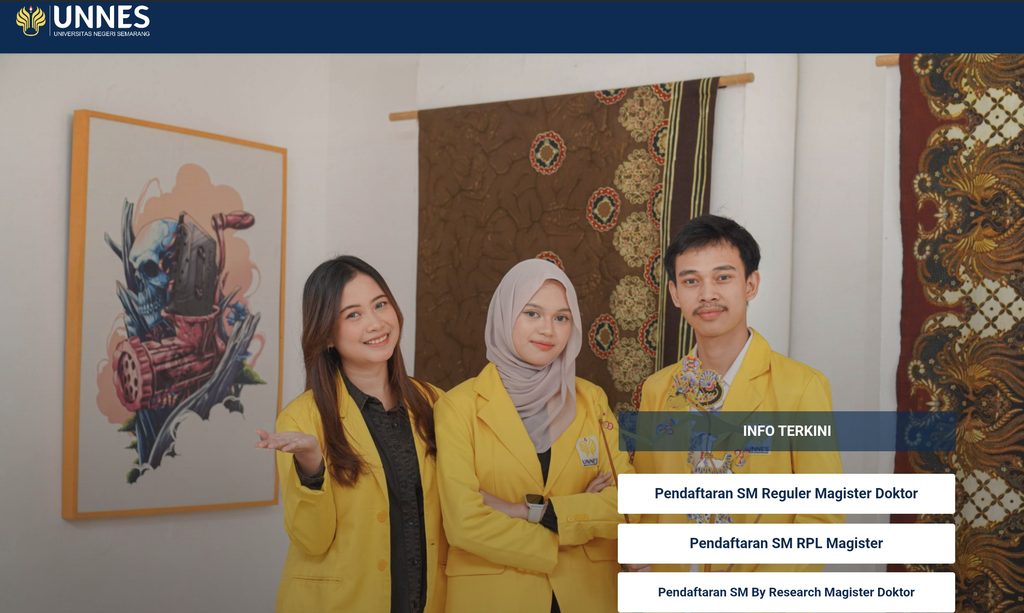
University records document participation in access programmes and provide information on students’ financial backgrounds, entry pathways, gender and disability.
Universitas Negeri Semarang (UNNES) monitors student access to higher education through admissions records, affirmative pathways and targeted scholarships. The reported student totals across these programmes were 2,001 in 2021, 1,766 in 2022, 1,374 in 2023 and 1,969 in 2024. These records document programme participation over successive years and provide a basis for reviewing the reach of affirmative education and financial support.
These records support the university’s assessment of participation among students who may face financial, geographical or other barriers to higher education. UNNES combines information on participation in access programmes with student demographic records to inform its approach to inclusive education.
Monitoring Affirmative and Financial Support Programmes
UNNES records participation in Afirmasi Pendidikan Tinggi (ADik), which supports eligible students from disadvantaged regions, including Papua, Aceh, Sulawesi, West and North Kalimantan, Maluku and East Nusa Tenggara. The university also monitors participation in Kartu Indonesia Pintar Kuliah (KIP-K), which supports students from low-income families.
ADik Programme Recipient Criteria
A. Students from the Papua Region
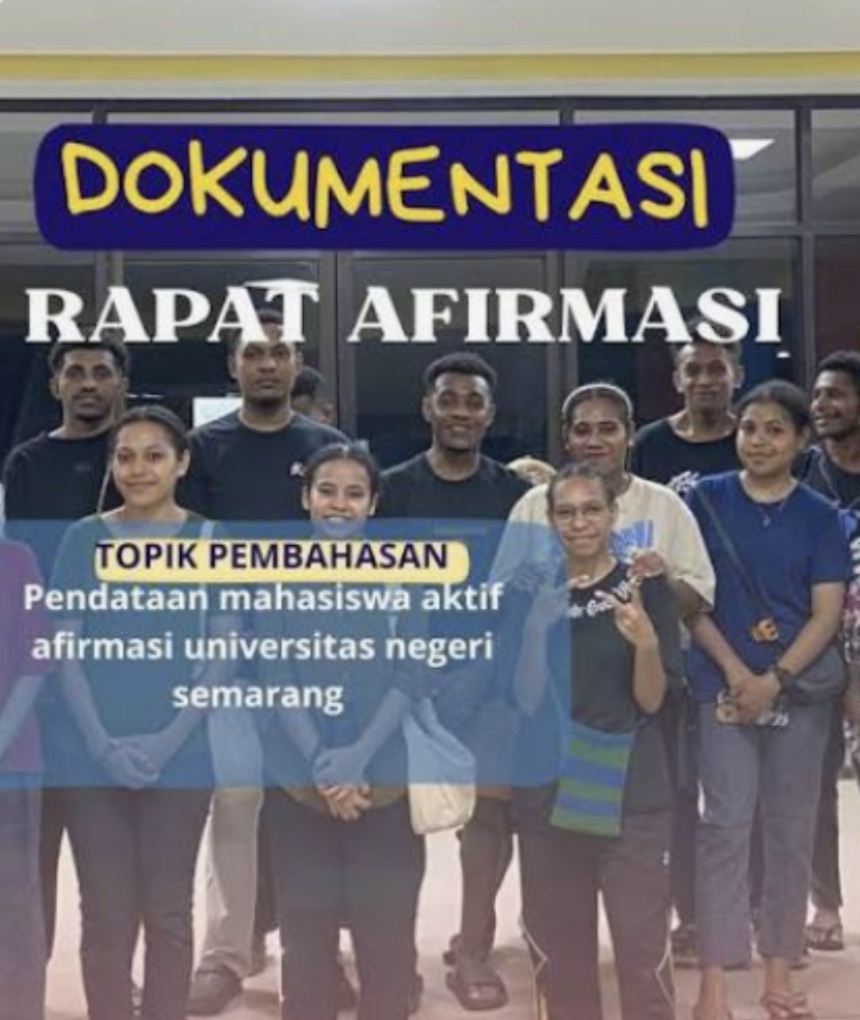
source: Himpunan Mahasiswa/i Afirmasi Pendidikan Tinggi Universitas Negeri Semarang @AFIRMASI ADIK & 3T UNNES (OFFICIAL)
- Be an Indonesian citizen enrolled in a senior high school (SMA), vocational high school (SMK), or equivalent, and either expected to graduate in the current year or have graduated one year earlier.
- The following criteria apply to graduates of SMA, SMK, or equivalent educational institutions:
- Be of Indigenous Papuan origin, as defined under the laws and regulations on special autonomy for the Papua region, and provide a recommendation letter from the relevant provincial and/or district/city education office.
- Be a recipient of the Affirmative Secondary Education Programme (ADEM) for the Papua region, as determined by the Ministry of Primary and Secondary Education, and have studied in Banten, West Java, Central Java, the Special Region of Yogyakarta, East Java, or Bali.
- The provinces in the Papua region are Papua, Central Papua, Highland Papua, South Papua, West Papua, and Southwest Papua.
B. Students from Special 3T Areas
- Be an Indonesian citizen enrolled in an SMA, SMK, or equivalent, and either expected to graduate in the current year or have graduated one year earlier.
- The following criteria apply to graduates of SMA, SMK, or equivalent educational institutions:
- Be from and reside, as shown on the applicant’s identity documents, in a Special Region designated by the Ministry.
- Be a recipient of ADEM for a Special Region, as determined by the Ministry of Primary and Secondary Education, and have studied in Aceh, West Sumatra, Riau, West Kalimantan, North Sulawesi, or East Nusa Tenggara.
- Priority will be given to Special Regions designated by the Ministry of Higher Education, Science, and Technology.
Children of Indonesian Migrant Workers (Repatriation)
- Be an Indonesian citizen enrolled in an SMA, SMK, or equivalent, and either expected to graduate in the current year or have graduated one year earlier.
- The following criteria apply to graduates of SMA, SMK, or equivalent educational institutions:
- Be a child of an Indonesian migrant worker and have graduated from an Indonesian school or a non-formal education institution abroad.
- Be a recipient of ADEM for repatriated students, as determined by the Ministry of Primary and Secondary Education, and have studied in Bali, Banten, the Special Region of Yogyakarta, West Java, Central Java, East Java, South Kalimantan, North Kalimantan, Lampung, West Nusa Tenggara, or South Sulawesi.
- Indonesian schools serving children of Indonesian migrant workers in Malaysia:
- Indonesian School of Kota Kinabalu
- Indonesian School of Johor Bahru
- Indonesian School of Kuala Lumpur
- Indonesian schools serving children of Indonesian migrant workers in Saudi Arabia:
- Indonesian School of Jeddah
- Indonesian School of Makkah
- Indonesian School of Riyadh
ADik Programme Eligibility Requirements
(Students from the Papua region, ADEM recipients, Special Regions, and repatriated children)
- Register in the ADik Scholarship system at adik.kemdiktisaintek.go.id and provide:
- Population Identification Number (NIK)
- National Student Identification Number (NISN)
- National School Identification Number (NPSN)
- Pass the new-student admission selection at a higher education institution designated by the Ministry of Higher Education, Science, and Technology, through either the ADik Affirmative Scholarship Selection or the National New Student Admissions Selection (SNPMB): the National Selection Based on Achievement (SNBP), the Computer-Based Test–National Selection Based on Test (UTBK-SNBT), or an independent institutional selection.
- Submit a handwritten personal statement prepared by the applicant and uploaded to the ADik Scholarship system during registration, using the template available at adik.kemdiktisaintek.go.id.
- Submit a parent’s or guardian’s consent letter and agree to pursue higher education.
- Submit a handwritten profile or personal description in the required format.
- Not be receiving another education grant or scholarship funded by the State Budget (APBN).
- Agree to sign a performance agreement for scholarship recipients.
- Have a minimum average report-card score of 75 in all subjects for each semester.
- Have a minimum average report-card score of 75 in six subjects relevant to the applicant’s intended field of study.
- Candidates for the KIP Kuliah Affirmative Selection will be ranked based on their scores in the following six subjects:
- Science track: Mathematics, Indonesian Language, English, Chemistry, Physics, and Biology.
- Social Sciences track: Mathematics, Indonesian Language, English, Sociology, Economics, and Geography.
- Language track: Mathematics, Indonesian Language, English, Indonesian Literature, Anthropology, and one foreign language.
- Vocational high school (SMK): Mathematics, Indonesian Language, English, and Vocational Competency (theory and practice).
- Applicants may select up to two higher education institutions and up to two study programmes at each institution.
- The selected institutions and study programmes indicate the applicant’s order of preference.
- If the applicant is not admitted to the selected study programmes or institutions, they may authorize the selection committee to assign them to a study programme and institution. Applicants must be Indonesian citizens enrolled in an SMA, SMK, or equivalent, and either expected to graduate in the current year or have graduated one year earlier.
ADik Programme Admission Pathways
- SNPMB pathway: Students recommended by a provincial or district/city education office, an ADEM Coordinator, and an Education and Culture Attaché (Atdikbud), who participate in the SNBP or UTBK-SNBT selection.
- ADik independent selection pathway: Students recommended by a provincial or district/city education office, an ADEM Coordinator, and an Education and Culture Attaché (Atdikbud).
ADik Programme Application Procedures
- Applications for the ADik programme are submitted through the Higher Education Affirmation Information System (SIM ADik) at adik.kemdiktisaintek.go.id.
- Applicants through the SNPMB and ADik independent selection pathways are registered online through SIM-ADik by the relevant district/city or provincial government. Offline registration is available to districts facing specific constraints.
- Applicants through the SNPMB pathway must participate in and pass the SNBP or UTBK-SNBT selection.
ADik Admission Stages
- After receiving the quota, the district/city or provincial education office selects schools to nominate prospective ADik recipients, in coordination with the provincial education office and the schools.
- Students complete the application documents with assistance from their schools. The schools then submit all application documents to the relevant district/city or provincial education office.
- The district/city or provincial education office registers applicants through SIM-ADik, online or offline where specific constraints apply, in accordance with the quota.
- The ADik implementation team of PPAPT, Ministry of Higher Education, Science, and Technology, verifies and validates the application documents.
- The head of the higher education institution, assisted by the ADik implementation team of PPAPT, Ministry of Higher Education, Science, and Technology, selects ADik recipients. The head of the institution determines which students receive the ADik scholarship.
- The head of PPAPT, Ministry of Higher Education, Science, and Technology, formally designates the new students who will receive ADik scholarships.
KIP-K for Higher Education
KIP Kuliah (KIP-K) programme provides tuition and living-cost assistance to prospective students from low-income families who have strong academic potential, enabling them to pursue studies at public or private higher education institutions (PTN/PTS).
- Be a senior high school or equivalent graduate from the current year or within the preceding two years.
- Demonstrate strong academic potential and financial need, supported by valid documentation.
- Pass the new student admission selection.
- Be admitted to a public or private higher education institution in a study programme accredited A/Excellent or B/Very Good, or accredited C, subject to consideration.
Required Documents
- National Identity Card (KTP)
- Family Card (KK)
- Proof of financial need (KIP, KKS, DTKS record, or Certificate of Financial Hardship/SKTM)
- Proof of graduation from senior high school or equivalent
- Proof of admission to a higher education institution
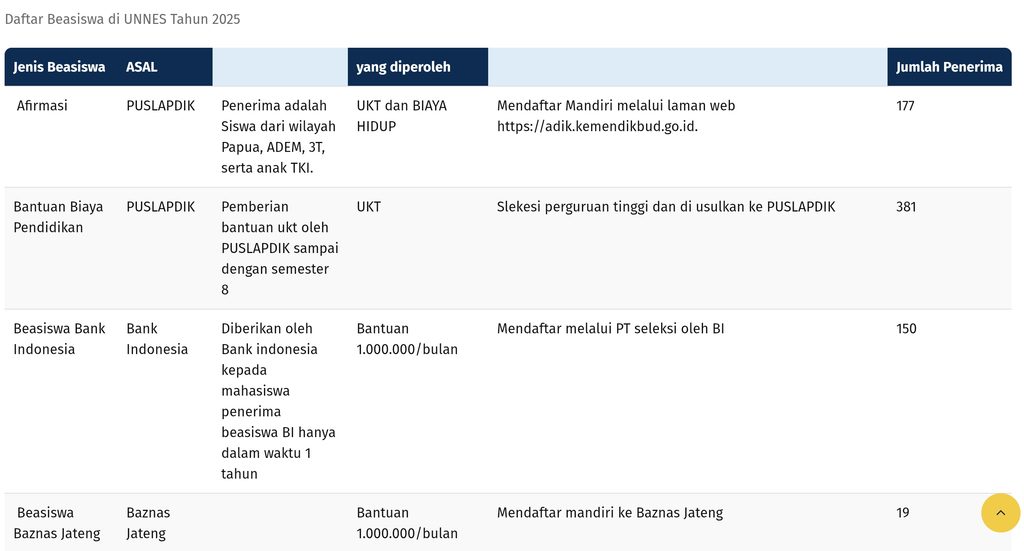
Recording Alternative Pathways and Targeted Scholarships
In 2025, UNNES also offered Recognition of Prior Learning (RPL) and scholarships for Islamic boarding school students, with 1,728 students reported across programmes.
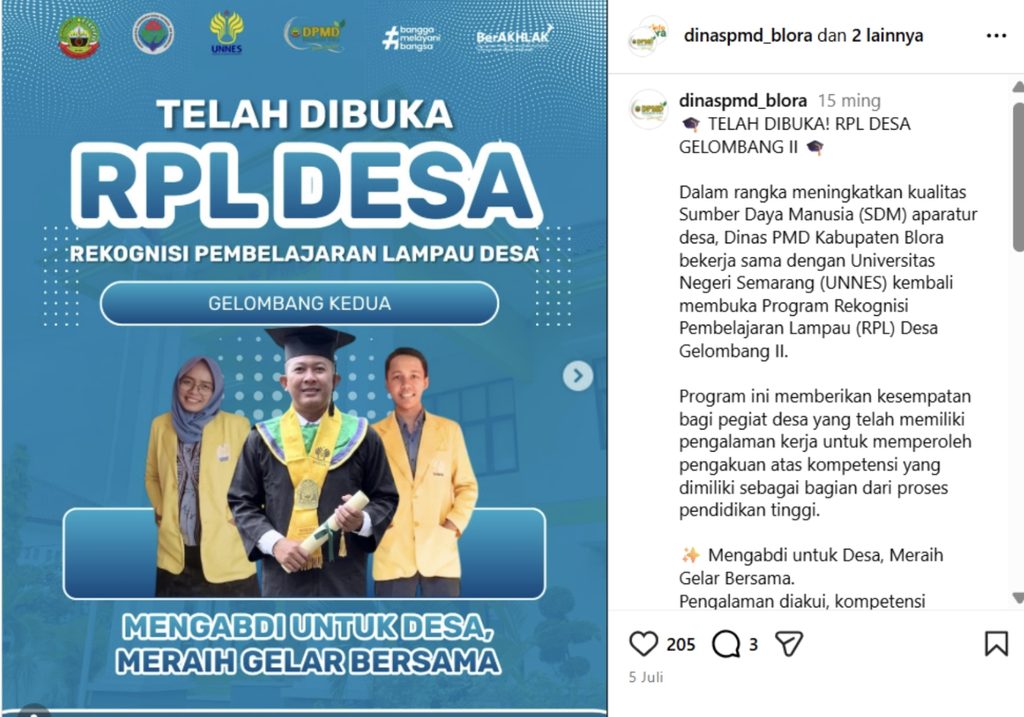
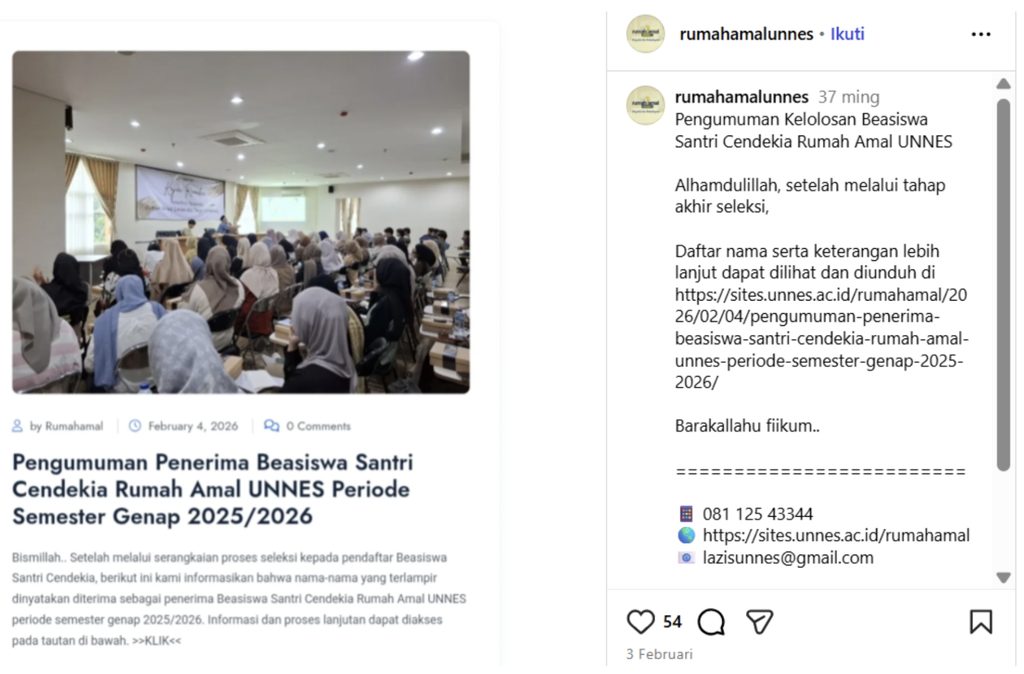
RPL provides a pathway that recognises prior learning and experience, supporting access for students whose educational journeys differ from conventional entry routes. Scholarships for Islamic boarding school students broaden access for applicants from different educational backgrounds.
Recording participation in these programmes helps UNNES review the reach of alternative pathways and targeted support.
Tracking Disability and Gender Representation
UNNES’s reported student records include 364 students with disabilities. In 2025, 8 students received disability scholarships, documenting targeted financial assistance for this group.
The university also records student participation by gender, with 74,366 female students
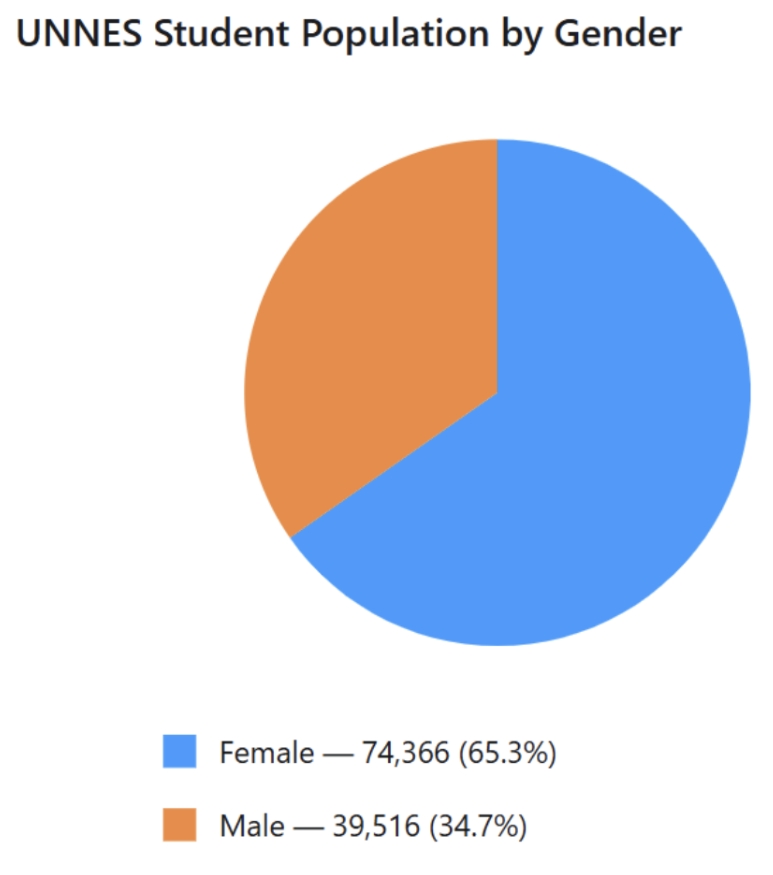
These figures provide a basis for examining gender representation. Female students outnumber male students in these records, so the figures do not indicate that women are underrepresented across the university.
Informing Inclusive Access through Institutional Records
Admissions records, programme participation data and demographic information provide complementary perspectives on access to UNNES. Affirmative pathways document participation among students from disadvantaged regions, financial assistance records identify supported students from low-income households, and RPL records capture participation through an alternative educational pathway.
Together, these records support institutional monitoring of student access and representation and can inform the development of admissions opportunities, scholarships and student support services.