

Semarang, Indonesia — Universitas Negeri Semarang (UNNES) provides educational programmes on water management and conservation for local communities through school outreach and village-based community service. These programmes introduce rainwater harvesting, water reuse for plant irrigation, and soil infiltration practices, helping participants understand how everyday water management relates to groundwater availability and freshwater ecosystem protection.
Through collaboration with schools, village governments, and residents, UNNES connects academic knowledge with local water challenges. Activities at SMP Negeri 24 Semarang and Desa Wiru demonstrate the university’s approach to delivering practical conservation education to communities beyond campus.
Rainwater Harvesting Education for the School Community
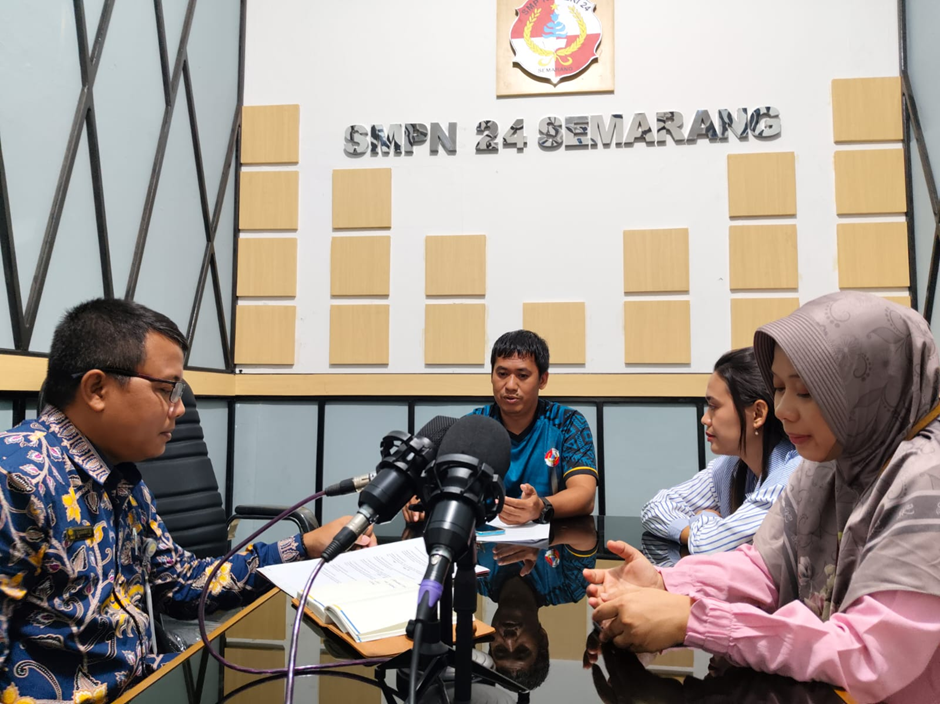
The Conservation Task Force of the Faculty of Social and Political Sciences (FISIP) UNNES introduced rainwater harvesting at SMP Negeri 24 Semarang on 4 September 2025. Held at the school’s podcast studio, the educational discussion explored rainwater collection and reuse and encouraged understanding of how a school-scale harvesting system could support water conservation.
The session introduced a system that channels rainwater from rooftops through gutters and pipes, filters it, and stores it for appropriate non-potable uses, including toilet flushing and plant irrigation. It also explained how excess rainwater can be directed into infiltration facilities to support groundwater recharge. These explanations connected the design of water infrastructure with practical decisions about water use within the school environment.
Beyond introducing collection and storage techniques, the activity helped the school community understand the relationship between rainfall, groundwater, and water demand. Rainwater reuse was presented as an approach to conserving existing supplies, while infiltration illustrated how managing rainfall at its source can support the movement of water into the soil.
This educational focus links water-saving practices with awareness of the wider water cycle. It provides a foundation for understanding how water use and the responsible management of runoff affect the resources that sustain freshwater environments.
Soil and Water Conservation Education in Desa Wiru
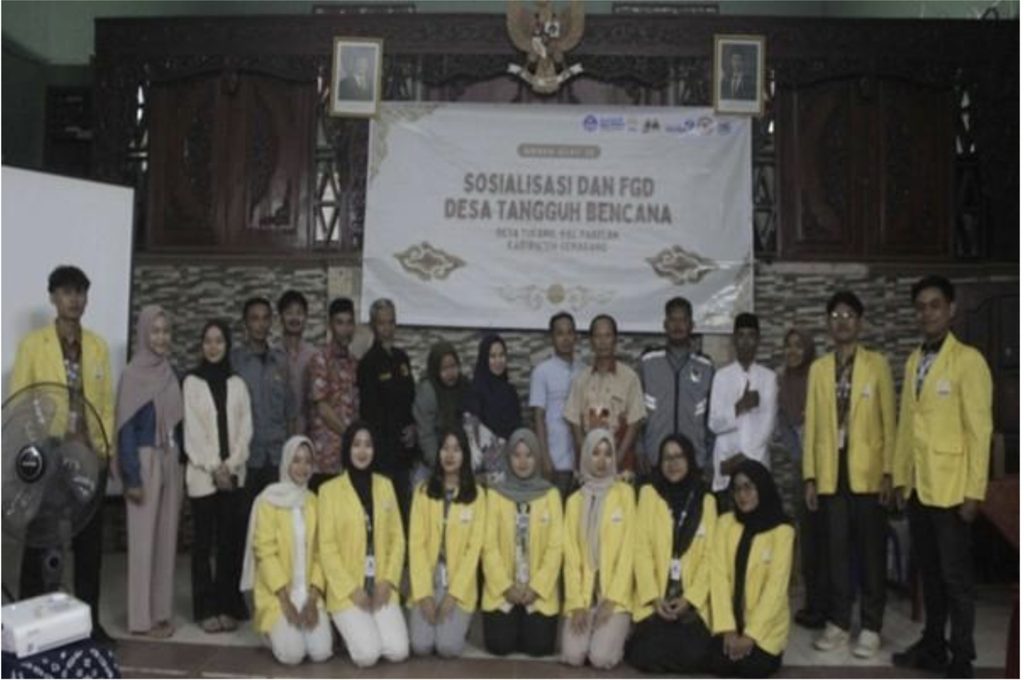
UNNES extended its community education through a FISIP lecturer-led service initiative in Desa Wiru, Bringin District, Semarang Regency, during 2025. Initial field surveys and coordination with the village government took place on 27 May 2025, establishing a basis for activities responsive to local conditions.
The programme addressed water shortages, particularly in Dusun Jrebeng, which experienced more severe drought conditions than other hamlets in the village. Its educational focus covered rainwater harvesting, biopore infiltration holes, and alternative water sources, connecting conservation knowledge with residents’ needs during periods of limited rainfall.
Rainwater harvesting education introduced the collection of rainfall as an alternative water resource. Alongside this, explanations of biopore infiltration holes showed how small infiltration points help water enter the soil and reduce surface runoff. Presenting these approaches together helped connect the conservation of surface water with the replenishment of groundwater.
The initiative also placed soil management within the discussion of water conservation. Maintaining infiltration and managing runoff are relevant to limiting the movement of soil particles into waterways. In this way, the programme linked household and village water practices with the condition of the surrounding environment.
Connecting Community Learning with Freshwater Ecosystem Protection
The school and village programmes bring complementary perspectives to freshwater education. At SMP Negeri 24 Semarang, learning centred on collecting and reusing rainwater within an educational setting. In Desa Wiru, conservation education responded to drought and the need to improve soil infiltration and access to alternative water sources.
Together, these activities demonstrate UNNES’s provision of community education on water conservation, water management, and rainwater use for irrigation. They help participants understand the connections between rainfall, soil, groundwater, and surface water, making freshwater resource management relevant to everyday practices.
By combining academic outreach with local participation, UNNES promotes knowledge that supports responsible water use and care for aquatic environments. These efforts reflect its commitment as a Conservation University to strengthening community capacity to manage water resources and protect the ecosystems connected by the water cycle.