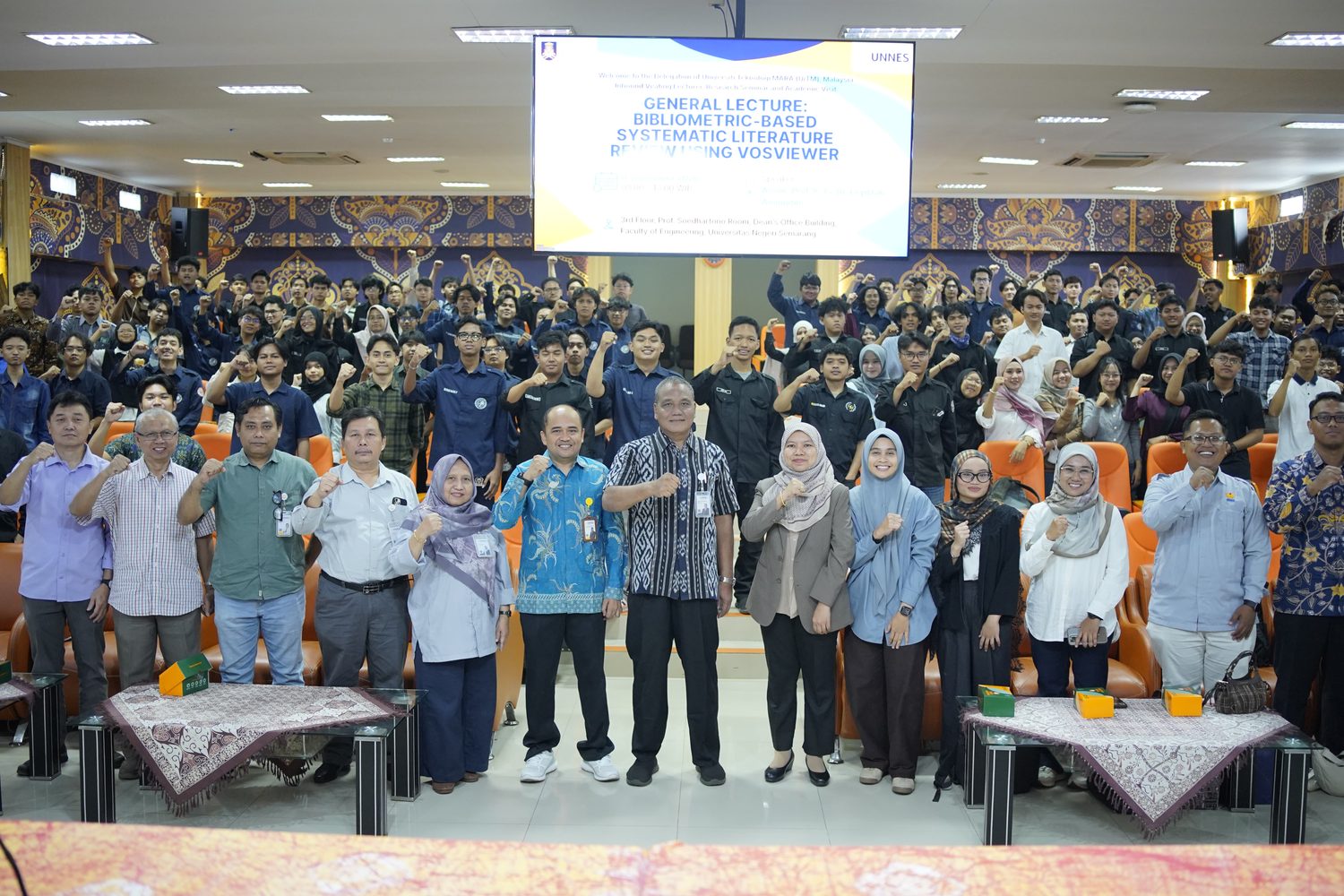
UNNES and UiTM Malaysia Strengthen Research Literacy Through International Public Lecture

Universitas Negeri Semarang > Sustainable Development Goals Universitas Negeri Semarang > Unit > FT > UNNES and UiTM Malaysia Strengthen Research Literacy Through International Public Lecture

The Faculty of Engineering at Universitas Negeri Semarang (FT UNNES) welcomed a delegation from Universiti Teknologi MARA (UiTM) Malaysia for an international academic programme on September 8–9, 2026. Held at the FT UNNES Dean’s Office building, the visit brought together a public lecture, a research seminar, and an academic visit to encourage the exchange of knowledge between the two institutions.

The UiTM delegation included Assoc. Prof. Ir. Ts. Dr. Eeydzah Aminudin and her team. They were welcomed by the Dean of FT UNNES, Prof. Dr. Wirawan Sumbodo, M.T., along with the faculty’s vice deans and study programme coordinators. Their participation provided an opportunity for lecturers, students, and faculty leaders to engage with international academic perspectives in a shared learning setting. The activities formed part of FT UNNES’s efforts to expand international engagement in education and research.

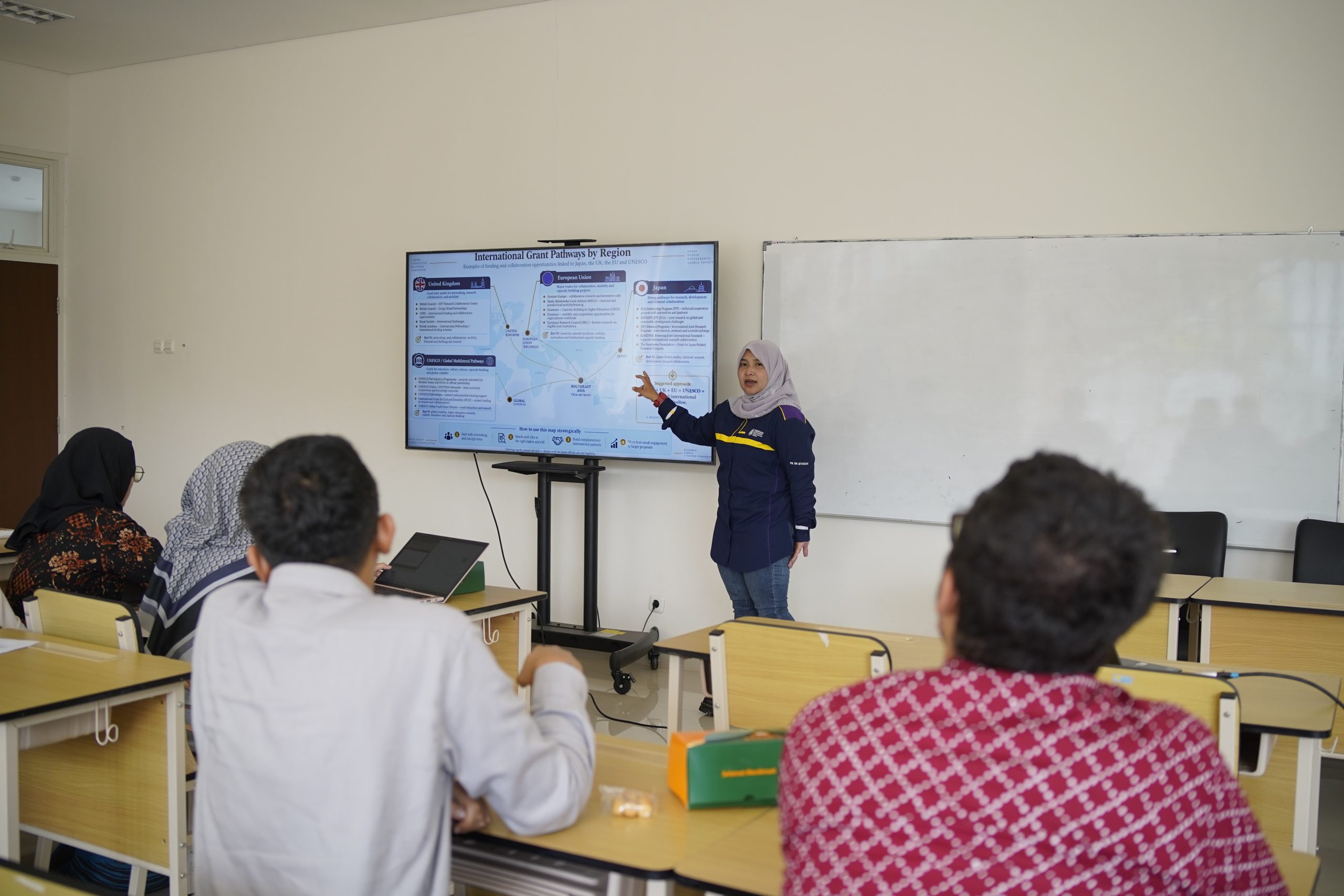
A central part of the programme was a public lecture titled “Bibliometric-Based Systematic Literature Review Using VOSviewer.” The session introduced participants to the use of VOSviewer in examining academic literature. For students and lecturers developing research projects, the topic offered a way to consider how published studies can be explored systematically before formulating a research question or identifying an area for further investigation.

Bibliometric analysis can help researchers examine patterns across publications, such as recurring topics and connections among areas of study. In the context of a literature review, these patterns can provide a broader view of how a field has developed. The lecture therefore connected a practical research tool with a wider academic skill: reading existing scholarship carefully and using it to guide future work.

Participants responded actively during the session. Students raised questions about VOSviewer’s functions and how they might apply the tool in their own work at UNNES. Their discussion showed interest in moving beyond an introduction to the software toward its possible use in research practice. The visiting lecturer programme also gave participants a chance to learn from researchers working in a different university setting.

The public lecture was one element of a wider two-day exchange. Alongside the lecture, the research seminar and academic visit created space for interaction between the UNNES and UiTM delegations. Such meetings can help both institutions identify shared academic interests and consider opportunities for continued cooperation in teaching and research.
The programme relates directly to Sustainable Development Goal (SDG) 4: Quality Education. By giving students and lecturers access to an international learning experience and a research methods session, FT UNNES sought to strengthen the knowledge and skills available within its academic community. The emphasis on research literacy is especially relevant for participants preparing literature reviews, proposals, theses, or scholarly publications.

The visit also supports SDG 17: Partnerships for the Goals, which recognises the value of cooperation in advancing sustainable development. In this case, the partnership took a concrete form through the exchange of academic expertise and direct engagement between representatives of UNNES and UiTM Malaysia. The event may serve as a foundation for further joint activities, although any future projects would need to be developed and agreed upon by the two institutions.

Through the visiting lecturer session, research seminar, and academic visit, FT UNNES and UiTM Malaysia demonstrated how an international partnership can contribute to everyday academic work. The two-day programme gave participants an opportunity to explore a research method, ask questions directly, and build connections that could support future educational and research collaboration.
Related Posts

Leave a Reply

* Kode Akses Komentar:

* Tuliskan kode akses komentar diatas:

GDPR

  • Privacy Policy

Privacy Policy

At unnes.ac.id, the privacy of our visitors is of extreme importance to us. This privacy policy document outlines the types of personal information that is received and collected by unnes.ac.id and how it is used.

Log Files

Like many other Web sites, unnes.ac.id makes use of log files. The information inside the log files includes internet protocol (IP) addresses, type of browser, Internet Service Provider (ISP), date/time stamp, referring/exit pages, and number of clicks to analyze trends, administer the site, track user’s movement around the site, and gather demographic information. IP addresses and other such information are not linked to any information that is personally identifiable.

Cookies

unnes.ac.id uses cookies to store information about visitors’ preferences, to record user-specific information on which pages the site visitor accesses or visits, and to personalize or customize our web page content based upon visitors’ browser type or other information that the visitor sends via their browser.

Third-party ad servers or ad networks use technology in their respective advertisements and links that appear on unnes.ac.id and which are sent directly to your browser. They automatically receive your IP address when this occurs. Other technologies (such as cookies, JavaScript, or Web Beacons) may also be used by our site’s third-party ad networks to measure the effectiveness of their advertising campaigns and/or to personalize the advertising content that you see on the site.

unnes.ac.id has no access to or control over these cookies that are used by third-party advertisers.

You should consult the respective privacy policies of these third-party ad servers for more detailed information on their practices as well as for instructions about how to opt-out of certain practices. unnes.ac.id’s privacy policy does not apply to, and we cannot control the activities of, such other advertisers or web sites.

If you wish to disable cookies, you may do so through your individual browser options. More detailed information about cookie management with specific web browsers can be found at the browsers’ respective websites.

Consent

By using our website, you hereby consent to our privacy policy and agree to its terms.

Update

This Privacy Policy was last updated on: 2023-02-14. Should we update, amend or make any changes to our privacy policy, those changes will be posted here.

Contact Us

If you have any questions, comments, or concerns about our Privacy Policy or our practices with regards to your personal information, please feel free to contact us through the contact form on our website or by emailing us at humas[at]mail.unnes.ac.id.

This Privacy Policy is intended as a general guide to our practices in collecting and using information. If there is any inconsistency between this Privacy Policy and the terms of the Service Agreement or any other terms that may apply to specific services you use, then those specific service terms shall apply.

Terms of Use

By using our website, you agree to abide by this Privacy Policy. If you do not agree with this Privacy Policy, please do not use our website. We reserve the right to update this Privacy Policy from time to time without prior notice. Please review our Privacy Policy periodically to check for changes. Your continued use of our website following the posting of changes to this Privacy Policy means that you accept the changes.

Thank you for reading our Privacy Policy. We are committed to protecting the privacy of our website visitors and will continue to update our Privacy Policy to ensure optimal protection.