A university education involves more than attending lectures, conducting research, and pursuing academic achievement. Campus life also gives students opportunities to encounter different experiences, question assumptions, and learn how to treat others with respect. At the Faculty of Social and Political Sciences of Universitas Negeri Semarang (FISIP UNNES), these lessons are part of an effort to make disability inclusion a lived experience within the academic community.
One way the faculty encourages this learning is by creating opportunities for students to meet and interact with people with disabilities. These encounters bring conversations about accessibility and equal participation closer to students’ everyday lives. They also allow students to learn directly from people whose perspectives may be missing from classroom discussions.
Dr. sos. Puji Lestari, M.Si., Vice Dean for Business, Research, and Cooperation at FISIP UNNES, sees such experiences as an important part of higher education. She believes universities have a responsibility to help students understand disability through the rights, abilities, and aspirations of people with disabilities, rather than through assumptions about what they cannot do.
“What we need to build is not only sympathy, but also an awareness that people with disabilities have the same rights, opportunities, and space to learn, create, and contribute,” Puji said.
That change in perspective matters because an inclusive campus depends on more than its physical design. Ramps, accessible buildings, and other facilities are essential, but they are only part of the experience. Students and visitors also need to be able to access information, take part in activities, and feel welcome in the social and academic life of the university.
For example, an opportunity to join a campus event has limited value if information about the event is difficult to access or if participants face assumptions about their abilities. Inclusion therefore calls for attention to the way activities are communicated, organised, and experienced. It also asks members of the campus community to listen to people with disabilities about the barriers they encounter.
FISIP UNNES encourages students to develop this understanding through direct interaction. Meeting people with disabilities gives students a chance to ask questions, hear individual experiences, and reflect on how everyday attitudes can either support or limit participation. In this way, inclusion becomes more than a term discussed in a lecture: it becomes something students can observe and practise.
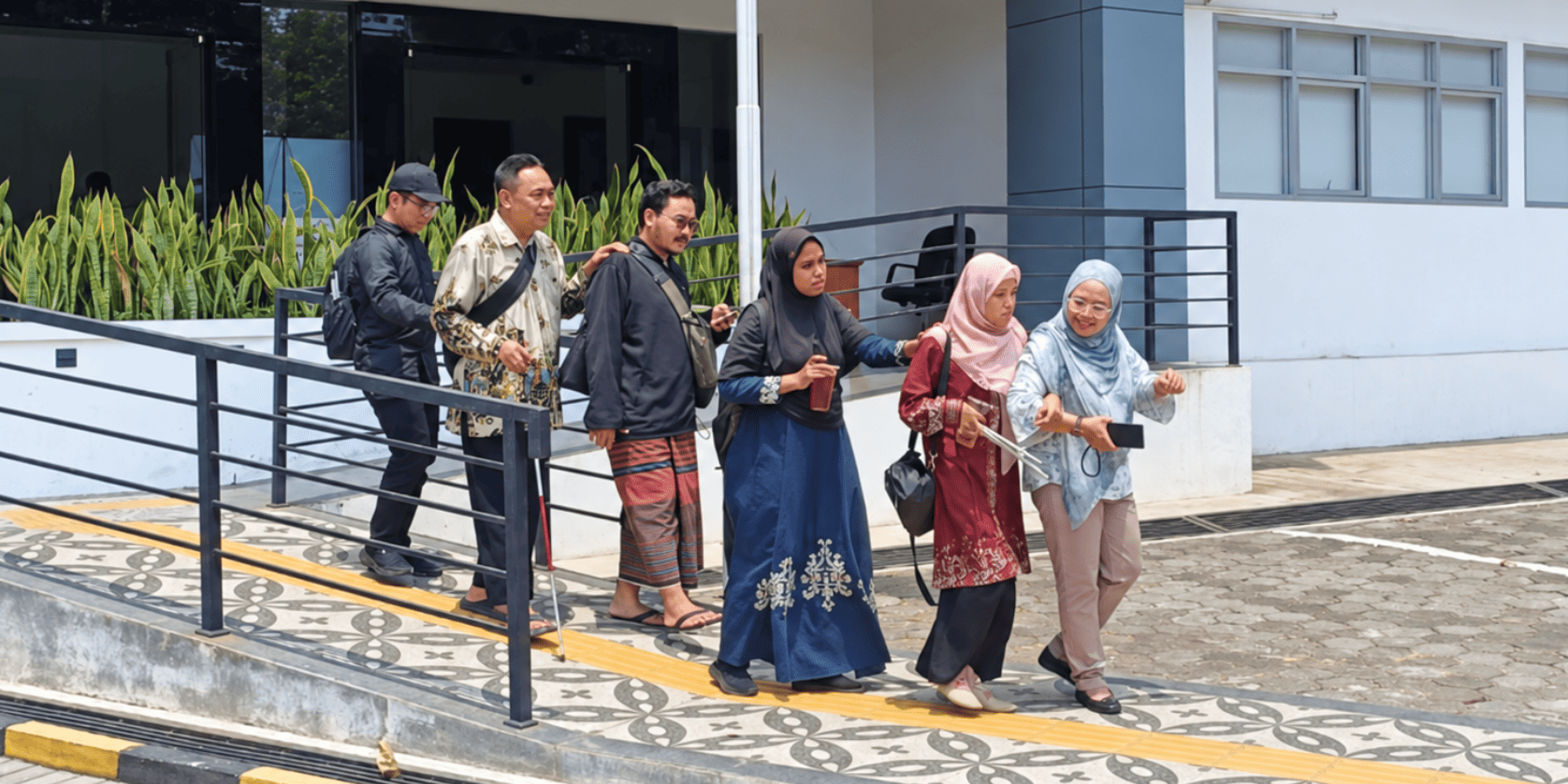
The faculty’s engagement includes Komunitas Sahabat Mata in Semarang, a community involved in education, empowerment, and creative development for people with visual disabilities. Its presence creates an opportunity for students to learn about both the challenges and the contributions of people with disabilities from those with direct experience.
Basuki, Chair of the Sahabat Mata Foundation, emphasised that people with disabilities need more than assistance. They also need opportunities to demonstrate their abilities, develop their potential, and participate on equal terms. A supportive environment can make a meaningful difference to their opportunities in education, social life, and creative work.
This perspective invites students to think carefully about what support should achieve. Assistance may address an immediate need, while an inclusive environment makes room for people to make choices, take part, and contribute in ways that reflect their own interests and strengths. Listening to disability communities is an important part of understanding that difference.
Interaction with Sahabat Mata also helps make questions of accessibility and equality more visible within campus life. Students can consider how information is shared, how people are welcomed into a group, and whether activities allow everyone to participate. These are practical questions that affect the experience of belonging at a university.
Puji believes higher education institutions should be places where people feel safe, valued, and able to participate regardless of physical condition or background. Building such a campus requires facilities, but it also requires a culture of mutual respect and a willingness to challenge stigma.
Through its engagement with the disability community, FISIP UNNES is encouraging students to see inclusion as a shared responsibility. The aim is for students to carry that understanding into their studies, their relationships, and the wider communities in which they will live and work.