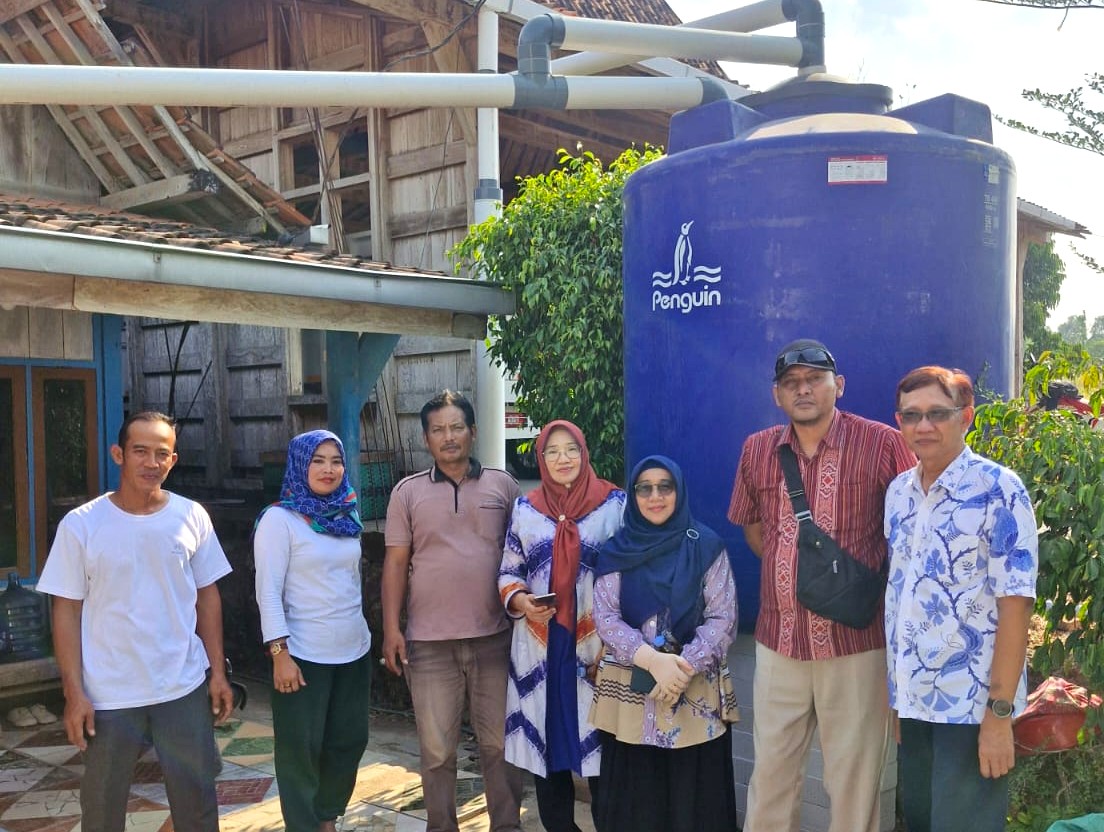
Universitas Negeri Semarang (UNNES) measures and monitors its campus water supply and consumption to support responsible water management. By recording treated water availability, daily usage, and the number of users, the university evaluates water demand and informs the management of water resources across campus.
Recording Water Supply and Daily Usage
During the reporting period, UNNES recorded a treated water supply of 189,379 liters per day, serving approximately 15,674 students, lecturers, and staff. Daily water consumption reached 155,326 liters, equivalent to 155.326 cubic meters, representing 82.02% of the available treated water supply.
Based on an estimated 240 active campus days, this daily consumption corresponds to approximately 37,278 cubic meters annually. This figure represents an estimate based on daily usage, rather than a measured total for the full calendar year.
Monitoring water availability alongside consumption provides a basis for assessing campus needs and planning water distribution.
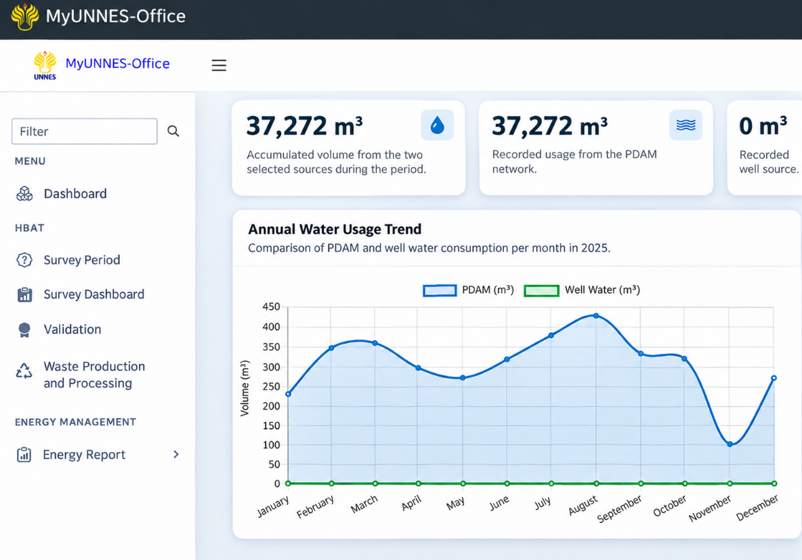
Tracking Changes in Campus Water Demand
Compared with the previous reporting period, daily treated water supply decreased from 190,841 to 189,379 liters, a reduction of 0.77%. Meanwhile, the average number of users increased from 15,534 to 15,674, or 0.90%.
Daily consumption increased by 0.91%, from 153,926 to 155,326 liters. Consequently, the proportion of available treated water utilized rose from 80.66% to 82.02%, an increase of 1.36 percentage points.
These figures demonstrate that a greater share of the available treated water was used to meet campus needs. Tracking these changes enables UNNES to assess demand in relation to supply and respond to changes in campus activity.
Treating Water for Drinking and Sanitation
UNNES applies water treatment technologies according to the intended use. Ozonation is used to treat water for drinking purposes, while filtration systems provide treated water for sanitation.
Water treatment and distribution infrastructure supports daily activities across academic and administrative facilities. Monitoring supply and usage complements these treatment processes by helping the university assess the availability of water for different operational needs.
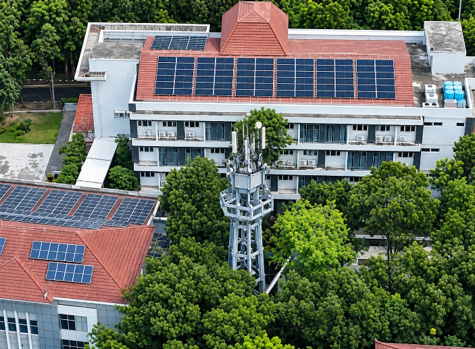
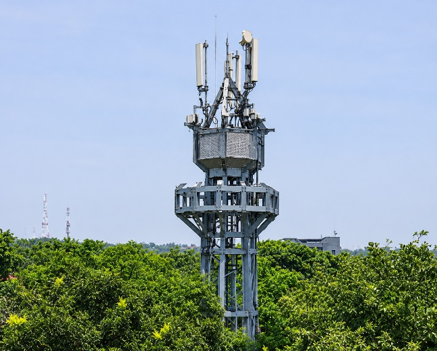
UNNES water tower in the Rectorate Zone, part of the university’s campus water supply infrastructure.
Promoting Water Conservation Across Campus
Alongside monitoring and treatment, UNNES promotes responsible water use through water-efficient facilities and awareness initiatives involving students, lecturers, and staff. These efforts encourage the campus community to reduce unnecessary consumption and participate in water conservation.
By integrating water consumption records, treatment processes, and conservation practices, UNNES supports informed management of campus water resources and contributes to Sustainable Development Goal 6: Clean Water and Sanitation.