Universitas Negeri Semarang (UNNES) has wastewater treatment processes in place to manage wastewater generated by campus activities before discharge. Through dedicated treatment facilities, the university applies filtration, sedimentation, and neutralization to reduce potential pollutants. Complementary water recycling initiatives support the reuse of water for non-potable purposes.
Operating Wastewater Treatment Facilities
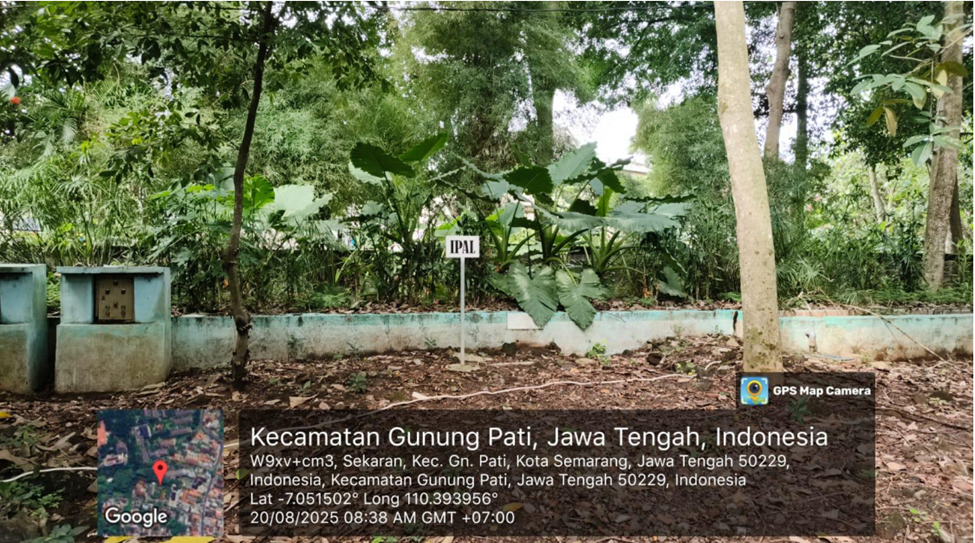
UNNES operates wastewater treatment facilities at the Faculty of Mathematics and Natural Sciences (FMIPA), the Faculty of Engineering (FT), and the Entrepreneurship Building, which also houses the university’s Health Service Center.
These facilities provide infrastructure for managing wastewater, particularly from laboratory activities. Treating wastewater before discharge forms part of the university’s approach to preventing water pollution and minimizing the environmental impacts of campus operations.
Applying Filtration, Sedimentation, and Neutralization
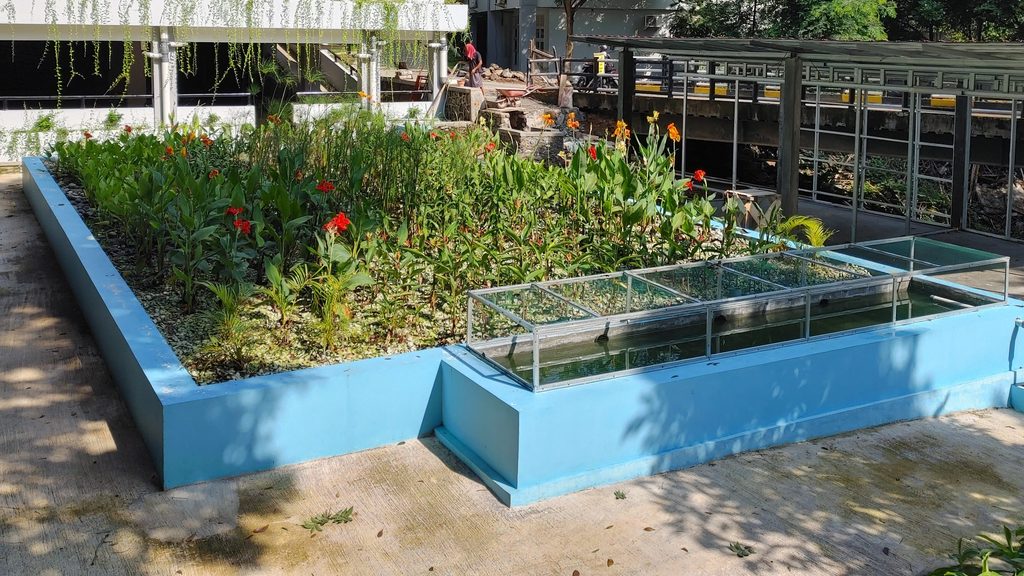
The wastewater treatment process involves filtration, sedimentation, and neutralization. Filtration removes suspended particles, while sedimentation allows settleable solids to separate from the water. Neutralization adjusts acidity or alkalinity to support further management and discharge.
Together, these processes address physical and chemical characteristics of wastewater, helping reduce potential pollutants before the treated water leaves the facilities. This approach supports responsible management of wastewater generated by teaching, research, and other campus activities.
Recovering Ablution Water for Irrigation
Alongside wastewater treatment, UNNES collects and treats ablution water from campus mosques. The collected water passes through filtration and is reused for non-potable purposes, particularly garden and landscape irrigation.
This practice provides a further use for water that would otherwise be discharged and helps reduce reliance on freshwater for maintaining campus green spaces.
Recirculating Swimming Pool Water
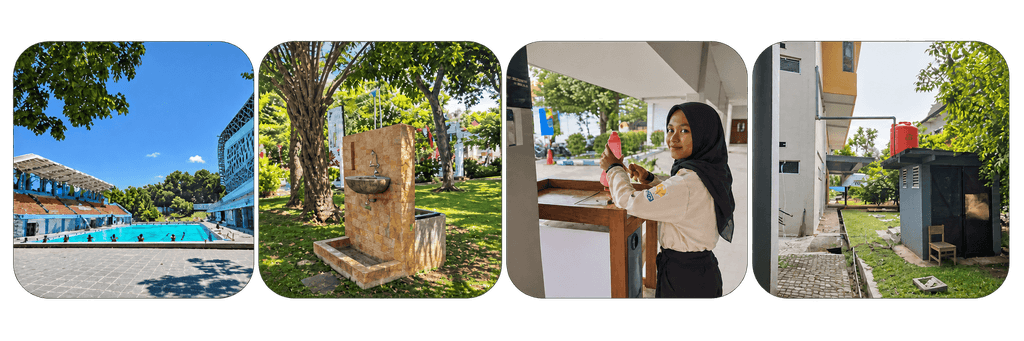
UNNES also operates a filtration-based water recycling system for its swimming pool. The system allows water to be filtered and recirculated, helping maintain water quality and reducing the need for frequent replacement.
This recirculation system complements the university’s wastewater management initiatives by supporting more efficient use of water within campus facilities.
Reducing Freshwater Demand through Water Reuse
Through wastewater treatment, ablution water reuse, and swimming pool recirculation, UNNES helps reduce demand for freshwater while managing wastewater more responsibly. Reusing filtered ablution water for irrigation provides an alternative water source for campus green spaces, while pool water recirculation reduces the need for frequent replacement. Together, these practices support water conservation and pollution prevention. Recording the volume of water treated and reused would enable the university to quantify these benefits in cubic meters and assess their contribution to reducing overall campus water demand.