
UNNES Implements Processes to Prevent Water Pollution

Universitas Negeri Semarang (UNNES) implements processes to prevent polluted water from entering campus water systems through wastewater treatment, hazardous waste segregation, laboratory safety practices, and water quality monitoring. These measures address potential contamination from campus activities and support the management of risks associated with laboratory accidents and incidents.

Establishing an Institutional Framework for Water Protection

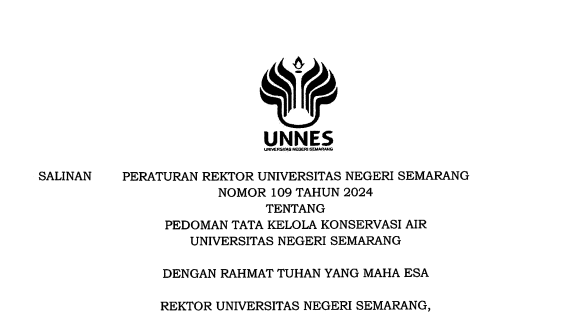
UNNES’s water conservation governance is supported by Rector’s Regulation No. 109 of 2024 on Guidelines for Water Conservation Governance at Universitas Negeri Semarang. This regulation provides the institutional framework for managing and protecting campus water resources.

Through this framework, wastewater management and water resource protection form part of the university’s responsibility to maintain a healthy campus environment and safeguard surrounding ecosystems.
Treating Wastewater Before Discharge
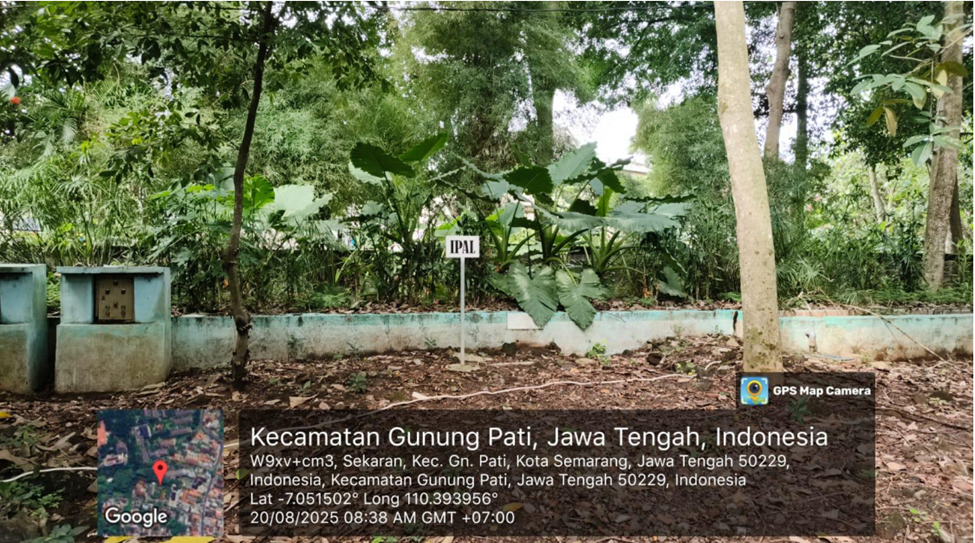
UNNES operates wastewater treatment facilities at several campus locations, including the Faculty of Mathematics and Natural Sciences (FMIPA), the Faculty of Engineering (FT), and the Entrepreneurship Building.

Treatment processes include filtration, sedimentation, and neutralization to reduce potential pollutants before discharge. At FMIPA, two wastewater treatment installations manage wastewater generated by faculty activities, including laboratory operations. Wastewater is directed to appropriate treatment according to its characteristics, helping prevent untreated effluent from entering the surrounding environment.

Managing Hazardous Waste and Laboratory Incident Risks

Pollution prevention also involves separating hazardous waste from ordinary wastewater. At FMIPA, hazardous laboratory waste is collected, segregated according to its characteristics, and placed in appropriate storage facilities. Waste requiring external management is transferred to authorized third-party operators.

These arrangements help prevent hazardous substances from entering ordinary wastewater streams. Laboratory safety training complements these measures by preparing personnel to handle chemicals, manage waste, use protective equipment, and respond to laboratory emergencies. Students also receive safety instruction before undertaking practical activities.

Together, waste segregation and safety procedures support the prevention of accidental releases and reduce the risk of contamination at its source.

Monitoring Water Quality to Identify Potential Contamination

Water quality monitoring provides an additional layer of protection by helping identify changes in campus water conditions. Assessments of water sources and receiving water bodies can provide evidence of potential contamination and inform further investigation.

UNNES also works with the Central Java Provincial Health Office Laboratory to support water quality evaluation. Combining laboratory analysis with wastewater treatment and source-level controls helps the university assess environmental conditions and determine appropriate follow-up measures.

Through these processes, UNNES integrates water pollution prevention into campus operations, supporting the protection of water resources and contributing to Sustainable Development Goal 6: Clean Water and Sanitation.

Related Posts

Leave a Reply

* Kode Akses Komentar:

* Tuliskan kode akses komentar diatas:

GDPR

  • Privacy Policy

Privacy Policy

At unnes.ac.id, the privacy of our visitors is of extreme importance to us. This privacy policy document outlines the types of personal information that is received and collected by unnes.ac.id and how it is used.

Log Files

Like many other Web sites, unnes.ac.id makes use of log files. The information inside the log files includes internet protocol (IP) addresses, type of browser, Internet Service Provider (ISP), date/time stamp, referring/exit pages, and number of clicks to analyze trends, administer the site, track user’s movement around the site, and gather demographic information. IP addresses and other such information are not linked to any information that is personally identifiable.

Cookies

unnes.ac.id uses cookies to store information about visitors’ preferences, to record user-specific information on which pages the site visitor accesses or visits, and to personalize or customize our web page content based upon visitors’ browser type or other information that the visitor sends via their browser.

Third-party ad servers or ad networks use technology in their respective advertisements and links that appear on unnes.ac.id and which are sent directly to your browser. They automatically receive your IP address when this occurs. Other technologies (such as cookies, JavaScript, or Web Beacons) may also be used by our site’s third-party ad networks to measure the effectiveness of their advertising campaigns and/or to personalize the advertising content that you see on the site.

unnes.ac.id has no access to or control over these cookies that are used by third-party advertisers.

You should consult the respective privacy policies of these third-party ad servers for more detailed information on their practices as well as for instructions about how to opt-out of certain practices. unnes.ac.id’s privacy policy does not apply to, and we cannot control the activities of, such other advertisers or web sites.

If you wish to disable cookies, you may do so through your individual browser options. More detailed information about cookie management with specific web browsers can be found at the browsers’ respective websites.

Consent

By using our website, you hereby consent to our privacy policy and agree to its terms.

Update

This Privacy Policy was last updated on: 2023-02-14. Should we update, amend or make any changes to our privacy policy, those changes will be posted here.

Contact Us

If you have any questions, comments, or concerns about our Privacy Policy or our practices with regards to your personal information, please feel free to contact us through the contact form on our website or by emailing us at humas[at]mail.unnes.ac.id.

This Privacy Policy is intended as a general guide to our practices in collecting and using information. If there is any inconsistency between this Privacy Policy and the terms of the Service Agreement or any other terms that may apply to specific services you use, then those specific service terms shall apply.

Terms of Use

By using our website, you agree to abide by this Privacy Policy. If you do not agree with this Privacy Policy, please do not use our website. We reserve the right to update this Privacy Policy from time to time without prior notice. Please review our Privacy Policy periodically to check for changes. Your continued use of our website following the posting of changes to this Privacy Policy means that you accept the changes.

Thank you for reading our Privacy Policy. We are committed to protecting the privacy of our website visitors and will continue to update our Privacy Policy to ensure optimal protection.