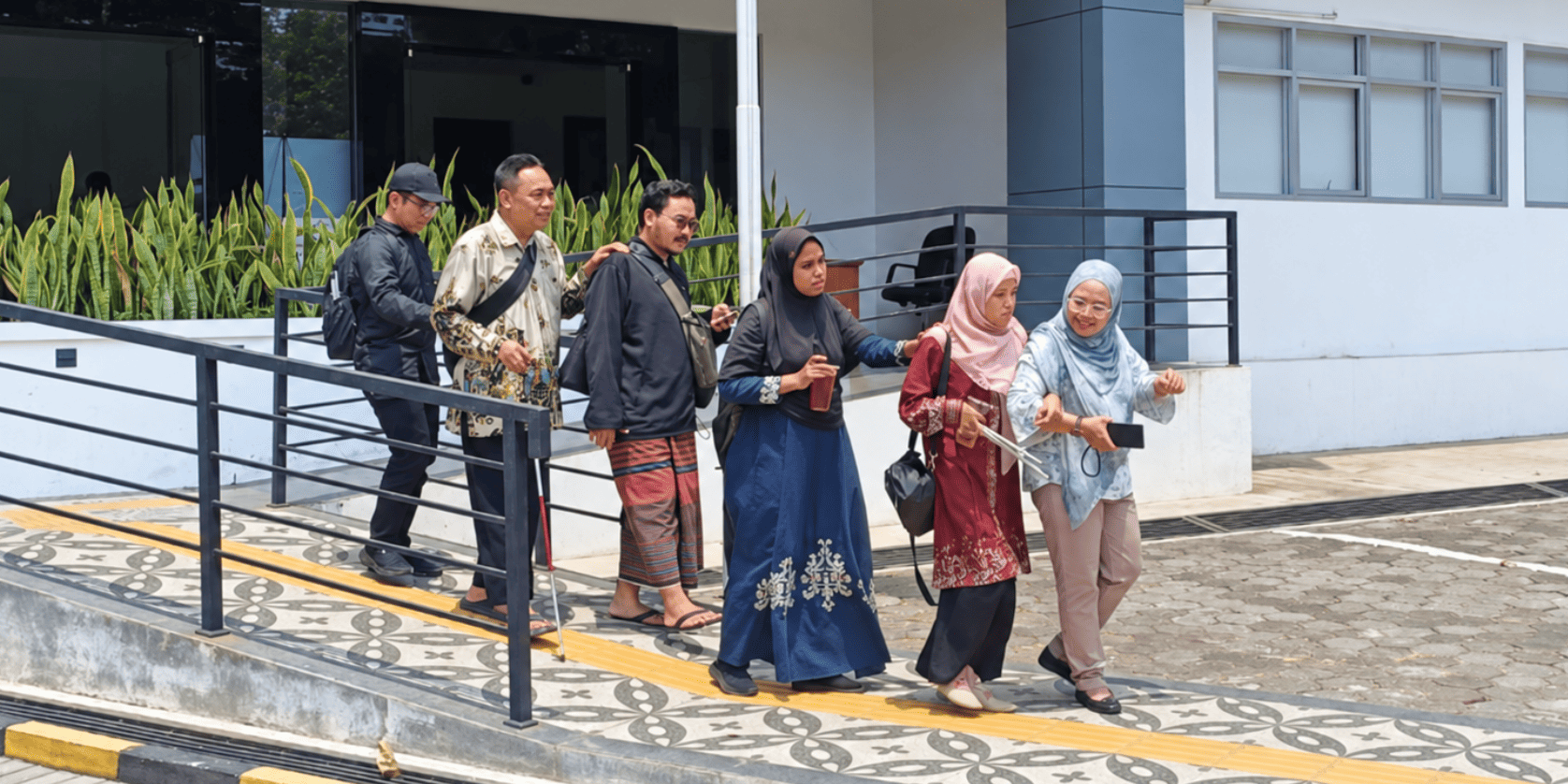
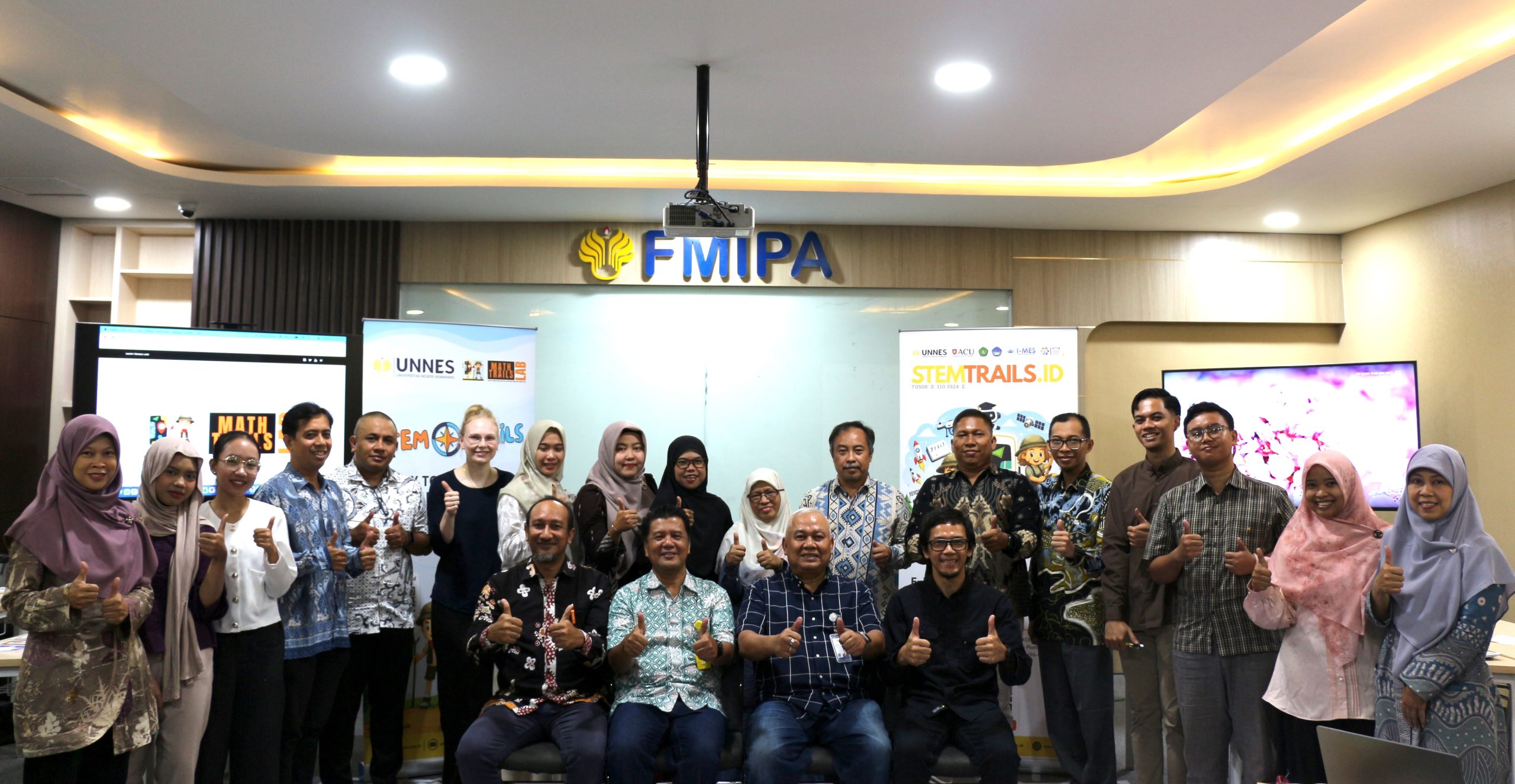
Universitas Negeri Semarang (UNNES) implements reasonable accommodation through Rector Regulation No. 116/2024 on Educational Services for Students with Disabilities. The policy is supported by the Disability Services Unit (ULD), funding for accessible infrastructure, and grants for disability services and inclusive learning.
Together, these arrangements connect formal rights with practical assistance, providing an institutional mechanism for addressing disability-related barriers to university participation.
Establishing a Formal Right to Reasonable Accommodation
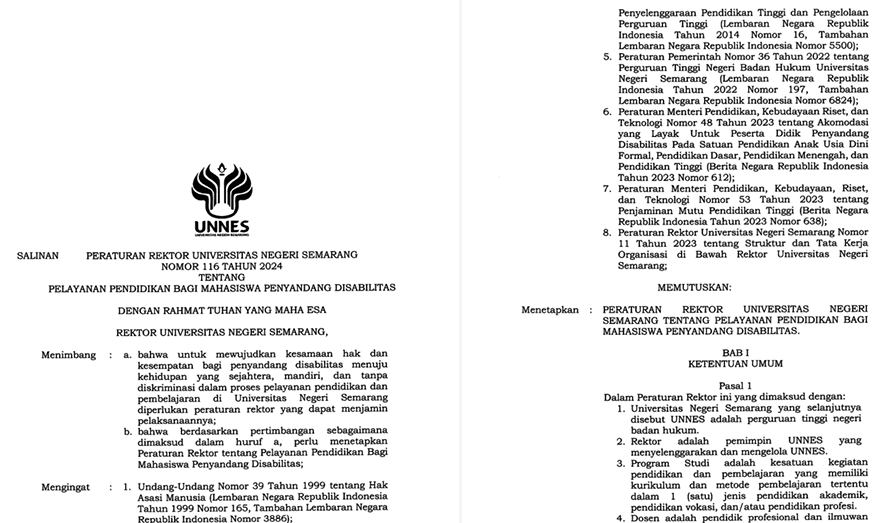
Rector’s Regulation No. 116 of 2024. Source: https://jdih.unnes.ac.id/web/view/9dfd746f-559d-49d1-9323-f9f388e16cff
Article 8 of Rector’s Regulation No. 116 of 2024 establishes the rights of students with disabilities at UNNES. Article 8(a) provides for quality and equitable education, while Article 8(c) and (e) explicitly recognise the right to reasonable accommodation in education and individual accessibility. Article 8(d) guarantees access to UNNES-owned public facilities, and Article 8(f) provides for reasonable accommodation in public services delivered appropriately, with dignity, and without discrimination. Article 8(g) further establishes the right to assistance, translation, and accessible facilities at public service locations.
Together, these provisions provide the institutional basis for addressing students’ different accessibility requirements across learning activities, university facilities, and public services.
Translating Policy into Individual Support
ULD implements the policy by assessing individual needs and providing accessible learning materials, disability assistants and assistive devices. This approach recognises that support requirements vary between students and that accommodation needs to respond to the barriers each person encounters.
Accessible materials support engagement with course content, while disability assistants and assistive devices provide additional means of participating in academic activities. Individual needs assessments connect these forms of assistance with students’ specific circumstances.
Funding Accessible Campus Infrastructure
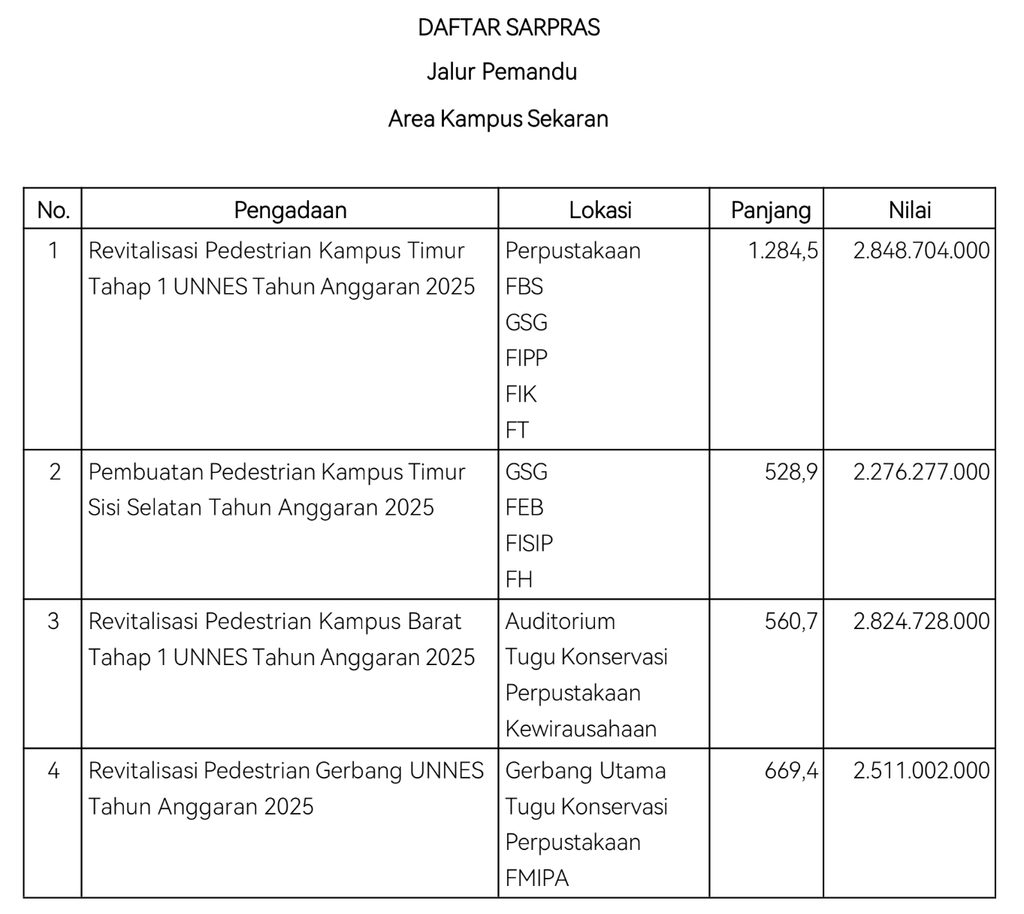
According to UNNES’s infrastructure inventory for guiding pathways at the Sekaran Campus, four pedestrian construction and revitalisation projects listed for the 2025 fiscal year covered 3,043.5 metres, with a combined recorded project value of Rp10,460,711,000. These projects comprised East Campus Phase 1 revitalisation, pedestrian construction on the southern side of the East Campus, West Campus Phase 1 revitalisation, and main-gate pedestrian revitalisation. These figures represent the scope of the listed 2025 projects, rather than the total length of the university’s pedestrian network.
The projects support campus accessibility by improving pedestrian connections to academic buildings, the library, the auditorium, and other university facilities. These infrastructure measures complement the academic assistance and individual support coordinated by the Disability Services Unit (ULD), supporting students’ access to campus activities and services.
Providing Dedicated Grants for Disability Services
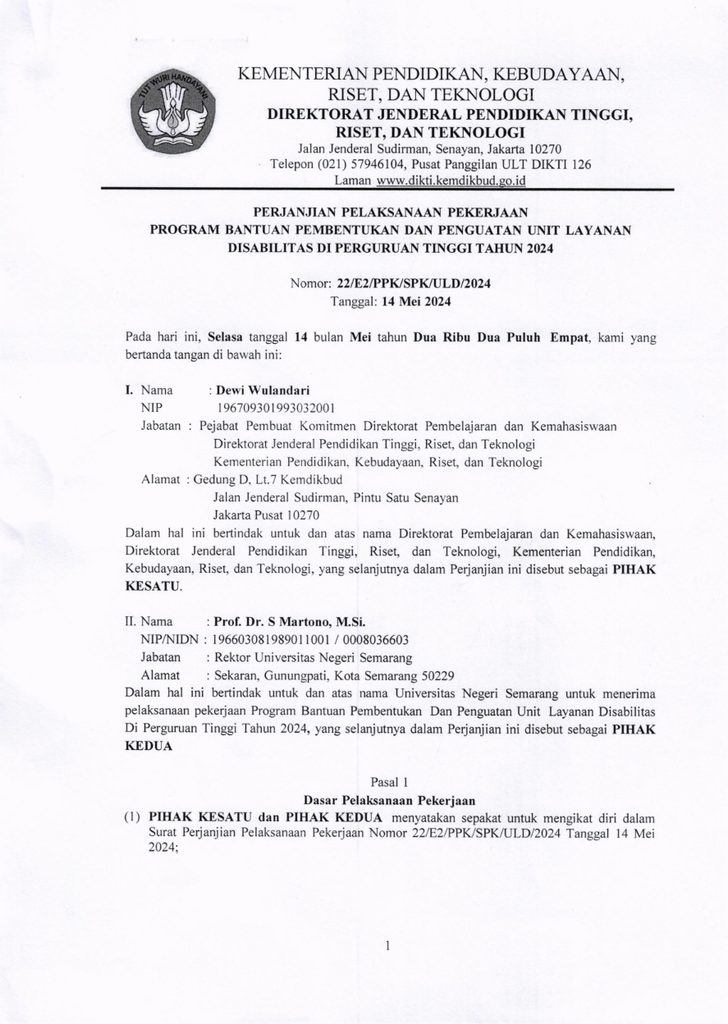
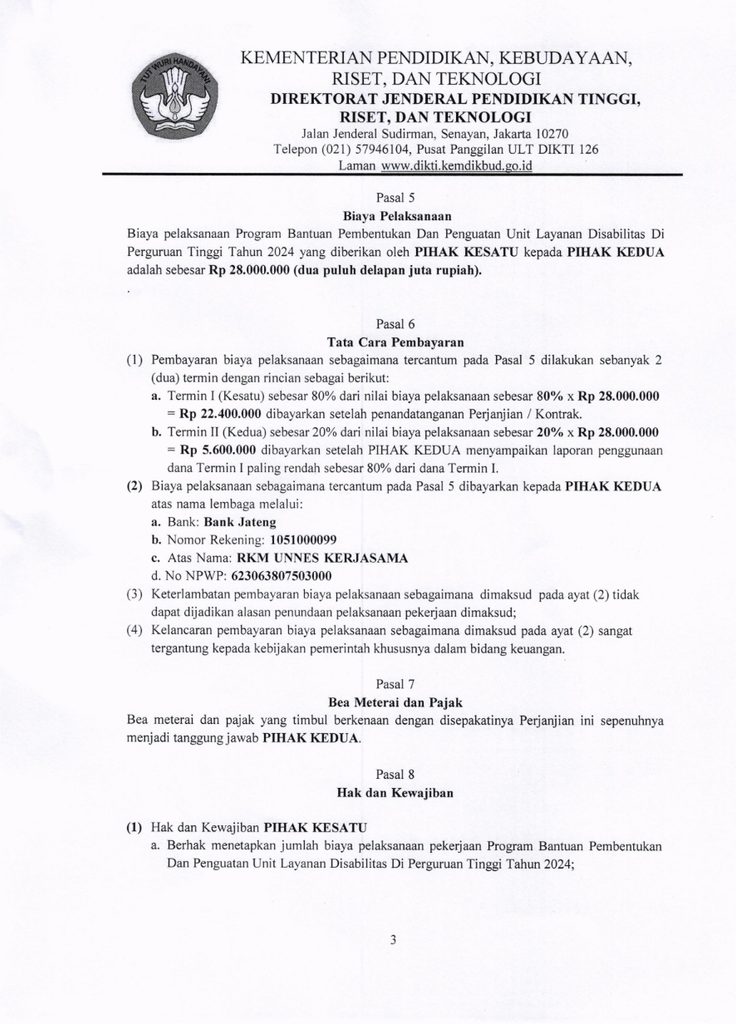
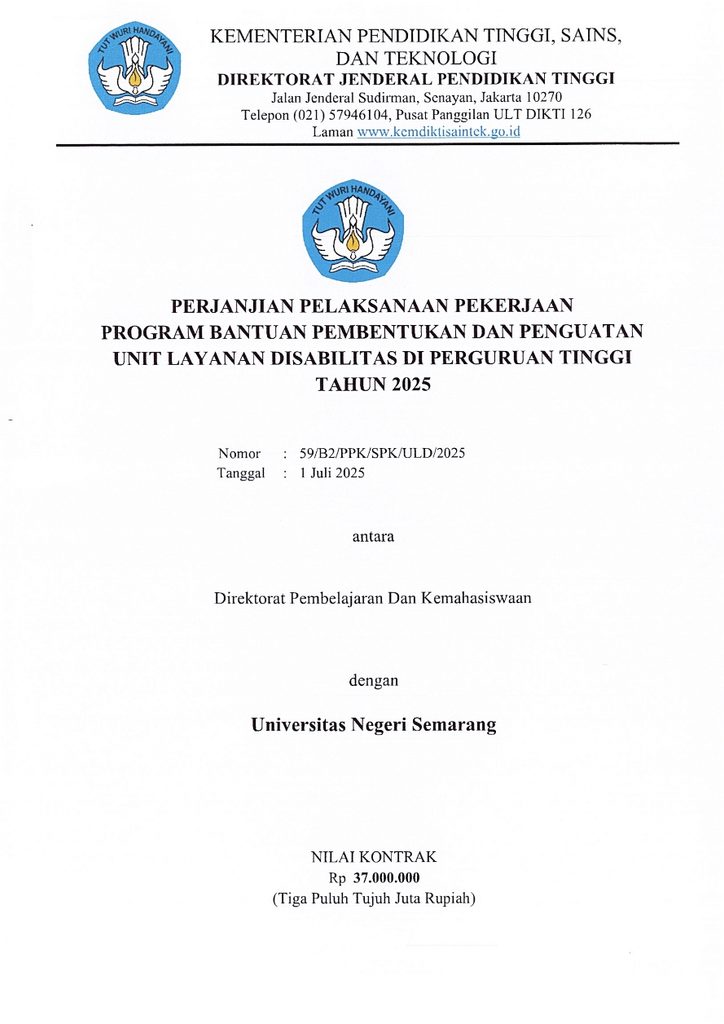
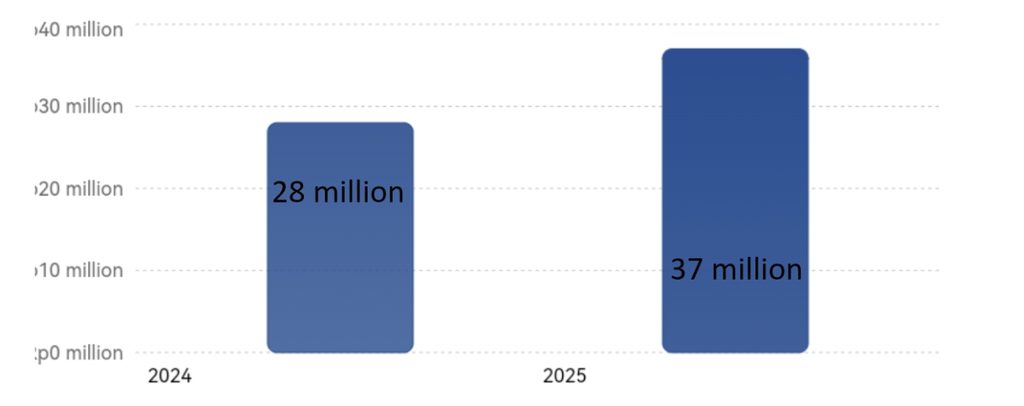
Alongside infrastructure funding, ULD received Rp28 million in 2024, under Contract No. 22/E2/PPK/SPK/ULD/2024, and Rp37 million in 2025, under Contract No. 59/B2/PPK/SPK/ULD/2025.
The grants provided funding for service development, accessibility assessments, staff and volunteer capacity building, and accessible educational resources. The reported grant amount increased by Rp9 million between the two years.
ULD grants, 2024–2025
The grants provided funding for service development, accessibility assessments, staff and volunteer capacity building, and accessible educational resources. The reported grant amount increased by Rp9 million between the two years.
ULD grants, 2024–2025
Annual grants supporting disability services, in millions of Indonesian rupiah.
Grant funding is shown separately from the accessible pedestrian infrastructure allocation.
Financing Staff Training, Volunteer Assistance and Accessible Learning
The grants funded volunteer selection and training, accessibility-needs surveys, benchmarking, sign-language training, lecturer inclusion workshops, ULD campaigns, Massive Open Online Course (MOOC) development, and the digitisation of learning materials.
Volunteer recruitment and training supported the provision of assistance to students with disabilities. Lecturer inclusion workshops addressed staff capacity to support participation in learning, while sign-language training strengthened inclusive communication.
MOOC development and the digitisation of learning materials supported the development of educational resources. These activities complemented direct assistance by investing in the materials and staff capabilities needed to deliver inclusive education.
Using Needs Assessments to Inform Service Development
Accessibility-needs surveys provided a mechanism for identifying barriers and support requirements. Alongside individual assessments, these surveys helped connect service development with the experiences and needs of people with disabilities.
Benchmarking supported institutional learning about disability services, while ULD campaigns communicated the importance of accessibility and inclusion across the university community.
UNNES’s reasonable accommodation framework therefore combines a formal policy, a designated implementing unit and identifiable funding mechanisms. Infrastructure allocations and ULD grants support practical implementation across campus access, learning assistance, communication and educational resources.