Universitas Negeri Semarang (UNNES) continues to strengthen participatory and accountable university governance through written policies and procedures for identifying, assessing, engaging, and evaluating external stakeholders, particularly local governments, community organizations, civil society groups, and institutional partners. These mechanisms provide a structured foundation for ensuring that stakeholder perspectives and local development needs are considered in the university’s collaborative initiatives.
In 2025, UNNES demonstrated the implementation of its stakeholder engagement framework through partnerships with regional governments, policy research initiatives, and multi-stakeholder consultations. These activities reflect the university’s commitment to translating institutional procedures into meaningful collaboration, in line with Sustainable Development Goal 16.
Institutionalizing Stakeholder Participation through Written Policies
UNNES formally recognizes the role of external stakeholders in evaluating university partnership activities through Rector’s Circular Letter No. B/28481/UN37/PK.02.00/2024, dated December 3, 2024, concerning partner participation in evaluating cooperation implementation.
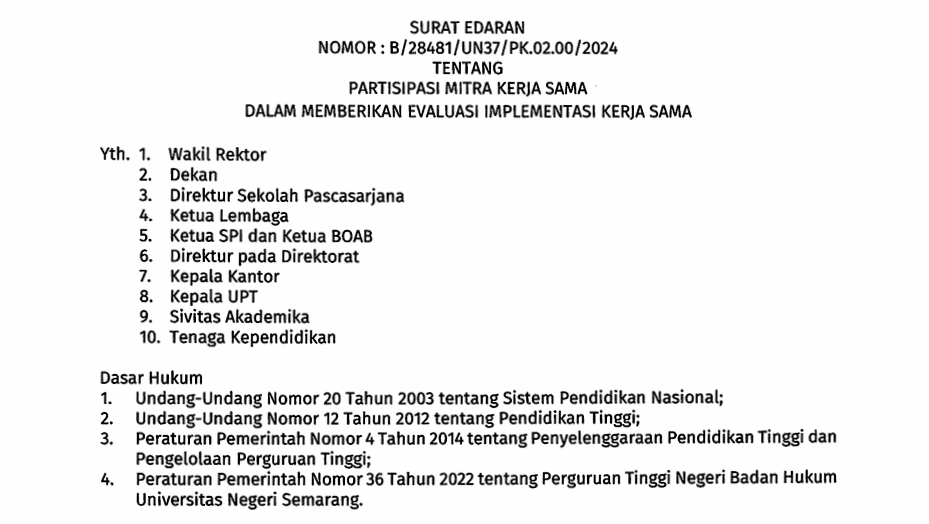
The circular letter directs university leaders and administrative units to provide their cooperation partners with opportunities to communicate feedback on collaborative programmes. It identifies three important forms of stakeholder participation: submitting comments, criticism, and recommendations on partnership implementation; evaluating activities conducted under cooperation programmes; and communicating these assessments through designated evaluation forms.
These provisions establish a written mechanism through which external partners can express their perspectives on university programmes and contribute to their assessment. Rather than limiting stakeholder engagement to the signing of agreements, the policy recognizes the importance of continued communication and feedback during programme implementation.
The circular letter therefore provides institutional evidence of UNNES’s commitment to maintaining stakeholder consultation and evaluation as part of its partnership governance framework.
Identifying, Assessing, and Prioritizing Local Stakeholders through Partnership Procedures
To complement stakeholder consultation and evaluation, UNNES maintains written partnership management procedures that establish how prospective external partners are identified and assessed before cooperation is formalized.
The university’s documented partnership management framework recognizes local governments, educational institutions, nongovernmental organizations, businesses, community groups, and other relevant external parties as potential cooperation partners.
The initial identification process begins with identifying prospective partners whose activities, capabilities, and development priorities are relevant to the university’s academic responsibilities and strategic objectives. Cooperation proposals may originate from university-level offices, faculties, institutes, or other authorized work units.
Prospective partners are then subject to an assessment process considering their legal status, institutional track record, strategic value, organizational capacity, compatibility of objectives, available resources, and potential mutual benefits. These considerations provide a documented basis for evaluating the suitability of prospective partners and determining whether a proposed collaboration should proceed.
The process also requires consultation and negotiation between the university and prospective partners. Proposals considered appropriate are reviewed through the relevant institutional authorities before being formalized through cooperation documents, such as Memoranda of Understanding (MoUs) or Memoranda of Agreement (MoAs).
By linking prospective partner assessment with institutional priorities and programme relevance, these procedures support structured stakeholder identification and cooperation planning rather than relying solely on informal arrangements.
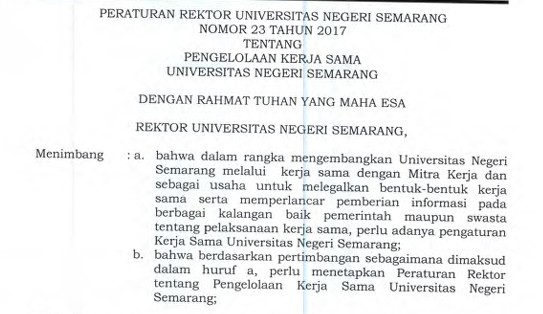
The procedures are documented in the university’s Partnership Management Regulation and Procedures, particularly the provisions governing partnership principles, preliminary assessment, negotiation, implementation, and monitoring.
Monitoring Stakeholder Engagement through Partnership Documentation and Evaluation
Stakeholder engagement at UNNES extends beyond partner identification and agreement signing to include cooperation implementation, monitoring, and evaluation. The university’s partnership procedures establish provisions for documenting joint activities, assessing implementation progress, and using evaluation findings to inform subsequent decisions.
Under the partnership management framework, monitoring and evaluation address both the implementation process and the performance of cooperation programmes. External partners can contribute observations and recommendations, while responsible university units document implementation and evaluate opportunities for improvement or continuation.
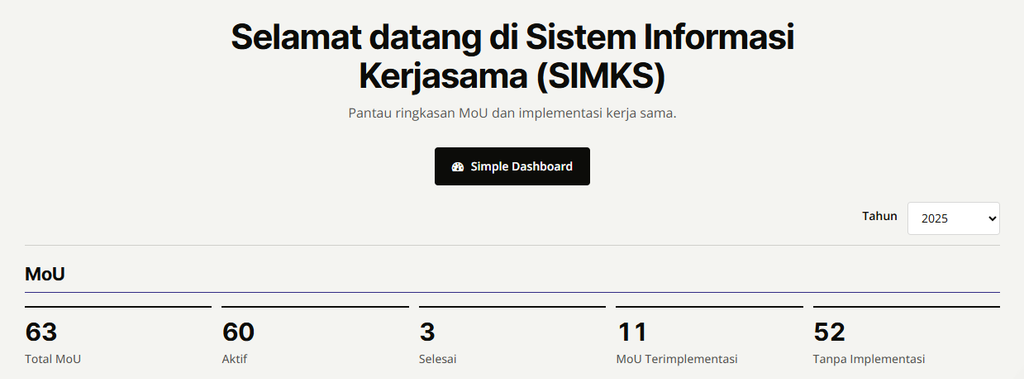
UNNES also maintains its Cooperation Information System (Sistem Informasi Kerja Sama/SIMKS), which provides a digital platform for monitoring cooperation agreements and recorded implementation activities.
In addition, the university publishes a List of Cooperation Partners through its Public Information and Documentation Office (PPID), supporting public access to partnership information and institutional transparency.
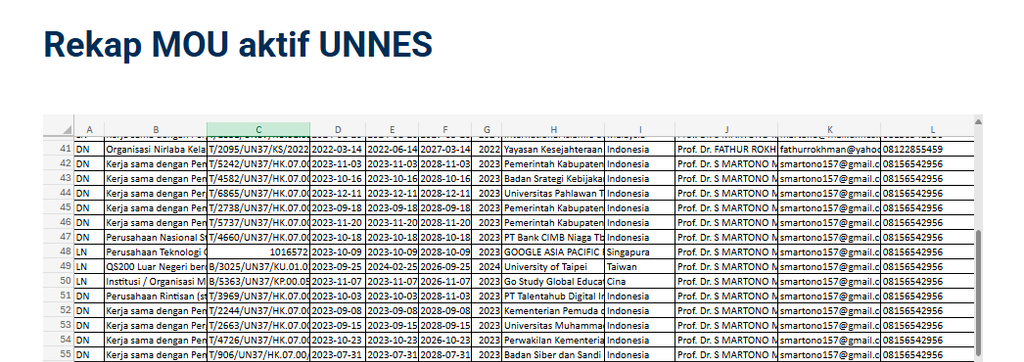
Together, the written evaluation requirements, institutional partnership records, and digital monitoring facilities provide a framework for tracking cooperation activities and supporting continued engagement with external stakeholders.
Implementing Local Stakeholder Identification through Government Partnerships
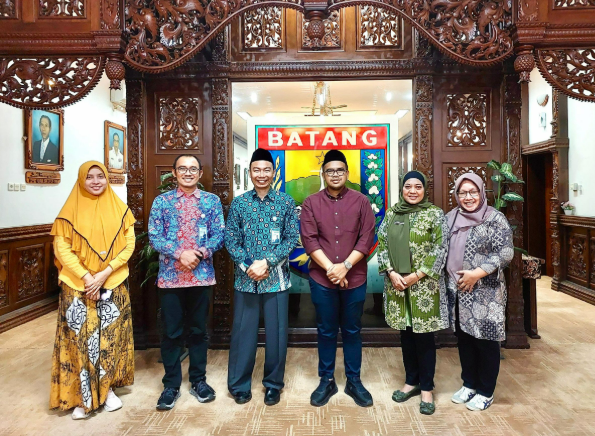
The application of UNNES’s local stakeholder engagement approach was demonstrated through policy research cooperation initiated with regional governments during 2025.
On July 12, 2025, representatives of the UNNES Faculty of Law engaged with the Batang Regency Government to explore opportunities for collaboration in legal research, evidence-based policymaking, legal assistance, and capacity-building for government personnel.
The engagement brought together university representatives and local government officials to discuss potential areas of mutual interest. It illustrates the early stages of stakeholder engagement, in which prospective cooperation areas are identified and discussed before further institutional development.
Similarly, on July 25, 2025, the Faculty of Law and the Institute for Research and Community Service (LPPM UNNES) initiated discussions with the Kendal Regency Government regarding collaborative legal studies, regional policy development, applied research, and community empowerment.
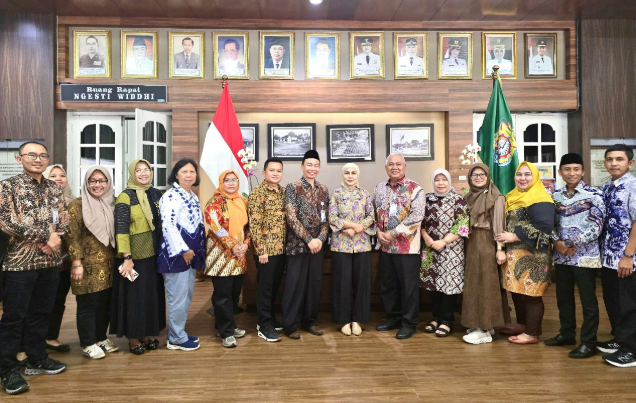
These discussions illustrate the identification of relevant local government stakeholders, consultation on shared priorities, and exploration of potential cooperation activities. They provide examples of UNNES engaging external stakeholders in addressing regional development needs.
Strengthening Stakeholder Consultation through Central Java Biodiversity Policy Development
A further example of stakeholder engagement took place on November 17, 2025, when UNNES academics participated in a technical consultation supporting the development of the Central Java Biodiversity Management Master Plan (Rencana Induk Pengelolaan Keanekaragaman Hayati/RIP-KH).
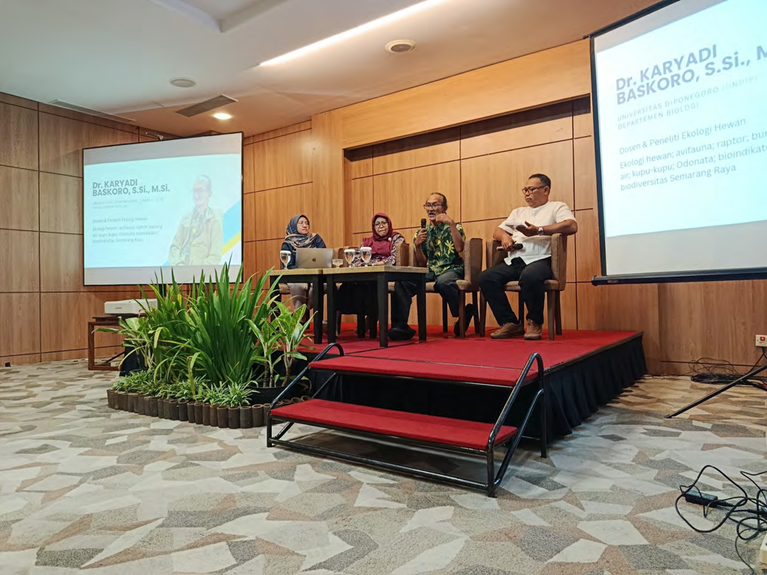
The consultation brought together provincial government agencies, district and municipal authorities, researchers, civil society organizations, and environmental stakeholders to identify biodiversity management challenges and discuss regional conservation priorities.
UNNES contributed academic expertise through Prof. Dr. Margareta Rahayuningsih, M.Si., and Rifa’atunnisa, S.Hut., M.Si., Ph.D. Their contributions included ecological evidence, analysis of biodiversity pressures, and recommendations for strengthening regional conservation planning.
During the technical consultation, Rifa’atunnisa served as a discussion formulator and respondent, contributing to the formulation of recommendations and responding to policy proposals. The consultation considered environmental pressures, priority landscapes, management interventions, and the scientific evidence needed to guide future decisions.
The activity illustrates how external stakeholder consultation can connect local and regional government priorities, academic research, and civil society perspectives in a shared policy development process.
The wider policy formulation process also incorporated stakeholder verification, assessment of biodiversity conditions, identification of management priorities, and recommendations for monitoring and evaluation. These elements demonstrate the value of structured consultation in developing evidence-informed regional policies.
Advancing Accountable and Inclusive Local Stakeholder Engagement
Through its written partnership policies, prospective partner assessment procedures, consultation mechanisms, and evaluation requirements, UNNES maintains an institutional framework for identifying and engaging external stakeholders.
The Rector’s Circular Letter provides a formal channel for partner feedback and evaluation, while the partnership management procedures establish stages for identifying prospective partners, assessing their suitability, consulting on cooperation priorities, and documenting implementation.
The 2025 engagements with the Batang and Kendal Regency Governments and the Central Java biodiversity policy consultation demonstrate how UNNES works with external stakeholders to identify shared priorities, exchange expertise, and contribute to locally relevant policy development.
Supported by institutional cooperation records, digital monitoring facilities, and public information services, these practices strengthen the relationship between university expertise and stakeholder needs.
Contributing to Regional Policy through Multi-Stakeholder Consultation
In 2025, UNNES academics also contributed scientific recommendations during a multi-stakeholder consultation on the Central Java Biodiversity Management Master Plan. The consultation involved government agencies, universities, civil society organizations, local communities, and international partners. Through this process, UNNES contributed academic perspectives and scientific input to regional biodiversity policy discussions, demonstrating the university’s participation in collaborative decision-making beyond the campus environment.