In 2025, Universitas Negeri Semarang contributed directly to the formulation of the Central Java Biodiversity Management Master Plan through scientific consultation, research-based recommendations, and collaboration with government agencies, nongovernmental organisations, and international partners.
Universitas Negeri Semarang (UNNES) contributed to regional SDG policy development through the involvement of its academics in the formulation of the Central Java Biodiversity Management Master Plan (RIP-KH). This contribution included participation in the technical consultation for the former Semarang Residency, held in Semarang on 17 November 2025, where UNNES provided scientific input on biodiversity challenges, management priorities, and the evidence needed to guide conservation and restoration.
The university’s involvement connected ecological research with regional policy formulation. Its contributions addressed the identification of environmental problems and governance challenges, the development of management recommendations, and the establishment of scientific foundations for monitoring, evaluation, and adaptive management.
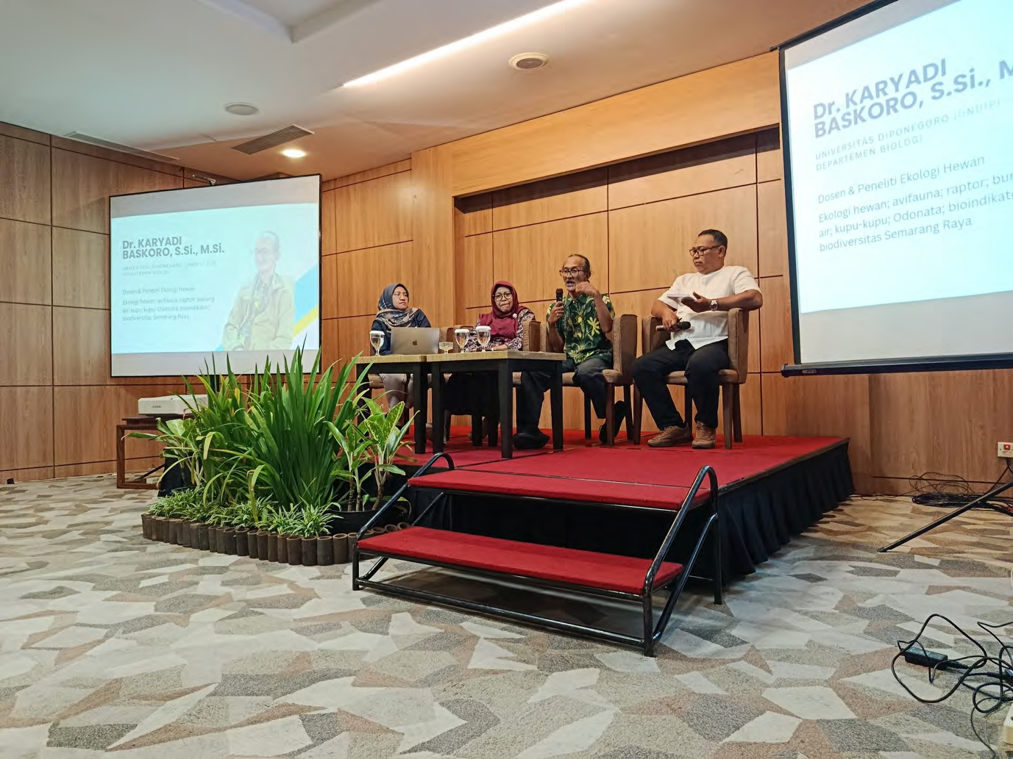
A collaborative framework for biodiversity policy development
The RIP-KH formulation brought together government institutions, universities, nongovernmental organisations, local communities, and international development and research partners. The process combined scientific expertise, government planning responsibilities, conservation experience, and local knowledge to inform regional biodiversity management.
Programme materials identify the Ministry of National Development Planning/Bappenas and German international climate cooperation as part of the supporting framework. International and national implementation partners identified in these materials include GIZ, CIFOR, World Agroforestry (ICRAF), KEHATI, and SNV, with Burung Indonesia supporting the facilitation of the process.
At the regional level, participating institutions included the Central Java Provincial Government, the Environmental and Forestry Agency (DLHK), and Bappeda, alongside agencies responsible for fisheries, agriculture, energy, and water resources, as well as district and municipal governments.
Civil society and conservation organisations, including Wetlands International and local environmental communities, contributed field experience, ecological information, and management recommendations. Their contributions helped ensure that policy discussions reflected environmental conditions and conservation challenges across Central Java’s landscapes.
Within this collaborative framework, UNNES provided academic expertise to help translate research findings and field observations into recommendations for regional biodiversity policy.
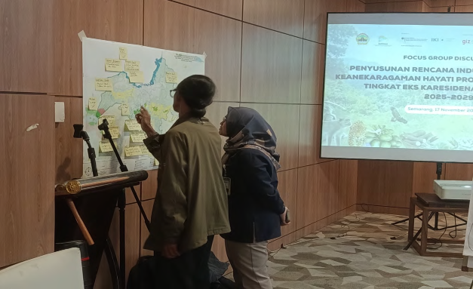
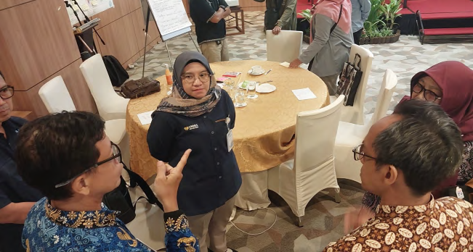
UNNES’s direct role in identifying policy challenges and priorities
UNNES was represented in the academic working group by Prof. Dr. Margareta Rahayuningsih, M.Si., and Rifa’atunnisa, S.Hut., M.Si., Ph.D. Together with academics from other universities, they contributed research findings and field-based perspectives from key Central Java landscapes, including Mount Ungaran, Rawa Pening, the Semarang–Demak mangrove ecosystem, riparian environments, and the northern Dieng slopes.
The academic discussions highlighted the interconnected ecological and governance dimensions of biodiversity loss. These included land-use pressures, habitat degradation, development activities, weaknesses in spatial planning, and the limited integration of scientific findings into regional decision-making.
Identifying these challenges helped frame the policy discussion around both ecosystem conditions and the institutional responses needed to address them. The forum emphasised the importance of strengthening biodiversity data, improving communication between researchers and policymakers, and incorporating conservation priorities into development planning.
At the 17 November 2025 technical consultation, Rifa’atunnisa was formally invited to serve as a discussion formulator and respondent. Her role was to provide scientific input, formulate recommendations, and respond to proposals concerning the substance and direction of provincial biodiversity management policy.
This assignment demonstrates UNNES’s direct involvement in the policy development process. The university’s contribution extended beyond attendance to substantive input on the problems to be addressed, management priorities, and the evidence required to inform policy choices.
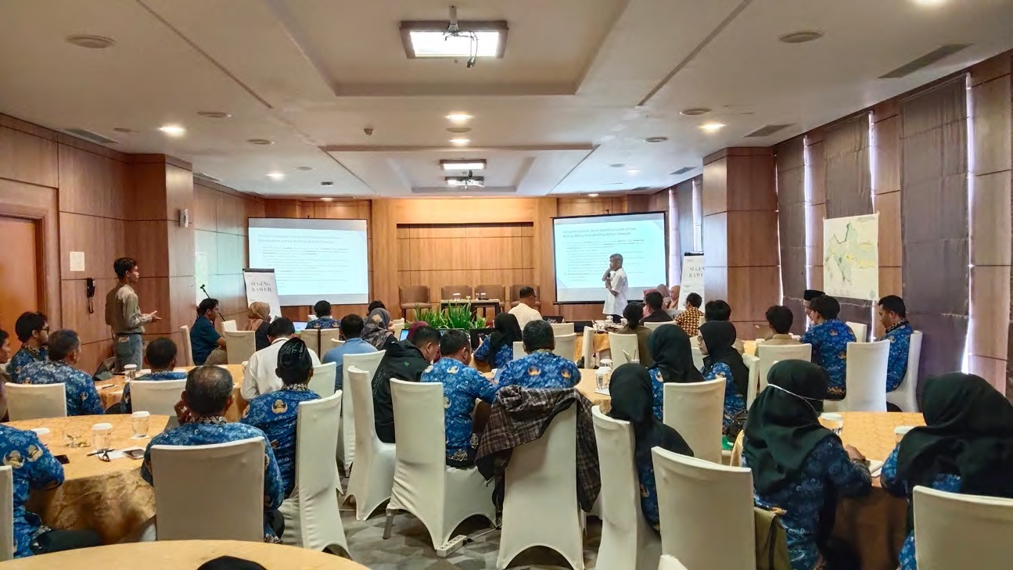
Connecting scientific evidence with policy responses through DPSIR
The RIP-KH formulation used the Driver–Pressure–State–Impact–Response (DPSIR) framework to examine the relationships between the underlying drivers of biodiversity loss, environmental pressures, ecosystem conditions, ecological impacts, and potential policy responses.
The framework provided a structured basis for identifying problems and discussing priority interventions. It helped participants consider how development pressures affect biodiversity and how management responses could address the causes and consequences of ecosystem degradation.
This approach also supported discussion of potential future ecological conditions under different management choices. Its use provided a basis for considering intervention options, although it does not, by itself, establish that UNNES conducted quantitative modelling of scenarios with and without interventions.
Within these discussions, Dr. Rifa’atunnisa recommended a more systematic assessment of biodiversity threats, clearer ecological standards for ecotourism, and stronger collaboration among government, communities, and universities.
These recommendations addressed the need to align development and tourism activities with conservation objectives and to strengthen cooperation among the institutions and communities responsible for biodiversity management.
Establishing baselines for monitoring and adaptive management
A further recommendation concerned the establishment of a verified ecological baseline (T0) before restoration interventions are implemented. Rifa’atunnisa highlighted the importance of reliable information on initial ecosystem conditions to guide restoration planning, support the selection of locally appropriate species, and provide a reference for assessing subsequent ecological change.
This recommendation linked policy formulation with the practical requirements of monitoring and evaluation. Comparing ecological conditions before and after an intervention can help decision-makers assess progress, identify gaps, and determine whether management measures need to be revised.
The wider RIP-KH process also incorporates gap analysis, baseline and trend assessment, stakeholder verification, management planning, monitoring, evaluation, and consultation on draft policy. These components support adaptive management by allowing management priorities and policy responses to be reviewed as new scientific evidence and monitoring results become available.
UNNES’s input focused on strengthening the scientific foundations for these activities. Its recommendations concerned how future interventions should be designed and assessed, rather than reporting measured outcomes from completed restoration activities.
Through this contribution, the university highlighted the value of research evidence in informing policy direction, establishing credible ecological baselines, and supporting the long-term assessment of biodiversity management.
Documenting the wider assessment and consultation process
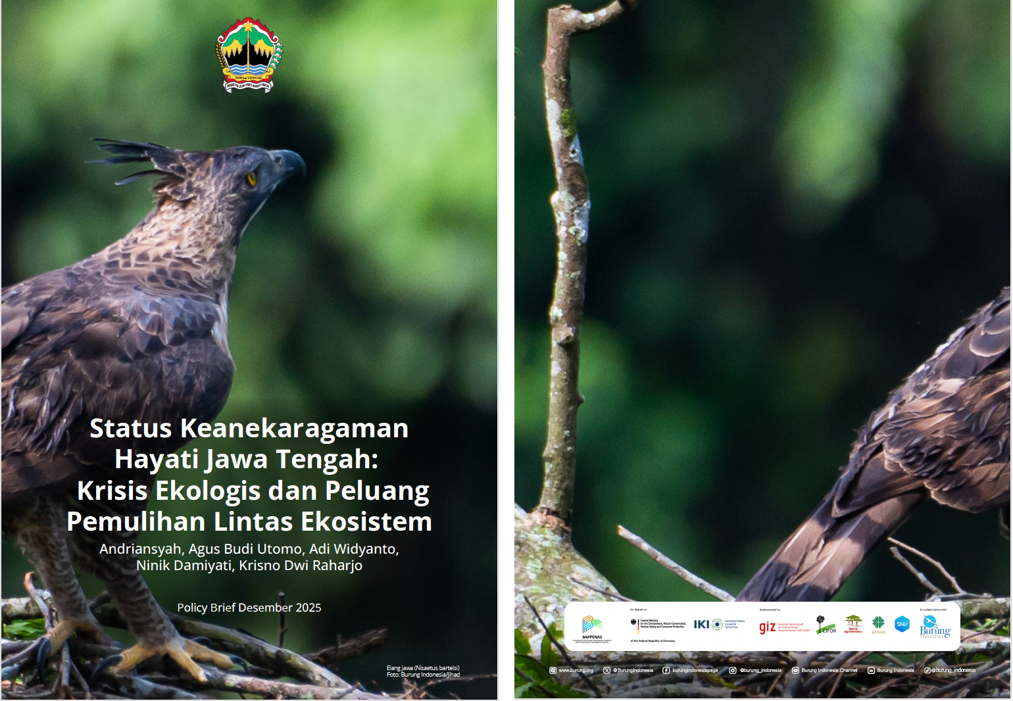
The broader biodiversity assessment and consultation process was documented in the December 2025 policy brief, Status Keanekaragaman Hayati Jawa Tengah: Krisis Ekologis dan Peluang Pemulihan Lintas Ekosistem.
The publication synthesises biodiversity pressures, governance challenges, and opportunities for ecological recovery across interconnected ecosystems. It provides an accessible, policy-oriented output from the wider process and a reference for further discussion of regional biodiversity management priorities.
UNNES’s participation in the November technical consultation and the subsequent publication of the policy brief illustrate the progression from scientific and stakeholder discussion to a documented policy-oriented output within the broader RIP-KH process.
The consultation provided an opportunity for UNNES to contribute directly to policy formulation, while the policy brief brought together findings and priorities from the wider assessment. These contributions supported policy development without presuming that all recommendations had already been incorporated into an adopted government policy.