Universitas Negeri Semarang (UNNES) continues to uphold its institutional commitment to preventing corruption, bribery, unlawful gratification, collusion, nepotism, and other forms of misconduct through publicly accessible regulations, institutional oversight mechanisms, and formal integrity commitments. These measures reflect the university’s dedication to maintaining ethical conduct, transparent administration, and accountability across its academic and administrative operations.
In 2025, UNNES strengthened the implementation of these principles through an updated Gratification Control Unit, a formal Standard Operating Procedure (SOP) for reporting gratification, and the signing of an Integrity Pact between university leadership and the Internal Supervisory Unit (Satuan Pengawas Internal/SPI). These developments demonstrate how UNNES translates its published anti-corruption principles into institutional responsibilities and reporting procedures.
Establishing Institutional Anti-Corruption Principles through the Gratification Control Regulation
UNNES formally establishes its commitment to preventing corruption and bribery through Rector’s Regulation No. 9 of 2024 on Gratification Control at Universitas Negeri Semarang. Issued on January 5, 2024, this regulation provides an institutional foundation for preventing improper benefits and promoting integrity in university governance.
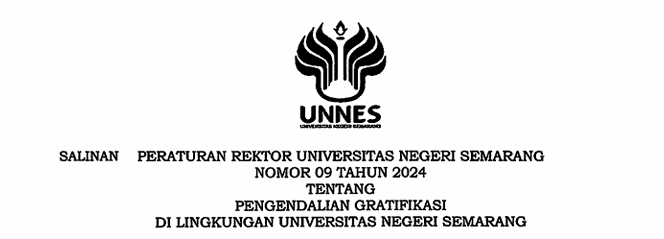
The regulation was established to support a university environment free from corruption, collusion, and nepotism. It addresses principles of gratification control, forms of gratification, the establishment of the University Gratification Control Unit (Unit Pengendali Gratifikasi Universitas/UPGU), and mechanisms for reporting suspected gratification.
Through this policy, UNNES recognizes the importance of preventing inappropriate benefits that could compromise professional responsibilities, institutional impartiality, or public trust. The regulation also establishes a framework for managing potential gratification-related risks through institutional monitoring and reporting.
The regulation is publicly available through the university’s Legal Documentation and Information Network (JDIH), ensuring that its anti-corruption principles and institutional commitments can be accessed by university members and the wider public.
Strengthening Anti-Bribery Implementation through the 2025 Gratification Control Unit
To implement its institutional anti-corruption principles, UNNES established a dedicated Gratification Control Unit through Rector’s Decree No. B/3641/UN37/HK.02/2024.
The university reinforced this institutional mechanism in 2025 through Rector’s Decree No. T/858/UN37/HK.02/2025 on the Appointment of the UNNES Gratification Control Unit Team for 2025. The decision formally documents the appointment of personnel responsible for supporting the university’s gratification control framework during the reporting year.
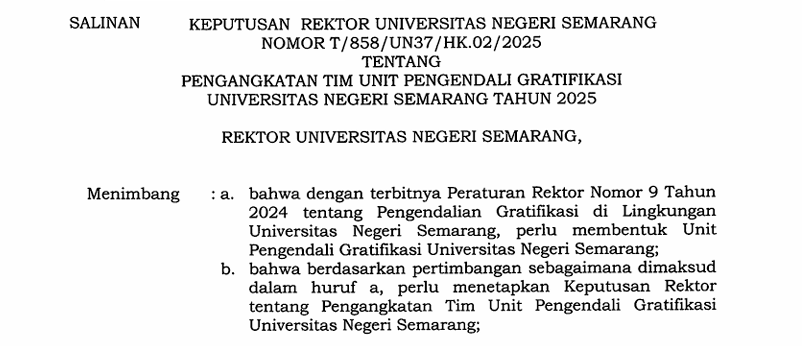
The unit forms part of the university’s efforts to operationalize its published anti-corruption policies by providing an institutional structure for handling gratification-related matters. Its establishment connects the principles outlined in Rector’s Regulation No. 9 of 2024 with practical administrative responsibilities.
By formally appointing a team dedicated to gratification control, UNNES strengthens institutional accountability and supports the consistent implementation of its integrity framework.
Establishing a Transparent Gratification Reporting Procedure
A significant development in 2025 was the formal establishment of the Standard Operating Procedure for Gratification Reporting through Rector’s Decree No. B/903/UN37/HK.02/2025. The procedure became effective on September 2, 2025, providing a documented process for submitting, reviewing, and following up on gratification-related reports.
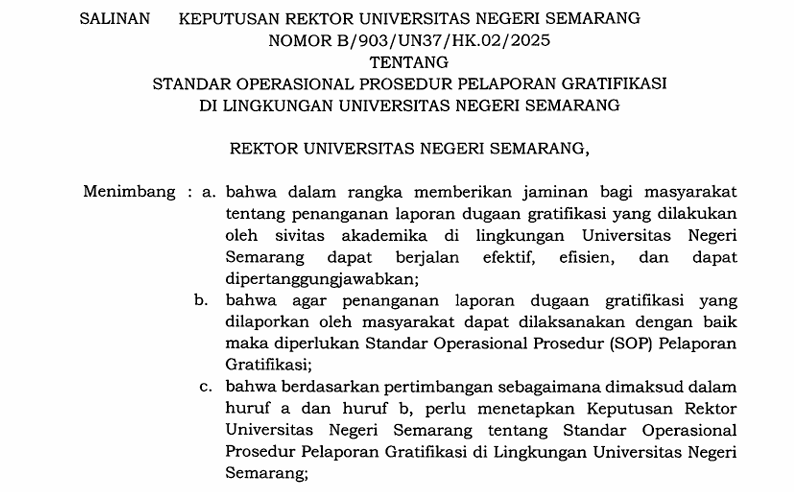
The SOP establishes a structured reporting mechanism involving the reporting individual, the University Gratification Control Unit, and the relevant anti-corruption authorities.
Under the procedure, individuals can submit reports concerning the receipt of gratification by completing a reporting form and submitting it through designated written or electronic channels, including the university’s gratification reporting email address or an available reporting system.
The procedure specifies five principal stages:
- Report submission: The reporting individual submits information concerning the gratification received using the designated reporting form.
- Initial examination: The Gratification Control Unit receives, examines, and reviews the report and supporting evidence.
- Assessment: The unit considers the examination results and determines whether further gratification-related action is required.
- Referral: Relevant reports and examination results are forwarded to the Corruption Eradication Commission (KPK) through the designated ministry-level gratification control mechanism.
- Notification: The reporting individual receives information regarding the outcome or progress of the report.
The SOP also establishes procedural timeframes and documentation requirements, strengthening the traceability and accountability of the reporting process.
By publishing these procedures, UNNES provides a concrete mechanism through which its anti-bribery and gratification control commitments can be implemented and monitored, rather than relying exclusively on policy statements or institutional declarations.
Strengthening Anti-Corruption Awareness through Integrity Zone Initiatives
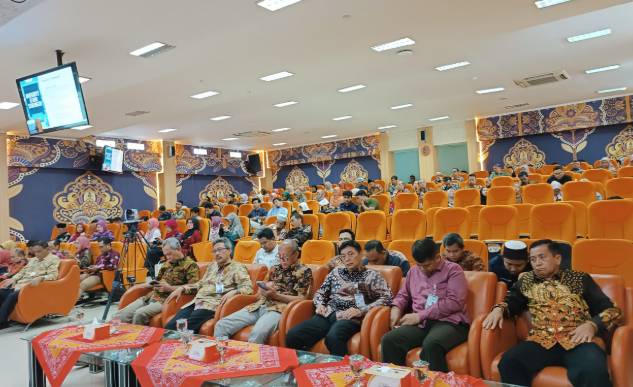
UNNES continued to promote anti-corruption awareness through Integrity Zone initiatives across its academic units. On April 16, 2025, the Faculty of Engineering (FT UNNES) organized an Integrity Zone socialization programme to improve awareness of corruption prevention, internal supervision, accountability, and service quality among faculty members and relevant personnel.
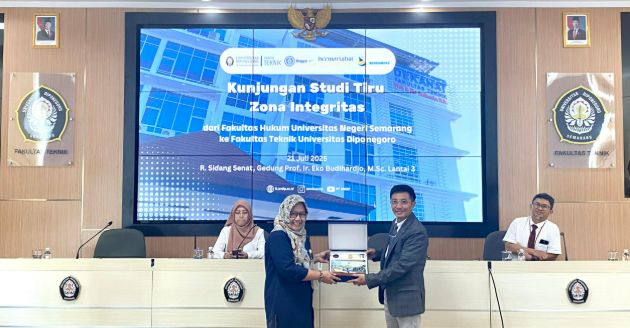
Furthermore, on July 21, 2025, the Faculty of Law (FH UNNES) conducted an Integrity Zone benchmarking visit to the Faculty of Engineering at Universitas Diponegoro (UNDIP). The visit provided an opportunity to learn from UNDIP’s experience in implementing the Clean and Serving Bureaucratic Zone (WBBM), particularly in change management, accountability, digital service innovation, and public service improvement. These activities demonstrate UNNES’s continued efforts to translate its anti-corruption commitments into institutional awareness, learning, and administrative improvement.
Reinforcing Institutional Integrity through Integrity Pact
In addition to its regulatory and reporting framework, UNNES publicly reaffirmed its commitment to ethical governance through the signing of an Integrity Pact during the University’s Leadership Working Meeting (Rapat Kerja Universitas) on January 30, 2025.
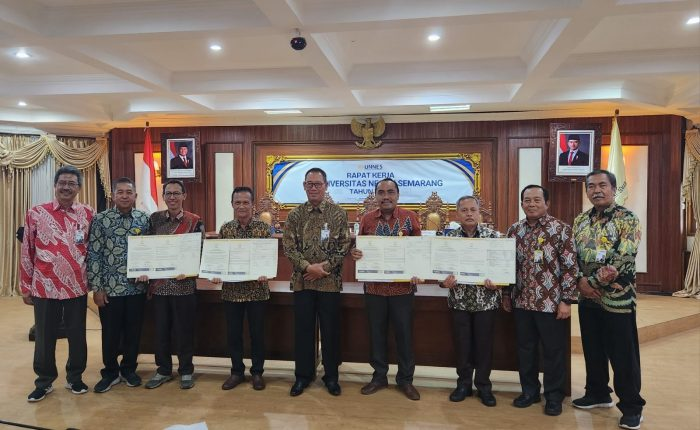
The Integrity Pact was signed by UNNES Rector Prof. Dr. S. Martono, M.Si., and Head of the Internal Supervisory Unit Prof. Dr. Muhammad Khafid, M.Si., QIA, at the Senate Meeting Room in the Rectorate Building.
The signing formalized a commitment to carrying out institutional duties with integrity, transparency, and accountability. As communicated in the official SPI publication, the pact emphasized maintaining professional conduct free from corruption, collusion, and nepotism; complying with university regulations and ethical standards; ensuring responsible oversight of institutional budgets and resources; and preventing and responding to reported violations.
The involvement of SPI is particularly significant because internal supervision supports the university’s efforts to identify governance risks, monitor compliance, and promote accountability across institutional activities.
Providing Public Reporting Channels for Corruption and Institutional Misconduct
UNNES further reinforces its published integrity commitments through its publicly accessible Whistleblowing System (WBS) and institutional complaint procedures.
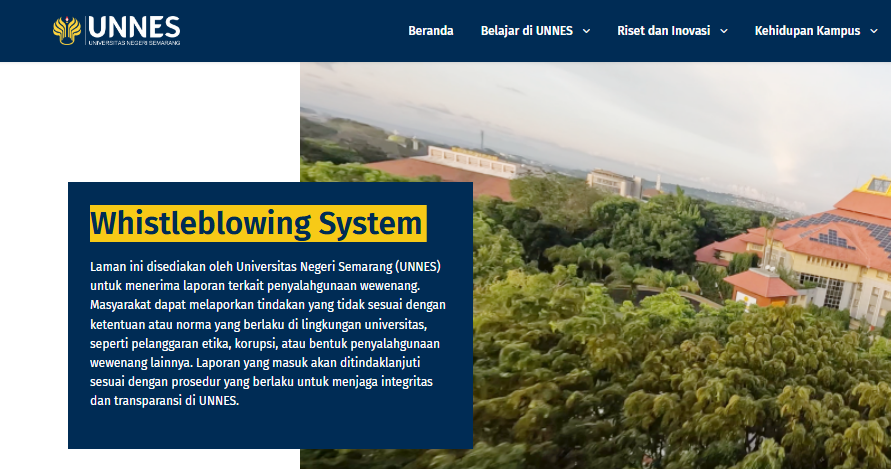
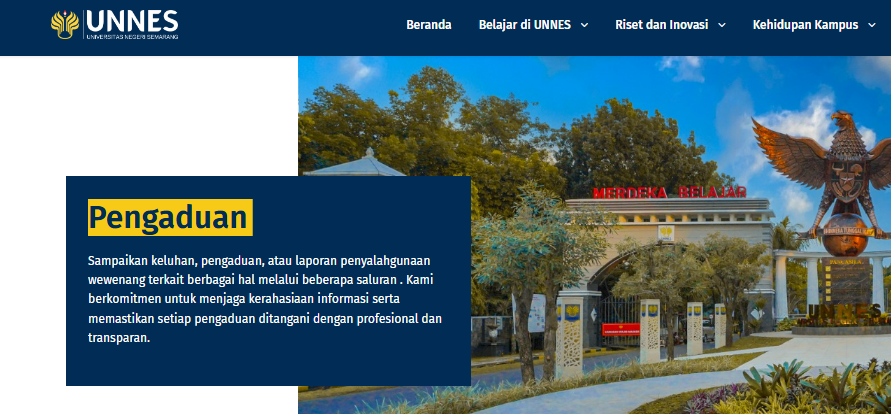
The university’s reporting framework enables members of the academic community and the public to report suspected misconduct, including corruption, abuse of authority, ethical violations, and other irregularities affecting university operations.
Under Rector’s Regulation No. 10 of 2024 concerning the Violation Reporting System, complaints may be submitted through direct or indirect mechanisms. Individuals may report concerns to the designated institutional team, while additional channels include written correspondence, email, telephone, and online reporting services.
The university also provides escalation procedures when complainants consider the institutional response inadequate, including submission to university leadership or relevant external authorities.
Through these mechanisms, UNNES seeks to facilitate early identification of potential misconduct and strengthen institutional accountability. The combination of gratification reporting procedures and broader whistleblowing channels provides complementary approaches to corruption prevention, reporting, and institutional oversight.
Strengthening Accountability and Preventing Institutional Misconduct
Through its published regulations, designated oversight structures, reporting procedures, and leadership integrity commitments, UNNES maintains a coordinated institutional approach to preventing corruption, bribery, collusion, and related misconduct.
Rector’s Regulation No. 9 of 2024 establishes the substantive anti-gratification policy, while the 2025 appointment of the Gratification Control Unit and the new reporting SOP provide organizational and procedural mechanisms for implementation. The signing of the Integrity Pact further demonstrates the university leadership’s publicly documented commitment to ethical governance and institutional accountability.
These commitments were further reflected in the university’s 2025 Integrity Zone initiatives, including anti-corruption awareness socialization organized by the Faculty of Engineering on April 16 and an Integrity Zone benchmarking visit conducted by the Faculty of Law on July 21. Both activities demonstrate continued efforts to promote integrity awareness, strengthen institutional supervision, and improve accountable public services across university units.
These mechanisms also contribute to reducing institutional vulnerabilities that may facilitate unlawful influence, collusion, and coordinated misconduct. By providing reporting channels, formal oversight responsibilities, and procedures for referring relevant concerns to competent authorities, UNNES supports prevention and accountability within the scope of its institutional responsibilities.