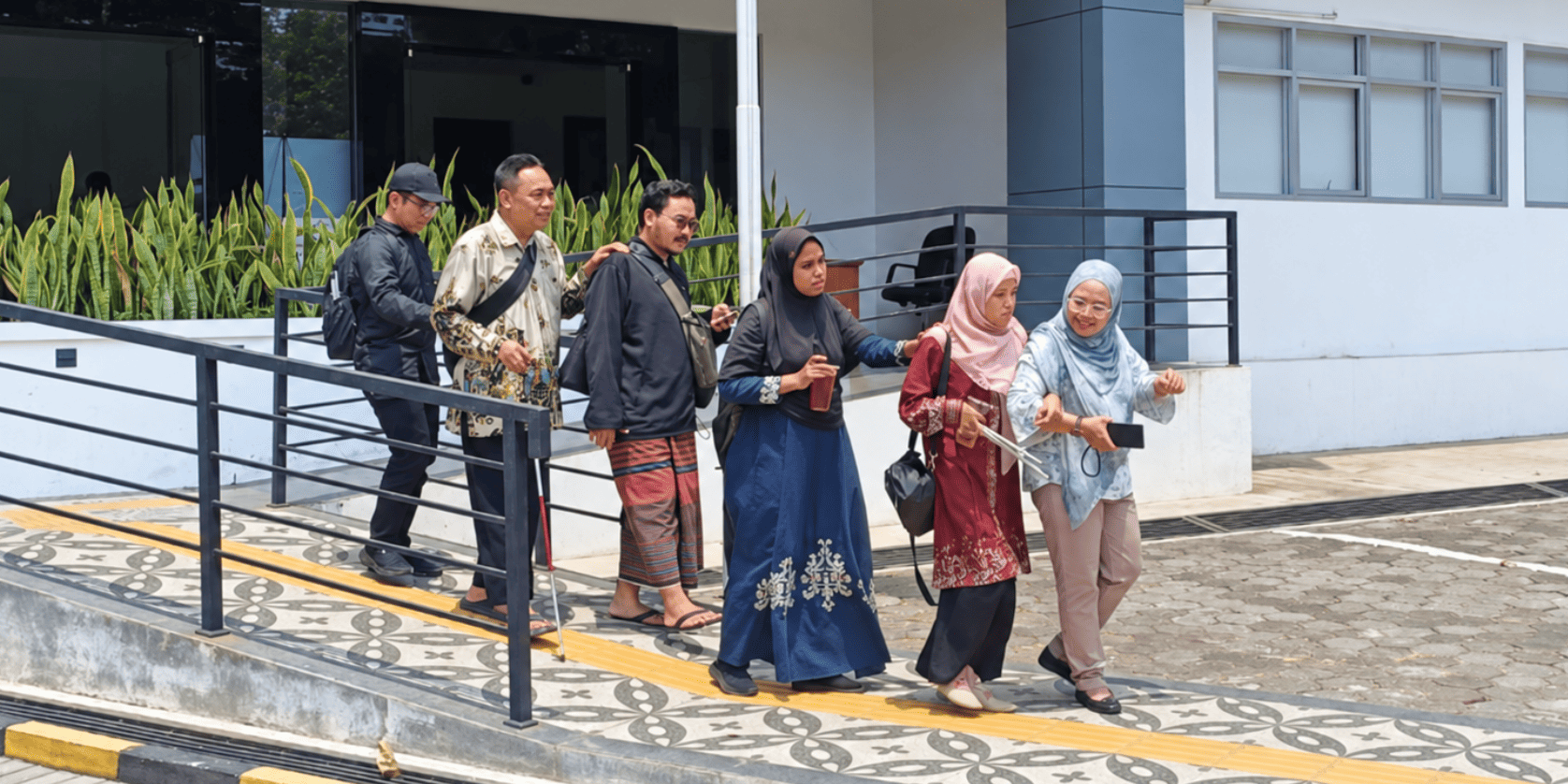
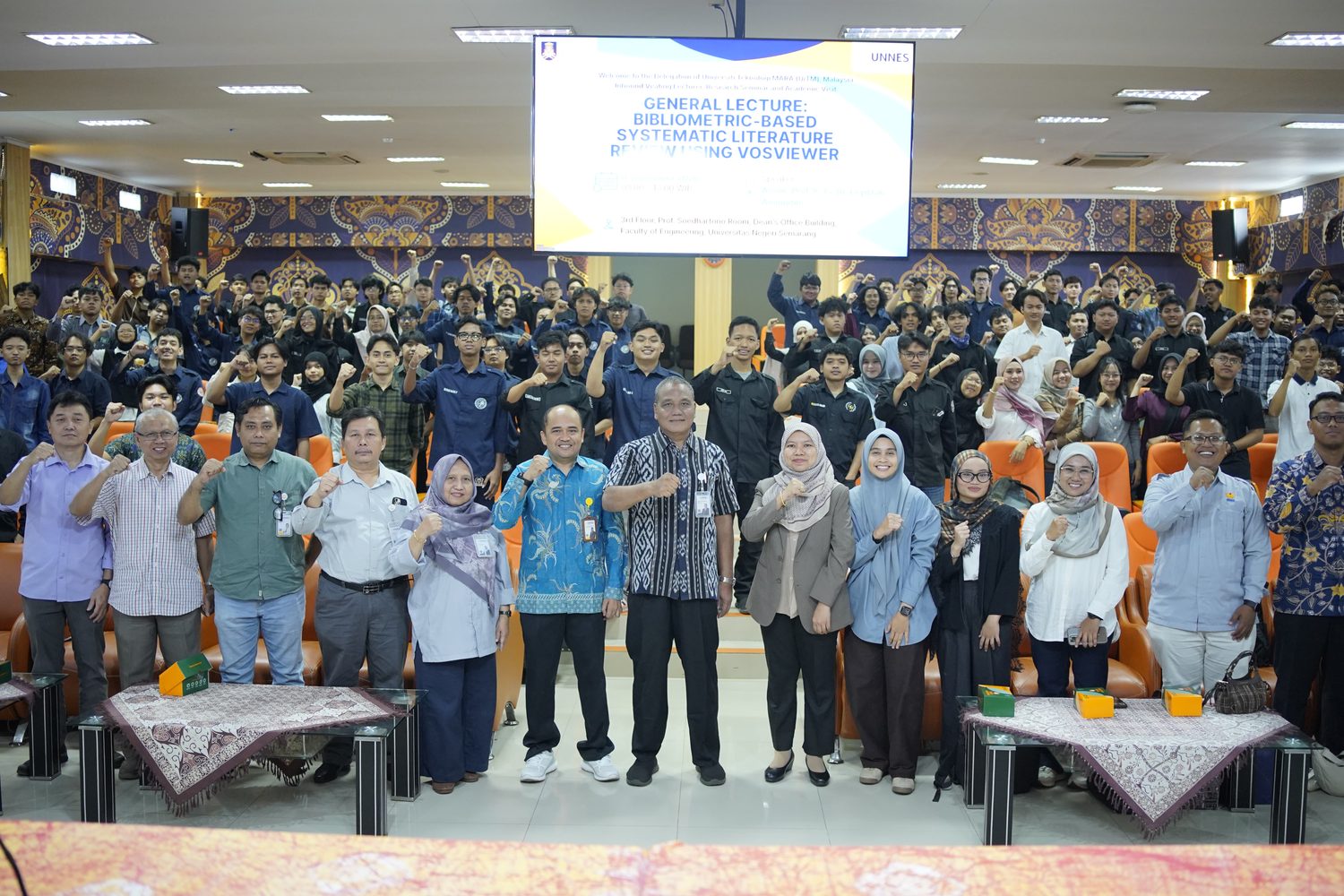
In 2025, UNNES undertakes educational ad hoc and programmed outreach activities beyond campus, including voluntary student-run schemes at schools, in communities, at partner institutions, and in government offices. Programmed outreach activities deployed 4,353 students and 188 faculty members across 355 villages in 14 regencies and 38 subdistricts in Central Java. UNNES funds 240 ad hoc outreach activities (160 for partner institutions, 77 for partner communities, and 3 for entrepreneur groups). 48 ad hoc outreach activities are funded by the Ministry of Education (37 partner institutions, 3 assisted villages, 2 flagship products, 1 regional activity, and 5 student empowerment activities). Nine UNNES departments conduct and fund 356 tailored lectures and demonstrations on different fields such as earthquake safety for Grobogan students (July 29), teaching analytical skills to Klaten junior high teachers (July 26), processing household waste for the Pakintelan community (May 25), and digital marketing for Pekalongan officials (June 18).
In alignment with Sustainable Development Goal 4 (SDG 4), which promotes inclusive and equitable quality education and lifelong learning opportunities for all, Universitas Negeri Semarang (UNNES) has strengthened its mission to extend education beyond the university environment. As a conservation and inclusive university, UNNES integrates education, research, and community service to empower citizens through faculty-led and student-run initiatives. These programs aim to bring knowledge, innovation, and capacity-building directly to communities, schools, and local institutions, ensuring that education contributes to sustainable development and social progress.
Programmed and Ad Hoc Outreach Activities
Programmed and ad hoc outreach activities are tailored into lectures and demonstrations, which are often delivered through UNNES community service activities. Community service is one of the core pillars of UNNES’s Tri Dharma of Higher Education, alongside education and research. It extends the university’s educational contribution beyond campus through knowledge sharing, practical training, and community empowerment. In 2025, UNNES’s Institute for Research and Community Service (LPPM) reported a community service budget allocation and realized expenditure totaling 9,707,332,000. This supported lecturer-led community service, Indonesian collaborative community-service programs, technology and innovation programs, and Nusantara arts initiatives. National BOPTN-funded programs also supported community empowerment, regional and entrepreneurship development, and disaster-response activities. These funding streams provided institutional support for UNNES to apply its expertise to community needs and strengthen its contribution to sustainable development.
A wide range of programs were carried out using participatory and collaborative approaches, including Village Empowerment Programs, Community Partnership Programs, Entrepreneurship Development Initiatives, and the integration of community service with project-based learning. Beyond lecturers, these programs also involved students through Thematic Community Service Programs (KKN) that were aligned with UNNES’s conservation mission and village empowerment schemes.
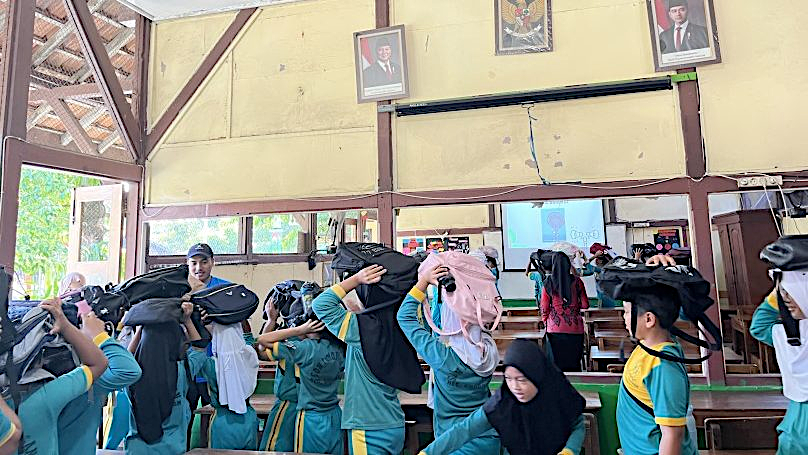
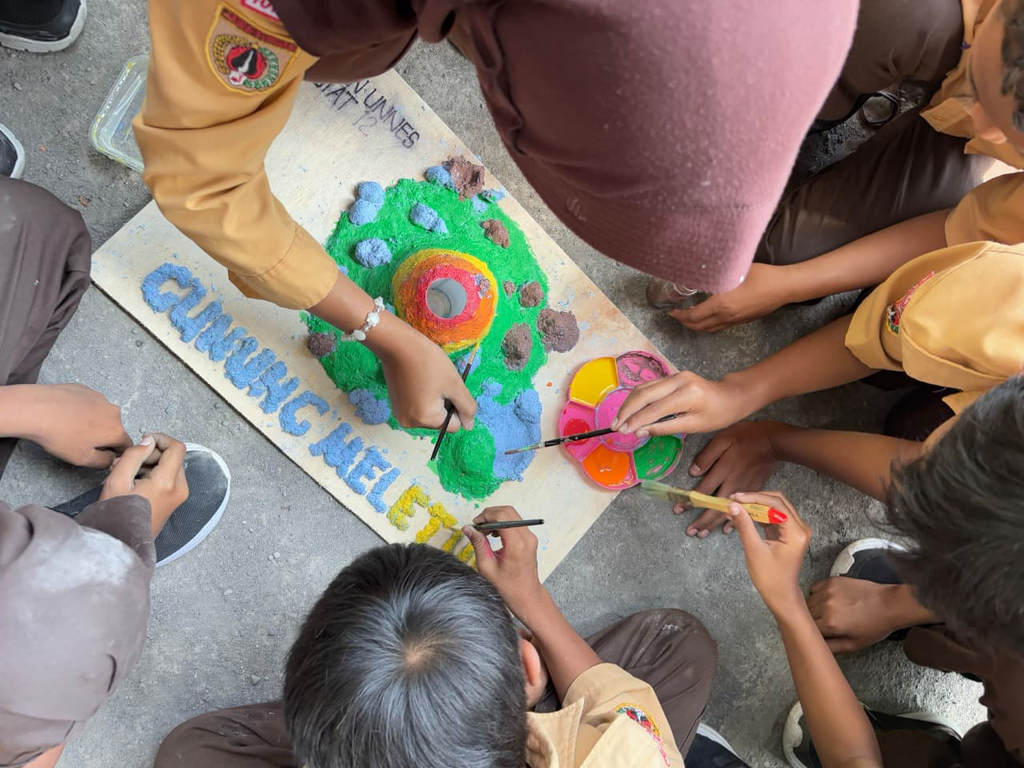
On 29 July 2025, the GIAT 12 SKM UNNES student team in Grobogan delivered earthquake-preparedness education at Negeri 1 Grobogan Elementary School. The session involved 74 students and teachers. Students explained earthquake risks and safety procedures through visual materials, educational songs, and small simulations, then guided participants through self-protection and evacuation practice to the school assembly point. The activity translated disaster knowledge into actions that children and teachers could practice in their own school.
UNNES conducts wide-ranging educational outreach programs across schools, communities, government offices, and small businesses throughout Central Java and beyond. The activities include lectures for government officials, teacher training programs, entrepreneurship workshops, literacy campaigns, and technology demonstrations. These initiatives address the specific learning needs of diverse groups and are designed to make education a practical and transformative force for communities. By taking learning outside the classroom, UNNES ensures that education benefits not only students but society as a whole.
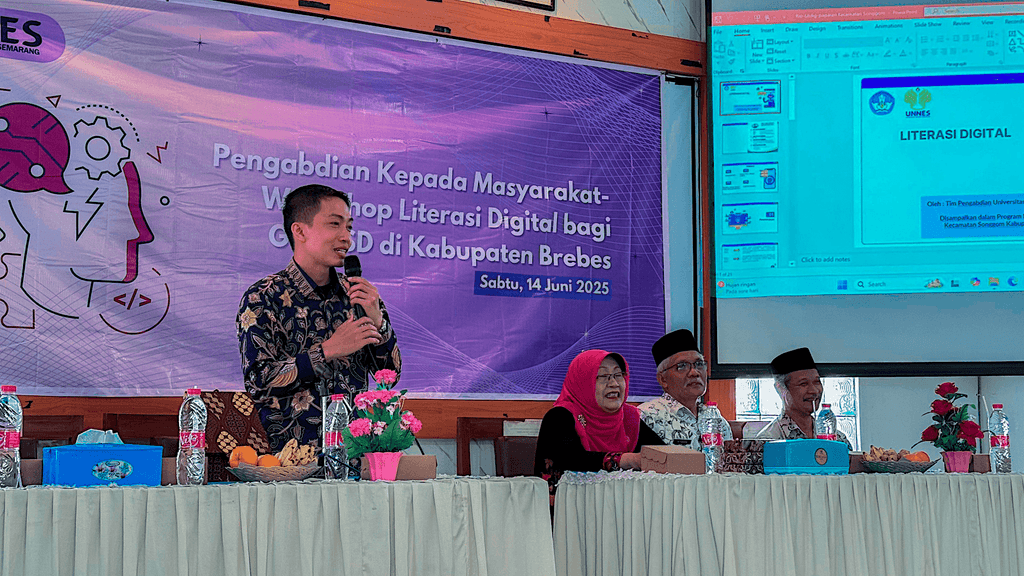
On 14 June 2025, the UNNES community service team delivered a digital literacy workshop for 30 primary school teachers from Songgom, Brebes. The session took place at the PKG hall in Songgom. The faculty and student team brought professional learning directly to the teachers’ local area, addressing digital literacy as a skill needed in their daily teaching. The public report links the workshop to an initial observation of teachers’ digital literacy needs, demonstrating the outreach’s locally tailored purpose.
Student Involvement in Education Outreach Activities
A key strength of UNNES’s outreach efforts lies in student participation, including voluntary student-run schemes. In 2025, UNNES announced the deployment of 4,353 students through its UNNES GIAT 12 community-service program, covering 355 villages across 38 subdistricts in 14 regencies and cities in Central Java. Scheduled from 2 July to 29 August 2025, the program was supported by 188 academic field supervisors.
Students were tasked with supporting disaster preparedness, stunting prevention, housing-data verification, and civic education, applying academic knowledge to practical community needs. This university-coordinated engagement provided opportunities for experiential learning while encouraging students to develop a sense of social responsibility and contribute to local development.
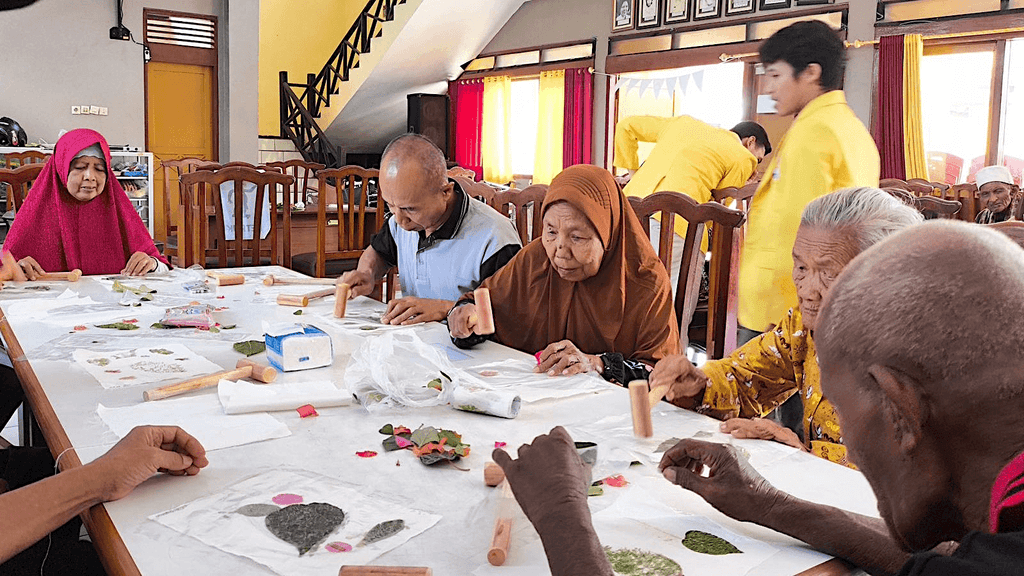
A student team introduced guided learning to older residents at the Wening Ati senior care home at RPSLU Wening Wardoyo in Semarang. Five psychology students, supervised by a faculty member, delivered self-compassion and mindfulness activities. They taught breathing exercises, butterfly hugs, and ecoprint as ways to practice emotional awareness. The Ministry of Education funded the program, and learning modules were provided to support continuation.
Promoting Culture and Sustainable Practices
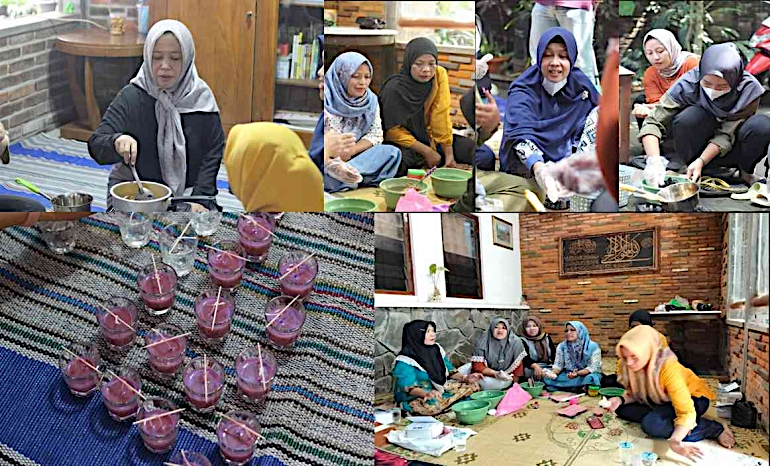
UNNES also integrates cultural and environmental education into its outreach programs. Students promoted cultural learning in local communities and schools, teaching traditional arts, music, and regional heritage. Other student groups developed creative, hands-on projects focused on sustainability — for instance, training school students to transform waste materials, such as used cooking oil, into soap.
These initiatives not only enhance environmental awareness but also demonstrate how education can generate practical, sustainable solutions that benefit both people and the planet.
Faculty-Led Workshops and Professional Development
Alongside student efforts, UNNES faculty members play a vital role in leading capacity-building workshops for educators and public officials. Faculty organized training on school management for schools in Indonesia, inclusive education for teachers in different districts, the general public, and government officials. These programs strengthen local governance, improve the quality of education, and enhance the capacity of public institutions to serve their communities effectively. Faculty engagement ensures that academic expertise is applied directly to real-world challenges, reinforcing UNNES’s role as a national center of educational innovation.
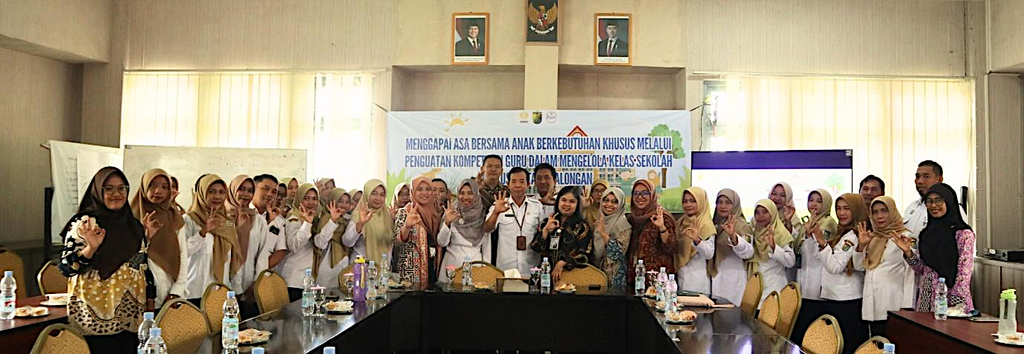
In Pekalongan, UNNES provided inclusive classroom training to 30 primary school teachers at the City Education Office Hall. The faculty-funded outreach was designed to strengthen teachers’ understanding of inclusive education and classroom management. The approach included reflection and practice, with follow-up mentoring envisaged by the organizers. This brought professional learning to a municipal venue beyond the UNNES campus.
Strengthening Villages and Local Enterprises
UNNES’s community engagement also includes support for village-owned enterprises (BUMDes) and local economic resilience programs. Several villages in Central Java received training on various topics, such as socio-economic resilience, mental health, and nutrition. These programs help local leaders build sustainable economies while addressing emerging social issues such as mental health awareness. By connecting education with community needs, UNNES empowers rural areas to achieve self-reliance and fosters innovation at the grassroots level.
UNNES also strengthens local enterprises in several regions by conducting educational outreach on culinary innovation and food product diversification to promote the growth and development of endemic coffee Small and Medium Enterprises (SMEs).
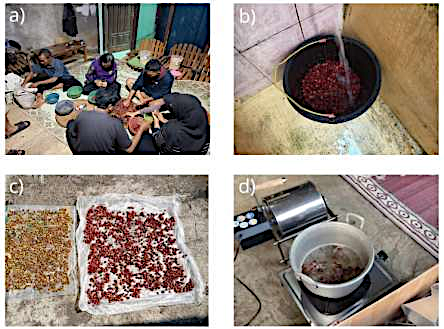
The UNNES team delivered cascara tea education in Peron Village, Limbangan, Kendal. Students and a lecturer also worked with the SEKAR community group on processing coffee husks through sorting, washing, drying, and brewing.
Participatory and Inclusive Approach
UNNES’s outreach model is grounded in participatory, student-led, and community-based approaches that ensure mutual learning and empowerment. The programs are designed not only to deliver knowledge but also to promote collaboration, inclusivity, and problem-solving. Through these initiatives, UNNES brings together faculty expertise, student enthusiasm, and community participation, creating a dynamic educational ecosystem that extends far beyond the classroom. This approach reinforces the university’s vision of education as a catalyst for societal transformation and sustainability.
The impact of UNNES’s community service programs is evident in the breadth and depth of interventions that directly address real community needs. These participatory and context-based activities successfully enhanced local capacities in education, economy, technology, and socio-cultural development. Through village empowerment programs, communities received mentoring in managing local potential, including micro, small, and medium enterprise development, appropriate technology adoption, and village governance strengthening. For students, integrating community service with academic learning provided valuable hands-on experience applying knowledge in real-world contexts. Their engagement fostered empathy, leadership, and social responsibility, aligning education with civic values. Collaboration between lecturers, students, and local partners has also strengthened UNNES’s position as an institution responsive to societal challenges and a key contributor to sustainable development at both local and national levels.
Through its faculty-led and student-run educational outreach and community engagement programs, Universitas Negeri Semarang (UNNES) exemplifies the core principles of SDG 4: Quality Education. By extending learning into schools, villages, and public institutions, UNNES ensures that education remains relevant, inclusive, and transformative. These initiatives empower citizens, strengthen local innovation, and contribute to building resilient, knowledge-driven communities. In doing so, UNNES reaffirms its commitment to being a university that not only educates within its walls but also enlightens and uplifts society beyond them.