Universitas Negeri Semarang (UNNES) continues to strengthen its institutional commitment to upgrading existing campus buildings through energy efficiency improvements, renewable energy integration, and sustainable building management. Guided by Rector’s Circular Letter No. B/28595/UN37/PA.00.00/2024 concerning Green Buildings, the university has established a comprehensive framework for improving the energy performance of existing infrastructure while supporting its long-term commitment to carbon neutrality.
The policy establishes university-wide energy efficiency measures covering building operations, energy management, equipment maintenance, renewable energy utilization, and the gradual replacement of conventional technologies with more efficient alternatives.
Institutional Policy for Upgrading Existing Buildings
UNNES’s building energy efficiency improvement strategy is explicitly supported by its Green Building Policy, issued on December 6, 2024. The policy applies to all types of university buildings and establishes seven major areas of energy management, including energy management planning, improved energy efficiency, energy system implementation, continuous monitoring, equipment maintenance, renewable energy utilization, and green open-space provision.
To translate these commitments into practical building improvements, the university has identified several measures for existing facilities:
- Gradually replacing conventional lighting systems with energy-efficient alternatives.
- Conducting regular maintenance of building equipment and energy-consuming facilities.
- Selecting air conditioning systems based on energy efficiency, thermal comfort, and appropriate cooling requirements.
- Establishing operational schedules to prevent unnecessary energy consumption.
- Strengthening energy monitoring and management systems.
- Expanding the integration of renewable energy technologies into existing campus infrastructure.
These measures provide an institutional framework for progressively upgrading building energy performance through equipment modernization, operational improvements, and sustainable infrastructure management.
More Than 1,200 Solar Panels Integrated into 14 Campus Buildings
One of UNNES’s most significant achievements in upgrading existing building infrastructure is the integration of rooftop solar photovoltaic systems. According to the university’s Green Building Implementation Report, more than 1,200 solar panels have been installed across 14 main campus buildings. These installations include the Rectorate, Information Technology Centre, University Library, Entrepreneurship Building, research and institutional facilities, and faculty buildings.
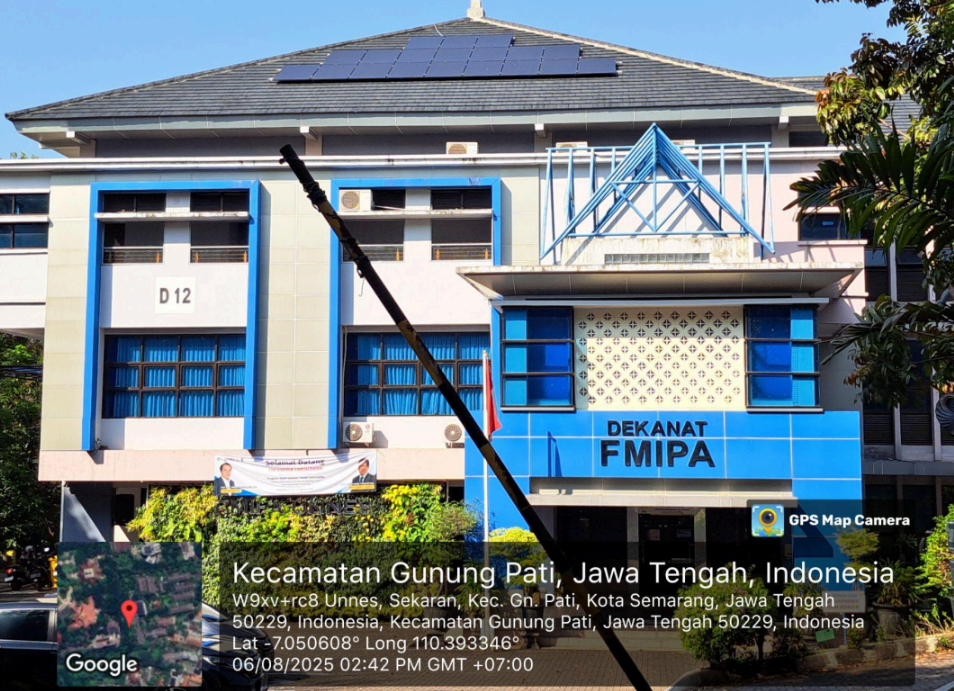
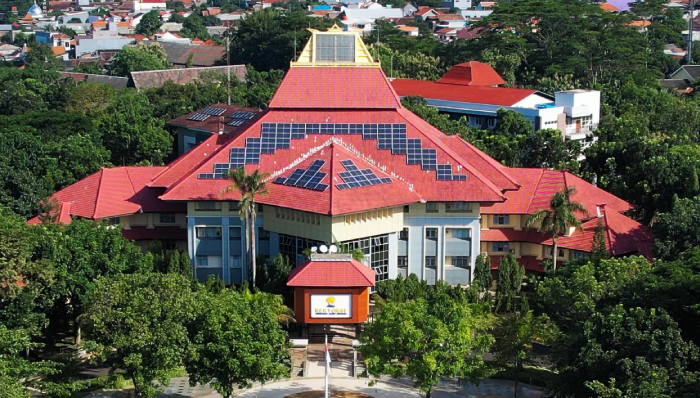
The solar photovoltaic systems are connected to the electricity grid, allowing renewable electricity generation to reduce dependence on conventional grid-supplied electricity. Furthermore, the installations are supported by an online energy monitoring system that enables the university to observe electricity generation and support energy management decisions. This integration of renewable energy generation and digital monitoring represents an important component of UNNES’s strategy for improving the energy performance of existing buildings.
Optimizing Natural Lighting and Ventilation
In addition to technological upgrades, UNNES promotes passive energy efficiency strategies that reduce dependence on artificial lighting and mechanical cooling. Natural lighting and ventilation features have been incorporated into numerous campus facilities, including the University Library, Rectorate, Faculty of Engineering, Faculty of Economics and Business, Faculty of Mathematics and Natural Sciences, Faculty of Languages and Arts, and various classroom buildings.
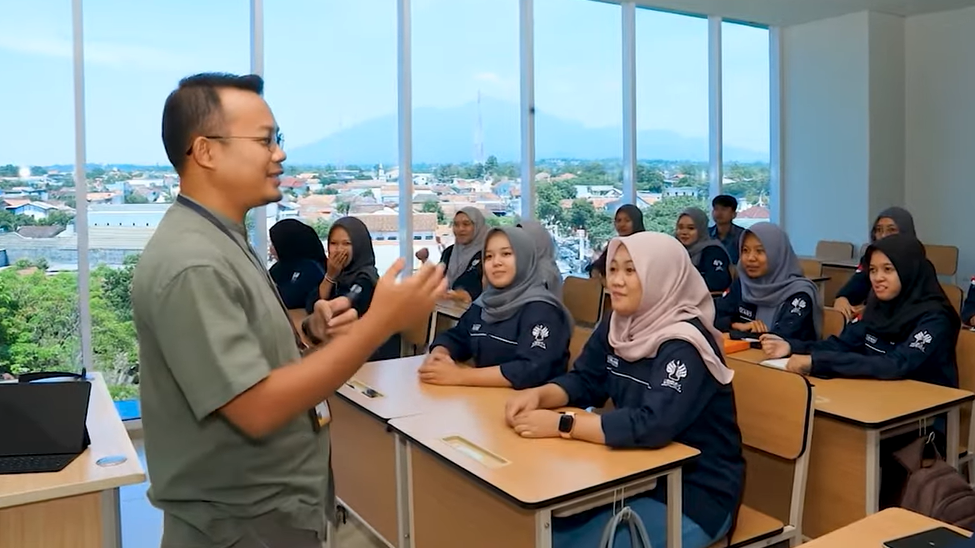
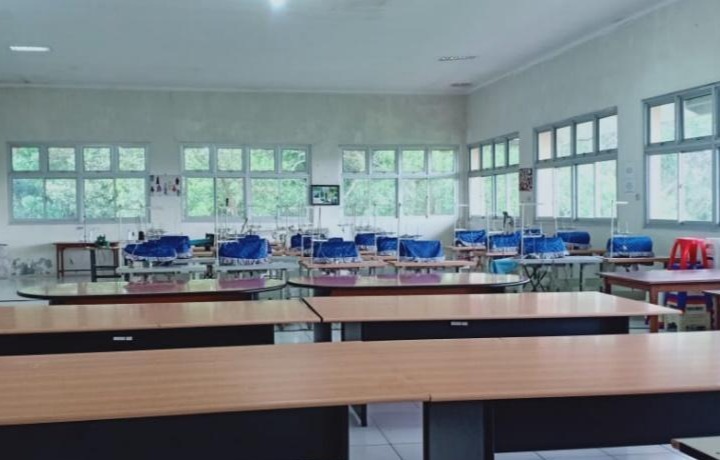
The use of glass windows, ventilation openings, reflective building elements, and architectural features that facilitate daylight penetration allows indoor spaces to benefit from natural illumination. These approaches support the university’s efforts to improve thermal comfort and reduce unnecessary energy consumption during building operations. As part of its ongoing building improvement framework, UNNES emphasizes the continued optimization of daylighting and ventilation in existing academic and administrative facilities.
Integrating Vertical Gardens into Campus Buildings
UNNES also incorporates ecological building improvements through indoor and outdoor vertical gardens. The university’s implementation report documents vertical gardens at at least eight campus locations, including the Faculty of Engineering, Faculty of Languages and Arts, Faculty of Mathematics and Natural Sciences, Faculty of Economics and Business, Faculty of Sport Science, Faculty of Law, institutional facilities, and the Conservation Office.
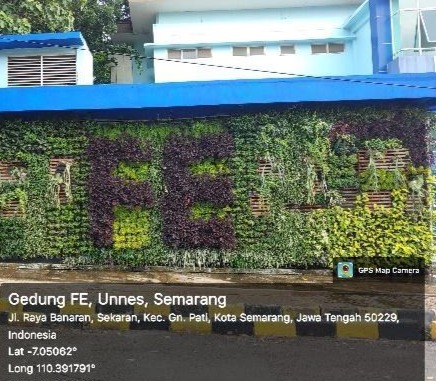
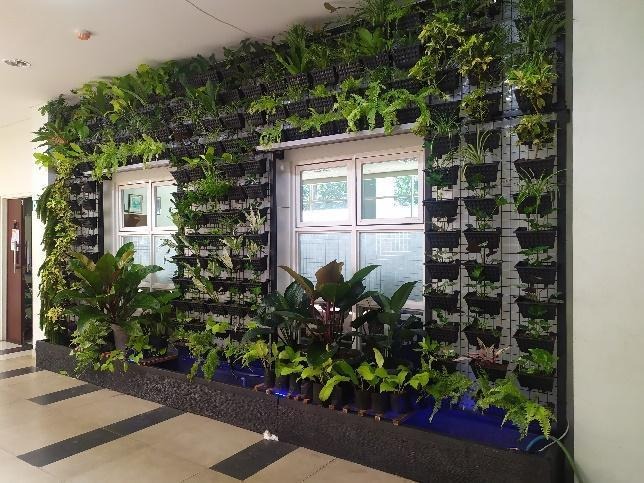
These green building elements contribute to the integration of vegetation into existing building environments, supporting shading, environmental quality, and sustainable campus aesthetics. The development and maintenance of vertical gardens complement other building efficiency strategies by promoting environmentally responsive infrastructure and more comfortable campus environments.
Strengthening Energy Monitoring and Building Management
UNNES recognizes that upgrading existing buildings requires not only physical improvements but also effective management of energy consumption. Under the Green Building Policy, university units are encouraged to improve energy management through systematic monitoring, regular equipment maintenance, operational scheduling, and the adoption of energy-efficient technologies.
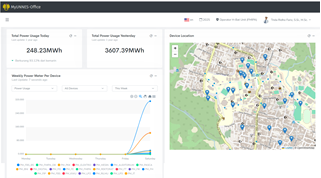
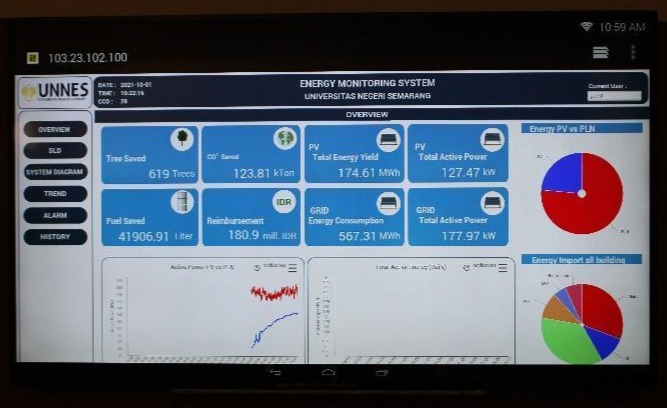
The integration of online monitoring systems with rooftop solar installations provides an operational foundation for evaluating renewable electricity generation and supporting future energy management improvements. These measures are intended to strengthen the university’s ability to identify energy efficiency opportunities and guide the gradual modernization of campus facilities.
Supporting Carbon Neutrality and Sustainable Development Goals
UNNES’s building energy efficiency improvement program forms part of its broader commitment to environmental sustainability and carbon neutrality. By combining institutional policy, rooftop solar energy, passive building design, vertical gardens, and improved energy management, the university has established a foundation for continuously improving the performance of existing campus infrastructure.
These initiatives directly support Sustainable Development Goal 7 (Affordable and Clean Energy) by promoting energy efficiency and renewable energy utilization. They also contribute to SDG 11 (Sustainable Cities and Communities) and SDG 13 (Climate Action) through sustainable infrastructure development and climate-conscious building management. Through the continued implementation of its Green Building Policy, UNNES aims to progressively transform existing campus facilities into more energy-efficient, environmentally responsible, and sustainable buildings, reinforcing its institutional identity as a conservation-oriented university.