

FMIPA UNNES Students Empower Communities in a Drought-Prone Village in Klaten through Rainwater Harvesting and Corn Waste Briquette Production Based on Circular Economy Principles

Universitas Negeri Semarang/Faculty of Mathematics and Natural Sciences/Berita/FMIPA UNNES Students Empower Communities in a Drought-Prone Village in Klaten through Rainwater Harvesting and Corn Waste Briquette Production Based on Circular Economy Principles
Two-panel field activity collage in Dukuh Village, Klaten, showing a student and a Karang Taruna member pushing a wheelbarrow along a village road on the left, and two students in purple-and-green vests gathering dried corn cobs into a grey basin on the right.

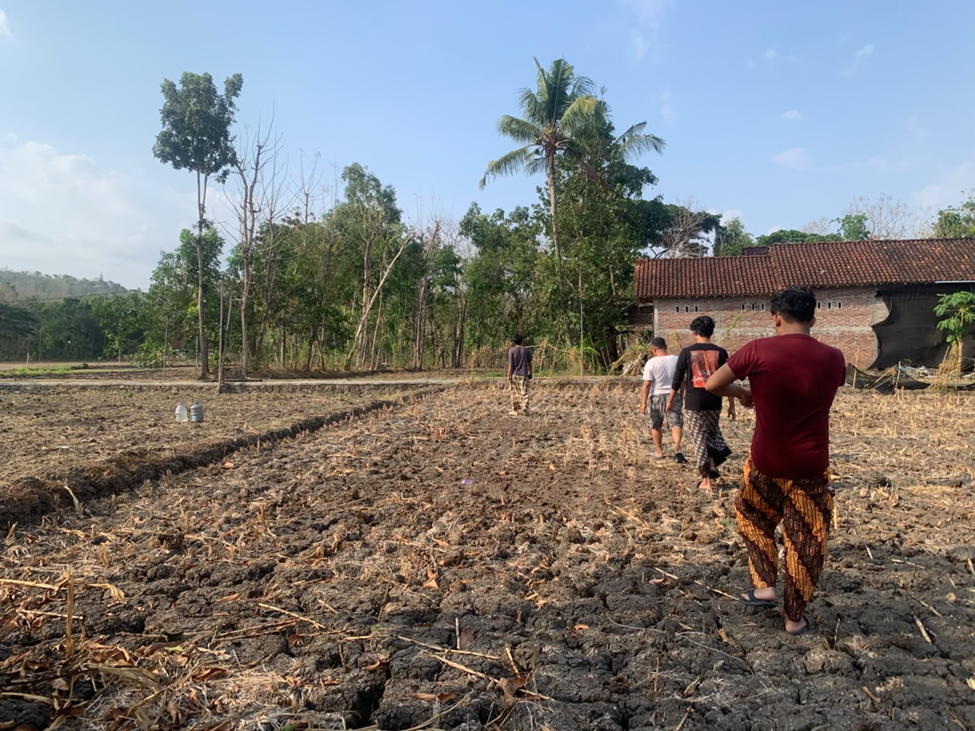
Dukuh Village, Bayat District, Klaten Regency, is one of the areas facing drought and limited access to clean water during the 2026 dry season. These conditions pose significant challenges for local communities, most of whom depend on agriculture, particularly rice farming, for their livelihoods. In response to these challenges, the Science Education and Environmental Science Student Associations (Hima IPA & Ilmu Lingkungan) of Universitas Negeri Semarang (UNNES) implemented a community empowerment program through innovations in water conservation and agricultural waste utilization.

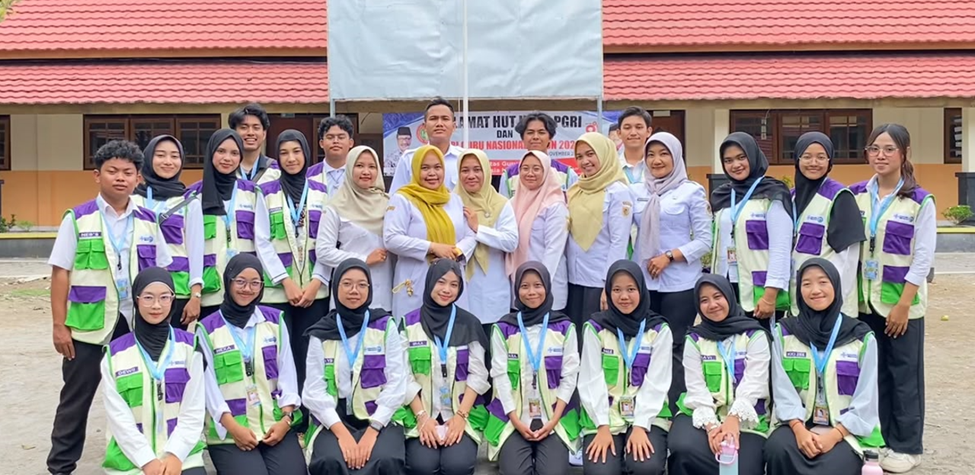
The program, entitled “Empowering Farmer Groups and Youth Organizations in Dukuh Village through Rainwater Harvesting and Corn Waste Briquettes Based on the Circular Economy,” is being implemented by students from the Science Education and Environmental Science Student Associations from October to early December 2026. This initiative is part of the Aksara Mahasiswa (Student Learning and Community Empowerment Action) program launched by the Indonesian Ministry of Higher Education, Science, and Technology (Kemdiktisaintek).

The program is supervised by Abdul Jabbar, M.Ling., Amnan Haris, M.Ling., and Rizky Nor Amelia, M.Pd., lecturers from the Environmental Science and Science Education Study Programs at FMIPA UNNES. The activities involve local farmer groups and youth organizations (Karang Taruna) as community empowerment partners in Dukuh Village.

One of the program’s main focuses is the implementation of Rainwater Harvesting (RWH) as an alternative method for collecting and storing rainwater to help communities address water shortages during the dry season. This approach is expected to improve rainwater utilization while strengthening public awareness of the importance of water resource conservation.
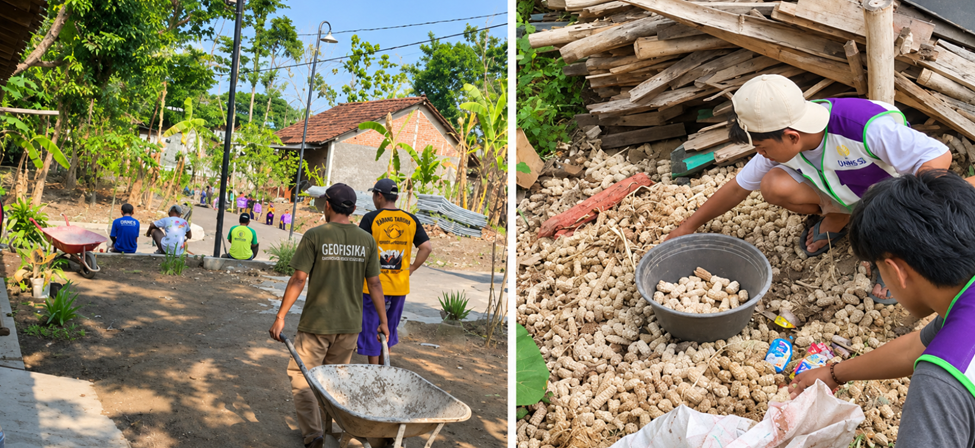
In addition to water conservation, students are developing biomass briquettes from corn waste as an application of circular economy principles. This innovation aims to increase the value of agricultural residues by converting them into alternative fuel sources. Briquette development also aligns with research areas frequently explored by the Environmental Science Study Program at FMIPA UNNES.

Through the involvement of farmer groups and youth organizations, the program is expected to strengthen community skills in managing local resources, reduce underutilized agricultural waste, and create opportunities for environmentally based productive economic activities.
This initiative supports the Sustainable Development Goals (SDGs), particularly SDG 6 (Clean Water and Sanitation) through rainwater harvesting, SDG 7 (Affordable and Clean Energy) through biomass briquette development, SDG 12 (Responsible Consumption and Production) through agricultural waste utilization based on circular economy principles, and SDG 17 (Partnerships for the Goals) through collaboration among students, universities, and local communities.

Through the Aksara Mahasiswa program, FMIPA UNNES demonstrates its contribution to integrating education, appropriate technology innovation, and community empowerment. The program is expected to support water security, alternative energy utilization, and circular economy development tailored to the potential and needs of the Dukuh Village community.

Related Posts

Leave a Reply

* Kode Akses Komentar:

* Tuliskan kode akses komentar diatas:

GDPR

  • Privacy Policy

Privacy Policy

At unnes.ac.id, the privacy of our visitors is of extreme importance to us. This privacy policy document outlines the types of personal information that is received and collected by unnes.ac.id and how it is used.

Log Files

Like many other Web sites, unnes.ac.id makes use of log files. The information inside the log files includes internet protocol (IP) addresses, type of browser, Internet Service Provider (ISP), date/time stamp, referring/exit pages, and number of clicks to analyze trends, administer the site, track user’s movement around the site, and gather demographic information. IP addresses and other such information are not linked to any information that is personally identifiable.

Cookies

unnes.ac.id uses cookies to store information about visitors’ preferences, to record user-specific information on which pages the site visitor accesses or visits, and to personalize or customize our web page content based upon visitors’ browser type or other information that the visitor sends via their browser.

Third-party ad servers or ad networks use technology in their respective advertisements and links that appear on unnes.ac.id and which are sent directly to your browser. They automatically receive your IP address when this occurs. Other technologies (such as cookies, JavaScript, or Web Beacons) may also be used by our site’s third-party ad networks to measure the effectiveness of their advertising campaigns and/or to personalize the advertising content that you see on the site.

unnes.ac.id has no access to or control over these cookies that are used by third-party advertisers.

You should consult the respective privacy policies of these third-party ad servers for more detailed information on their practices as well as for instructions about how to opt-out of certain practices. unnes.ac.id’s privacy policy does not apply to, and we cannot control the activities of, such other advertisers or web sites.

If you wish to disable cookies, you may do so through your individual browser options. More detailed information about cookie management with specific web browsers can be found at the browsers’ respective websites.

Consent

By using our website, you hereby consent to our privacy policy and agree to its terms.

Update

This Privacy Policy was last updated on: 2023-02-14. Should we update, amend or make any changes to our privacy policy, those changes will be posted here.

Contact Us

If you have any questions, comments, or concerns about our Privacy Policy or our practices with regards to your personal information, please feel free to contact us through the contact form on our website or by emailing us at humas[at]mail.unnes.ac.id.

This Privacy Policy is intended as a general guide to our practices in collecting and using information. If there is any inconsistency between this Privacy Policy and the terms of the Service Agreement or any other terms that may apply to specific services you use, then those specific service terms shall apply.

Terms of Use

By using our website, you agree to abide by this Privacy Policy. If you do not agree with this Privacy Policy, please do not use our website. We reserve the right to update this Privacy Policy from time to time without prior notice. Please review our Privacy Policy periodically to check for changes. Your continued use of our website following the posting of changes to this Privacy Policy means that you accept the changes.

Thank you for reading our Privacy Policy. We are committed to protecting the privacy of our website visitors and will continue to update our Privacy Policy to ensure optimal protection.