


SEMARANG – Advancements in energy and transportation technologies are driving the demand for materials that offer high performance while utilizing resources more efficiently. One of the key challenges lies in developing energy storage materials to support renewable energy utilization and finding alternative materials for safer and more sustainable vehicle components. Addressing these challenges, Prof. Sutikno, together with a research team from the Faculty of Mathematics and Natural Sciences, Universitas Negeri Semarang (FMIPA UNNES), has developed advanced material innovations through research on sodium-ion battery electrodes and brake pad composites based on natural fibers and local minerals.
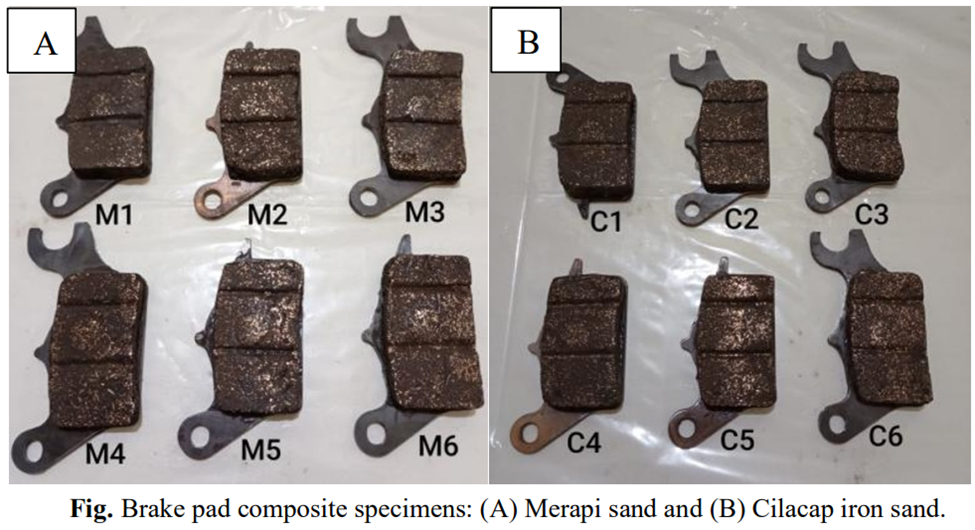
Both studies adopt distinct approaches in materials engineering yet share an interconnected goal: developing functional materials to support technological advancement and the utilization of alternative resources. The first study, entitled “Fabrication and Characterization of Metal-Organic Frameworks-5 Based on Zinc Nitrate Hydrate for Sodium Ion Battery Electrodes”, has been published in the International Journal of Nanoelectronics and Materials, Volume 19, Number 1, in 2026. Meanwhile, the second study, entitled “Mechanical Performance of Water Hyacinth Fiber Reinforced Non-Asbestos Brake Pad Composites with Mount Merapi and Cilacap Iron Sand Fillers”, investigates the potential of utilizing water hyacinth fiber and mineral sands as non-asbestos brake pad composite materials.
In the first study, the research team developed zinc-based Metal-Organic Frameworks (MOF-5) as candidate electrode materials for sodium-ion batteries. MOF materials are characterized by a porous structure, high surface area, and tunable material properties. These characteristics make MOFs attractive for investigation in the development of electrochemical energy storage technologies.
Sodium-ion batteries represent an alternative energy storage technology that continues to be developed because sodium is a relatively abundant element. Battery technology plays a crucial role in supporting renewable energy systems, particularly for storing electricity generated from fluctuating sources such as solar and wind power. Therefore, developing electrode materials is a vital aspect of enhancing the capacity and reliability of future energy storage technologies.
The MOF-5 research was conducted via a solvothermal synthesis method using zinc nitrate hydrate-based precursors. The research team performed characterizations to understand structural changes, surface morphology, and material stability under varying treatment conditions. The results indicated that MOF-5 has limited thermal resistance at high temperatures, with optimal stability reported at 650°C. The study also evaluated the use of binders such as polyvinylidene fluoride (PVDF) and epoxy resin, and conducted electrochemical testing to examine the material’s characteristics for battery electrode applications.
Meanwhile, the second study developed non-asbestos brake pad composites utilizing water hyacinth fiber, Mount Merapi sand, and Cilacap iron sand. Water hyacinth was selected due to its cellulose content, which holds potential as a natural reinforcing agent, while mineral sands were used as fillers to support the mechanical properties and friction characteristics of the composite.
Developing non-asbestos brake pads is essential because the use of asbestos in friction materials poses health risks, especially if its fibers become airborne and are inhaled. By utilizing natural fibers and local mineral resources, this study explores alternative materials with potential applications in vehicle component manufacturing.
The composite fabrication process was carried out using a cold-pressing method at a pressure of 10 metric tons, followed by heat treatment at 300°C for two hours. The water hyacinth fibers were pre-treated with a 5% NaOH solution to enhance interfacial bonding between the fibers and the composite matrix. The resulting materials were subsequently tested for hardness, wear resistance, and friction coefficient.
The results showed that composites filled with Mount Merapi sand exhibited a lower wear rate of 0.133 × 10⁻⁷ cm³/Nm compared to composites with Cilacap iron sand at 0.304 × 10⁻⁷ cm³/Nm. These findings indicate that the characteristics of mineral materials influence the mechanical performance of composites and can serve as key considerations in developing non-asbestos brake pad materials.
The positive impact of both studies lies in advancing knowledge and technology for alternative materials with potential applications in the energy and transportation sectors. The MOF-5 research provides scientific insights into electrode material characteristics for sodium-ion battery development, while the brake pad composite research opens opportunities for utilizing water hyacinth biomass and local minerals as engineering materials. Both studies also underscore the importance of mastering materials technology to generate innovations that can be further scaled toward industrial applications.
From a sustainable development perspective, both studies support the achievement of the Sustainable Development Goals (SDGs), particularly SDG 7 (Affordable and Clean Energy) through the development of candidate sodium-ion battery electrode materials that can support energy storage technologies for renewable energy systems. This research also contributes to SDG 9 (Industry, Innovation and Infrastructure) through the development and characterization of advanced materials for energy technology applications and vehicle components. Furthermore, the research on composites based on water hyacinth fiber and local minerals is relevant to SDG 12 (Responsible Consumption and Production) by exploring the use of alternative resources in industrial material development.
Although further research is still required to ensure performance, durability, production feasibility, and environmental impacts, both innovations represent important steps in expanding the application of materials science for future technological needs. The development of battery materials and non-asbestos composites is expected to open research collaboration opportunities with the industrial sector and foster innovations that increasingly prioritize resource efficiency and environmental sustainability.
Through these studies, the FMIPA UNNES research team demonstrates higher education’s contribution to advancing science and technology relevant to energy transition challenges and industrial material needs. These innovations are expected to serve as a foundation for developing more sustainable energy storage technologies and vehicle components, while strengthening the role of advanced materials research in supporting sustainable development in Indonesia.