

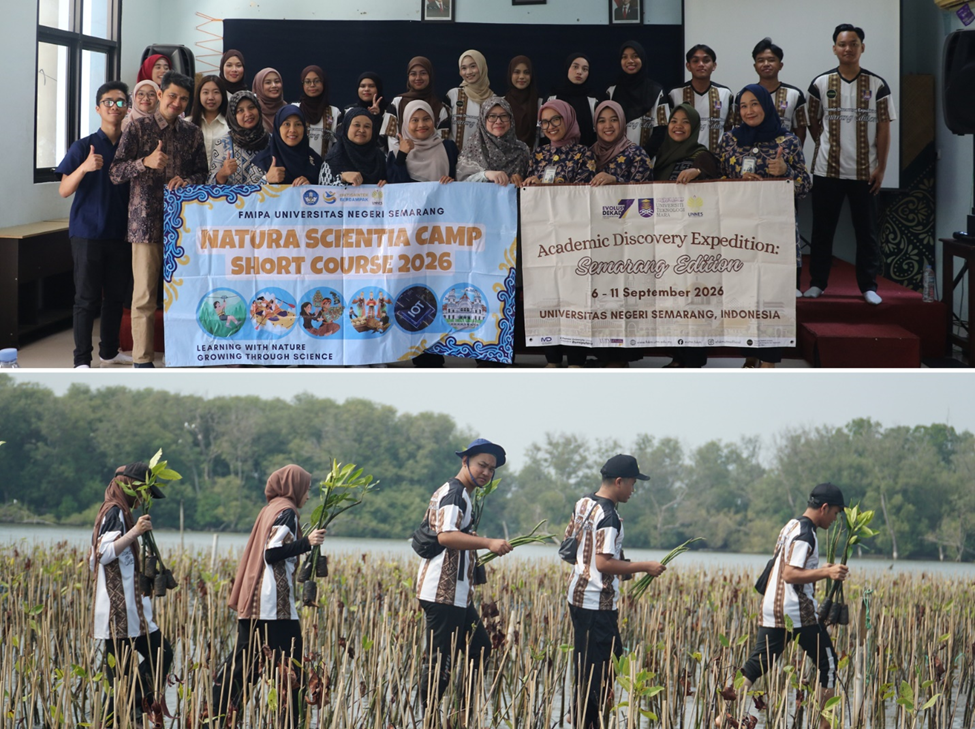
The Faculty of Mathematics and Natural Sciences (FMIPA), Universitas Negeri Semarang (UNNES), once again organized Natura Scientia Camp (NSC) Season 4, an international short course designed to strengthen academic collaboration, cultural exchange, research, and the use of digital technology. In NSC Season 4, FMIPA UNNES welcomed students and lecturers from Universiti Teknologi MARA (UiTM), Malaysia. Held from September 7–10, 2026, the program combined technology-based learning, academic lectures, environmental conservation activities, local cultural exploration, visits to natural and heritage sites, and educational activities at an elementary school.
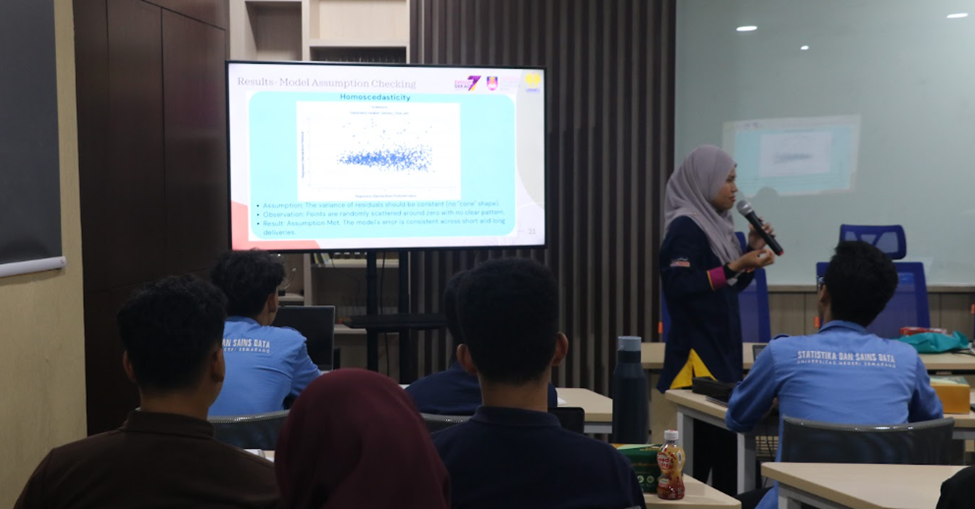
The NSC Season 4 program began on September 7, 2026, with a Software Workshop: Python Programming. The workshop provided participants with hands-on experience in digital technology, particularly in learning Python programming, which is widely used for data processing, analysis, computation, and various research applications. The workshop was followed by a public lecture delivered by a UiTM lecturer, providing an opportunity for knowledge sharing and the exchange of academic perspectives between the two institutions.
Planting 3,000 Mangrove Seedlings in Patebon
On September 8, 2026, NSC Season 4 participants joined a mangrove planting activity in Patebon, Kendal Regency. The activity was part of a broader mangrove rehabilitation program targeting the planting of 60,000 mangrove seedlings, initiated by PAMA Group in collaboration with FMIPA UNNES.
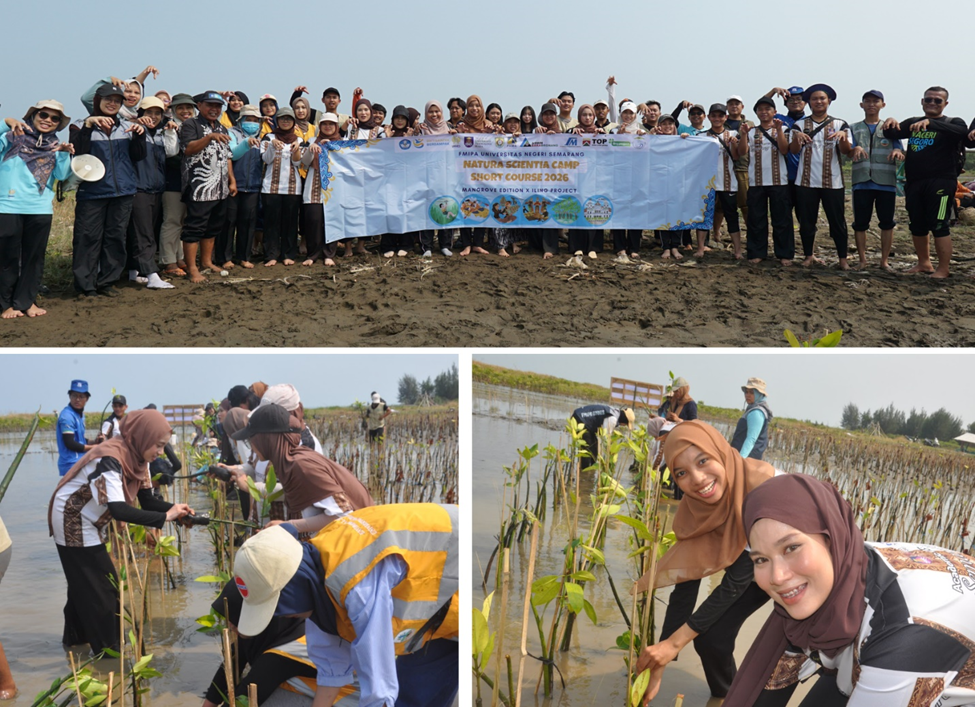
During the activity involving FMIPA UNNES and students and lecturers from UiTM, a total of 3,000 mangrove seedlings were planted along the Patebon coastal area. The activity provided international participants with first-hand experience of coastal ecosystem rehabilitation while introducing the role of universities in environmental conservation efforts.
The mangrove planting was not only a field activity but also a learning experience about the ecological functions of mangroves in protecting coastal areas, supporting biodiversity, and contributing to climate change mitigation through carbon storage.
Exploring Javanese Arts and Culture
Also on September 8, 2026, participants took part in a gamelan introduction session at Pendopo Kautaman. They had the opportunity to learn about traditional gamelan instruments and experience playing one of the important forms of Javanese cultural heritage.
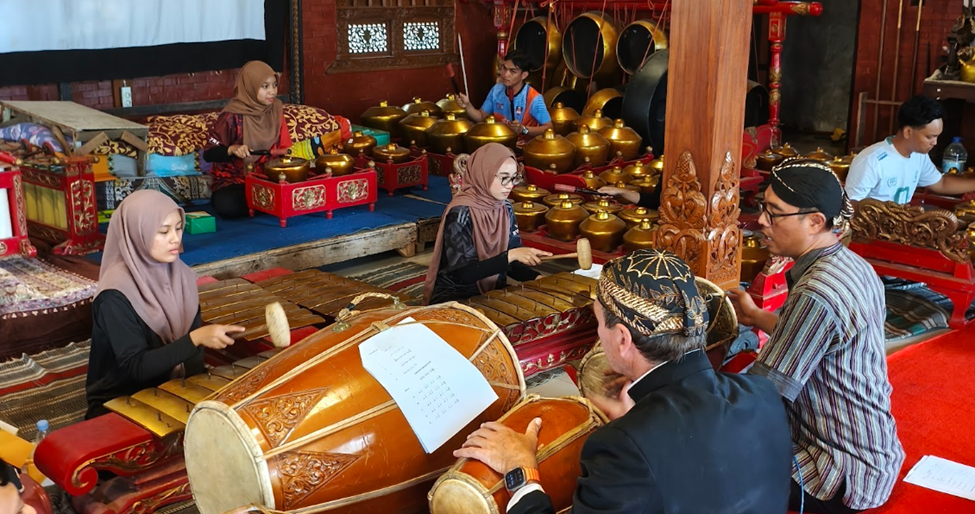
The cultural activity was an integral part of NSC Season 4, demonstrating that international collaboration can extend beyond academic settings through direct engagement with local culture. The experience allowed UiTM participants to gain a closer understanding of the cultural richness of Java and Indonesia.
Exploring Nature and Semarang’s Cultural Heritage
On September 9, 2026, the program continued with visits to Umbul Sidomukti and Semarang Old Town (Kota Lama Semarang). The activities gave participants an opportunity to experience the region’s natural landscape as well as the historical and cultural heritage of Semarang.
The visit to Semarang Old Town also introduced participants to a designated cultural heritage area that represents an important part of the city’s historical development. The combination of environmental exploration and cultural heritage provided participants with a broader understanding of the local character and cultural richness of Indonesia.
Sharing Educational Experiences through a School Visit
The NSC Season 4 program concluded on September 10, 2026, with an Elementary School Visit & Educational Activity. During the activity, participants interacted with elementary school students through educational activities designed to create an engaging and enjoyable learning experience.
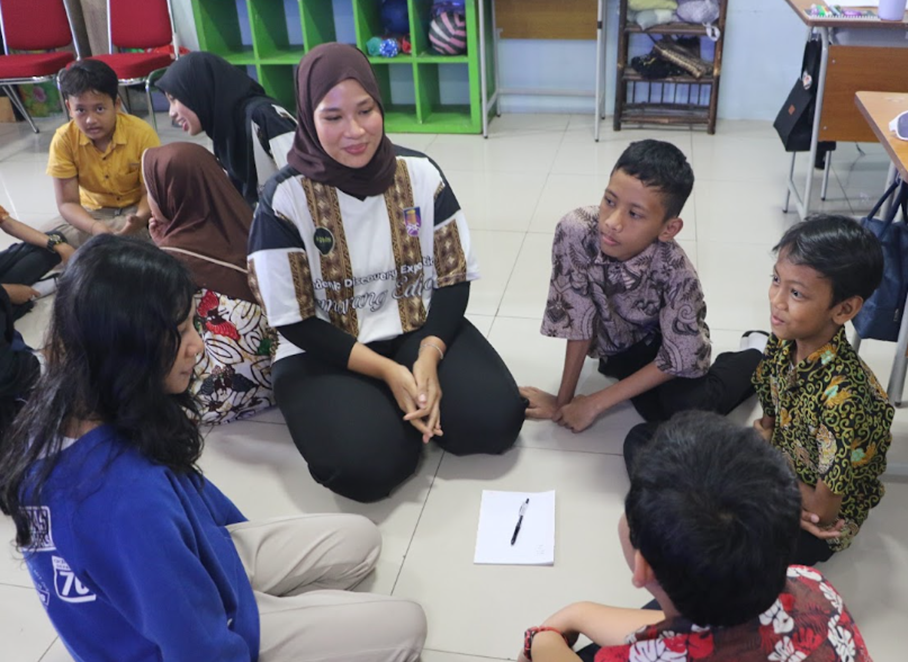
The visit also provided international participants with an opportunity to gain insights into the elementary education environment in Indonesia while encouraging the exchange of educational experiences across countries.
Supporting the Sustainable Development Goals
The NSC Season 4 program supported various Sustainable Development Goals (SDGs) by integrating academic learning, technology, environmental conservation, cultural engagement, and education.
The Software Workshop: Python Programming and public lecture supported SDG 4: Quality Education by strengthening participants’ competencies and facilitating knowledge exchange, as well as SDG 9: Industry, Innovation and Infrastructure through the introduction of digital technology and programming.
The planting of 3,000 mangrove seedlings as part of the broader 60,000-seedling rehabilitation program supported SDG 13: Climate Action through climate change mitigation efforts, SDG 14: Life Below Water through the protection and rehabilitation of coastal ecosystems, and SDG 15: Life on Land through ecosystem restoration and biodiversity conservation.
The introduction to gamelan and the visit to Semarang Old Town contributed to SDG 11: Sustainable Cities and Communities, particularly through the appreciation and preservation of cultural heritage. Meanwhile, the overall NSC Season 4 program bringing together FMIPA UNNES and UiTM represents a concrete contribution to SDG 17: Partnerships for the Goals by strengthening international academic partnerships.
Through NSC Season 4, FMIPA UNNES demonstrates that an international short course can provide learning experiences that extend beyond classrooms and campuses. The combination of technology, academic learning, mangrove conservation, arts and culture, environmental and heritage exploration, and education provides participants with a comprehensive learning experience while strengthening the international academic network of FMIPA UNNES.