


Kendal, 30 August 2026 — The effort to establish Peron Village, Kendal Regency, as a disaster-resilient and environmentally sustainable village continues to be strengthened by the Student Organization Capacity Strengthening Program (PPK Ormawa) Team of BEM FMIPA Universitas Negeri Semarang (UNNES). PPK Ormawa is a community empowerment grant program that encourages student organizations to actively contribute to solving community challenges through capacity building, innovation, and collaboration with local communities and stakeholders.
Through the “Sengkuyung Desa Peron” initiative, the PPK Ormawa BEM FMIPA UNNES team integrates Internet of Things (IoT) technology, local wisdom, local resources, environmental conservation, landslide and erosion mitigation, community institutional strengthening, and cross-sectoral collaboration to develop sustainable eco-resilience in Peron Village.
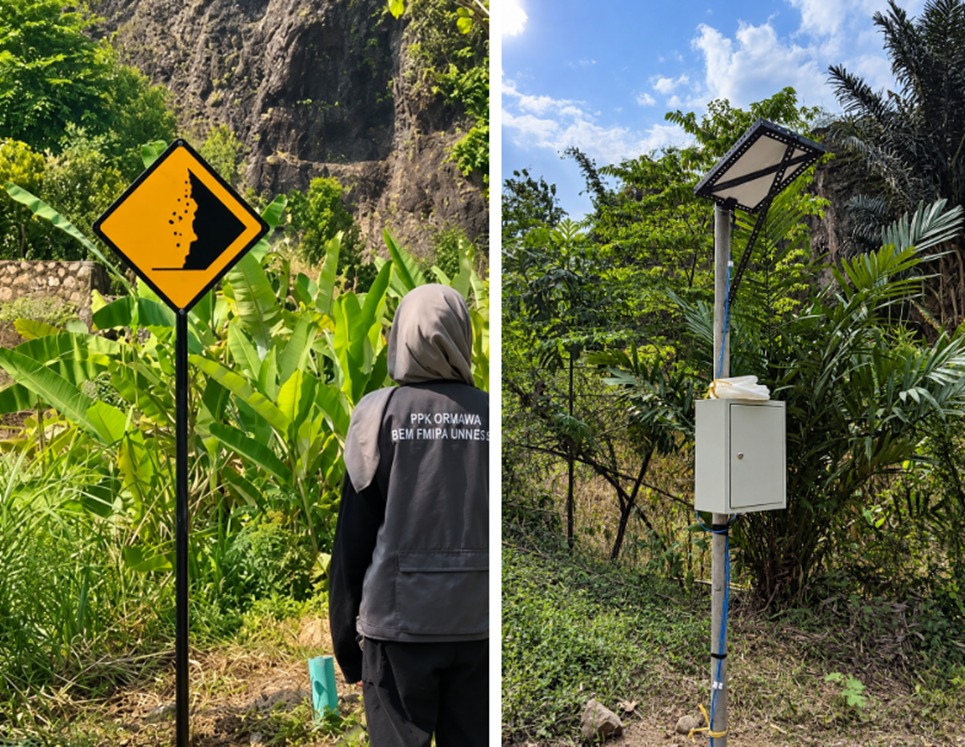
Peron Village holds a strategic position as it is hydrologically located in the upper Bodri Watershed (DAS Bodri) and is characterized by areas vulnerable to landslides and erosion. These conditions require disaster preparedness efforts that go beyond warning signs and awareness campaigns. Instead, they call for an integrated approach combining data, technology, local wisdom, community capacity, and direct conservation actions in the field.
The program officially began on Friday, 12 June 2026, with an opening ceremony and initial community outreach attended by 83 representatives of Peron Village residents. The event was attended by Zaenal Abidin, S.Si., M.Cs., Ph.D., Vice Dean I of FMIPA UNNES; Amnan Haris, S.Si., M.Ling., FMIPA UNNES PIC; Erna Hermawati, Head of Peron Village; and Septina Suratinah, representing the subdistrict government.
From the outset, the program was designed around the philosophy of Sengkuyung, a Javanese expression reflecting togetherness, mutual support, and gotong royong. Sengkuyung is not merely the identity of the program but is positioned as a form of local wisdom and social capital for strengthening village resilience. This philosophy places local residents not simply as program beneficiaries, but as key partners throughout the development of Peron as a Conservation and Disaster-Resilient Village.
This spirit is further strengthened through the utilization of local resources, particularly bamboo. Bamboo is viewed not only as a natural resource with economic potential, but also as a locally available material that can support conservation and disaster mitigation. Using local materials enables communities to develop mitigation technologies that are familiar, accessible, and potentially easier to maintain independently.
The approach was implemented through a series of science- and technology-based activities. On 26 July 2026, the team conducted slope-gradient mapping using a clinometer. The mapping served to identify terrain characteristics and provide field-based information to support disaster mitigation planning in Peron Village.
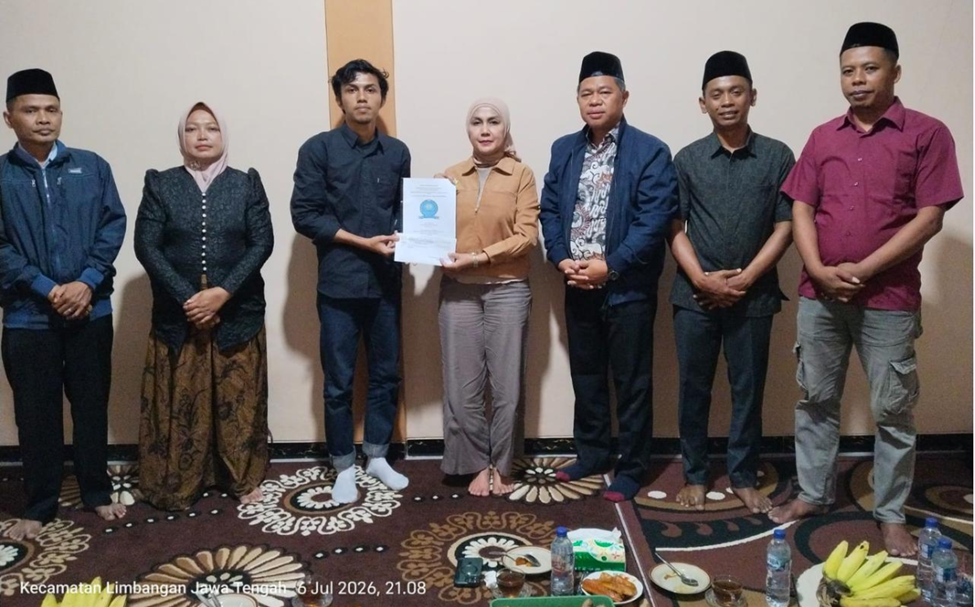
The program was also strengthened through strategic audiences with multiple stakeholders. On 6 July 2026, the PPK Ormawa BEM FMIPA UNNES team held an audience with the Regent of Kendal to present the concept of a Conservation and Disaster-Resilient Village in Peron. The meeting received a positive response and became an important entry point for strengthening collaboration among students, the university, local government, and the community.
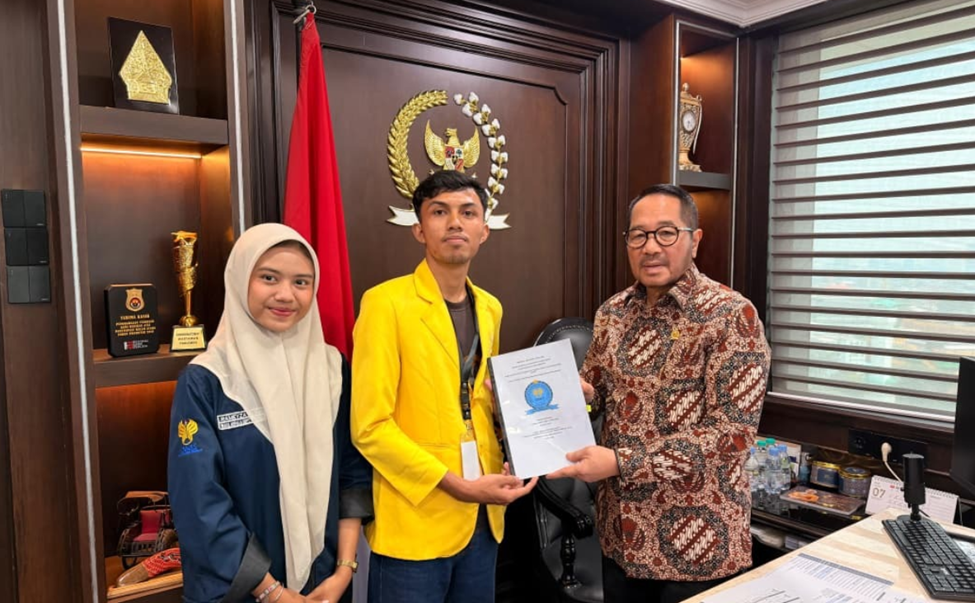
The collaboration was subsequently expanded to the national level. On 28 July 2026, BEM FMIPA UNNES held an audience with Firman Subagyo, Deputy Chair of Commission IV of the Indonesian House of Representatives (DPR RI). During the meeting, the team submitted a proposal for the development of Peron Conservation Village, focusing on disaster mitigation, environmental conservation, and agricultural development. The audience demonstrated that sustaining village-based programs requires coordination and support across sectors rather than relying solely on university intervention.
On 26 August 2026, local residents participated in training on the governance and management of EWS Sengkuyung, followed by the development of an IoT-based Early Warning System. The system is designed to strengthen community preparedness by utilizing technology to support the monitoring and faster dissemination of information related to potential hazards.
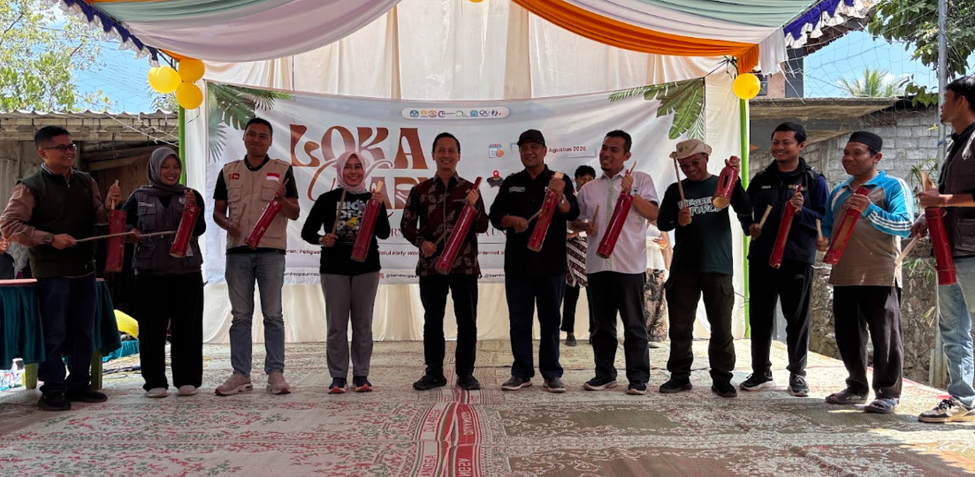
Importantly, EWS Sengkuyung does not rely solely on digital technology. The early warning system combines IoT technology with local wisdom and simple technologies familiar to the community, including the traditional kentongan (wooden or bamboo slit drum used as a community signaling device), as well as bamboo-based components. This approach creates a warning mechanism that is not entirely dependent on electronic devices. In the event of power outages, network disruptions, or digital equipment failures, the community can still rely on familiar local communication mechanisms.
This integration represents a key characteristic of Sengkuyung Desa Peron: modern technology works alongside local knowledge and local resources. IoT strengthens hazard detection and information dissemination, while kentongan and bamboo-based devices provide simple, familiar, and community-operable warning mechanisms. Rather than replacing local wisdom, technology is therefore used to strengthen it into a more adaptive community-based preparedness system.
However, Sengkuyung Desa Peron goes beyond technological intervention. The program also involves direct conservation and landslide and erosion control measures in the field. Physical interventions are supported by heavy equipment, including an excavator, to address site conditions and support the construction of appropriate conservation structures in vulnerable areas. Thus, the mitigation strategy does not merely involve installing warning signs but also addresses the physical sources of risk through land management and site strengthening.
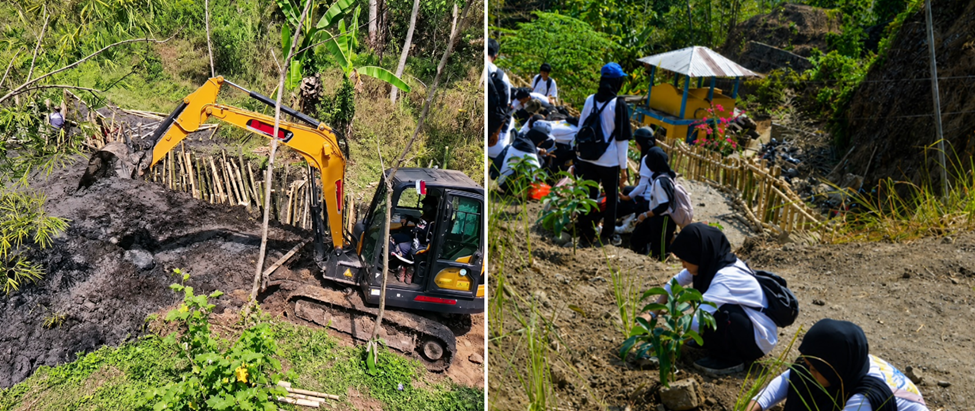
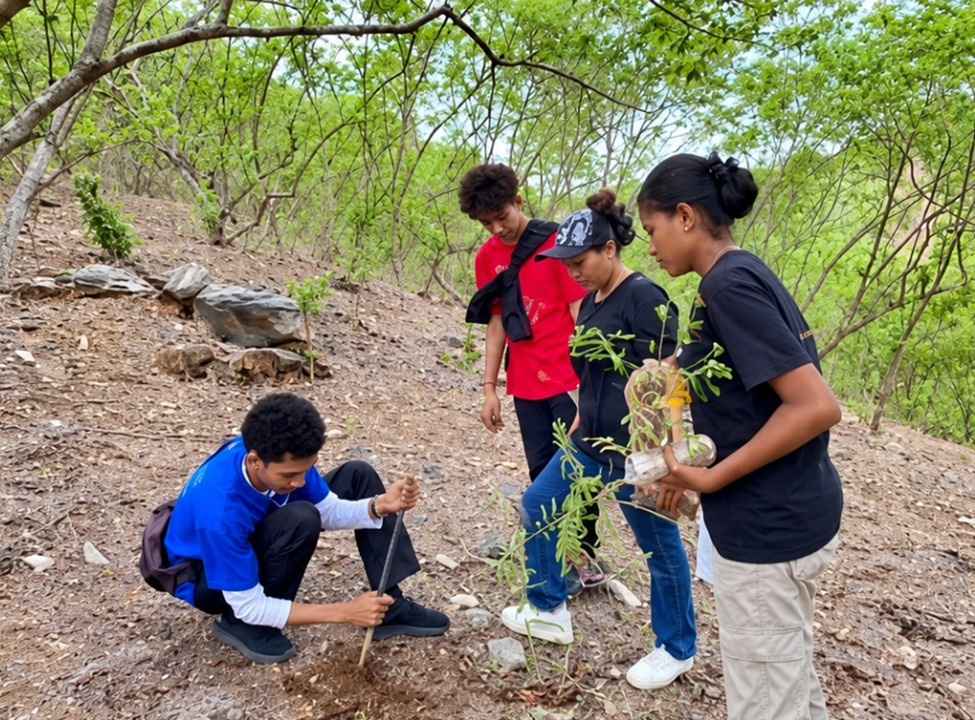
The program reached a major milestone on 30 August 2026 through the Sengkuyung Desa Peron workshop and declaration. The activity began with the planting of 200 durian seedlings, 200 mahogany seedlings, 200 avocado seedlings, and 1,000 vetiver plants (Chrysopogon zizanioides). Vetiver was primarily planted in areas requiring soil reinforcement and erosion control, while the tree species are expected to provide long-term ecological benefits and potential benefits for local communities.
The workshop and declaration were attended by Prof. Dr. Edy Cahyono, M.Si., Dean of FMIPA UNNES; Teguh Prihanto, S.T., M.T., from the UNNES Conservation Subdirectorate; Abdul Jabbar, M.Ling., faculty advisor to the PPK Ormawa BEM FMIPA team; Trida Ridho Fariz, M.Sc., from the FMIPA Conservation and SDGs Group; and Amnan Haris, M.Ling., PIC of PPKO FMIPA. Government representatives included Pujiharini, S.Hut., M.P., Head of the Watershed Management, Rehabilitation, and Natural Resources Conservation Division of the Central Java Provincial Environment and Forestry Agency (DLHK); Ignatius Hidayat Edhi Nugroho, S.Kom., M.A., Head of the Environmental Pollution and Damage Control Division of the Kendal Environmental Agency; and Laksono Dewanto, S.E., M.M., from the Central Java Provincial Secretariat.
The series of activities demonstrates that Sengkuyung Desa Peron represents an integrated community empowerment model connecting policy-level audiences, scientific mapping, IoT-based EWS, local wisdom, local resources, vegetation-based conservation, physical disaster mitigation, and community institutional strengthening. Together, these components are designed to strengthen the village’s capacity to face disaster risks while maintaining environmental sustainability.
Through this initiative, BEM FMIPA UNNES promotes a community empowerment pathway that moves from “data → system → action → collaboration.” Field data provides a basis for decision-making; IoT-based EWS and local wisdom form part of the preparedness system; conservation actions provide tangible risk reduction; while cross-sectoral audiences and partnerships provide a foundation for long-term program sustainability.
With this approach, Sengkuyung Desa Peron is more than an EWS installation, tree-planting activity, or disaster mitigation infrastructure project. It represents an effort to develop a village resilience ecosystem that combines modern technology with local wisdom, natural resources with scientific knowledge, and community action with support from government and higher education institutions.
The spirit of Sengkuyung Desa Peron ultimately seeks to build a community capable of understanding its risks, utilizing appropriate technology, optimizing local resources, protecting its ecosystem, and acting collectively in the face of disaster threats. The program contributes to SDG 11 (Sustainable Cities and Communities), SDG 13 (Climate Action), SDG 15 (Life on Land), and SDG 17 (Partnerships for the Goals) by strengthening community resilience, conserving watersheds and land, integrating technology and local wisdom into disaster preparedness, and developing partnerships among students, universities, government institutions, local communities, and other stakeholders.