

Related to SDGs
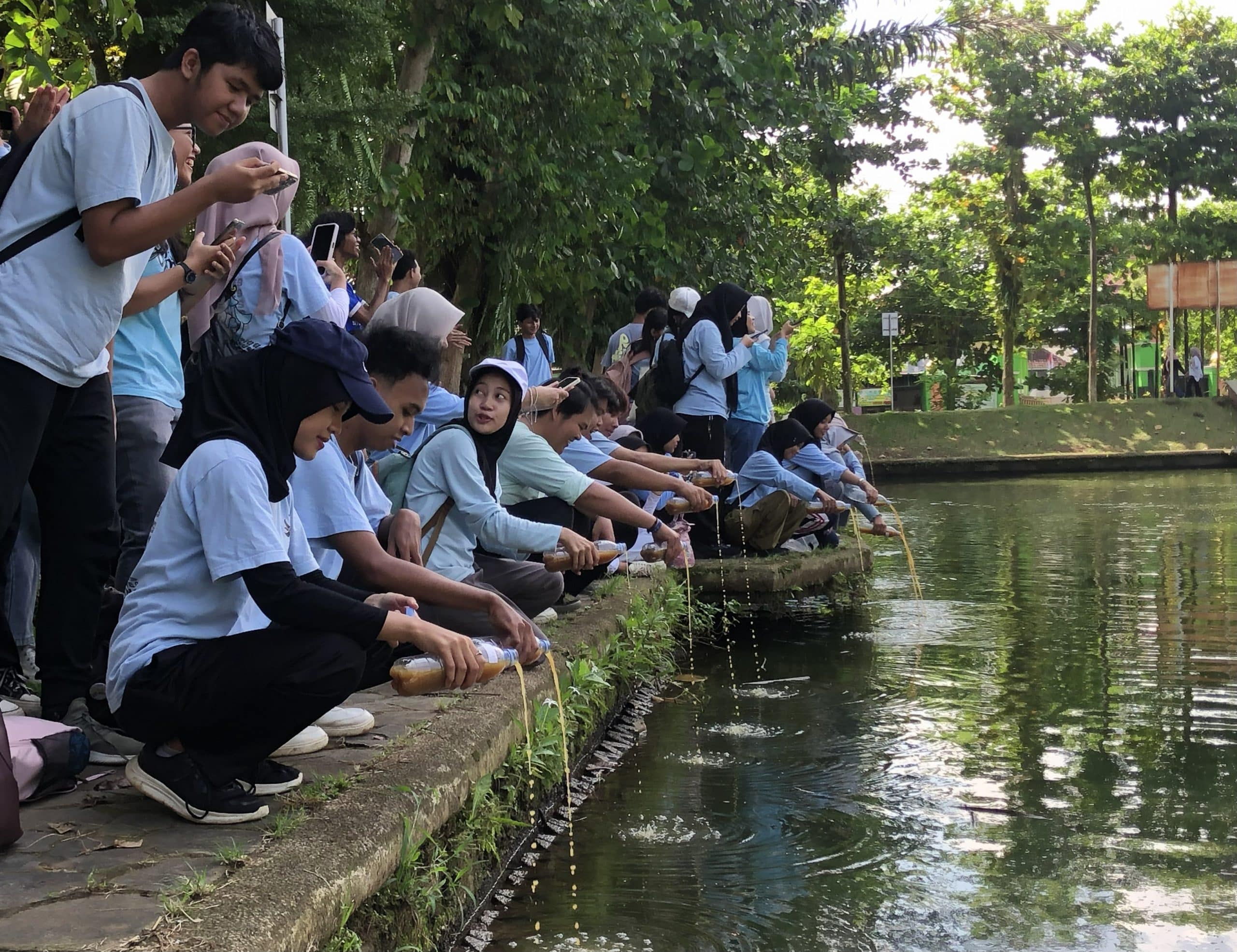
In commemoration of Earth Day 2026, the academic community of the Faculty of Mathematics and Natural Sciences (FMIPA), Universitas Negeri Semarang (UNNES), carried out an environmental action by pouring eco-enzyme into the UNNES reservoir on Saturday, April 25, 2026. This activity reflects the university’s commitment to addressing environmental pollution issues, which are part of the global Triple Planetary Crisis, through concrete and sustainable initiatives.
The program involved lecturers and approximately 90 students from the Environmental Science Study Program, combining academic learning with real-world environmental action. The eco-enzyme used in the activity was produced from fermented organic waste, such as vegetable scraps and fruit peels, demonstrating an innovative approach to waste management while promoting environmental awareness among students.
Beyond serving as a practical learning medium in environmental chemistry, the eco-enzyme also plays an important role in improving water quality. It stimulates natural microorganisms, reduces unpleasant odors, and helps break down organic matter in aquatic ecosystems. Through this hands-on initiative, students gain not only theoretical knowledge but also direct experience in environmental conservation, particularly in maintaining water ecosystems on campus.
The activity also functioned as an educational platform to strengthen collective awareness of the importance of protecting water resources, especially considering UNNES’s strategic location within a watershed area. This position underscores the university’s responsibility to contribute actively to maintaining water quality, both within the campus and in downstream areas.
Furthermore, this initiative aligns with the Sustainable Development Goals (SDGs), particularly SDG 6 (Clean Water and Sanitation) through efforts to improve water quality, SDG 12 (Responsible Consumption and Production) by promoting the reuse of organic waste, and SDG 13 (Climate Action) as part of broader efforts to address climate and environmental challenges. Through such activities, FMIPA UNNES continues to strengthen its role in fostering impact-based learning and sustainability-oriented practices.