
FISIP UNNES Dorong Pertanian Ramah Lingkungan di Coblong melalui Pupuk Organik Cair

Universitas Negeri Semarang > Faculty of Social Sciences and Political Science > Berita > FISIP UNNES Dorong Pertanian Ramah Lingkungan di Coblong melalui Pupuk Organik Cair

Program Studi Pendidikan Sejarah FISIP Universitas Negeri Semarang bersama Kelompok Tani Dusun Coblong mendorong praktik pertanian yang lebih ramah lingkungan melalui program “Penguatan Kapasitas Pemupukan Pertanian Kelompok Tani Dusun Coblong melalui Pembuatan Pupuk Organik Cair dari Air Bekas Cucian Beras.” Air cucian beras yang sebelumnya menjadi limbah rumah tangga dimanfaatkan sebagai bahan utama pupuk organik cair untuk membantu petani mengurangi penggunaan pupuk kimia. PM Hany Nurpratiwi

Sebanyak 12 petani mengikuti sosialisasi dan workshop yang dilaksanakan pada 26 Juni 2025 di rumah Jupri, Ketua Kelompok Tani Dusun Coblong, Desa Pakopen, Kecamatan Bandungan. Tim FISIP UNNES yang terdiri dari Hany Nurpratiwi, Junaidi Fery Lusianto, dan Dimas Anggoro mendampingi petani mulai dari pengenalan manfaat pupuk organik hingga praktik langsung pembuatannya.

Dusun Coblong berada di Desa Pakopen, wilayah pertanian di lereng Kecamatan Bandungan. Data pemerintah Kabupaten Semarang mencatat luas administratif Desa Pakopen sekitar 3,07 km² atau 307 hektare.

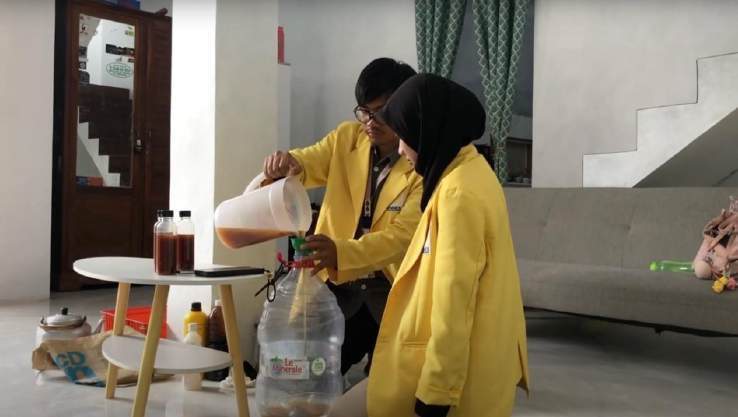
Dalam praktiknya, petani memanfaatkan air cucian beras yang dikumpulkan dari rumah masing-masing. Bahan tersebut kemudian dicampurkan dengan bahan fermentasi seperti gula merah dan EM4 atau inokulan hayati, sebelum disimpan dalam wadah selama proses fermentasi. Peserta juga belajar mengenai dosis penggunaan, penyimpanan, serta cara mengaplikasikan POC pada tanaman. PM Hany Nurpratiwi

Pendekatan ini memberi alternatif bagi petani yang selama ini menghadapi keterbatasan pupuk subsidi dan tingginya ketergantungan terhadap pupuk kimia. Dengan bahan yang tersedia dari lingkungan rumah, petani dapat memproduksi pupuk sendiri sekaligus memanfaatkan limbah yang sebelumnya langsung dibuang.

Praktik bersama menghasilkan beberapa jerigen POC yang kemudian menjalani proses fermentasi selama sekitar 7–10 hari sebelum diaplikasikan pada lahan. Sekitar 65 persen peserta mampu menjelaskan kembali proses pembuatan POC, mulai dari pencampuran bahan hingga penyimpanannya, sementara para petani juga telah mempraktikkan proses produksinya secara berkelompok.

Penggunaan awal POC mulai memperlihatkan perubahan pada lahan. Petani melihat tekstur tanah menjadi lebih gembur dan tanaman tampak lebih hijau serta segar dibandingkan tanaman yang hanya menggunakan pupuk kimia. Pemantauan jangka panjang tetap diperlukan untuk mengukur perubahan produktivitas secara kuantitatif.

Program tersebut juga membangun kebiasaan baru dalam pengelolaan limbah rumah tangga. Sejumlah petani mulai mengumpulkan air cucian beras secara rutin sebagai bahan baku POC, sehingga bahan yang sebelumnya terbuang dapat kembali digunakan dalam siklus produksi pertanian. Praktik ini sekaligus mengurangi ketergantungan pada input kimia dan memperkuat kemandirian kelompok tani.

Pada tahap berikutnya, anggota kelompok tani bahkan mulai menginisiasi produksi sederhana dengan label “POC Coblong Organik.” Kemampuan memproduksi pupuk secara mandiri membuka peluang agar praktik pertanian ramah lingkungan tersebut terus diterapkan dan dikembangkan oleh masyarakat Dusun Coblong.
Related Posts

Leave a Reply

* Kode Akses Komentar:

* Tuliskan kode akses komentar diatas:

GDPR

  • Privacy Policy

Privacy Policy

At unnes.ac.id, the privacy of our visitors is of extreme importance to us. This privacy policy document outlines the types of personal information that is received and collected by unnes.ac.id and how it is used.

Log Files

Like many other Web sites, unnes.ac.id makes use of log files. The information inside the log files includes internet protocol (IP) addresses, type of browser, Internet Service Provider (ISP), date/time stamp, referring/exit pages, and number of clicks to analyze trends, administer the site, track user’s movement around the site, and gather demographic information. IP addresses and other such information are not linked to any information that is personally identifiable.

Cookies

unnes.ac.id uses cookies to store information about visitors’ preferences, to record user-specific information on which pages the site visitor accesses or visits, and to personalize or customize our web page content based upon visitors’ browser type or other information that the visitor sends via their browser.

Third-party ad servers or ad networks use technology in their respective advertisements and links that appear on unnes.ac.id and which are sent directly to your browser. They automatically receive your IP address when this occurs. Other technologies (such as cookies, JavaScript, or Web Beacons) may also be used by our site’s third-party ad networks to measure the effectiveness of their advertising campaigns and/or to personalize the advertising content that you see on the site.

unnes.ac.id has no access to or control over these cookies that are used by third-party advertisers.

You should consult the respective privacy policies of these third-party ad servers for more detailed information on their practices as well as for instructions about how to opt-out of certain practices. unnes.ac.id’s privacy policy does not apply to, and we cannot control the activities of, such other advertisers or web sites.

If you wish to disable cookies, you may do so through your individual browser options. More detailed information about cookie management with specific web browsers can be found at the browsers’ respective websites.

Consent

By using our website, you hereby consent to our privacy policy and agree to its terms.

Update

This Privacy Policy was last updated on: 2023-02-14. Should we update, amend or make any changes to our privacy policy, those changes will be posted here.

Contact Us

If you have any questions, comments, or concerns about our Privacy Policy or our practices with regards to your personal information, please feel free to contact us through the contact form on our website or by emailing us at humas[at]mail.unnes.ac.id.

This Privacy Policy is intended as a general guide to our practices in collecting and using information. If there is any inconsistency between this Privacy Policy and the terms of the Service Agreement or any other terms that may apply to specific services you use, then those specific service terms shall apply.

Terms of Use

By using our website, you agree to abide by this Privacy Policy. If you do not agree with this Privacy Policy, please do not use our website. We reserve the right to update this Privacy Policy from time to time without prior notice. Please review our Privacy Policy periodically to check for changes. Your continued use of our website following the posting of changes to this Privacy Policy means that you accept the changes.

Thank you for reading our Privacy Policy. We are committed to protecting the privacy of our website visitors and will continue to update our Privacy Policy to ensure optimal protection.