The Unnes Community Service Team Provides Deep Learning-Based Coding and AI Literacy Training for Elementary School Teachers to Achieve Inclusive and Quality Education.

Universitas Negeri Semarang/Faculty of Education and Psychology/Berita/PGSD/The Unnes Community Service Team Provides Deep Learning-Based Coding and AI Literacy Training for Elementary School Teachers to Achieve Inclusive and Quality Education.

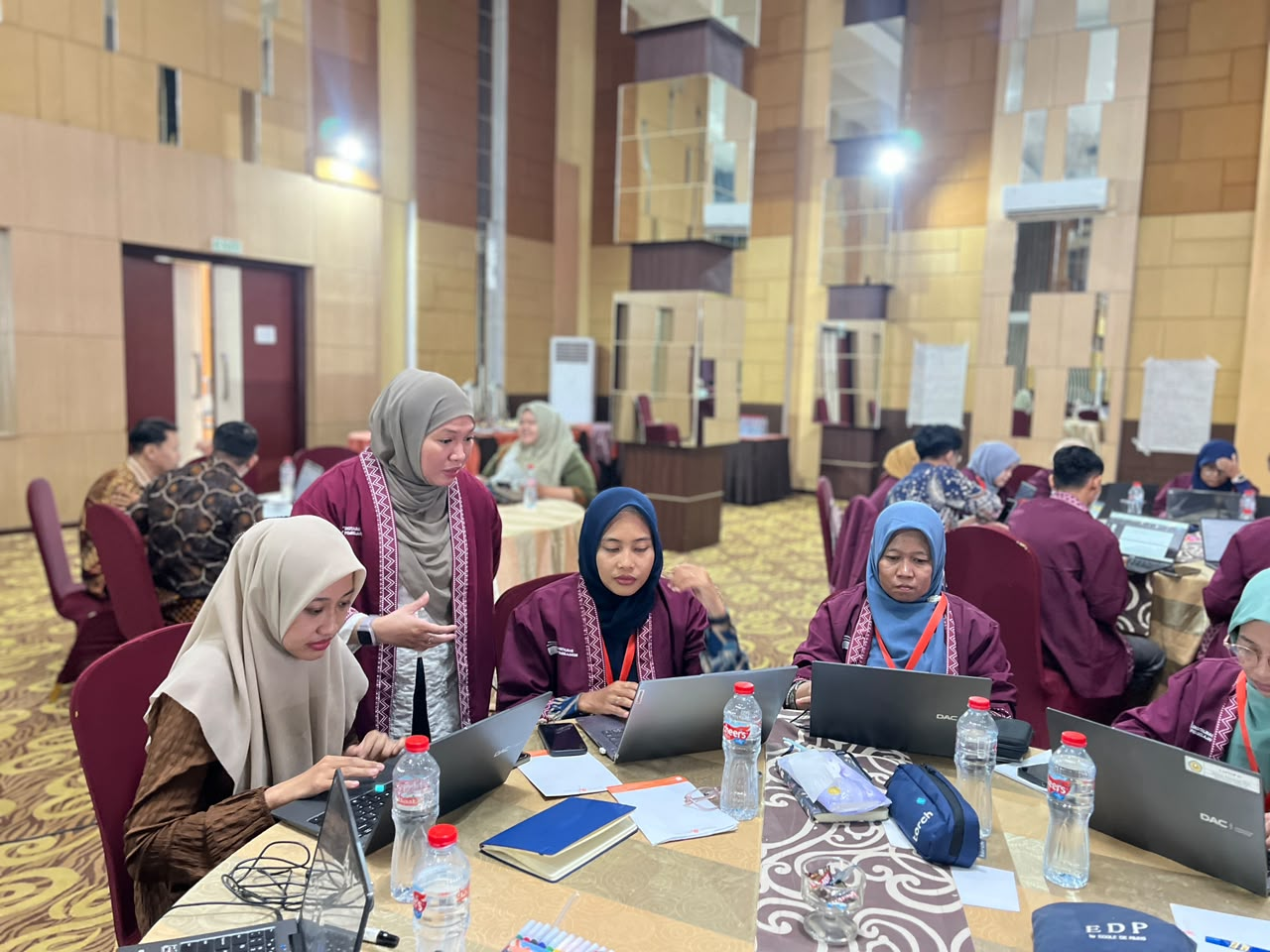
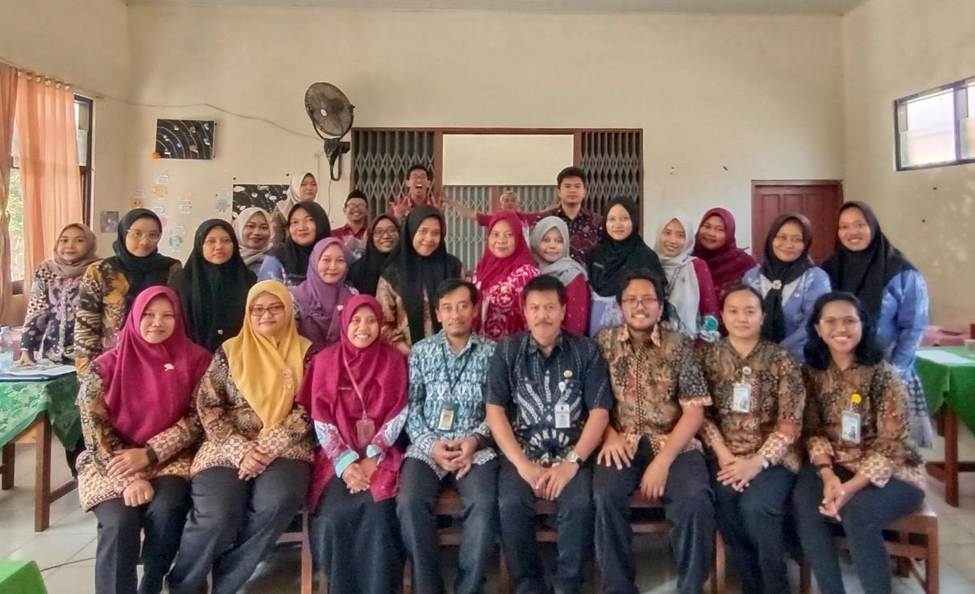
The community service team of Semarang State University (UNNES) has successfully held a workshop with the theme “Building a Golden Generation Through Artificially Intelligent Teachers: Integration of Coding and AI in the Learning Context of the Pongangan Branch of PGRI”. This activity was held on Thursday, June 11, 2026, at Pongangan Elementary School, Gunungpati District, Semarang City. The community service team was chaired by Dr. Nursiwi Nugraheni, S.Si., M.Pd. with Dr. Trimurtini, S.Pd., M.Pd., Aldina Eka Andriani, S.Pd., M.Pd., Petra Kristi Mulyani, S.Pd., M.Ed., Ph.D., and Abtadi Tris Hamdani, S.Pd., M.Pd., and accompanied by four students namely Puspa Ayu Anastasya, Rikha Permatasari, Nuzulia Fatimatur Rohmah, and Berliana Jelita Zarabiyyu, along with Mrs. Naralita Kusuma Noviyani, M.Pd. as the contact person for the partner of the Pongangan Branch of PGRI Gunungpati Branch. and the contact person for the partner Mrs. Naralita Kusuma Noviyani, M.Pd., trained 44 elementary school teachers who are members of the Pongangan Branch of PGRI, including Pongangan Elementary School, Nongkosawit 01 Elementary School, Nongkosawit 02 Elementary School, and Wijaya Kusuma Elementary School. This training aims to improve the digital competence of elementary school educators through contextual integration of coding and artificial intelligence to meet the challenges of the era of technological acceleration.
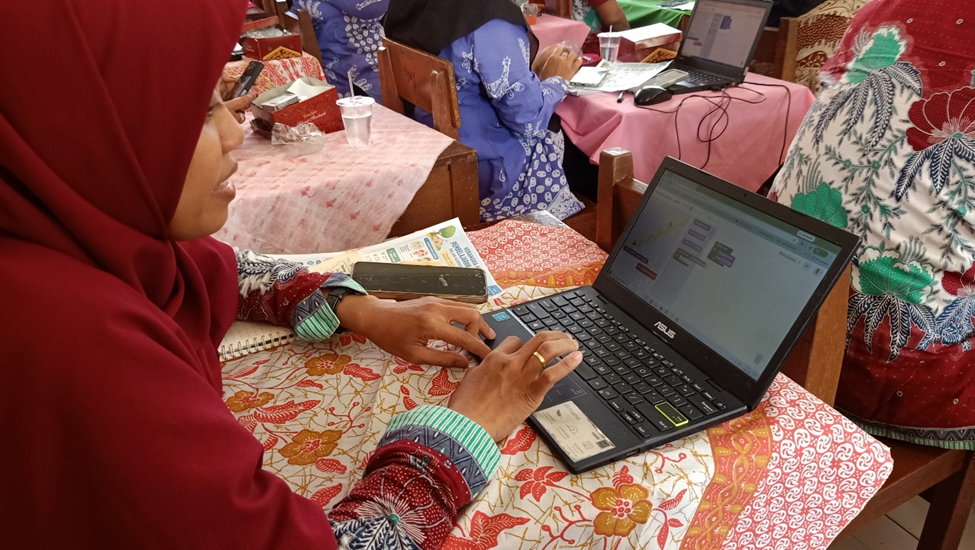
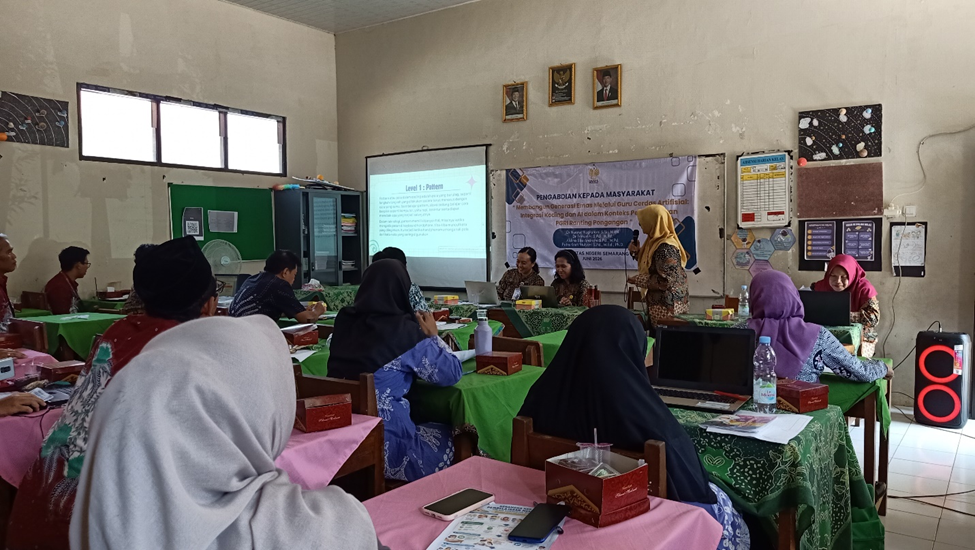
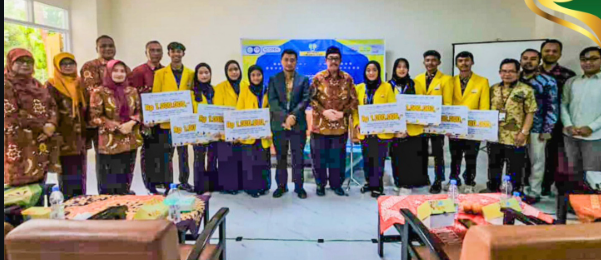
The activity began with the registration process and filling out a pre-test to measure participants’ initial understanding of basic coding, the AI ​​ecosystem, and deep learning principles, followed by an official opening ceremony and remarks from partner representatives, Mr. Sisnanto, S.Pd.SD., and the leader of the community service team. In the main activity, Petra Kristi Mulyani, Ph.D. explained the concept of Deep Learning Implementation, followed by Dr. Trimurtini, M.Pd. who guided the preparation of an in-depth RPPM to create an inclusive learning experience. Next, Aldina Eka Andriani, M.Pd. introduced unplugged and plugged methods of coding and AI learning through AI prompt simulations and the Blockly platform . Dr. Nursiwi Nugraheni, S.Si., M.Pd. explained the strategy for integrating Coding and AI (KKA) into the Independent Curriculum through the application of computational thinking logic to mathematics subjects. The briefing was concluded by Abtadi Tris Hamdani, M.Pd. Through practical animation and interactive game creation using Scratch Jr. , it concluded with a post-test , evaluation, participant testimonials, and a group photo. Complete documentation of the training activities has been uploaded and is publicly accessible through the following YouTube channel: https://youtu.be/b_qUdEeerOQ
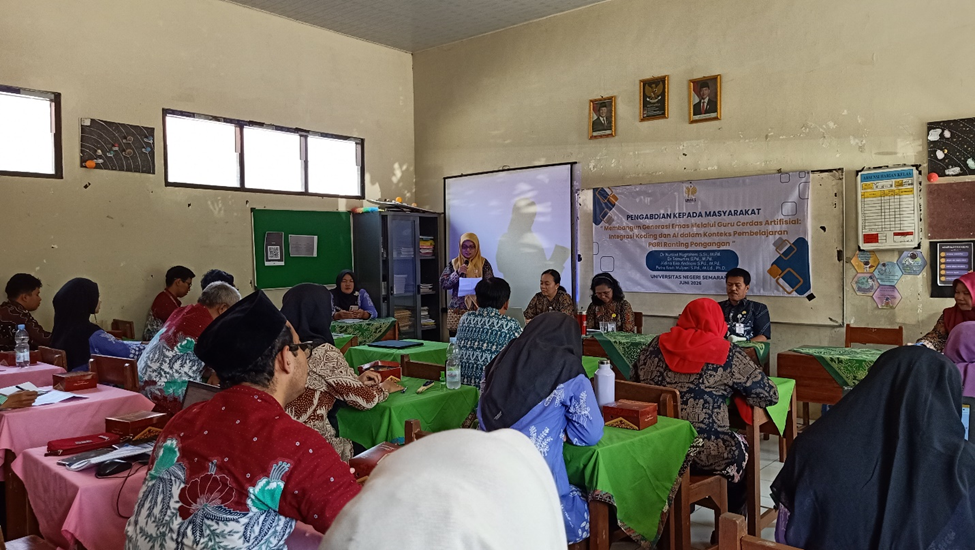
The integration of coding and AI for elementary school teachers and students is closely linked to the achievement of the Sustainable Development Goals (SDGs), with the main target of SDG 4: Quality Education. Mastery of coding and AI strengthens students’ computational thinking, logic, and problem-solving skills from an early age, while transforming the role of teachers in designing inclusive, meaningful, and interactive learning so that students become not just consumers of technology but digital creators. The accompanying impact of this activity supports SDG 8 (Decent Work and Economic Growth) by equipping the younger generation with future skills to produce superior human resources with global competitiveness towards Indonesia Emas 2045. In addition, this program also promotes SDG 9 (Industry, Innovation, and Infrastructure) through the formation of an elementary school ecosystem based on innovation and sustainable digital infrastructure.
Related Posts

Leave a Reply

* Kode Akses Komentar:

* Tuliskan kode akses komentar diatas:

GDPR

  • Privacy Policy

Privacy Policy

At unnes.ac.id, the privacy of our visitors is of extreme importance to us. This privacy policy document outlines the types of personal information that is received and collected by unnes.ac.id and how it is used.

Log Files

Like many other Web sites, unnes.ac.id makes use of log files. The information inside the log files includes internet protocol (IP) addresses, type of browser, Internet Service Provider (ISP), date/time stamp, referring/exit pages, and number of clicks to analyze trends, administer the site, track user’s movement around the site, and gather demographic information. IP addresses and other such information are not linked to any information that is personally identifiable.

Cookies

unnes.ac.id uses cookies to store information about visitors’ preferences, to record user-specific information on which pages the site visitor accesses or visits, and to personalize or customize our web page content based upon visitors’ browser type or other information that the visitor sends via their browser.

Third-party ad servers or ad networks use technology in their respective advertisements and links that appear on unnes.ac.id and which are sent directly to your browser. They automatically receive your IP address when this occurs. Other technologies (such as cookies, JavaScript, or Web Beacons) may also be used by our site’s third-party ad networks to measure the effectiveness of their advertising campaigns and/or to personalize the advertising content that you see on the site.

unnes.ac.id has no access to or control over these cookies that are used by third-party advertisers.

You should consult the respective privacy policies of these third-party ad servers for more detailed information on their practices as well as for instructions about how to opt-out of certain practices. unnes.ac.id’s privacy policy does not apply to, and we cannot control the activities of, such other advertisers or web sites.

If you wish to disable cookies, you may do so through your individual browser options. More detailed information about cookie management with specific web browsers can be found at the browsers’ respective websites.

Consent

By using our website, you hereby consent to our privacy policy and agree to its terms.

Update

This Privacy Policy was last updated on: 2023-02-14. Should we update, amend or make any changes to our privacy policy, those changes will be posted here.

Contact Us

If you have any questions, comments, or concerns about our Privacy Policy or our practices with regards to your personal information, please feel free to contact us through the contact form on our website or by emailing us at humas[at]mail.unnes.ac.id.

This Privacy Policy is intended as a general guide to our practices in collecting and using information. If there is any inconsistency between this Privacy Policy and the terms of the Service Agreement or any other terms that may apply to specific services you use, then those specific service terms shall apply.

Terms of Use

By using our website, you agree to abide by this Privacy Policy. If you do not agree with this Privacy Policy, please do not use our website. We reserve the right to update this Privacy Policy from time to time without prior notice. Please review our Privacy Policy periodically to check for changes. Your continued use of our website following the posting of changes to this Privacy Policy means that you accept the changes.

Thank you for reading our Privacy Policy. We are committed to protecting the privacy of our website visitors and will continue to update our Privacy Policy to ensure optimal protection.