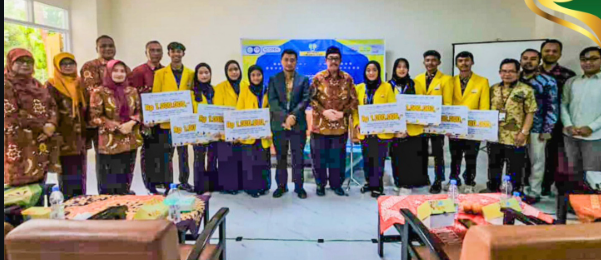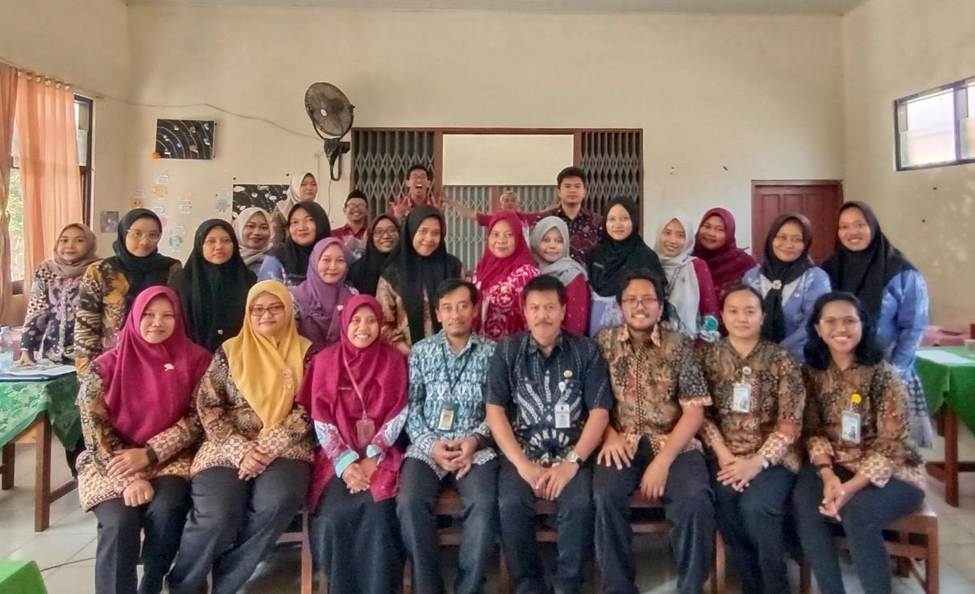


UNNES – The quality of early childhood education is determined not only by the classroom learning process, but also by the teacher’s ability to understand child development holistically. Recognizing this importance, the Community Service Team of Lecturers at Semarang State University (UNNES) held an activity titled “Strengthening Early Childhood Education Teachers’ Self-Awareness of Physical Motor Stimulation and ENT Health as the Foundation for Holistic Early Childhood Development” on Saturday (July 4, 2026) at the Siwi Raharjo 4 Early Childhood Education Post, Bawen District, Semarang Regency.
The activity, in collaboration with the Semarang Regency Association of Early Childhood Education (HIMPAUDI), was attended by approximately 50 teachers and early childhood education personnel from various districts in Semarang Regency. This program is part of an effort to increase the capacity of educators to provide appropriate stimulation from the early stages of a child’s life, when various aspects of development are occurring rapidly.
The Chairperson of the Semarang Regency Association of HIMPAUDI, Ulfa Maria, S.E., M.Pd., expressed her appreciation for the implementation of the activity, which she considered relevant to the needs of early childhood teachers in the field. According to her, improving educator competency is a long-term investment in providing quality education services for early childhood.
“We really need activities like this to continuously upgrade the knowledge and skills of PAUD teachers. We feel the need for ongoing training so that we can provide appropriate stimulation according to the needs and developmental stages of our children,” said Ulfa.
In line with this, the Head of the UNNES Lecturer Community Service Team, Fatma Kusuma Mahanani, S.Psi., M.Psi., Psychologist, hopes this activity will be the starting point for establishing a more holistic learning culture in PAUD environments. She emphasized that synergy between universities and educators needs to be continuously strengthened to improve the quality of early childhood education services.
“We hope the knowledge gained today will not only be additional knowledge but can be applied in the daily learning process. PAUD teachers have a strategic role as the vanguard in preparing a healthy, intelligent, and character-based generation of Indonesians. We hope this collaboration can continue so that its benefits extend to the wider community,” said Fatma.
The implementation of this program was based on needs identification results, which indicated that teachers’ understanding of the relationship between physical motor stimulation and children’s psychological development still needed strengthening. Furthermore, Ear, Nose, and Throat (ENT) health, which impacts children’s hearing, speech, balance, and learning readiness, has not received much attention in early childhood education (PAUD) teaching practices. Based on this situation, the community service team presented material integrating perspectives from psychology, early childhood education, sports science, and health.
To provide a comprehensive understanding, the event featured four speakers, each with their own areas of expertise: Fatma Kusuma Mahanani, S.Psi., M.Psi., Psychologist, an educational psychologist; Gustiana Mega Anggita, S.Pd.Jas., M.Or., specializing in child physical motor development; Dr. Tyar Bhatara Putra, Sp.T.H.T.K.L., an Ear, Nose, and Throat (ENT) specialist; and Wantoro, M.Pd., an Early Childhood Education academic. The activity was also supported by three UNNES Psychology students: Nailah Rizkiyanti Salma, Vania Nazla Nurhaura, and Nasywa Felycianandra Aurantiviola, who served as assistants throughout the program.
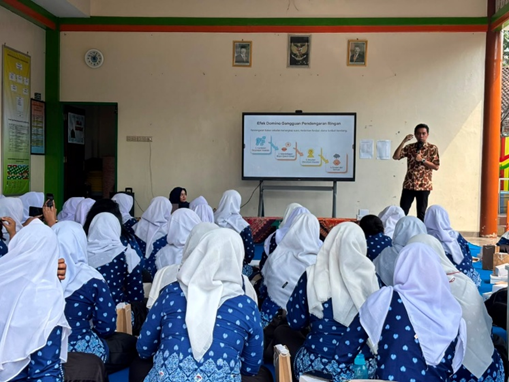
Material Presentation Session (Source: Community Service Team Documentation)
Throughout the activity, participants received material delivered interactively through presentations, discussions, and simulation exercises. Topics covered included the importance of brain and nervous system development in children, physical motor stimulation as a foundation for development, early detection of Ear, Nose, and Throat (ENT) disorders, and the application of a holistic approach in early childhood education. All materials were designed to be practical so that teachers could immediately adapt them to their learning activities.
All participants were highly enthusiastic during each session. Early childhood education teachers actively participated in the discussion, asking questions and sharing experiences regarding the challenges they face while supporting children’s development in their respective educational institutions. This two-way interaction reflected the participants’ strong interest in the material presented and enriched the discussion through various real-life cases encountered in the field.
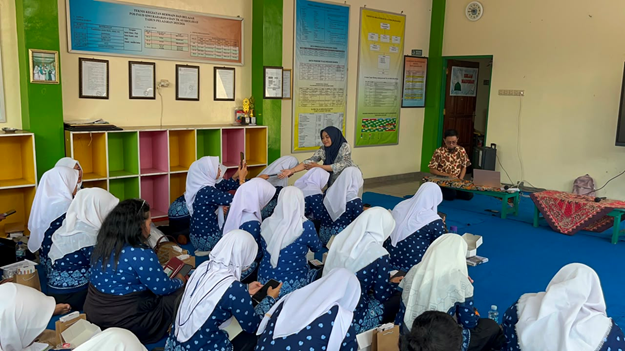
Pre-Test and Post-Test Sessions (Source: Community Service Team Documentation)
As a form of evaluation, the community service team implemented systematic measurements through a pre-test before the activity began and a post-test after the entire series of materials were delivered. The evaluation results showed an increase in participants’ understanding of the importance of physical motor stimulation, Ear, Nose, and Throat (ENT) health, and the application of a holistic approach in early childhood learning. These findings indicate that this activity not only served as a means of sharing knowledge but also measurably increased teacher capacity, equipping them to implement the materials in their respective PAUD settings.
This community service demonstrates Semarang State University’s commitment to supporting the achievement of the Sustainable Development Goals (SDGs), specifically SDG 3 (Good Health and Well-being) by strengthening promotive and preventive efforts for early childhood health, and SDG 4 (Quality Education) by improving teacher competency in providing quality, inclusive, and sustainable education services.
This program also aligns with the implementation of the President of the Republic of Indonesia’s Asta Cita (Asta Cita), particularly the agenda for developing superior human resources through strengthening the quality of education and health. By increasing the capacity of PAUD teachers as the frontline of early childhood education, this activity is expected to contribute to realizing a healthy, intelligent, resilient, and character-based Indonesian generation as a foundation towards Golden Indonesia 2045.