Supporting the Zero New Stunting Target, the Sumbergirang Village Government and the Rembang Community Empowerment Program (PKBI) Equip Cadres with UNNES in Family Psychology

Universitas Negeri Semarang/Faculty of Education and Psychology/Berita/Supporting the Zero New Stunting Target, the Sumbergirang Village Government and the Rembang Community Empowerment Program (PKBI) Equip Cadres with UNNES in Family Psychology

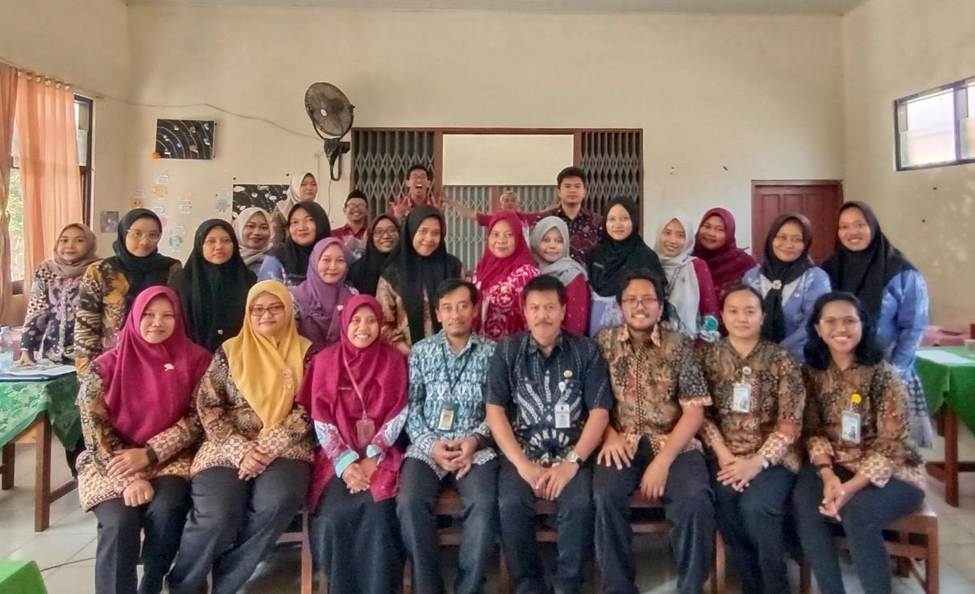
Rembang – Cross-sectoral synergy to accelerate the reduction of stunting rates has once again been implemented in Rembang Regency. Through a mental health and family resilience approach, 30 participants, consisting of village cadres and youth representatives, participated in the Peer Family Support training: Strengthening the Psychosocial Capacity of Community Cadres Towards Zero New Stunting on Saturday (June 27, 2026).

The community service activity, held at the Sumbergirang Village Hall, Lasem District, was attended by the Head of Sumbergirang Village, Mr. Edy Sunarno, and a representative of the Rembang Branch of PKBI, Harisa Laraswatie, S.Kep., M.Kes. The presence of these figures demonstrates their full support for improving the capacity of cadres at the grassroots level.
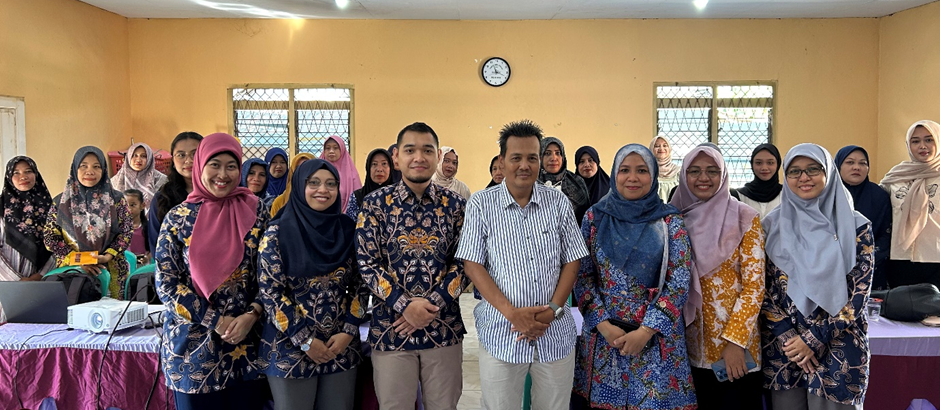
This training was initiated and facilitated by a team of lecturers from the Faculty of Education and Psychology (FIPP) at Semarang State University (UNNES). This community service team is led by Hasna’ Pratiwi Kurwardani, S.Psi., M.Psi., Psi., with members Aftina Nurul Husna, S.Psi., M.A., Chamilul Hikam Al Karim, S.Psi., M.Psi., and Tri Hutami Wardoyo, S.Pd., M.Ed.

This event was motivated by the finding that stunting management cannot rely solely on physical nutrition. The stress and psychological pressure experienced by mothers has been shown to directly impact the quality of parenting patterns, feeding discipline, and reluctance to take children to health facilities.

Therefore, this training provides direct benefits in the form of Psychological First Aid (PFA) skills for cadres. Through this material, village cadres are now equipped with appropriate methods for handling family crises through three steps: observing residents’ needs (Look), listening empathetically without lecturing (Listen), and connecting residents to professional health services if needed (Link).
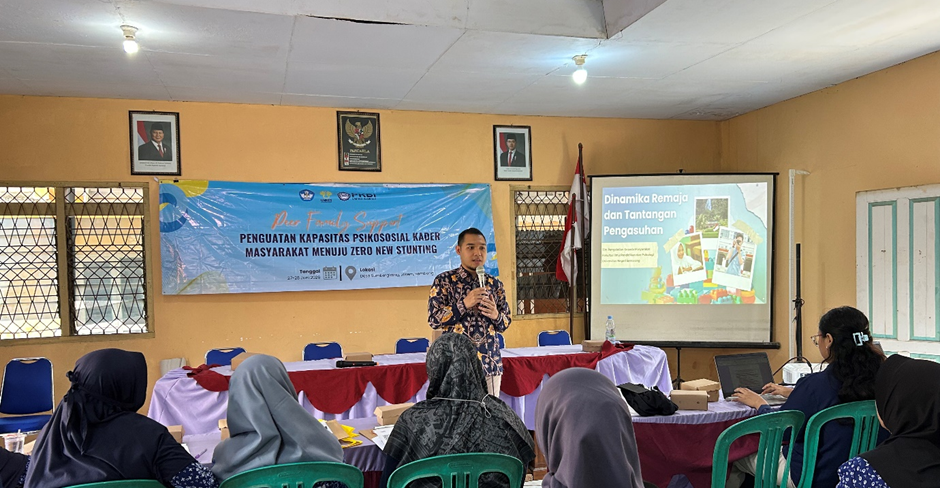
In addition to PFA, participants also gained other technical skills. Cadres are now able to detect early signs of mental disorders using screening methods, understand adolescent psychological dynamics to facilitate communication within families, and are skilled at creating visual educational media using artificial intelligence (AI) to maximize outreach.

The Head of the Community Service Team, Hasna’ Pratiwi Kurwardani, expressed high hopes for this activity. She emphasized that the role of cadres in the community is now increasingly crucial and expanding.

“The hope is that the role of cadres will no longer be limited to simply weighing toddlers, but will also be truly present and possess strong communication skills to respond to community concerns. With cadres who are able to maintain privacy and non-judgmental about mothers’ parenting styles, it is hoped that psychological stability will be created within families. If parents are mentally healthy, parenting will be optimal, and the goal of realizing a village with Zero New Stunting can be achieved,” Hasna hoped.
Related Posts

Leave a Reply

* Kode Akses Komentar:

* Tuliskan kode akses komentar diatas:

GDPR

  • Privacy Policy

Privacy Policy

At unnes.ac.id, the privacy of our visitors is of extreme importance to us. This privacy policy document outlines the types of personal information that is received and collected by unnes.ac.id and how it is used.

Log Files

Like many other Web sites, unnes.ac.id makes use of log files. The information inside the log files includes internet protocol (IP) addresses, type of browser, Internet Service Provider (ISP), date/time stamp, referring/exit pages, and number of clicks to analyze trends, administer the site, track user’s movement around the site, and gather demographic information. IP addresses and other such information are not linked to any information that is personally identifiable.

Cookies

unnes.ac.id uses cookies to store information about visitors’ preferences, to record user-specific information on which pages the site visitor accesses or visits, and to personalize or customize our web page content based upon visitors’ browser type or other information that the visitor sends via their browser.

Third-party ad servers or ad networks use technology in their respective advertisements and links that appear on unnes.ac.id and which are sent directly to your browser. They automatically receive your IP address when this occurs. Other technologies (such as cookies, JavaScript, or Web Beacons) may also be used by our site’s third-party ad networks to measure the effectiveness of their advertising campaigns and/or to personalize the advertising content that you see on the site.

unnes.ac.id has no access to or control over these cookies that are used by third-party advertisers.

You should consult the respective privacy policies of these third-party ad servers for more detailed information on their practices as well as for instructions about how to opt-out of certain practices. unnes.ac.id’s privacy policy does not apply to, and we cannot control the activities of, such other advertisers or web sites.

If you wish to disable cookies, you may do so through your individual browser options. More detailed information about cookie management with specific web browsers can be found at the browsers’ respective websites.

Consent

By using our website, you hereby consent to our privacy policy and agree to its terms.

Update

This Privacy Policy was last updated on: 2023-02-14. Should we update, amend or make any changes to our privacy policy, those changes will be posted here.

Contact Us

If you have any questions, comments, or concerns about our Privacy Policy or our practices with regards to your personal information, please feel free to contact us through the contact form on our website or by emailing us at humas[at]mail.unnes.ac.id.

This Privacy Policy is intended as a general guide to our practices in collecting and using information. If there is any inconsistency between this Privacy Policy and the terms of the Service Agreement or any other terms that may apply to specific services you use, then those specific service terms shall apply.

Terms of Use

By using our website, you agree to abide by this Privacy Policy. If you do not agree with this Privacy Policy, please do not use our website. We reserve the right to update this Privacy Policy from time to time without prior notice. Please review our Privacy Policy periodically to check for changes. Your continued use of our website following the posting of changes to this Privacy Policy means that you accept the changes.

Thank you for reading our Privacy Policy. We are committed to protecting the privacy of our website visitors and will continue to update our Privacy Policy to ensure optimal protection.