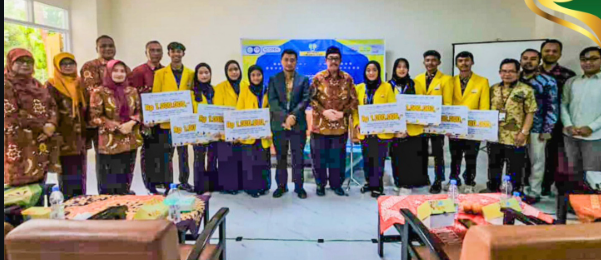


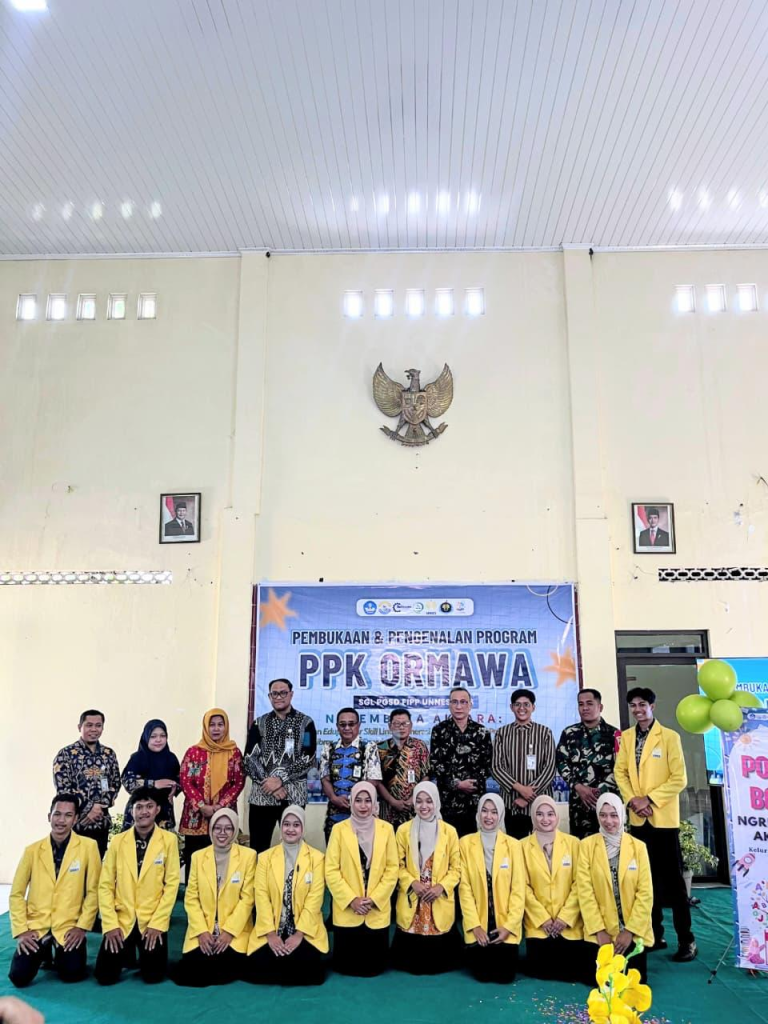
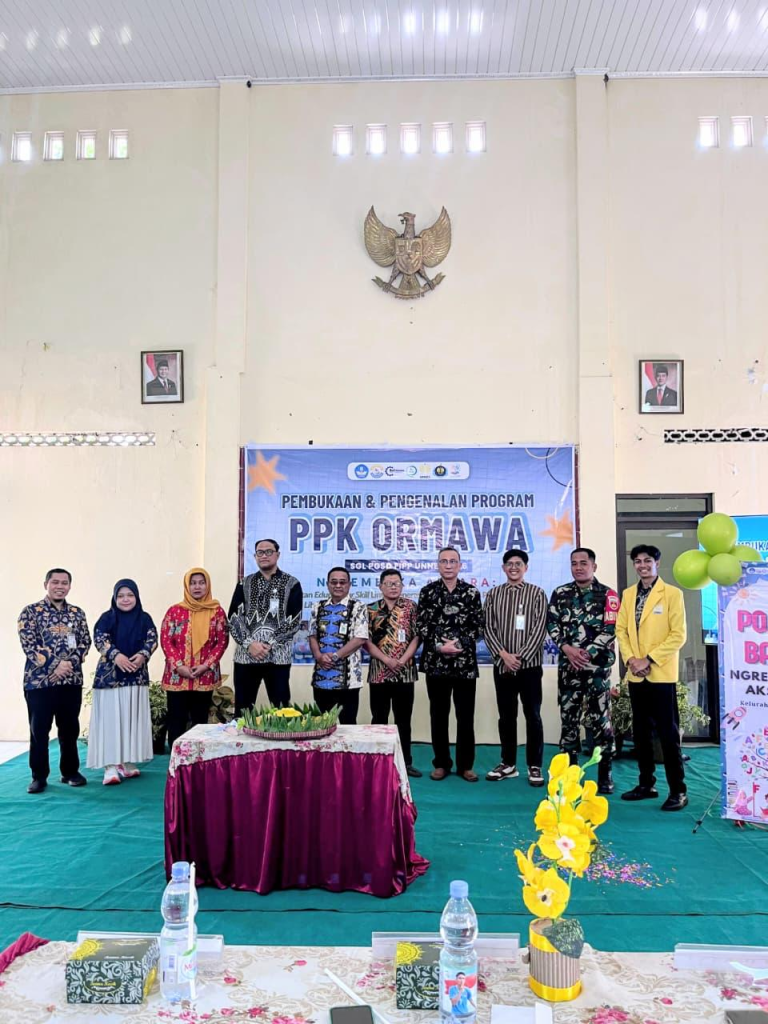
Semarang, June 18, 2026 – The spirit of collaboration between universities, the government, and the community was once again demonstrated through the Opening and Socialization of the Student Organization Capacity Strengthening Program (PPK Ormawa) for the 2026 Training Sub-Group (SGL) of the Elementary School Teacher Education Program (PGSD) of Semarang State University, held at the Podorejo Village Hall, Ngaliyan District, Semarang City. This event marked the beginning of the implementation of the community empowerment program titled “NGREMBAKA AKSARA: Strengthening Cross-Generation Edupreneur Skills Through the Integration of Literacy Corners and Hosting Libraries to Create a Sustainable Smart Podorejo Village.”
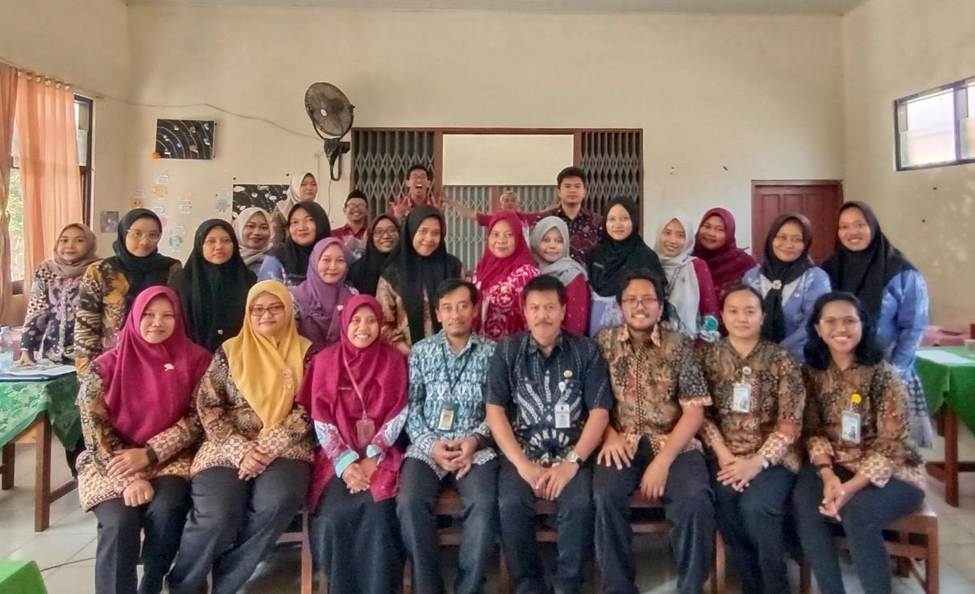
The event was attended by the Vice Dean for Academic and Student Affairs of the Faculty of Education and Psychology, Semarang State University, Mr. Farid Ahmadi, S.Kom., M.Kom., Ph.D.; the Head of Podorejo Village, Mr. Yusdi Dwiyantoro, S.H. and his staff; the Head of the Ngaliyan District Government Section, Mr. Nurwidi Tjahjanto, S.E.; the Coordinator of the Elementary School Teacher Education Study Program, Mr. Drs. Sigit Yulianto, M.Pd.; the PIC PPK Ormawa FIPP UNNES, Mr. Wantoro, S.Pd., M.Pd.; the Supervisor of PPK Ormawa, Ms. Nur Indah Wahyuni, S.Pd., M.Pd.; the Advisor of the SGL PGSD UNNES, Mr. Ipin Aripin, S.Pd.I., M.Pd.; village officials, PKK (Family Welfare Movement) administrators, Karang Taruna (Youth Organization), community leaders, neighborhood unit (RW) and neighborhood unit (RT) heads, and the Podorejo Village community.
The event began with an opening by the MC, followed by the singing of Indonesia Raya, a symbol of national spirit. The atmosphere was further enlivened by a performance of the Ngoser Purbalingga Dance by students of the Elementary School Teacher Education Program (PGSD) at Semarang State University, symbolizing cultural preservation and respect for the invited guests.
In his report on the event, Farid Fikri Khoirul Rasyid, Head of the Student Organization Capacity Building (PPK Ormawa) Team at the SGL PGSD UNNES, explained that the Student Organization Capacity Building Program (PPK Ormawa) encourages students to be directly involved in the community as agents of change. Through this program, students not only learn to implement the knowledge they have acquired in college but also strive to provide real solutions to various problems faced by the community through a sustainable empowerment approach.
Farid explained that the NGREMBAKA AKSARA Program was born for a reason. The program was developed based on the results of field surveys, observations, interviews, questionnaires, and Focus Group Discussions (FGDs) with the village government, community leaders, community cadres, and residents of Podorejo Village. The identification results revealed challenges such as low literacy interest among children due to the dominance of gadget use, the non-productive use of digital technology among adolescents, the limited skills of productive-age individuals and MSMEs in business development, and the suboptimal involvement of older adults in productive activities and health awareness.
“Podorejo Village has extraordinary potential. However, this potential needs to be optimized through strengthening literacy, skills, and cross-generational collaboration. Therefore, together with the Podorejo Village community, we initiated NGREMBAKA AKSARA as a shared space for learning, creating, growing, and empowering ourselves to realize a sustainable Smart Village,” Farid stated in his presentation.
As a solution to these various problems, the UNNES Student Organization (Ormawa) PPK Team, SGL PGSD, presents four main programs integrated into four NGREMBAKA AKSARA Literacy Corners: the Tunas Ngrembaka Literacy Corner for children, the Karya Ngrembaka Literacy Corner for teenagers, the Cakra Ngrembaka Literacy Corner for productive-age individuals and MSMEs, and the Kersa Ngrembaka Literacy Corner for the elderly. These four literacy corners are designed as non-formal learning centers based on community needs, interconnected within a sustainable empowerment ecosystem.
Through the Tunas Ngrembaka Literacy Corners, children will receive reinforcement in basic literacy, numeracy, character education, and simple, patented Metaverse technology-based learning. Meanwhile, teenagers will receive training in graphic design, videography, photography, social media management, and educational digital content creation through the Karya Ngrembaka Literacy Corners. In the productive age group, the community and MSMEs will receive mentoring on branding, packaging, digital marketing, and edupreneur skills development through the Cakra Ngrembaka Literacy Corner. Meanwhile, the elderly will be assisted through health programs, the use of family medicinal plants (TOGA), simple hydroponics, and productive skills training at the Kersa Ngrembaka Literacy Corner.
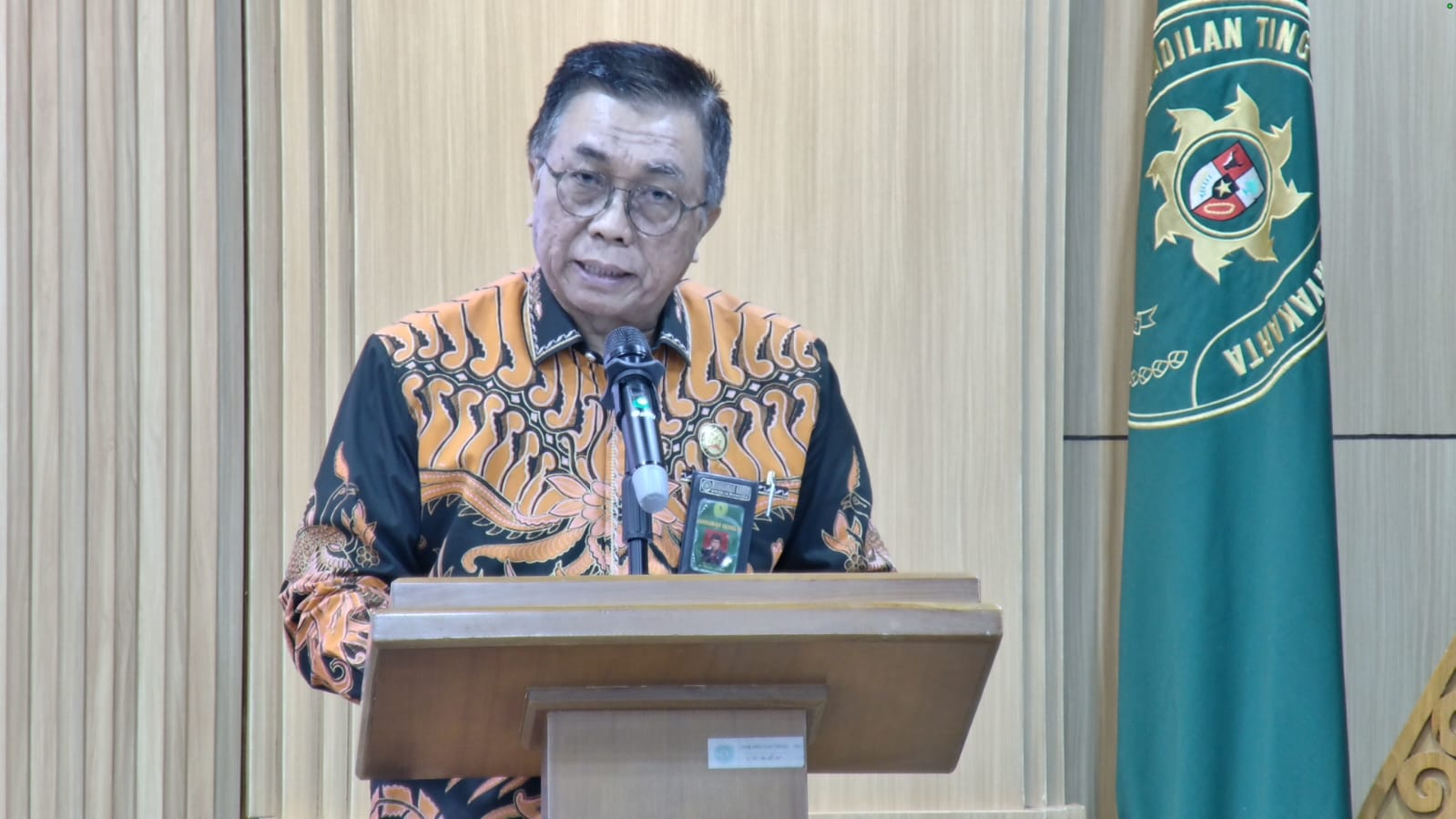
Full support for the program was conveyed by various parties. In his remarks, the Vice Dean for Academic and Student Affairs of FIPP UNNES, Mr. Farid Ahmadi, S.Kom., M.Kom., Ph.D., expressed his appreciation to students who were able to translate the Tri Dharma of Higher Education into concrete actions that provided direct benefits to the community. He also explained to the community of Podorejo Village about the Student Organization Capacity Strengthening Program (PPK Ormawa) as a national program that provides space for students to learn together with the community through empowerment activities oriented towards usefulness and sustainability. According to him, the success of development is not only determined by government policies alone, but also by collaboration between universities, the government, and the community who support each other in creating positive change. On that occasion, he symbolically sent off the UNNES SGL PGSD Student Organization (Ormawa PPK) Team to carry out community service and empowerment in Podorejo Village until the program’s conclusion on October 2, 2026.
The Head of the Ngaliyan District Government Section, Nurwidi Tjahjanto, S.E., also expressed his support for the program’s implementation. In his remarks, he expressed his appreciation for the selection of Podorejo Village as the location for the 2026 UNNES SGL PGSD Student Organization (Ormawa PPK) Program. He stated that this student-initiated program aligns with efforts to improve human resource quality and community empowerment, which have long been a government priority. He emphasized that Ngaliyan District is ready to support all activities of the 2026 UNNES SGL PGSD Student Organization (Ormawa PPK) Program, which will run until October 2, 2026. This support is expected to strengthen the synergy between universities, the government, and the community in realizing programs that have a real and sustainable impact. He also hoped that the various innovations presented through NGREMBAKA AKSARA would provide broad benefits to the community and serve as a good example of collaborative community empowerment practices based on education and skills in Semarang City.
Meanwhile, the Head of Podorejo Village, Mr. Yusdi Dwiyantoro, S.H., expressed his pride and gratitude for the trust placed in Podorejo Village as the location for the program. In his remarks, he stated that the village government was ready to fully support all activities, as they were deemed to align with the community’s needs and the direction of human resource development in the Podorejo area.
“The students came not only bringing programs, but also bringing a spirit of change. We warmly welcomed them and are ready to work together to create a more advanced and empowered society,” he said.
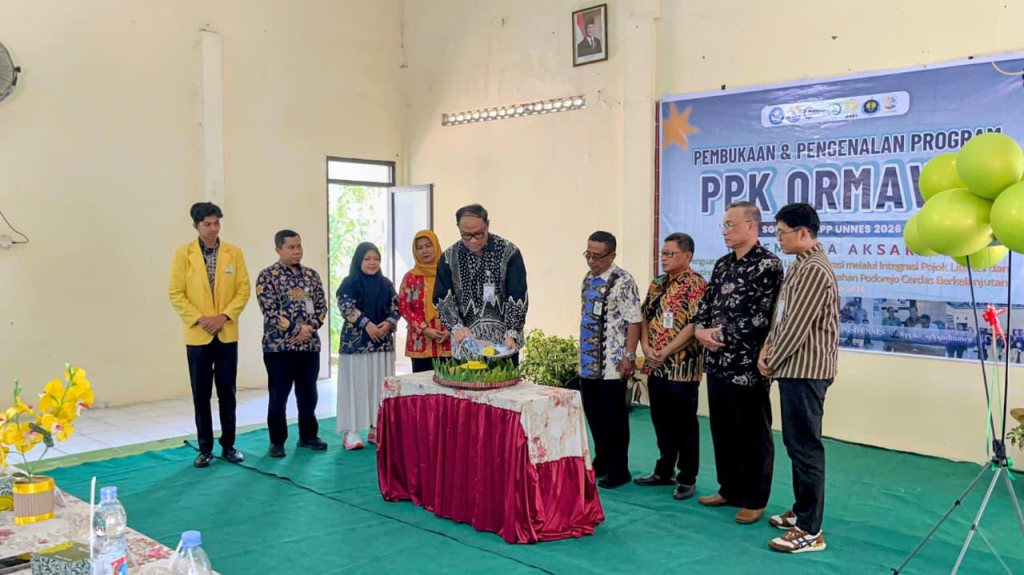
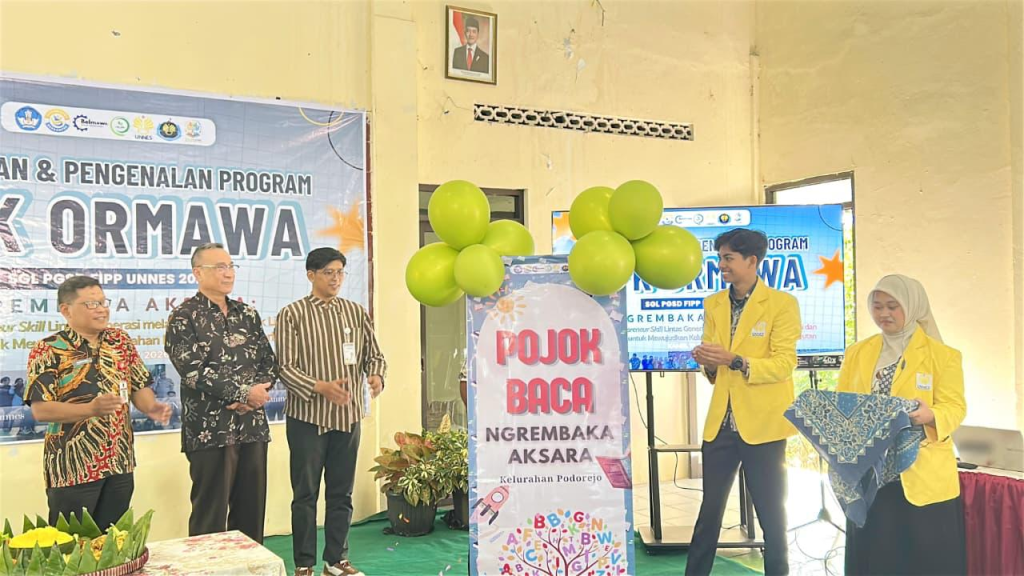
The program’s opening ceremony was marked by a tumpeng (rice cone) cutting ceremony, a symbol of gratitude and hope for the program’s success. The ribbon was then cut for the launch of the NGREMBAKA AKSARA Reading Corner, which symbolized the beginning of the community literacy movement in Podorejo Village. This procession not only marked the inauguration of a learning facility, but also symbolized the birth of a collaborative space that will bring together children, adolescents, productive-age individuals, and the elderly in the spirit of lifelong learning. Through this space, the community is expected to learn from each other, share experiences, and develop their potential according to the needs and characteristics of each generation.
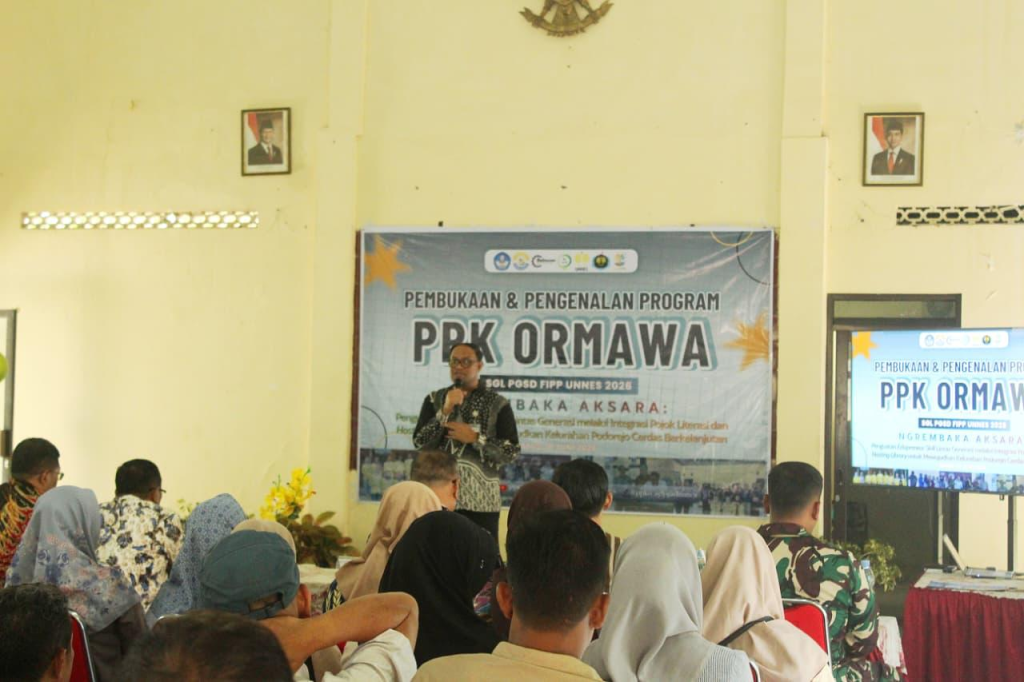
Following the inauguration, the PPK Ormawa SGL PGSD UNNES Team conducted a comprehensive program outreach to the community. Various activity agendas, achievement targets, and implementation mechanisms were explained in detail so that the community could actively participate as the main subject in each empowerment process. The event also explained that the NGREMBAKA AKSARA program series will be implemented in stages from June to October 2, 2026, encompassing literacy strengthening, skills development, community economic empowerment, elderly health promotion, and the establishment of a program sustainability system through community cadre development and management of the NGREMBAKA AKSARA Hosting Library. The participants’ enthusiasm was evident in the numerous questions, input, and hopes expressed during the discussion session.
More than just a community service program, NGREMBAKA AKSARA is a concrete form of student contribution to supporting the global development agenda through the Sustainable Development Goals (SDGs). This program directly contributes to SDG 4 (Quality Education) by strengthening basic literacy, digital literacy, and lifelong learning for all age groups. The program also supports SDG 8 (Decent Work and Economic Growth) by developing edupreneur skills, increasing the capacity of MSMEs, and creating economic opportunities based on local potential. Furthermore, the program supports SDG 12 (Responsible Consumption and Production) through innovation of higher-quality, competitive, and sustainable MSME products. Equally important, the program’s success is built on close partnerships between universities, government, communities, schools, youth organizations, and various other strategic partners, aligned with SDG 17 (Partnerships to Achieve the Goals).
Amidst the increasingly complex challenges of the digital era, NGREMBAKA AKSARA exists not only to improve reading and writing skills, but also to foster a culture of learning, build life skills, strengthen family resilience, develop the community economy, and strengthen intergenerational relationships. This program is expected to be the foundation for a society that is not only intellectually intelligent, but also economically independent, socially healthy, and resilient in facing the changing times.
With a spirit of mutual cooperation and collaboration fostered from the outset, the PPK Ormawa SGL PGSD UNNES is optimistic that NGREMBAKA AKSARA will become an empowerment movement capable of leaving a lasting impact on the Podorejo Village community. The program’s presence is proof that students, the government, and the community can work hand in hand to realize inclusive, participatory, and sustainable development. Through literacy, skills, and a spirit of collaboration across generations, Podorejo Village is expected to grow into a true example of a Smart Village that supports the achievement of sustainable development goals at the local and national levels.
Together, Empowered, Educating the Nation. NGREMBAKA AKSARA:
It’s possible! It’s possible! Can!