


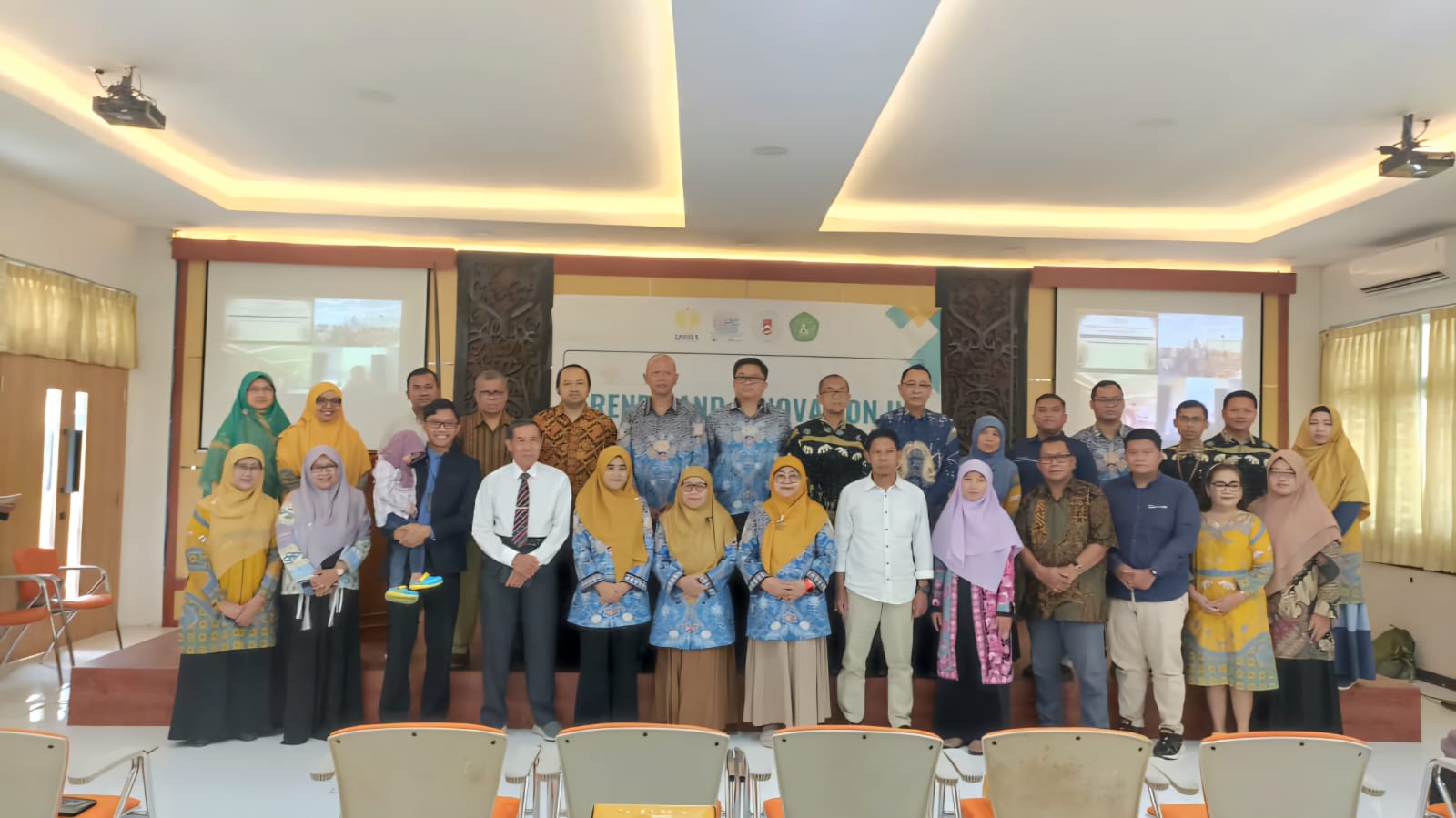
Universitas Negeri Semarang (UNNES), together with Universitas Mulawarman (UNMUL) and Sogang University of South Korea, strengthened their partnership through the Leading University Project for International Cooperation (LUPIC). The two-day program, held in Samarinda on September 9–10, 2025, combined the signing of a formal agreement with a range of community engagement activities.
The initiative reflects UNNES’s commitment to turning research-based innovations in chemistry education into practical classroom applications. UNNES lecturers presented micro-scale experiments, green chemistry practices, competency-based assessments, and Education for Sustainable Development (ESD). These innovations go beyond academic journals—teachers can immediately use them as lesson plans, learning modules, and classroom strategies.
The program also showcased how technology can enrich science learning. With the help of FabLab-based tools such as 3D pens and 3D printing, teachers explored new ways to visualize molecular structures and chemical bonding. These affordable tools make science more engaging and help bridge the gap between theory and practice. In addition, STEM challenges involving teachers and high school students encouraged collaboration, creativity, and critical thinking in local schools.
The UNNES delegation included Prof. Dr. Sri Haryani, Prof. Dr. Sri Wardani, Dr. Agung Tri Prasetya, Dr. Cepi Kurniawan, Siti Herlina Dewi, M.Pd., Dr. Dimas Gilang Ramadhani, M.Pd., and student representative Ibrahim Wicaksono. They contributed to designing innovative modules, developing new assessment methods, and creating classroom-ready 3D teaching aids.
From this collaboration, the three universities produced several outcomes: a formalized partnership with clear plans for joint programs, improved teacher skills in contextual chemistry teaching, new prototype teaching aids, and a roadmap for pilot testing and dissemination through Chemistry Teacher Forums (MGMP).
“This collaboration connects global expertise with local needs. UNNES research creates real impact when it is directly experienced by teachers and students in classrooms,” said Dr. Cepi Kurniawan.
Moving forward, UNNES plans to expand professional development for teachers through hybrid mentoring and lesson study, strengthen FabLab ecosystems with accessible teaching resources, and link research to policy through joint publications and recommendations. These efforts further position UNNES as a center of innovation in chemistry education, supporting the achievement of SDG 4 (Quality Education), SDG 9 (Industry, Innovation, and Infrastructure), and SDG 12 (Responsible Consumption and Production).