

Universitas Negeri Semarang (UNNES) reaffirms its strong institutional commitment to advancing women’s success in higher education by implementing a systematic approach to monitor and support female students’ academic journeys. Through the integrated academic portal data.unnes.ac.id, the university actively tracks graduation rates by gender and faculty to identify trends and ensure that women are fully supported in completing their studies on time.
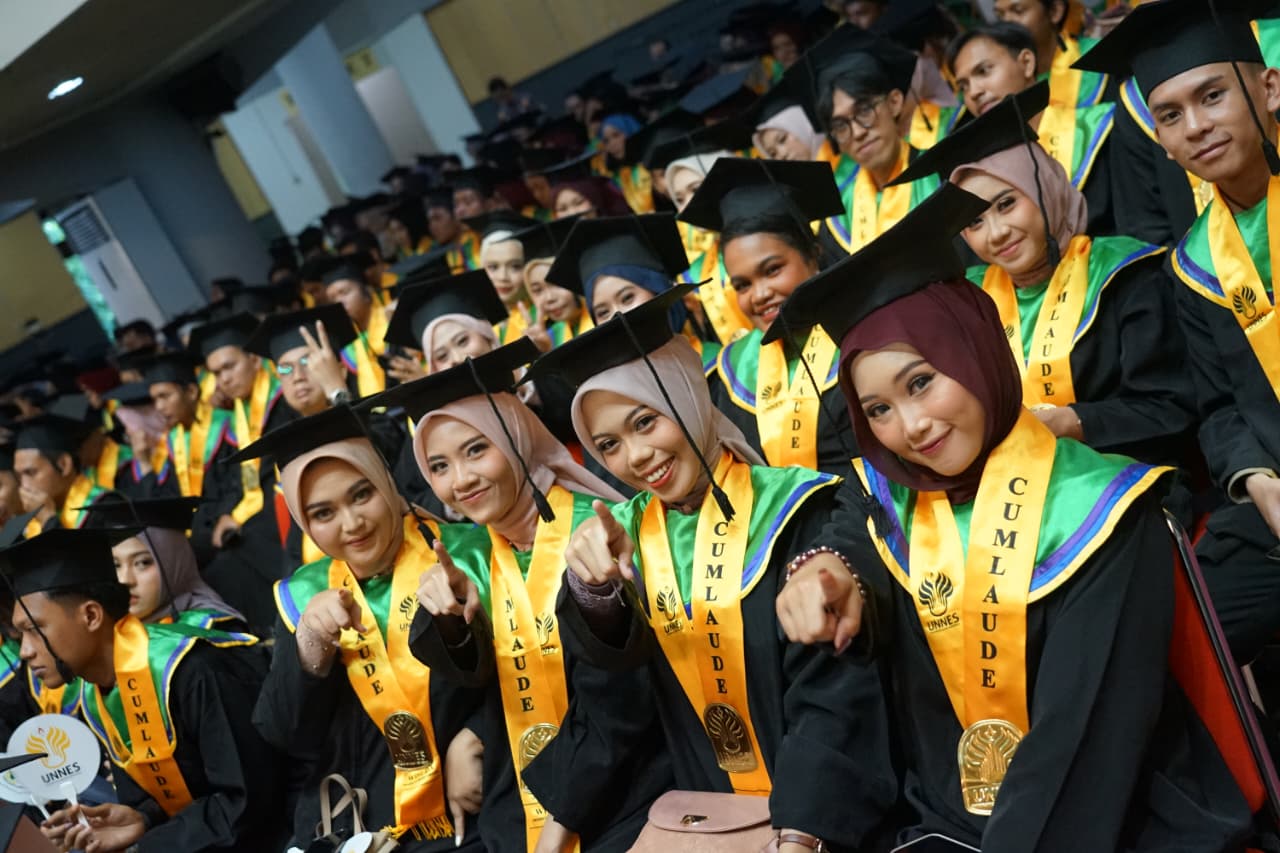
The data reveals that women consistently form the majority of UNNES’s student population. Recognizing their crucial contribution to the academic community, the university has taken proactive steps to ensure that female students receive targeted assistance throughout their studies, particularly in the final stages of their academic journey. Based on the 2024 academic year data, UNNES recorded that 61,32% of graduates were women, while 38,18% were men — demonstrating strong female participation and achievement in higher education. The university aims to maintain and strengthen gender parity in graduation outcomes, with a formal target to sustain women’s graduation rates at 100 % through 2030, ensuring equal academic success across all disciplines.
UNNES regularly conducts special mentoring programs for female students who have exceeded the ninth semester or are at risk of delayed graduation. Under the coordination of the Vice Rector for Academic and Student Affairs, these mentoring activities involve direct academic supervision, motivational sessions, and, when needed, parental engagement to reinforce students’ commitment to timely graduation. This institutional approach reflects UNNES’s belief that every woman deserves equal opportunity and structured support to complete her education successfully.
Beyond academic mentoring, UNNES also provides complementary programs to help female students overcome challenges that may hinder their progress. These include risk-based tutoring, writing assistance for final theses, mental health counseling, and access to emergency financial aid. Moreover, for student mothers, the university offers childcare facilities and flexible academic arrangements, ensuring that parenting responsibilities do not become a barrier to academic achievement.
As part of its transparency and evidence-based governance, UNNES is developing a public graduation dashboard that will display gender-based data across faculties. This initiative allows the university to measure progress, evaluate the effectiveness of its mentoring programs, and design more targeted policies to narrow any gaps between male and female graduation rates.
Through continuous monitoring, gender-sensitive mentoring, and institutional support, UNNES strengthens its role as a gender-responsive university. The university not only ensures equal access to education for women but also guarantees that female students are guided, encouraged, and empowered to graduate on time, reflecting UNNES’s broader mission to promote equality, academic excellence, and sustainability in higher education.