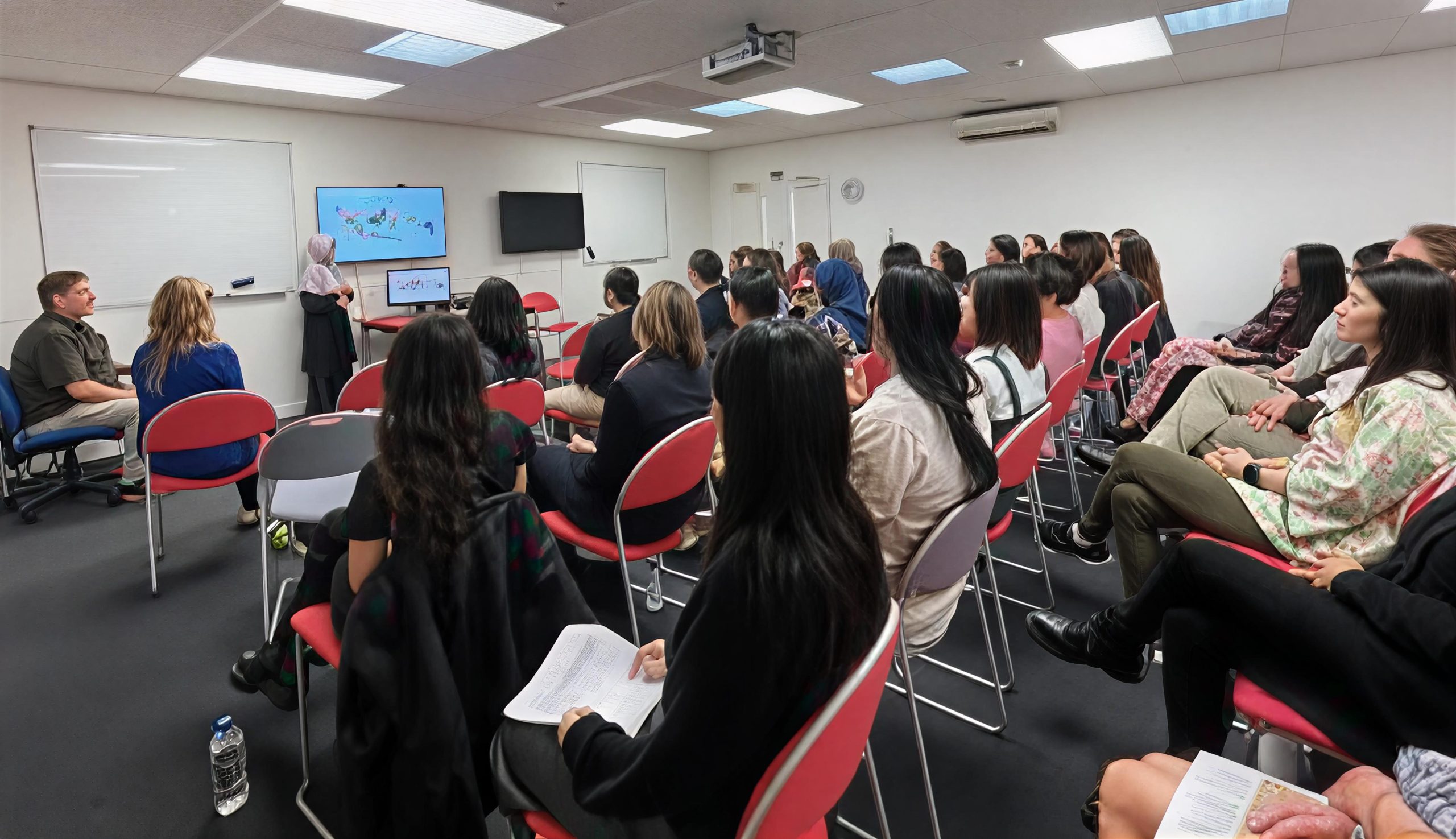


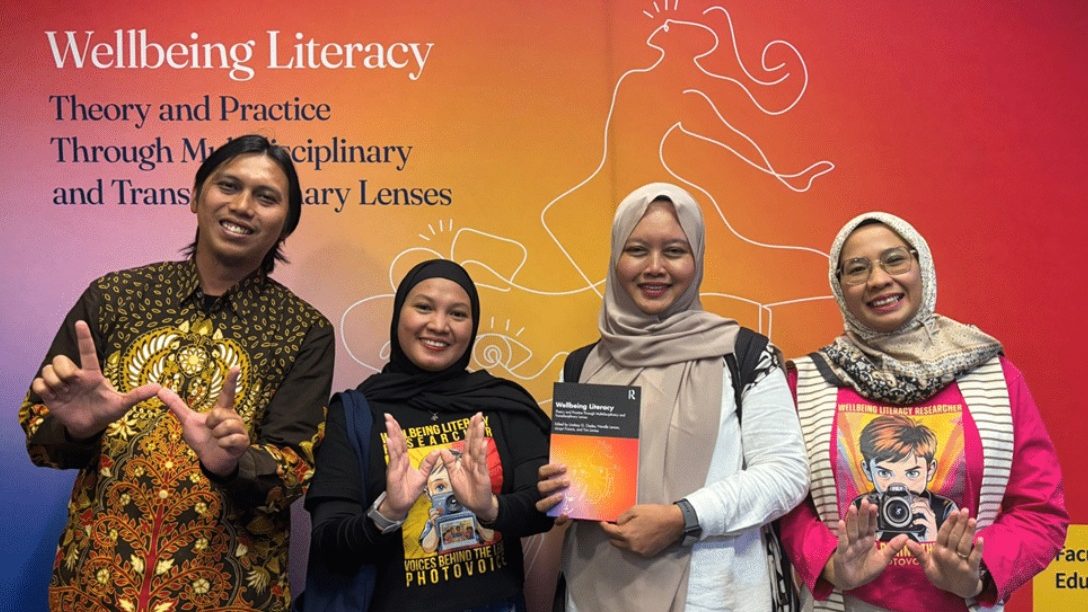
The Faculty of Education at the University of Melbourne was energized by a vibrant atmosphere of scholarly dialogue as more than 200 lecturers, professors, researchers, students, and wellbeing practitioners gathered for the launch of the Routledge volume Wellbeing Literacy: Theory and Practice through Multidisciplinary and Transdisciplinary Lenses, during an event held on 19 November 2025.
Among the international contributors, a research team from Universitas Negeri Semarang (UNNES), Indonesia, led by Dr. Siti Nuzulia, attracted considerable attention for their chapter, “Exploring Wellbeing Literacy among Javanese Undergraduates.”
As one of four invited panelists, Dr. Nuzulia presented the team’s key findings, bringing forward a culturally grounded and spiritually informed perspective that enriched the global discourse on wellbeing literacy.
Her presentation emphasized that Javanese wellbeing literacy is profoundly shaped by longstanding cultural values, such as spiritual grounding reflected in ikhlas, sabar, and alhamdulillah; relational harmony embodied in rukun; and respectful communication embedded within the Javanese speech levels ngoko–krama.
She highlighted how Javanese youth navigate the interplay between tradition and modernity, forming a hybrid wellbeing lexicon that integrates ancestral wisdom with contemporary wellbeing concepts.
Dr. Nuzulia’s insights offered a constructive challenge to Western-centric models of wellbeing literacy, underscoring that wellbeing is not solely individual or linguistic, but fundamentally cultural, relational, and context-dependent.
This culturally situated perspective contributes to SDG 10 (Reduced Inequalities) by elevating underrepresented epistemologies into the global academic conversation. Her presentation prompted substantive engagement from attendees, who posed critical questions about indigenous knowledge systems, cultural variability in wellbeing expression, and the future of cross-cultural wellbeing literacy research.
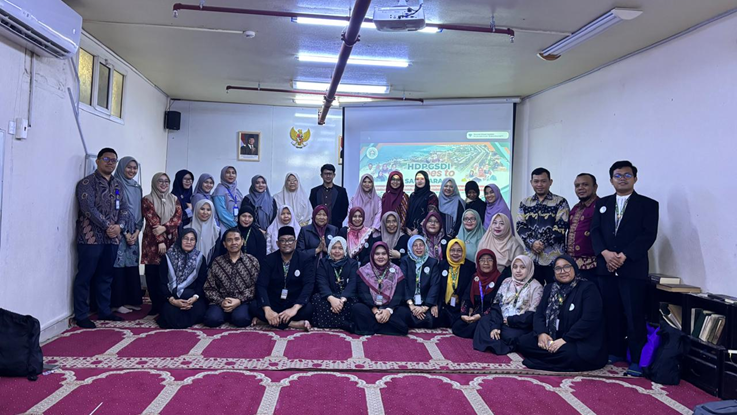
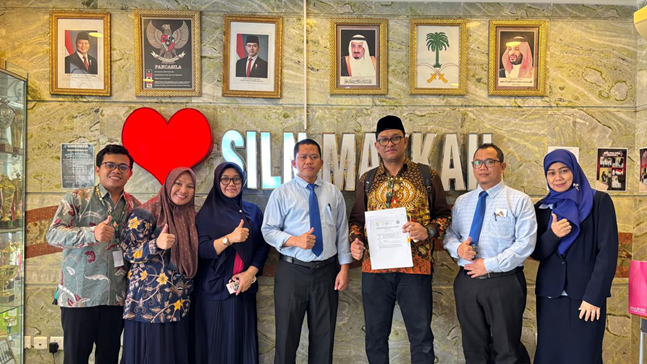
Beyond the intellectual exchange, the book launch functioned as a dynamic platform for strengthening international academic partnerships. Discussions between UNNES faculty and researchers from the University of Melbourne opened pathways for collaborative initiatives, including joint research projects, co-teaching programs, academic mobility opportunities, and cross-cultural wellbeing literacy activities.
These emerging initiatives exemplify the spirit of SDG 17 (Partnerships for the Goals), demonstrating how universities can collaborate to advance shared priorities through knowledge exchange and capacity-building.
The event also reaffirmed the central importance of wellbeing literacy as a transformative capability within education, aligning with SDG 4 (Quality Education) and SDG 3 (Good Health and Well-being).
Participants commended the book’s multidisciplinary and transdisciplinary orientation, noting its potential to inform more inclusive, human-centered educational frameworks that empower individuals and communities to communicate, interpret, and cultivate wellbeing across diverse cultural contexts.
For UNNES, this moment represents a significant milestone in Indonesia’s contribution to global educational research. By elevating Javanese cultural philosophies on an international platform, the UNNES research team demonstrated the richness, depth, and global relevance of Indonesian scholarship.
Their participation underscores the essential role of culturally grounded wellbeing research in fostering healthier, more equitable, and more sustainable societies worldwide.