


As a Conservation University, Universitas Negeri Semarang (UNNES) is strongly committed to realizing a zero-carbon campus. This initiative aligns with UNNES’s broader efforts to build a sustainable and environmentally responsible university.
The commitment is formally outlined in the Rector’s Decree No. B/3669/UN37/HK.02/2024 on UNNES’s Commitment to Achieving Carbon Neutrality by 2045.
One of the key provisions in the decree authorizes UNNES to collaborate with external partners to attract investments from the renewable energy sector, particularly to replace coal and petroleum-based energy sources (Article i).
This commitment is being translated into action through well-prepared plans, including collaboration with Indonesia Power to develop solar energy infrastructure on the UNNES campus.
Furthermore, Rector’s Regulation No. 22 of 2009, Article 7, serves as a guiding framework for UNNES’s transition to renewable energy, specifically through the adoption of solar cell technology. This technology complements various other institutional policies aimed at reducing the use of coal and fossil fuels.
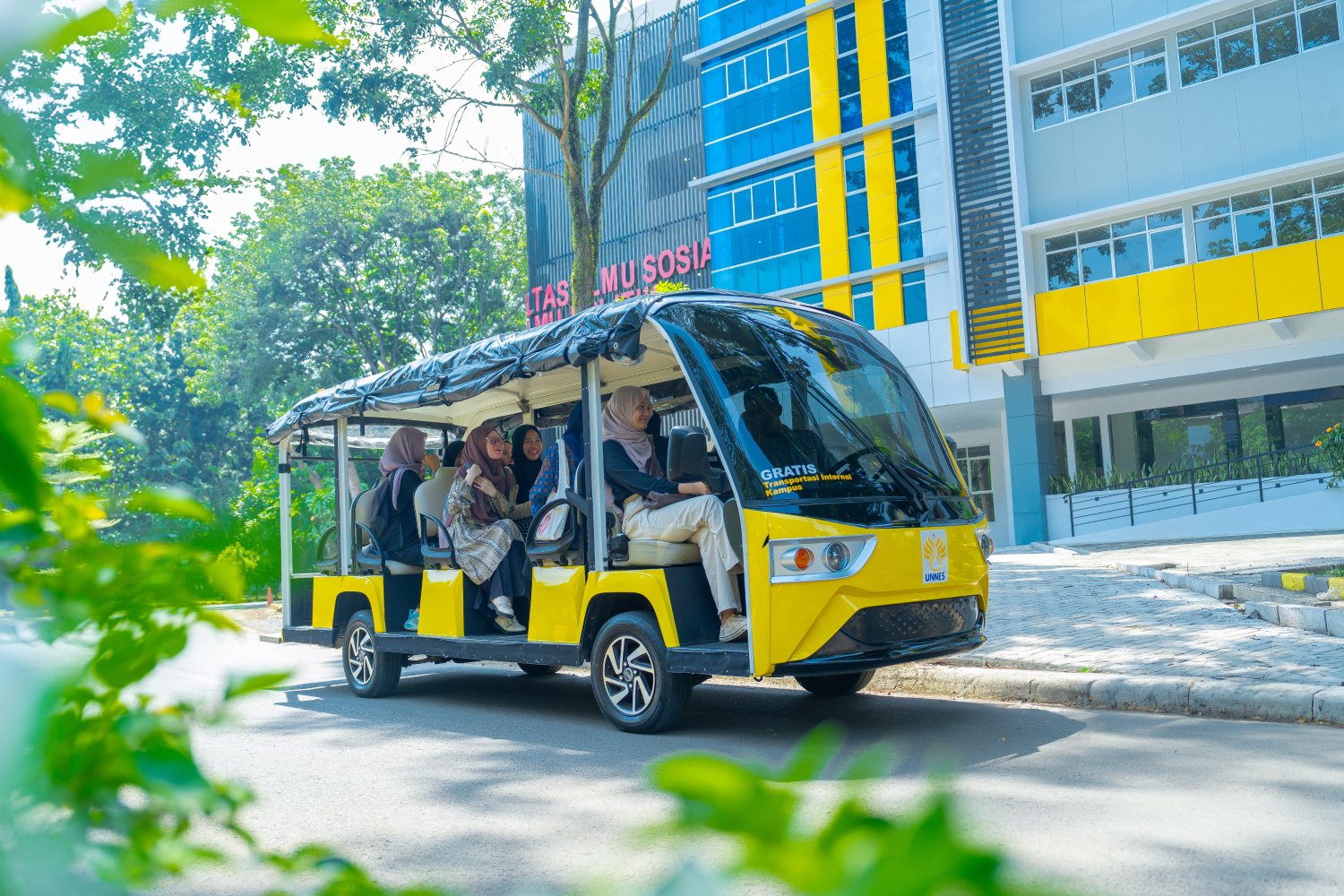
To implement these sustainability policies, UNNES has also designed comprehensive carbon-reduction programs across campus. One concrete initiative is the introduction of green transportation, a system that supports environmentally friendly mobility within the university.
Under this initiative, UNNES has launched a fleet of 20 electric shuttle buses serving all members of the academic community. The electric shuttles operate Monday through Friday, from 6:00 a.m. to 5:00 p.m., and the number of vehicles will increase in line with future needs.
In addition, UNNES provides bicycles to facilitate healthy and eco-friendly mobility for students, staff, and faculty members across the campus area.
Through these integrated steps—spanning renewable energy development, sustainable transportation, and behavioral transformation—UNNES is steadily moving toward its vision of becoming a carbon-neutral university by 2045.