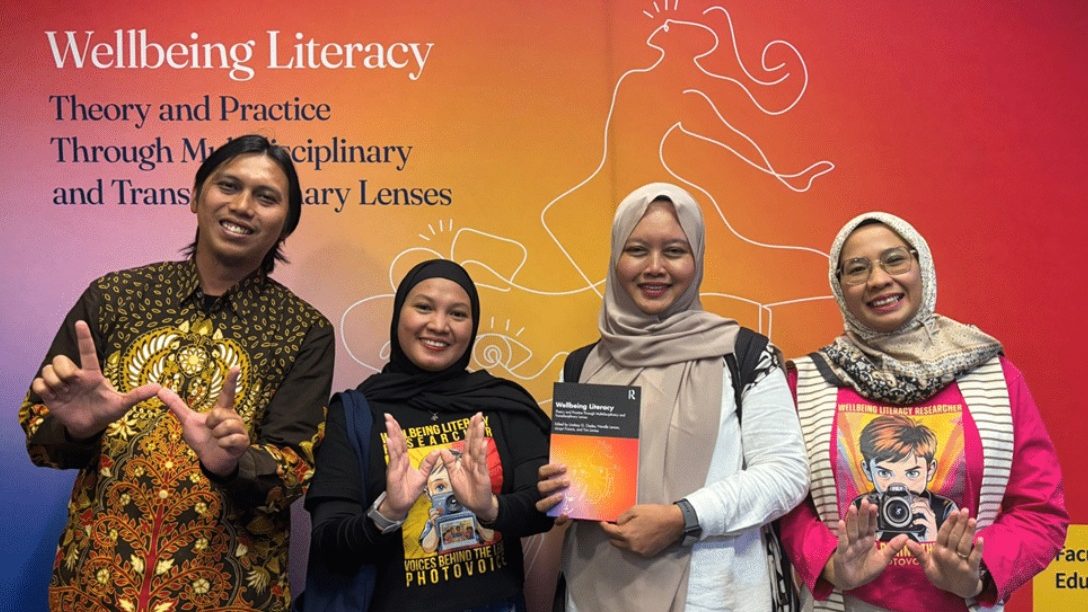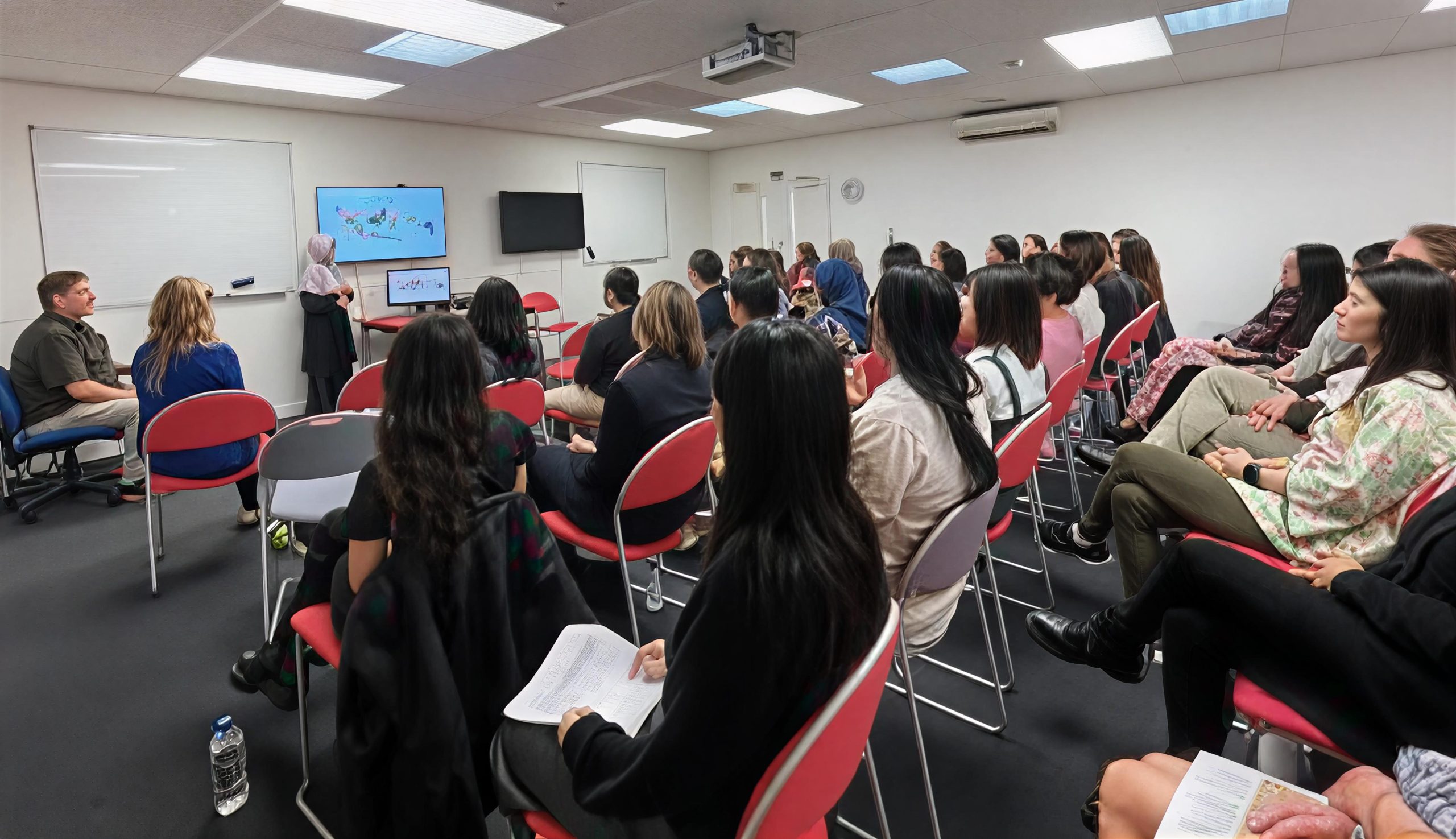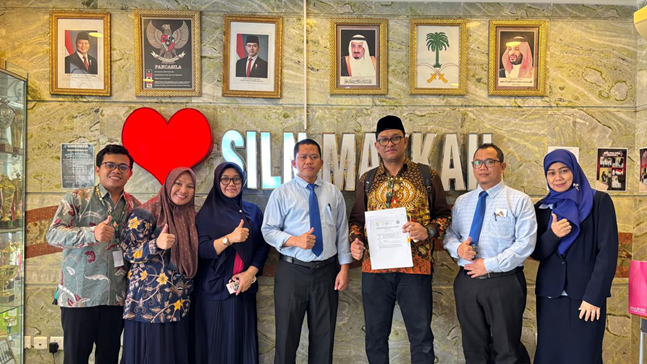


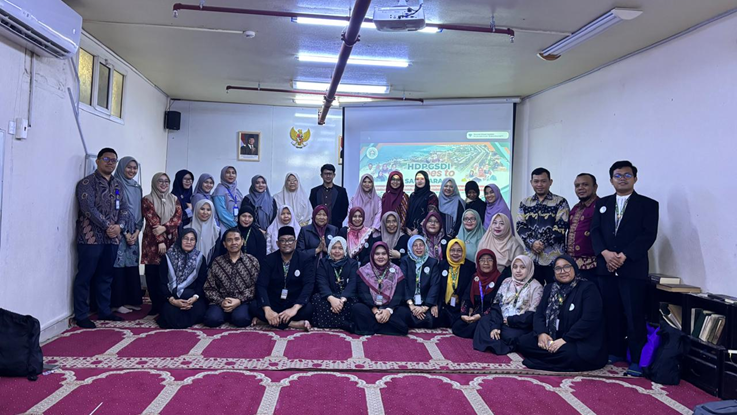
The Faculty of Education and Psychology (FIPP) at Universitas Negeri Semarang (UNNES) successfully implemented an international community service initiative titled “Mindfulness-Based Writing Assistance Program for Enhancing the Professionalism of Indonesian School Teachers in Jeddah.”
The activity, conducted in Jeddah on October 30, 2025, reflects UNNES’s strengthened commitment to advancing the professional capacity of Indonesian educators overseas.
The program was led by Dr. Mintarsih Arbarini, M.Pd., accompanied by team members Farid Ahmadi, S.Kom., M.Kom., Ph.D., Yudi Siswanto, M.Pd., Rendi Agung Febrianto, M.Pd., and Indri Ajeng Setyoningrum, M.Pd. Their collaborative efforts aimed to elevate teachers’ writing skills through a structured and reflective training model.
Designed to enhance teacher professionalism, the initiative integrates a mindfulness-based writing assistance approach that combines self-awareness practices with guided academic writing techniques. This method helps teachers manage stress, maintain focus, and produce meaningful, coherent, and high-quality academic works.
The training emphasized the development of reflective reports, scholarly articles, and classroom action research proposals, supported by mentoring sessions tailored to teachers’ professional needs.
Throughout the program, participants were encouraged to engage in mindfulness practices before and during the writing process, allowing them to approach writing with greater calmness, attentiveness, and productivity. Teachers expressed strong enthusiasm, noting that the mindfulness-based approach enabled them to write with improved clarity and emotional balance.
In his remarks, Farid Ahmadi, S.Kom., M.Kom., Ph.D., highlighted that this initiative demonstrates UNNES’s role as a Conservation University with an International Reputation, actively contributing to the global advancement of Indonesian educators.
He emphasized that the development of teacher professionalism requires not only technical mastery but also emotional regulation, reflective capacity, and humanistic awareness. According to him, the integration of mindfulness encourages teachers to write with greater empathy, intentionality, and a deeper sense of purpose.
This initiative also supports the achievement of the Sustainable Development Goals, particularly in promoting quality education and well-being. By fostering psychological resilience and strengthening professional competence through reflective, adaptive, and sustainable learning practices, the program contributes meaningfully to SDG 4 (Quality Education) and SDG 3 (Good Health and Well-Being).