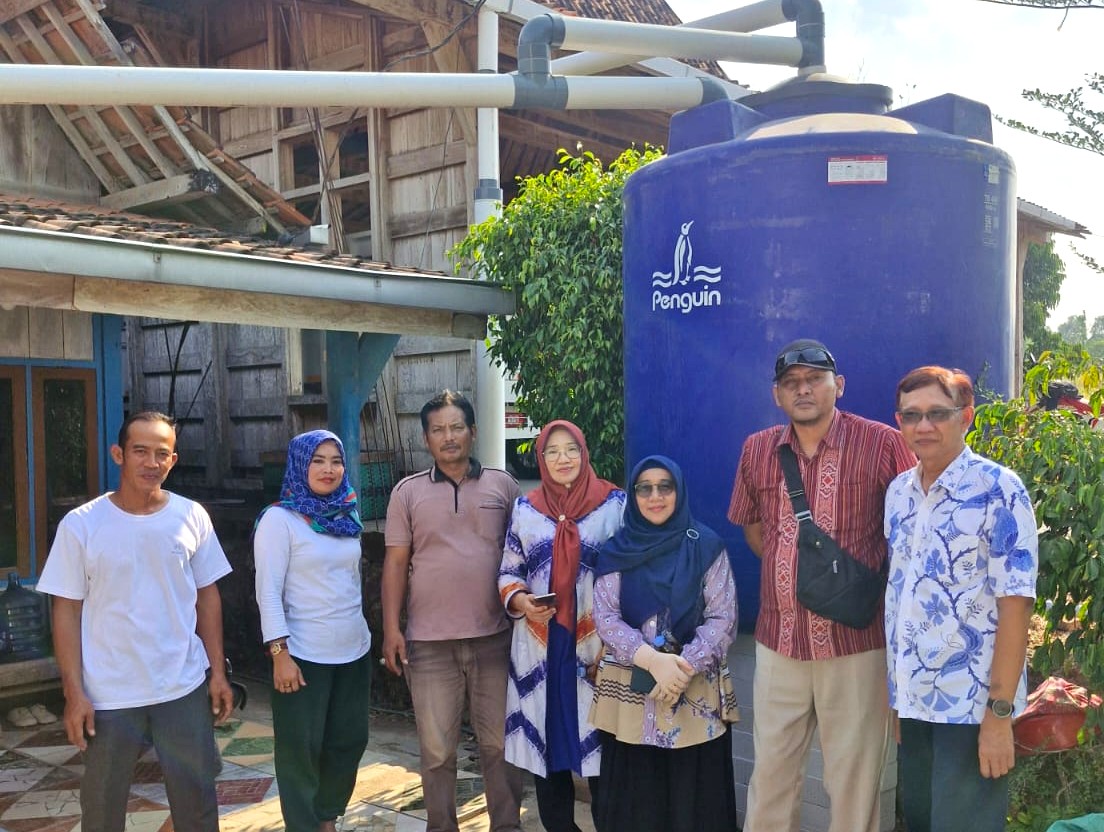
Partnerships with residents, farmer groups, village governments, conservation agencies, and businesses support tree planting, biodiversity conservation, and ecosystem rehabilitation across Central Java.
Semarang, Indonesia — Universitas Negeri Semarang (UNNES) strengthened its collaboration with local communities in 2025 through programmes to conserve and restore ecosystems in village landscapes, watersheds, and coastal areas. Working with community groups and institutional partners, the university contributed expertise, seedling propagation, practical training, student participation, and environmental monitoring.
The collaborations connected university research and education with the management of environments that support local livelihoods. Activities included rare-plant propagation in Wonolopo, mangrove rehabilitation in Mangunharjo, tree planting in Kalisegoro, and community-based conservation on the slopes of Mount Ungaran.
Rare-Plant Conservation and Community Greening in Wonolopo
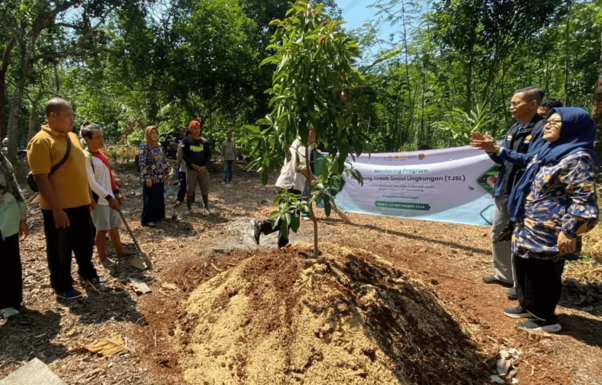
A partnership between UNNES and PT PLN (Persero) UPT Semarang supported rare-plant conservation and productive-tree development in Wonolopo, Mijen District, Semarang. Led by Prof. Dr. Juhadi, M.Si., from the Faculty of Social and Political Sciences (FISIP), the programme began in June 2025 under PLN’s Environmental and Social Responsibility programme.
Programme records report that, by September 2025, the UNNES Ecogreen/Ecofarm Nursery had propagated 150 seedlings representing 21 rare-plant varieties. PLN also provided 200 durian and avocado seedlings to support community greening and productive land use.
UNNES contributed propagation expertise and conservation planning, while PLN supported the provision of planting materials. The programme considered green open spaces and land around electricity transmission infrastructure, with species selection and planting locations taking account of infrastructure safety.
The recorded outputs concern seedlings propagated and supplied. Their intended contribution is to support vegetation cover, plant conservation, and productive land use by residents.
Mangrove Rehabilitation with Coastal Communities
In Mangunharjo, Semarang, UNNES worked with the Mangrove Lestari Farmers Group, university partners, and businesses to rehabilitate coastal vegetation.
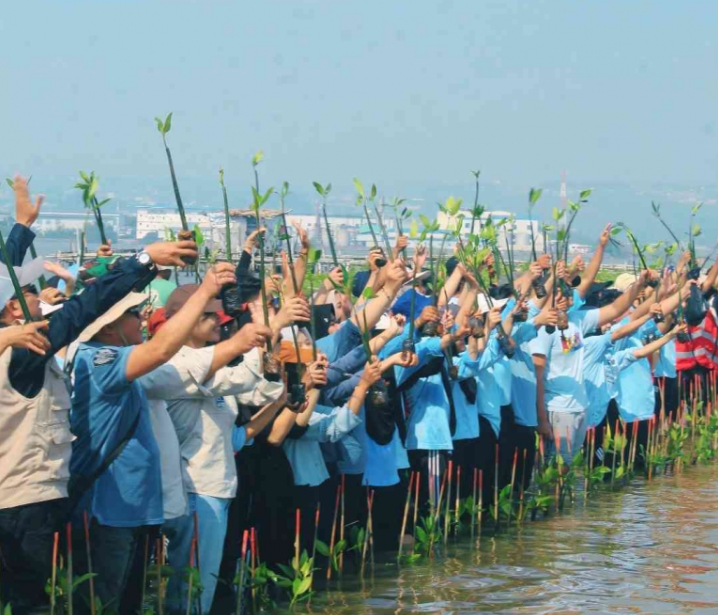
Through ILING PROJECT 2025, Environmental Science students from FMIPA UNNES and their partners planted 7,000 mangrove seedlings on 21 June 2025. The activity received support from PT PAMA, Wijayakusuma Industrial Estate, the Mangrove Lestari Farmers Group, and UNNES academic staff.
The collaboration followed a separate mangrove planting activity on 13 June 2025, involving UNNES, National Taiwan Normal University (NTNU), and the same local farmers’ group. Community participation connected both activities with an organisation engaged in the management of the local mangrove landscape.
Follow-up monitoring extended the work beyond planting. According to the programme’s monitoring account, PT PAMA and FMIPA UNNES conducted an assessment on 16 December 2025, recording 6,053 surviving seedlings, or approximately 86.5% of the June planting total.
Survival varied across three planting zones, providing information for directing further maintenance. The monitoring also recorded mud snails, small shrimp, and small fish at the rehabilitation site. These observations documented the presence of coastal organisms, while longer-term biodiversity changes require repeated assessment.
Tree Planting with Residents in the Garang Watershed
UNNES also engaged communities near its campus in planting activities within the upper Garang watershed.
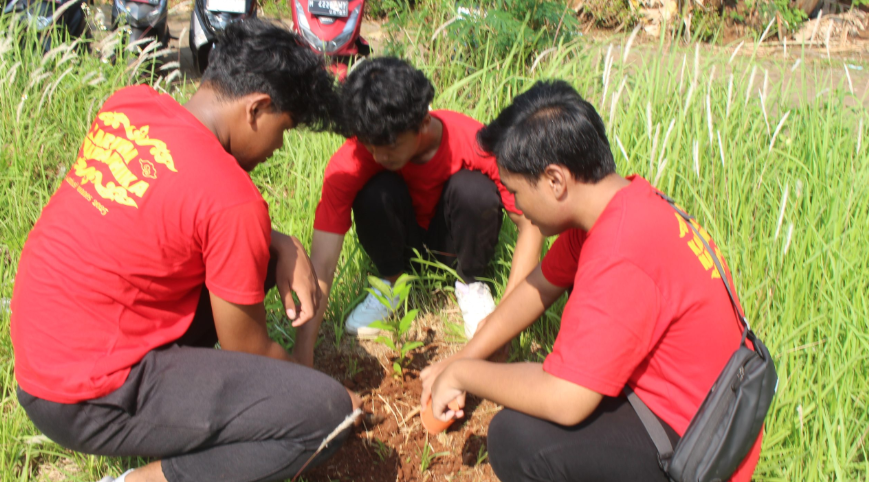
On 8 September 2025, the Science Adventure Team (SCEVA) organised tree planting through its CREATES programme in Delik, Kalisegoro, Semarang. Local residents participated alongside students, and the activity included a commitment to monitor tree growth periodically.
The programme linked student conservation activities with community involvement in maintaining local vegetation. Planting in the watershed was intended to support the ecological functions of land connected to the surrounding settlements and water system.
A further activity on 10 October 2025 involved approximately 1,255 first-year FISIP students, who planted 410 seedlings across about one hectare in Kalisegoro, Gunungpati. This expanded student participation in local greening and complemented the university’s conservation engagement around the campus.
The planting totals record the scale of participation and seedlings planted. Continued care and growth monitoring provide the basis for assessing their longer-term contribution to the landscape.
Community-Based Conservation on Mount Ungaran
On the slopes of Mount Ungaran, Kendal Regency, UNNES collaborated with residents and conservation institutions to connect biodiversity protection with community livelihoods.
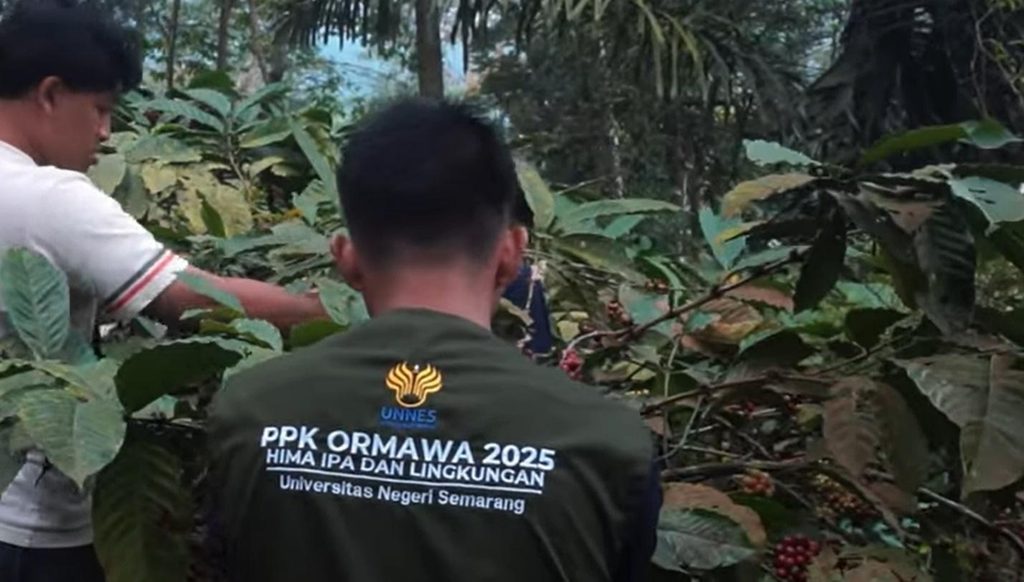
In Peron Village, the HIMA IPA dan Lingkungan student association implemented a Student Organisation Capacity Strengthening Programme (PPK Ormawa) focused on zero-waste agroforestry and community resilience.
Its AGROSIAGA activities introduced residents to local rare flora and fauna, habitat protection, and responsible interactions with wildlife. Contributions from the Central Java Natural Resources Conservation Agency (BKSDA Jawa Tengah) connected community learning with conservation expertise.
The programme addressed the relationship between agricultural activities and wildlife, encouraging residents to consider both livelihood needs and ecosystem protection. Agroforestry and the use of agricultural by-products complemented this conservation education by linking local production with more responsible resource management.
In neighbouring Ngesrepbalong Village, UNNES supported Rumat Anggrek, a community-based programme combining forest-orchid conservation, tissue culture, cultivation training, and educational ecotourism.
Residents participated in learning and mentoring activities that connected plant conservation with practical skills and opportunities for nature-based livelihoods. UNNES contributed technical expertise and education, while community participation placed conservation within the village’s social and economic activities.
Supporting Planting and Follow-Up through SIOMON
UNNES’s student tree-planting programme provides an institutional mechanism for participation in conservation. Students are required to plant at least one tree and document planting and subsequent care through SIOMON or the MyUNNES-Student application.
According to the SIOMON records cited in the programme documentation, students planted 6,176 trees in 2025. Activities took place across several regions of Indonesia, predominantly on Java, particularly in Central Java.
The system supports the recording of planting activities and tree-growth updates. For planting undertaken on community-managed land, cooperation with landowners and local managers provides a basis for agreeing on planting locations and subsequent care. The university-wide planting total describes overall participation; individual records establish the community partnerships associated with particular sites.
Connecting University Expertise with Local Ecosystem Care
UNNES’s partnerships bring together complementary contributions: academic expertise and student participation from the university, involvement from residents and farmer groups, technical input from conservation institutions, and support from businesses.
The programmes demonstrate several forms of collaboration in maintaining shared ecosystems, from community conservation education and seedling development to planting and follow-up assessment. By working within the landscapes where communities live and earn their livelihoods, UNNES connects its conservation responsibilities with local participation in the care of vegetation, habitats, and natural resources.