

Universitas Negeri Semarang (UNNES), as a Conservation University, supports aquatic ecosystem protection through community engagement, environmental education, and student-led conservation activities. In 2025, UNNES documented initiatives in Tambakrejo, Semarang, that combined community capacity building for mangrove ecotourism with student participation in coastal rehabilitation. These activities demonstrate complementary approaches to supporting local conservation efforts and contribute to the objectives of Sustainable Development Goal (SDG) 14, Life Below Water.
1. Strengthening Community Capacity through Mangrove Ecotourism
In June 2025, the Faculty of Social and Political Sciences (FISIP) UNNES conducted training and mentoring for the managers of Eduwisata Mangrove CAMAR in Tambakrejo, Semarang. The initiative aimed to strengthen the community’s ability to promote mangrove ecotourism through digital communication and reach a wider audience, including international visitors.
The activity is documented in the official UNNES report, FISIP UNNES Strengthens CAMAR Mangrove Ecotourism through Digital Marketing for International Markets.
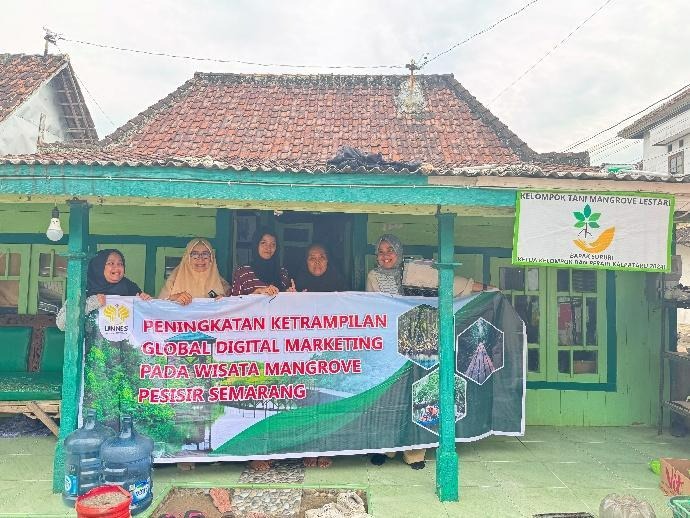
The FISIP UNNES team was led by Rahma Hayati from the Geography Department, together with Vina Nurul Husna, Lina Adi Wijayanti, and Enda Kalyana Putri. The team worked with the local managers of Eduwisata CAMAR, a community initiative that connects mangrove conservation with environmental education.
The training focused on preparing digital content, developing stories and visual identities, and creating promotional materials suitable for international audiences. This support was intended to improve how the community communicates the ecological value of mangroves and introduces visitors to local conservation practices.
The documented activity represents a practical form of community capacity building. However, the published report does not specify the total number of participants or provide quantitative evidence of subsequent increases in visitors, income, or mangrove restoration outcomes.
2. Community-Led Mangrove Conservation in Tambakrejo
Mangrove conservation in Tambakrejo has a longer history that predates the 2025 UNNES mentoring activity. Local residents have cultivated and planted mangroves since 2014 as a response to coastal abrasion and environmental pressures.
The community-managed CAMAR initiative combines mangrove conservation with environmental education through its ecotourism activities. Visitors can learn about coastal ecosystems and, through relevant activities, participate in mangrove planting and cultivation. This approach connects habitat protection with opportunities for environmental learning and local livelihoods.
Within this partnership, the documented roles are complementary. The FISIP UNNES team contributed academic and practical support for digital communication and promotion, while the CAMAR managers continued to operate the community-based ecotourism initiative and communicate its conservation activities to visitors. The available report does not establish a formal division of responsibilities for mangrove maintenance, ecological monitoring, or long-term restoration between UNNES and CAMAR.
The distinction is important: the June 2025 activity directly demonstrates capacity building for community-based conservation education, while evidence of changes in mangrove survival, vegetation cover, or shoreline conditions would require separate ecological monitoring records.
3. Student Participation in Coastal Rehabilitation
A second documented activity took place on 17 May 2025, when the Chemical Engineering Professional Student Association (HMPTK) of UNNES’s Faculty of Engineering organized Mangrove Replant #12 at Tambakrejo Beach, Semarang.
According to the official report, FT UNNES Students Care about the Environment: Mangrove Replant in 2025, the event involved 50 students from UNNES and other universities and resulted in the planting of 1,600 mangrove seedlings.
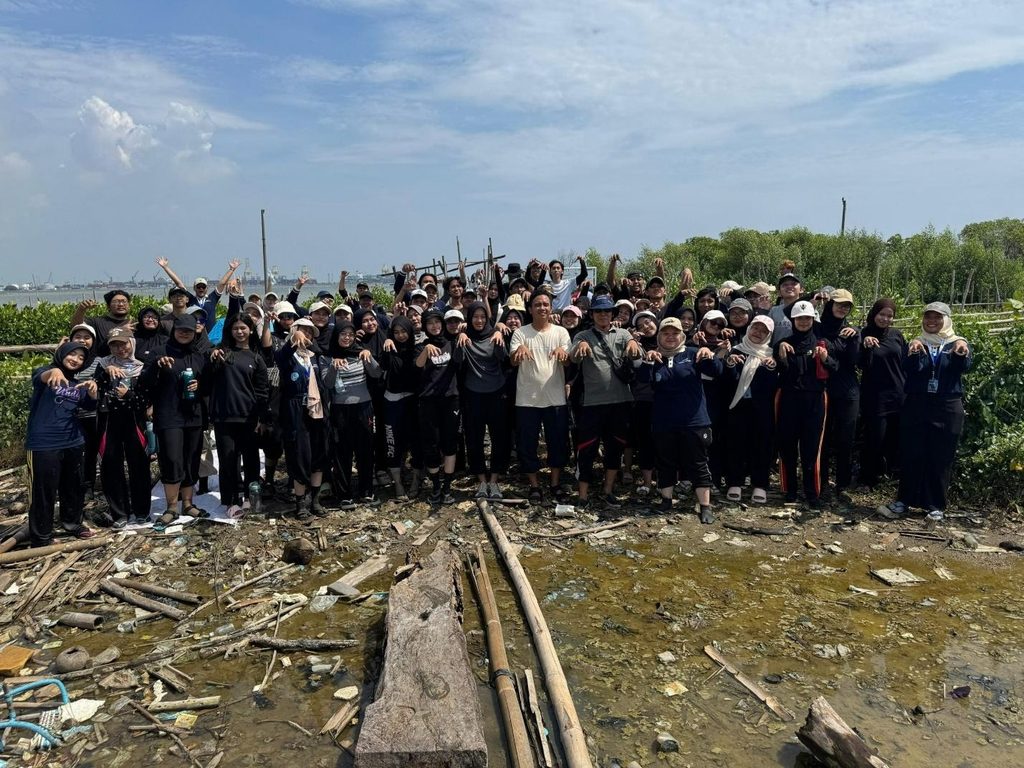
The activity focused on planting mangroves in a degraded coastal area to support the recovery of coastal ecological functions. It also sought to raise awareness among participating students about the role of mangroves in coastal protection and the importance of conserving marine and coastal environments.
The event provides a measurable record of student participation and the number of seedlings planted. Nevertheless, the number of seedlings planted should not be interpreted as the number of surviving plants or as proof of a specific area of restored habitat. Those outcomes require follow-up monitoring.
Although the planting activity and the CAMAR mentoring program both took place in Tambakrejo in 2025, the available reports do not establish that the two activities were conducted jointly or that CAMAR participated directly in the HMPTK planting event. They are therefore presented as complementary conservation initiatives rather than as a single integrated project.
4. Partnership, Continuity, and Community Benefits
Community-based mangrove conservation can support aquatic ecosystem protection while creating opportunities for environmental education and sustainable local livelihoods. The CAMAR ecotourism initiative illustrates how mangrove areas can function as learning spaces where visitors encounter coastal habitats and conservation practices.
UNNES’s June 2025 mentoring activity supported the communication and outreach capacity of the community managers. Meanwhile, the HMPTK Mangrove Replant activity documented student participation in coastal rehabilitation. Together, these initiatives show how university engagement can contribute through both community capacity building and direct conservation activities.
However, the available evidence does not establish a formal joint management agreement covering UNNES, CAMAR, Green Community, Mahapala, Pelatuk, and the Bintari Foundation. Nor does it provide a consolidated account of their respective responsibilities, recurring monitoring schedules, or shared evaluation mechanisms during 2025. These partnerships should be described individually where specific activities and roles can be verified.
To demonstrate long-term continuity, future reporting could include records of follow-up mentoring, community-led maintenance, survival assessments of planted seedlings, joint planning meetings, and the participation of local groups in monitoring mangrove conditions. Evidence of such activities would help establish whether individual events are part of sustained conservation partnerships.
5. Contribution to SDG 14 and Future Development
The 2025 activities provide concrete evidence of UNNES engagement in community-based coastal conservation. FISIP UNNES supported the capacity of CAMAR ecotourism managers through digital marketing training in June 2025, while HMPTK UNNES documented the planting of 1,600 mangrove seedlings with 50 student participants on 17 May 2025.
These activities contribute to SDG 14 by supporting environmental education, community involvement, and mangrove rehabilitation. However, the documented outputs do not yet establish measurable improvements in biodiversity, reduced coastal erosion, or the long-term survival of planted mangroves.
Future reporting should prioritize evidence of continued community participation, post-planting maintenance, mangrove survival rates, vegetation coverage, and documented changes in coastal habitat conditions. It should also clarify the responsibilities of university teams and community partners in implementing and monitoring conservation activities.
By combining community knowledge, university expertise, and student engagement, UNNES can continue to support coastal conservation while strengthening the evidence for evaluating environmental outcomes. Transparent reporting of activities, partner roles, and follow-up results will help demonstrate the contribution of these initiatives to the long-term protection of aquatic ecosystems and SDG 14.