Universitas Negeri Semarang (UNNES) continued its support for students from low-income families throughout 2025 through sustained educational assistance, socioeconomic-based selection, academic guidance, and scholarship recipient monitoring. These programmes form part of the university’s efforts to help students overcome financial and academic barriers so that they can continue their education and complete their studies.
These measures build on the integrated support approach published by UNNES in 2024 for students from the bottom 20% of household income groups. The approach combines financial assistance, student capacity development, academic guidance, and welfare services. In 2025, its continuation was reflected in the implementation of the Indonesia Smart College Card (Kartu Indonesia Pintar Kuliah/KIP Kuliah), the Education Advisory Board Scholarship (Beasiswa Dewan Penyantun Pendidikan/DPP), Rumah Amal UNNES programmes, and academic guidance and monitoring mechanisms.
KIP Kuliah and DPP Assistance Managed on a Sustained Basis
UNNES strengthened the administration of financial assistance for economically disadvantaged students through Rector’s Decree No. T/279/UN37/HK.02/2025, dated 3 March 2025, concerning the 2025 Fiscal Year KIP Kuliah Scholarship Management Team. The establishment of this team provides an institutional framework for administering educational assistance for students facing economic hardship.
Continuity of support was also reinforced through Rector’s Decree No. B/921/UN37/HK.02/2025 concerning KIP Kuliah On Going Educational Assistance for the First Semester of the 2025/2026 Academic Year. The decree establishes the continuity of educational opportunities for students from low-income families as a basis for providing assistance.
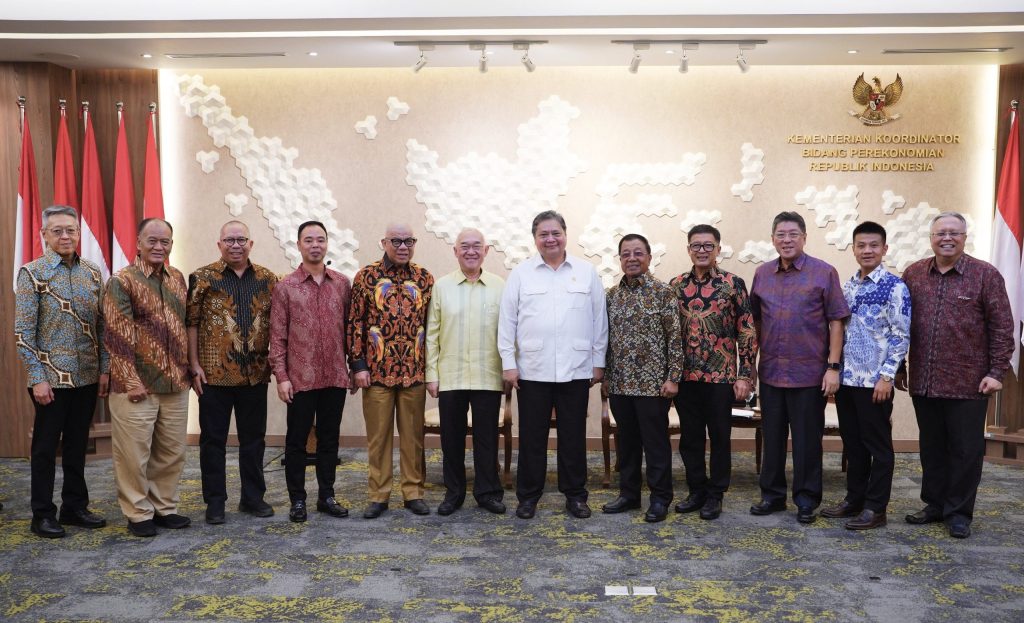
In addition to KIP Kuliah, the university regulated the designation and termination of recipients of DPP On GoingScholarships through Rector’s Decrees No. B/804/UN37/HK.02/2025 and No. B/805/UN37/HK.02/2025. These regulations demonstrate that assistance is also administered for students who have already undertaken their studies in previous semesters.
On 18 October 2025, UNNES announced plans to award DPP Scholarships to 400 economically disadvantaged students who had not been accommodated through KIP Kuliah. This programme continued the DPP assistance provided to 408 students in 2024. Its continuation demonstrates the university’s efforts to provide educational funding beyond the government assistance quota.
Rumah Amal Distributes IDR 2.74 Billion through Assistance with Clearly Defined Economic Eligibility Criteria
Support for economically disadvantaged students was further strengthened through Rumah Amal UNNES, which administers Regular Scholarships and Single Tuition Fee (Uang Kuliah Tunggal/UKT) Assistance.
Rumah Amal UNNES Letter No. 13.001/RAU/I/2025, dated 2 January 2025, stipulates that Regular Scholarships and UKT Assistance are intended for students from economically disadvantaged families. These provisions distinguish the two assistance schemes from the Tahfiz Scholarship, which is intended for students who have memorised the Qur’an.
On 24 January 2025, Rumah Amal UNNES distributed assistance totalling IDR 1,270,450,000, covering Regular Scholarships for 380 students, Tahfiz Scholarships for 46 students, and UKT payment assistance.
A second distribution took place on 1 September 2025, amounting to IDR 1,469,500,000 for 516 students. Of these recipients, 476 received Regular Scholarships or UKT Assistance, while 40 received Tahfiz Scholarships.
Overall, Rumah Amal UNNES distributed IDR 2,739,950,000 across two disbursement periods in 2025. The assistance covered programmes based on economic circumstances as well as other scholarship categories. Semester-based disbursements help provide financial support throughout students’ education.
Faculties Verify Recipients’ Economic Circumstances and Academic Status
The allocation of educational assistance is also supported by selection and verification mechanisms at the faculty level.
The Faculty of Law UNNES has established scholarship service standards through Dean’s Decree No. B/921/UN37.1.8/OT.01.00/2024. For certain categories of assistance, students are required to submit evidence of their parents’ income or a Certificate of Economic Hardship (Surat Keterangan Tidak Mampu), proof of active student status, and an academic transcript.
These procedures govern eligibility verification at the faculty level, followed by further review by the university’s scholarship unit. The requirements provide an administrative framework linking family economic circumstances to the educational status of prospective assistance recipients.
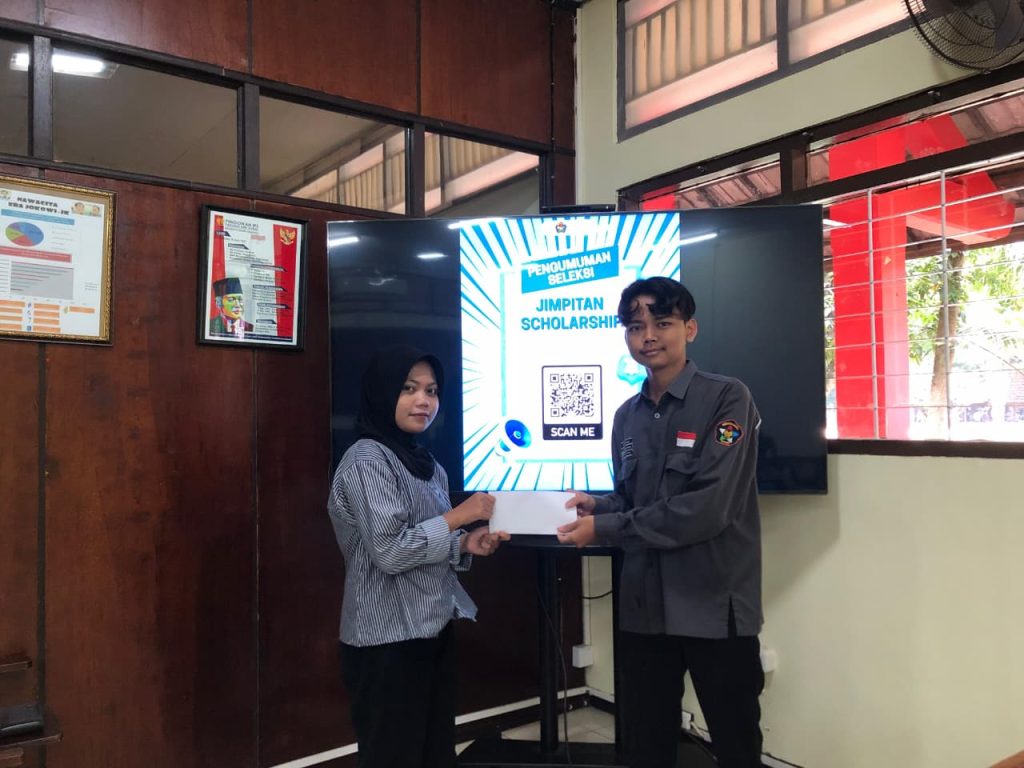
In 2025, the Faculty of Social and Political Sciences (FISIP) also implemented the Jimpitan Scholarship through the Student Association of Social Studies Education. The assistance was awarded on 28 November 2025, taking recipients’ economic circumstances into consideration and ensuring that they were not simultaneously receiving another scholarship.
Targeted assistance for students from low-income families was also provided through the Bojonegoro Regency Government’s Poor Family Scholarship, facilitated by FISIP on 2 December 2025 for one student enrolled in the Geography Study Programme.
These mechanisms demonstrate the implementation of needs-based assistance allocation at both university and faculty levels.
Academic Guidance and Student Status Evaluation Support Study Continuity
Alongside financial assistance, UNNES provides academic guidance through Academic Advisors (Pembimbing Akademik/PA). The UNNES Academic Guidelines, updated in May 2025, regulate consultations on course selection through the Integrated Academic Information System (Sistem Informasi Akademik Terpadu/Sikadu), monitoring of academic progress, and alerts for diploma and undergraduate students whose Semester Grade Point Average (SGPA or Indeks Prestasi Semester/IPS) falls below 2.00.
These mechanisms enable students experiencing declining academic performance to receive early attention from academic advisors and study programme administrators. The services are available to all students, including recipients of educational assistance from low-income families.
The approach to monitoring scholarship recipients’ academic progress was also described in UNNES’s 2024 SDG-related reporting, which referred to Rector’s Regulation No. 66 of 2023 concerning timely study completion and the semester-based evaluation of scholarship recipients’ academic progress.
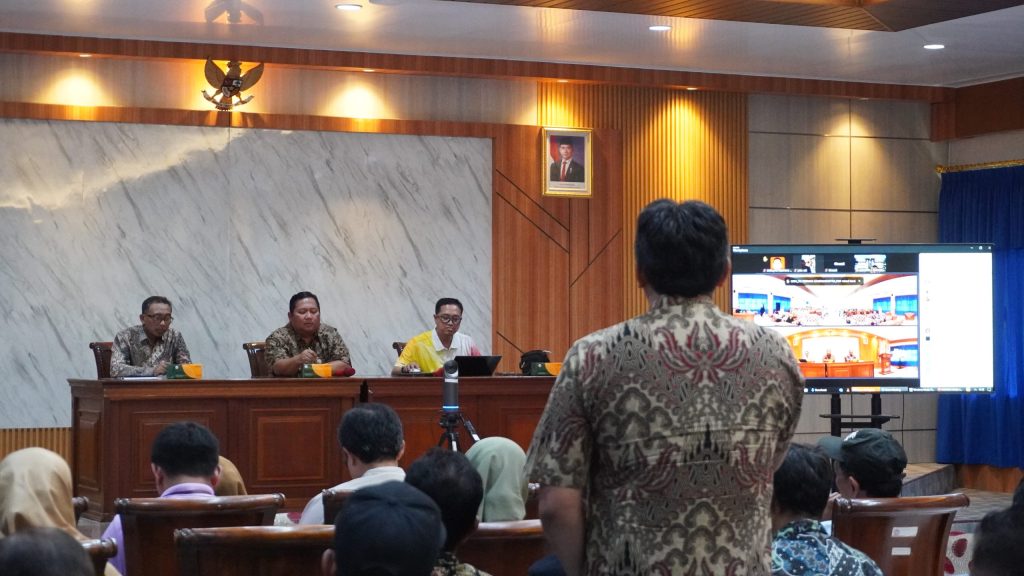
In 2025, monitoring of assistance recipients’ status was reflected in coordination activities conducted by the UNNES Internal Supervisory Unit (Satuan Pengawas Internal/SPI) on 7 August 2025. The unit worked with academic affairs and scholarship administrators to follow up on findings involving recipients of the Higher Education Affirmation Scholarship (Beasiswa Afirmasi Pendidikan Tinggi/ADik) who had been identified as inactive.
The coordination covered clarification of students’ status and updates to recipient records. Academic evaluation of the ADik programme was also reflected in Rector’s Decree No. B/888/UN37/HK.02/2025 concerning the termination of assistance for the first semester of the 2025/2026 academic year based on academic monitoring and evaluation results.
Oversight of KIP Kuliah administration was also conducted on 19 August 2025 through a monitoring activity involving the Corruption Eradication Commission (Komisi Pemberantasan Korupsi/KPK). Supported by SPI and involving university leaders and relevant units, the activity addressed beneficiary targeting, complaint-handling mechanisms, and risks of misuse of educational assistance.
These activities demonstrate institutional oversight of scholarship programmes, while the Academic Advisor mechanism provides support for students experiencing academic difficulties.
KIP Kuliah Graduate Demonstrates the Outcomes of Educational Support
The successful completion of higher education by a student from a low-income family is exemplified by Novia Ananda Hariyati, a KIP Kuliah recipient from the Chinese Language Education Study Programme at the Faculty of Languages and Arts, UNNES.
At UNNES’s 130th Graduation Ceremony on 14 June 2025, Novia completed her studies with a cumulative grade point average (CGPA) of 4.00, earning the distinction of the university’s best graduate.
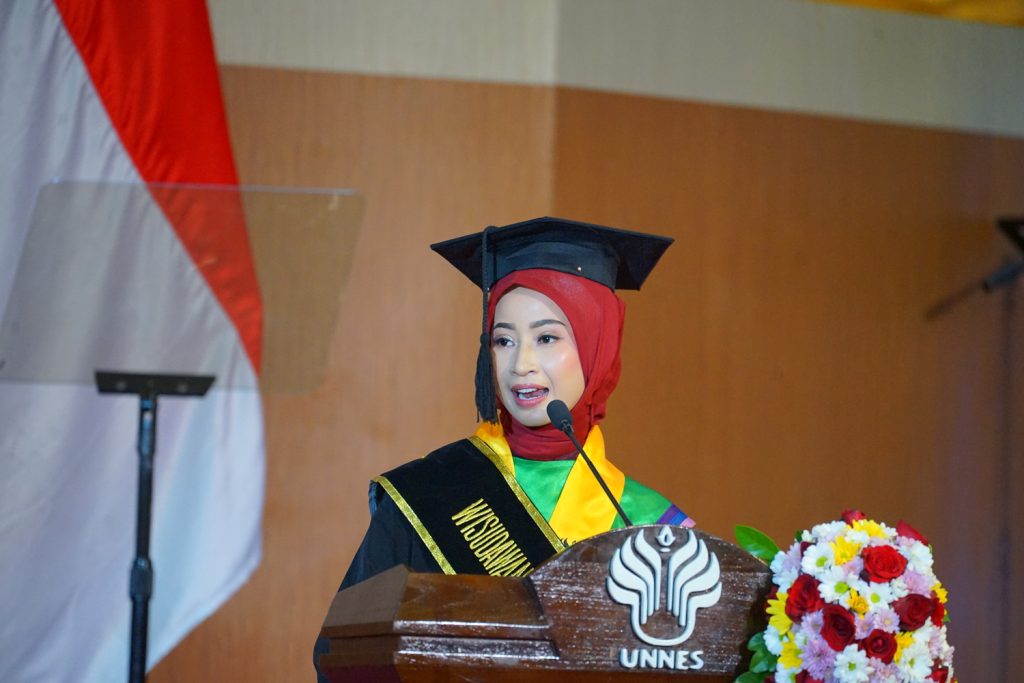
Coming from a family facing economic constraints, Novia received KIP Kuliah support throughout her studies. Her graduation provides a concrete example of an individual scholarship recipient completing higher education with outstanding academic achievement.
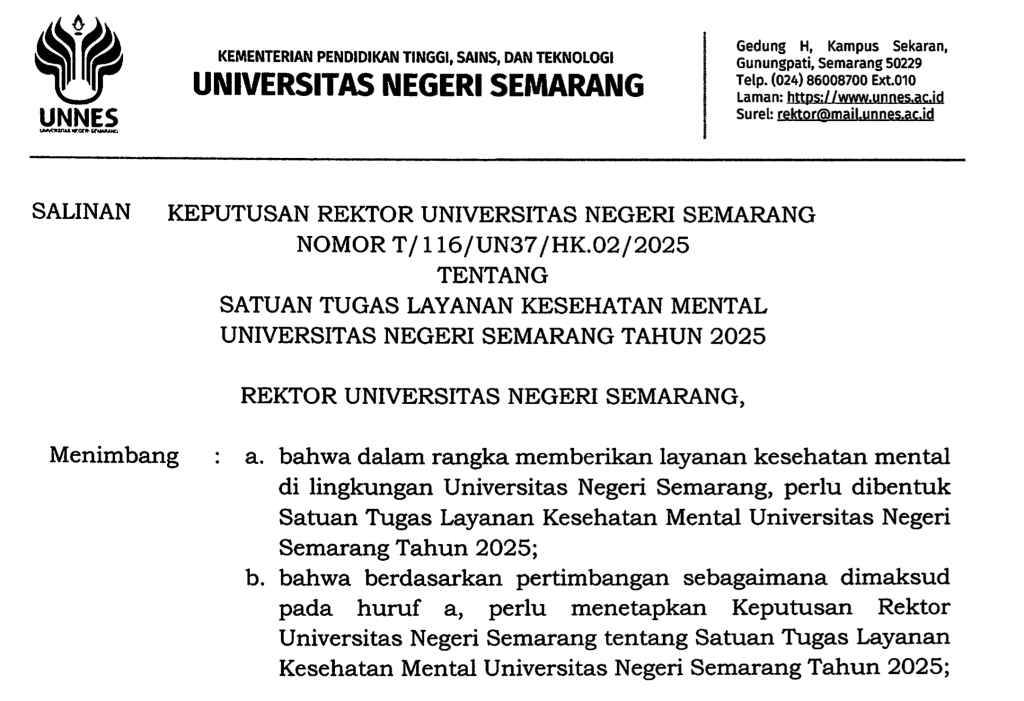
Non-financial support was also developed through the FMIPA Peer Counsellor Training held on 12 April 2025, the establishment of the Mental Health Services Task Force under Rector’s Decree No. T/116/UN37/HK.02/2025, and the introduction of MyUNNES-Parents at FISIP on 10 October 2025 as a means for families to monitor students’ academic progress.
Strengthening Targeted and Sustainable Educational Support
UNNES’s programmes throughout 2025 demonstrate continued efforts to support students from economically disadvantaged families through socioeconomic identification, financial assistance across semesters, academic guidance, and monitoring of scholarship recipients’ status.
KIP Kuliah and DPP On Going Scholarships serve as instruments for sustaining educational financing, while Rumah Amal UNNES and faculty-level programmes provide assistance through categories that take economic circumstances into account. Academic advising and student status evaluation complement these support mechanisms throughout the period of study.
These initiatives continue the integrated support approach for low-income students developed in previous years. Through coordination among scholarship management units, faculties, academic affairs, and external partners, UNNES strengthens its contribution to Sustainable Development Goal (SDG) 1: No Poverty by helping students overcome economic barriers and maintain their opportunities to complete higher education.