Universitas Negeri Semarang (UNNES) is strengthening its commitment to ensuring that access to higher education is accompanied by equitable opportunities to complete a degree. This effort forms part of the university’s strategy to ensure that students, including those from low-income households, receive the support necessary to complete their studies and graduate.
Under the UNNES Strategic Plan 2023–2028, the university set a target of 91% for the student study completion rate in 2025, alongside a target of 45% for on-time graduation. In line with these targets, UNNES has also committed to pursuing a 100% graduation rate among students from the lowest-income 20% of households. This commitment underscores that educational equity encompasses not only access to higher education but also students’ successful completion of their studies.
To achieve these objectives, UNNES is pursuing an integrated support approach that combines financial assistance, monitoring of academic progress, and academic mentoring. Tuition assistance and living allowances for eligible students are intended to reduce financial barriers, while academic mentoring helps students address challenges throughout their studies and complete their final projects.
Academic Policies to Promote Student Study Completion
UNNES distinguishes between study completion and on-time graduation. For undergraduate programmes, on-time graduation is defined as completing a degree within a maximum of nine semesters, whereas study completion refers to finishing the programme within the maximum permitted study period of seven years. This distinction enables the university to monitor educational continuity while improving on-time graduation rates.
Support for students from economically disadvantaged households is also grounded in Rector Regulation No. 24 of 2016 concerning Assistance for Economically Disadvantaged Students. The regulation provides for support in the form of scholarships, tuition assistance, tuition reductions or exemptions, and reviews of Single Tuition Fees (Uang Kuliah Tunggal, or UKT).
In 2025, academic support was further strengthened through Rector’s Decree No. T/817/UN37/HK.02/2025 on accelerating the completion of students’ final projects. The policy seeks to optimise supervision and examination processes by regulating the limits on lecturers’ remuneration points during the acceleration period for the 2025/2026 academic year. This provides university-level policy support for more effective final-project supervision.
Scholarships Help Students Continue Their Studies and Excel Academically
Academic support is complemented by financial assistance. On 1 September 2025, Rumah Amal UNNES distributed scholarships totalling IDR 1,469,500,000 to 516 students. Of these recipients, 476 received assistance for tuition fees and living expenses, while 40 received Tahfiz scholarships for Qur’an memorisation. This support is intended to reduce the risk of students discontinuing their studies because of financial hardship and enable them to focus on completing their education.
UNNES Vice-Rector for Planning, General Affairs, Human Resources, and Finance, Prof. Dr. Heri Yanto, MBA, Ph.D., emphasised during the distribution event the importance of educational assistance in supporting continued study, academic achievement, and on-time graduation.
Graduates’ Experiences Demonstrate the Impact of Educational Assistance
The impact of educational support is reflected in the experiences of several 2025 graduates. Riri Kumalasari, a recipient of the Board of Trustees’ Education Scholarship (Beasiswa Dewan Penyantun Pendidikan, or DPP) from the Indonesian Language and Literature Education Study Programme, completed her undergraduate degree in three years, three months, and 25 days. At UNNES’s 129th graduation ceremony on 3 May 2025, her achievement illustrated how financial support, academic supervision, and personal discipline can work together to facilitate timely degree completion. Riri also participated in a fast-track programme leading to postgraduate study.
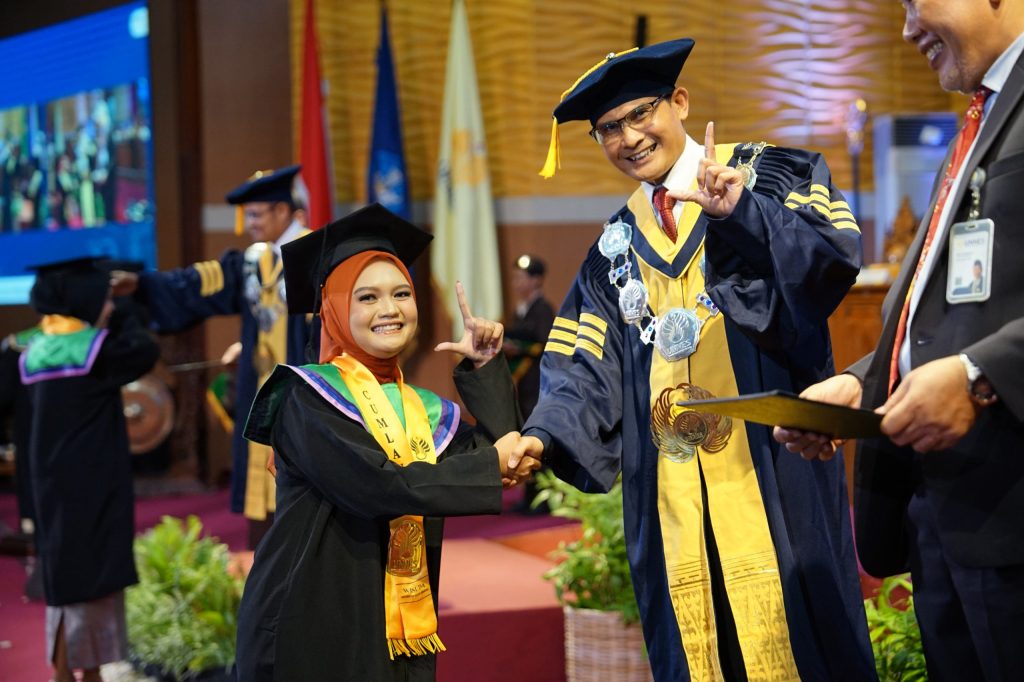
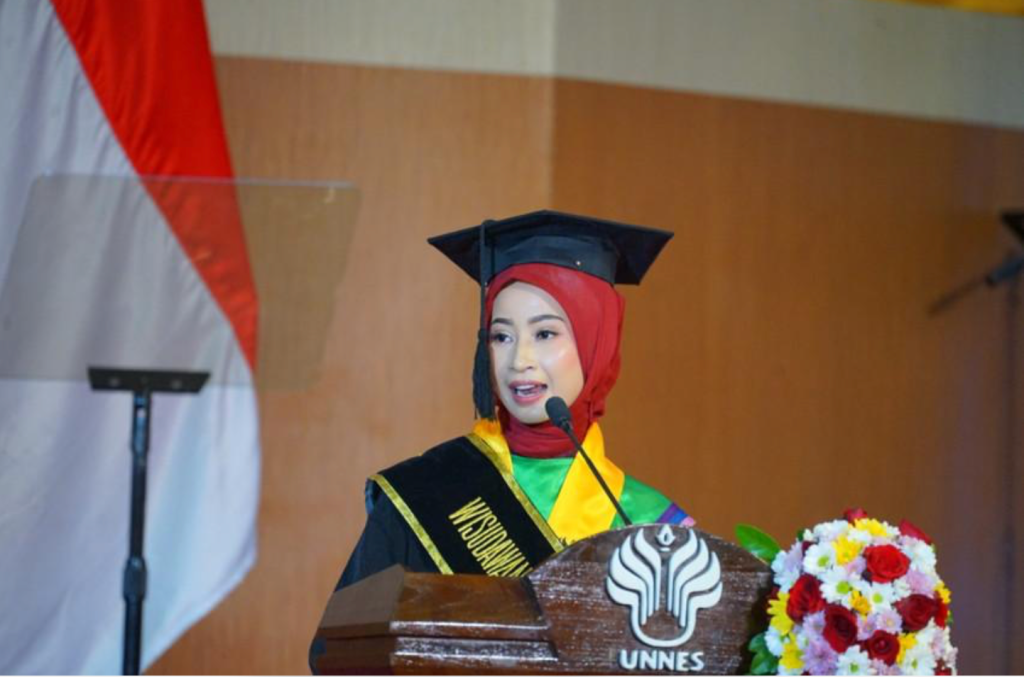
Another inspiring example is Novia Ananda Hariyati, a graduate of the Mandarin Language Education programme in the Faculty of Languages and Arts. A recipient of the Indonesia Smart College Card (Kartu Indonesia Pintar Kuliah, or KIP Kuliah) from a modest-income family in Klaten, she was named the university’s top graduate at UNNES’s 130th graduation ceremony on 14 June 2025, achieving a perfect GPA of 4.00. Before graduation, Novia had also secured an opportunity to work for a Chinese multinational company in Vietnam.
The completion of studies by financial-aid recipients is also documented in UNNES’s KIP Kuliah administration records. Rector’s Decree No. B/808/UN37/HK.02/2025, dated 1 August 2025, lists at least two students from the 2021 cohort whose financial assistance was terminated because they had graduated. They were enrolled in the undergraduate Law programme and the Indonesian Language, Literature, and Regional Languages Education programme, respectively. This document provides an example of how graduation status is tracked through official university records; it should not be interpreted as representing the total number of KIP Kuliah recipients who graduated.
Free Pre-Graduation Career Counselling
UNNES promotes graduates’ readiness to enter the workforce through counselling and career-preparation services for prospective graduates. These services form part of the university’s efforts to ensure that students not only complete higher education but are also prepared to navigate the challenges they may encounter after graduation.
For students from economically disadvantaged households, preparation for entering the workforce is an important component of building financial independence. Access to career information, consultation, and guidance in future planning can help prospective graduates identify employment opportunities and prepare for the transition beyond university.
Through pre-graduation counselling, students can prepare for the transition from academic life to the professional environment. Guidance may include self-assessment, career planning, preparation for recruitment processes, and strategies for developing competencies relevant to labour-market needs.
These services can also help students identify career pathways aligned with their interests, abilities, and educational backgrounds. With more structured preparation, graduates are expected to be better positioned to pursue employment opportunities or develop alternative career paths independently.
By strengthening career guidance, UNNES seeks to ensure that higher education provides students with broader preparation for the future, including those facing financial constraints.
Supporting Students with Disabilities
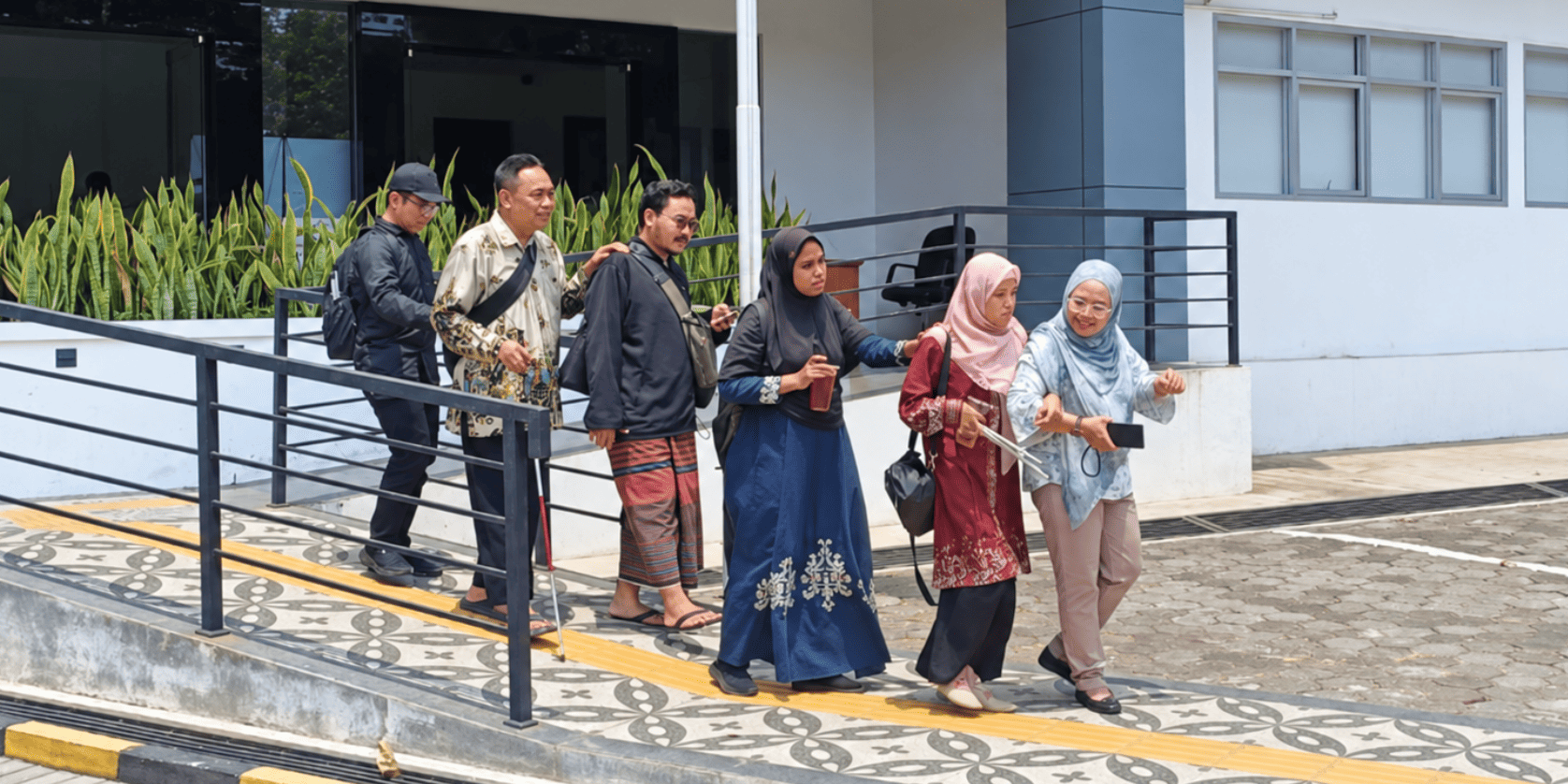
For students with disabilities, appropriate support can help reduce barriers to participating in lectures and accessing campus services. Support may be tailored to individual needs and can include adjustments to academic services, access to learning materials, assistance during academic activities, and coordination with relevant university units.
This approach recognises students with disabilities as equal members of the academic community. By taking individual needs into account, the university can promote meaningful participation while helping students maintain continuity in their studies.
Support for students with disabilities is also relevant to efforts to prevent barriers to educational access and completion. Students who receive appropriate assistance are better positioned to participate in learning activities, develop their competencies, and complete higher education.
A commitment to inclusive education forms part of UNNES’s broader efforts to extend the benefits of education to society. Access to quality education must be accompanied by an academic environment that accommodates diverse student needs, including those arising from accessibility barriers.
Through inclusive services and ongoing support, UNNES seeks to create a learning environment in which every student has the opportunity to develop and complete their higher education.
Commitment to Ensuring No Student Is Left Behind
UNNES has also expressed its commitment to pursuing the graduation of all students from the lowest-income 20% of households. This commitment is supported by an approach that combines financial assistance, semester-by-semester monitoring of academic progress, and academic mentoring.
Through a combination of policies, scholarships, and academic services, UNNES emphasises that equitable access to higher education does not end with student admission. The broader objective is to sustain educational participation and completion, ensuring that students from diverse economic backgrounds receive support to finish their studies and prepare for their futures.