

Semarang — Universitas Negeri Semarang (UNNES) has an institutional framework for reducing plastic waste on campus, combining a single-use plastic prohibition, reusable alternatives, drinking water refill facilities, environmental education, and monitoring. Together, these measures translate the university’s conservation commitment into actions addressing plastic consumption in daily campus activities.
Institutional Policy Directing Campus Action
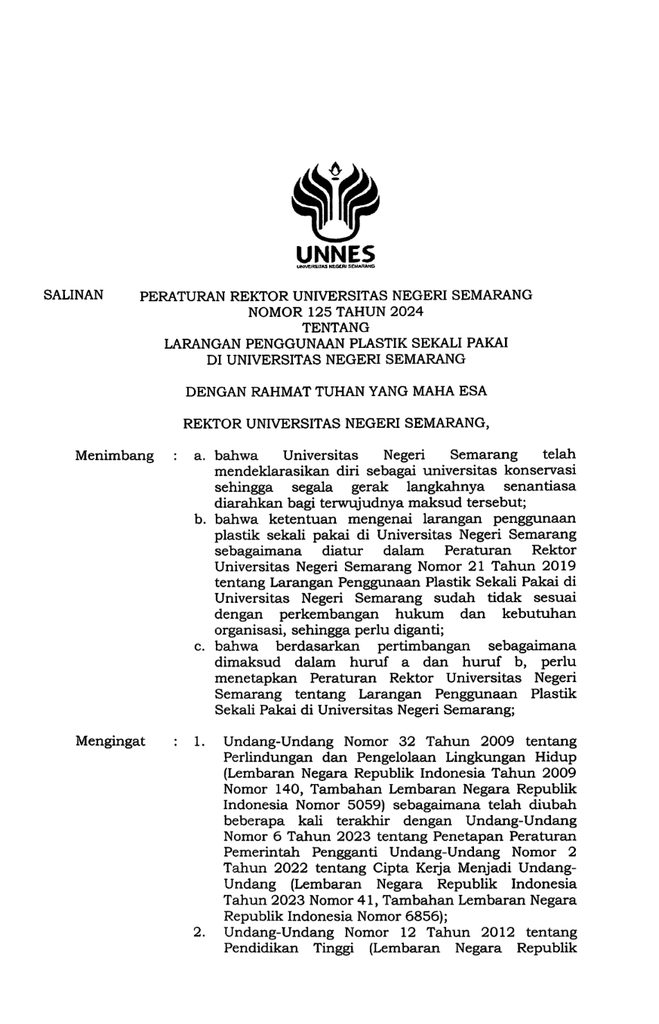
Rector’s Regulation No. 125 of 2024 on the Prohibition of Single-Use Plastics at UNNES provides the regulatory foundation for campus plastic reduction. Established on 31 October 2024, it replaced Rector’s Regulation No. 21 of 2019 and provides the updated institutional reference for the 2025 reporting period.
UNNES’s published implementation framework describes actions for faculties, offices, laboratories, and student organizations, including replacing disposable products with reusable alternatives, providing water dispensers, encouraging reusable bottles, and incorporating environmental education into campus activities. These measures connect institutional policy with practical changes in university operations.

Refill Facilities Supporting Reusable Bottles
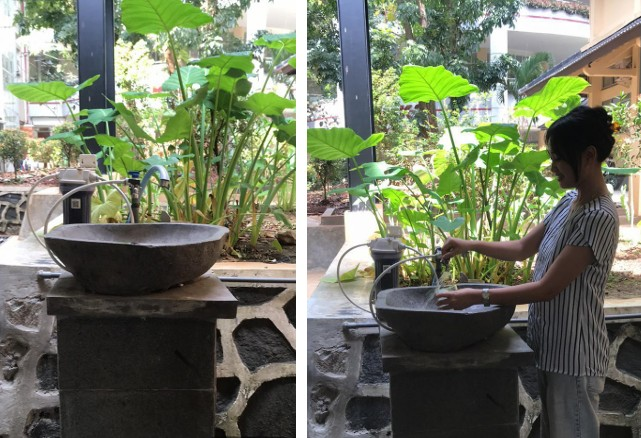
To support these actions, UNNES provides Drinkable Water Tap facilities at several campus locations, including FMIPA, FEB, FT, LPPM, LP3, FISIP, and FH. The facilities allow students, lecturers, and staff to refill personal bottles or tumblers.
By providing an alternative to disposable bottled water, the university connects its plastic reduction policy with infrastructure that supports everyday participation. Refillable containers and accessible drinking water facilities make reusable practices part of campus life.
Environmental Education and Institutional Monitoring
UNNES’s implementation reporting also identifies environmental education and monitoring as supporting components. Campus units are encouraged to promote reusable drinking containers and replace disposable event materials and packaging with environmentally responsible alternatives.
The report describes coordination with the Hijau Bersih dan Sehat (H-BaS) working group, linking awareness activities with institutional monitoring and evaluation. This establishes a role for campus units in putting plastic reduction measures into practice.
Preventing Waste at Its Source
UNNES’s approach addresses plastic waste through coordinated policy, infrastructure, education, and oversight. Reducing disposable packaging at its source supports responsible consumption and helps limit the risk of discarded plastics entering drainage systems and surrounding waterways.
The available evidence establishes a regulatory and operational framework for campus plastic reduction. It does not identify a separate, time-bound action-plan document with quantified targets or establish the amount of plastic waste avoided during 2025. The documented measures nevertheless demonstrate how UNNES organizes practical action to reduce plastic use across its campus.