

Semarang, Indonesia — Universitas Negeri Semarang (UNNES) offers educational programmes and outreach for local communities on fisheries, small-scale aquaculture, and sustainable coastal tourism. Through training, mentoring, and community service, the university connects academic expertise with the needs of fishermen, household cultivation groups, and community tourism managers. These activities promote informed resource use while strengthening understanding of the ecosystems that sustain aquatic livelihoods.
Maritime Information Training for Fishing Communities
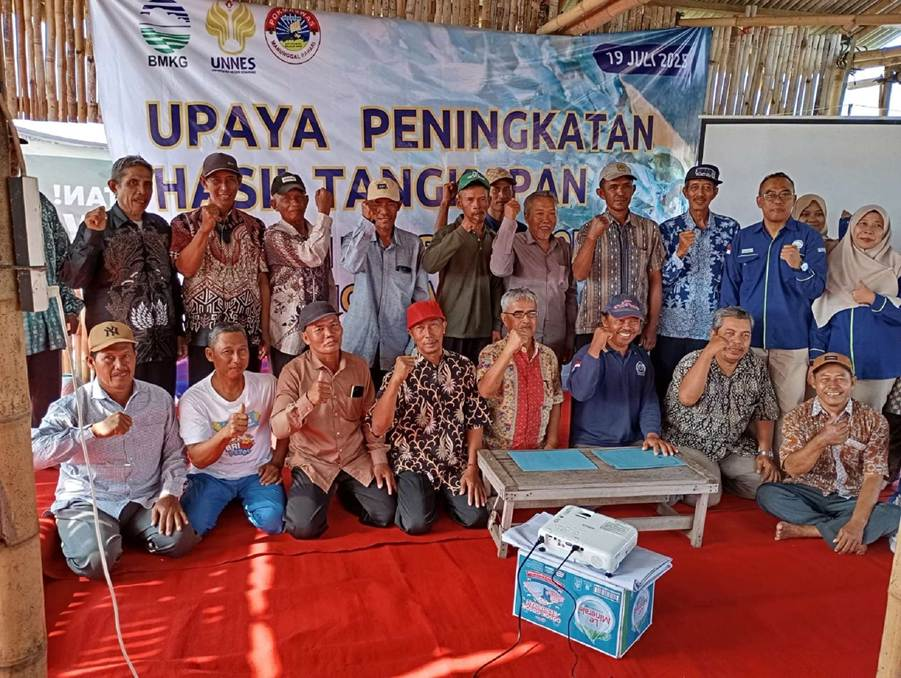
UNNES supports fishing communities through practical education on digital maritime information. On 19 July 2025, a community service team led by Prof. Dr. Supriyadi collaborated with the BMKG Maritime Meteorological Station Tanjung Emas to introduce the Indonesian Weather Information for Shipping (Inawis) application to fishermen in Tambaklorok, North Semarang.
Held at the secretariat of Pokmaswas Manunggal Bahari, the training involved local fishermen, community fisheries monitoring group members, and STMKG cadets. Participants learned how maritime weather information can inform navigation and fishing-trip decisions, including assessing conditions before departure and planning activities at sea.
The programme connects digital literacy with the practical management of fishing operations. Information about weather, waves, and fishing grounds helps participants understand how informed trip planning relates to safety and the efficient use of fuel and supplies.
Aquaculture Training for Communities with Limited Land
Alongside outreach to fishermen, UNNES provides practical education on household-scale fish cultivation. A community service programme documented in Jurnal Bina Desa in 2024 describes how the UNNES GIAT 7 team in Sroyo Village, Karanganyar Regency, delivered aquaponics training through Budikdamber, or fish cultivation in buckets.
The activity engaged the PKK community in Grumbul Sawit Hamlet, introducing cultivation methods suited to households with limited space. Training and mentoring helped participants learn how small-scale fish and plant cultivation could be incorporated into their surroundings.
The published report records that PKK members were able to manage the activity independently following the training. This programme demonstrates community outreach that translates cultivation knowledge into an accessible practice and develops residents’ capacity to maintain it.
Sustainable Mangrove Tourism Education in Tluwuk Village
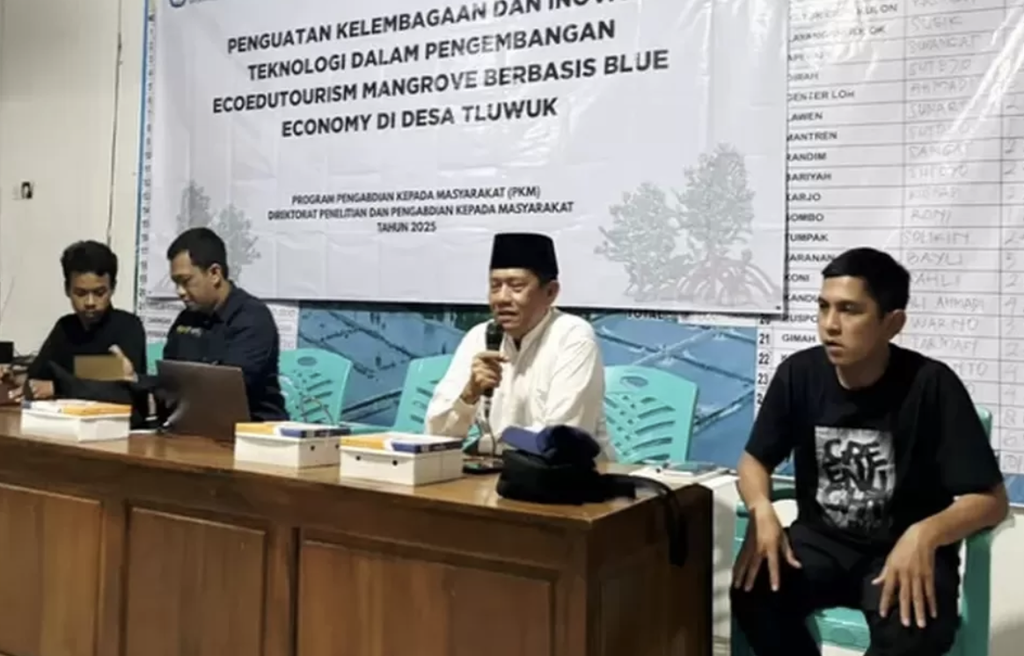
The university’s educational outreach also extends to community management of coastal tourism. On 21 June 2025, a FISIP UNNES community service team coordinated by Wahid Akhsin Budi Nur Sidiq conducted participatory training at Tluwuk Village Hall, Pati Regency.
Participants included Pokdarwis Karya Pamuji Agung, Karang Taruna Muda Berkarya, community leaders, and the village government. Building on social and environmental mapping undertaken in 2024, the programme strengthened the tourism group’s organization and supported preparation of a mangrove ecoedutourism work plan.
Through dialogue, participants identified local opportunities and problems and formulated priorities for managing tourism based on the mangrove ecosystem. The learning process connected organizational capacity, environmental conservation, and community participation, helping tourism managers plan activities around the ecological characteristics of their village.
Coastal Conservation Education in Tugurejo
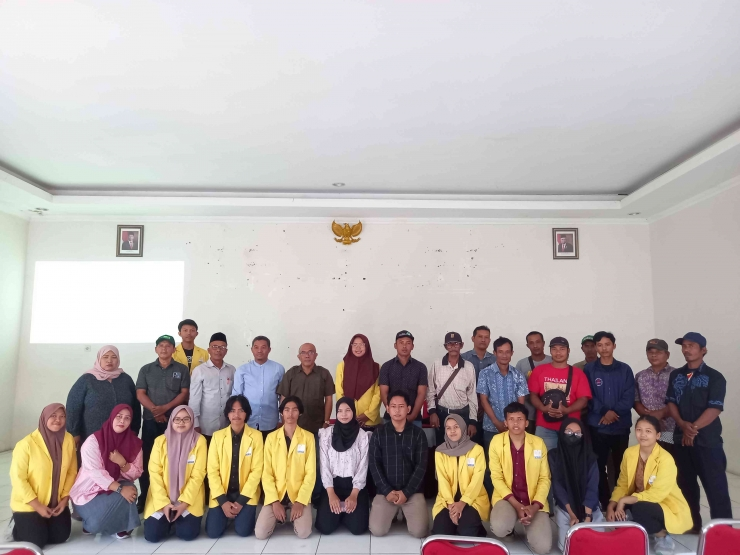
Responsible fisheries and tourism management also depend on understanding the habitats that support them. This relationship is addressed in the UNNES community service approach described in “Edukasi Pelestarian Ekosistem Kawasan Pesisir,” published in October 2025.
Focusing on Tugurejo, Semarang, the article identifies pressures on mangrove and estuarine ecosystems associated with prioritizing economic uses over ecological functions. Its educational approach combines community learning about coastal conditions with joint mangrove planting as a practical conservation activity.
This approach places ecosystem knowledge alongside resource use. It encourages communities to recognize that maintaining coastal habitats is part of sustaining the environmental foundations of local livelihoods.
Broader Environmental Learning through School Outreach
UNNES complements these sector-specific programmes with environmental education for school communities. The UGSR Energy, Climate Change and Water Workshop 2024 involved 80 green-school developers from Central Java, East Java, West Java, and East Kalimantan.
Topics included water-use efficiency, rainwater harvesting, water treatment, infiltration facilities, drainage, and water-quality monitoring. Although broader than fisheries and tourism training, this outreach extends knowledge of responsible water management to educational communities across several provinces.
Together, these programmes show how UNNES delivers community education across fishing operations, household aquaculture, and coastal tourism management. By combining practical skills with environmental learning, the university supports communities in using aquatic resources responsibly and maintaining the habitats on which their livelihoods depend.