

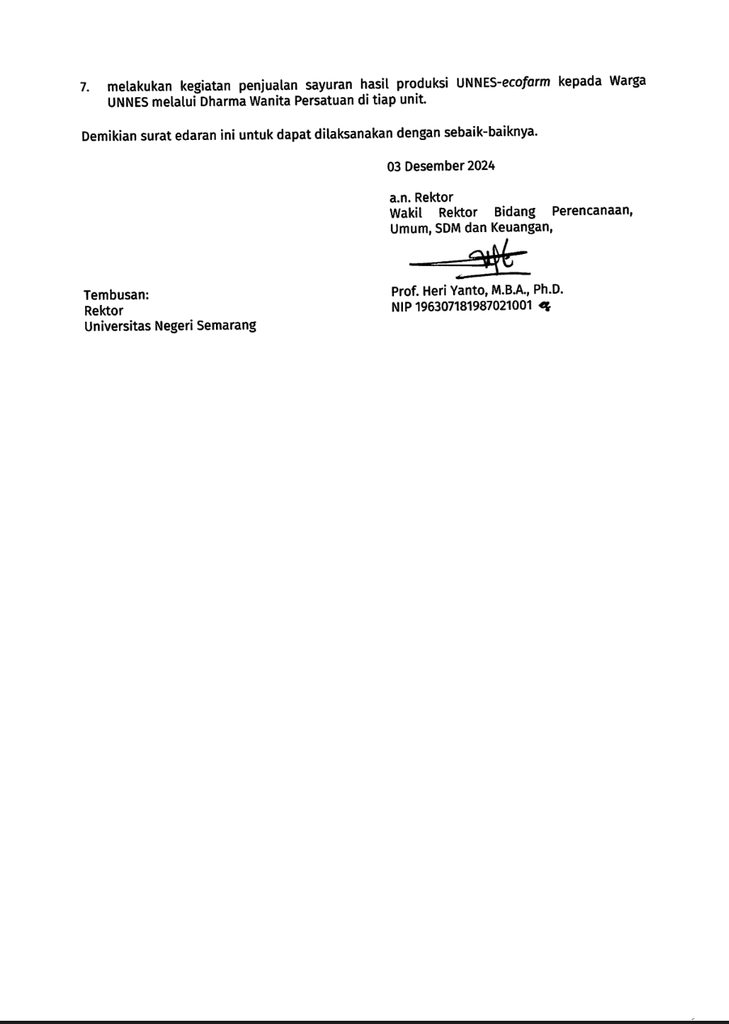
Semarang, Indonesia — Universitas Negeri Semarang (UNNES) has an institutional policy requiring campus canteens to use fish and seafood from sources proven to be sustainable. This requirement is set out in Vice Rector Circular Letter No. B/28480/UN37/RT.03.03.00/2024 on the Optimization of Sustainable Food Sources, linking campus food provision with responsible harvesting and aquatic ecosystem protection.
Sustainable Fish and Seafood in Campus Canteens
The circular letter establishes environmental expectations for food served within the university. Point 5 specifically addresses fish and seafood, requiring campus canteens to obtain these products from demonstrably sustainable sources. It also encourages the use of certification, including Marine Stewardship Council (MSC) certification, as a reference for sustainable sourcing.
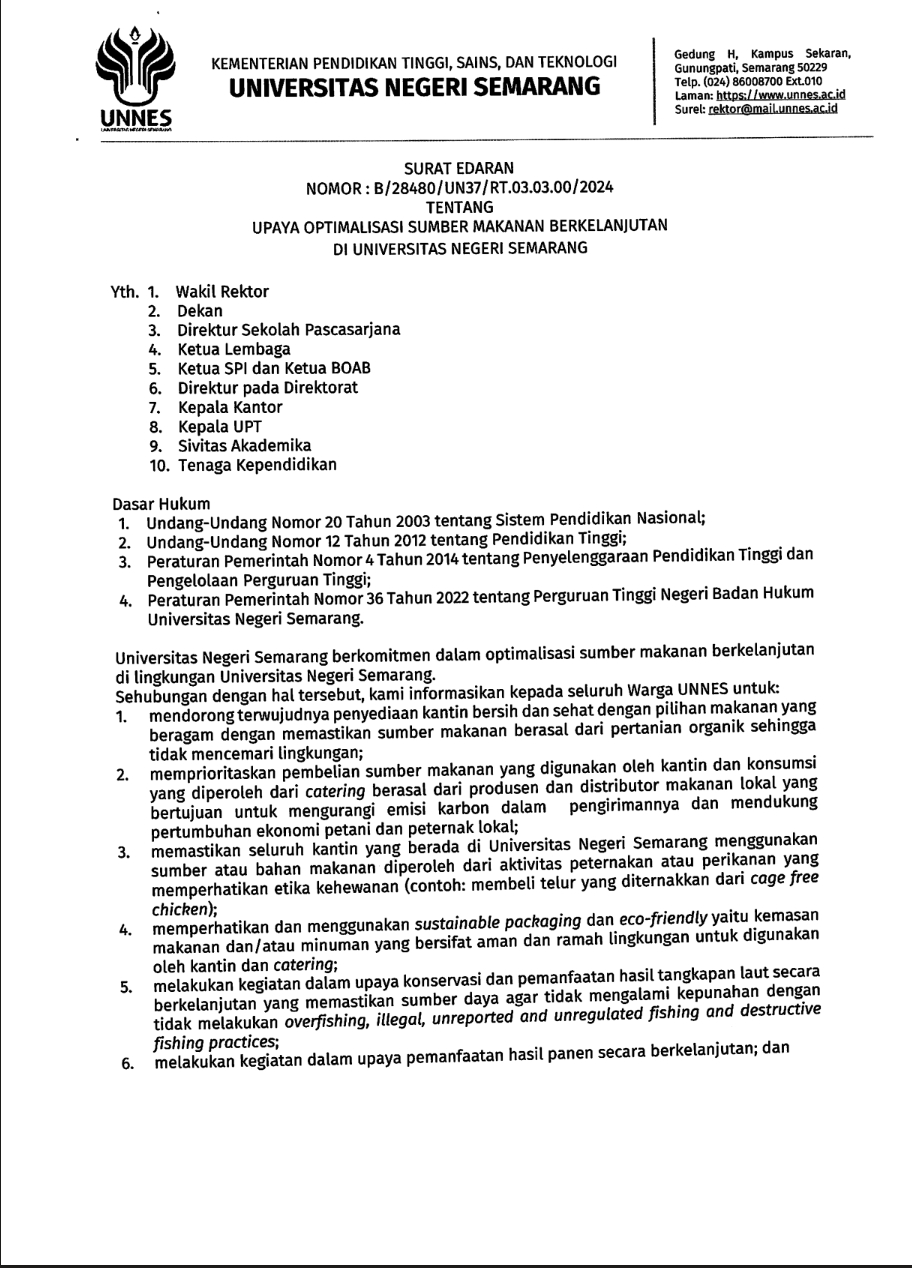
This provision directly addresses food originating from aquatic ecosystems. It places sustainability within campus purchasing decisions and establishes an expectation that fish and seafood sourcing should account for the environmental consequences of production and harvesting.
The requirement forms part of a broader food policy that also promotes local procurement, environmentally responsible food production, reduced food waste, and sustainable packaging. Together, these provisions connect campus consumption with the management of natural resources.
Controls on Fishing and Harvesting within Campus
UNNES complements its food-sourcing policy with Vice Rector Circular Letter No. B/5106/UN37/TU.01.01/2023, governing fishing and aquatic harvesting within the university area.
According to the university’s official policy report, the circular limits fishing to designated days, prohibits destructive methods such as mass netting and electric-shock devices, and requires written permission before harvesting fish or other aquatic animals. Harvesting must also be followed by replenishment of fish stocks in accordance with the policy.
These provisions establish controls over access to campus aquatic resources and the methods used to harvest them. They complement sustainable purchasing requirements by addressing harvesting activities within university-managed environments.
Connecting Campus Food Provision with Aquatic Conservation
The two circular letters provide complementary institutional safeguards: one directly addresses the sustainable sourcing of fish and seafood for campus canteens, while the other regulates harvesting within campus waters.
Their existence demonstrates UNNES’s policy commitment to responsible aquatic food sourcing. Supplier compliance and ecological outcomes remain separate matters requiring implementation records. Through this framework, UNNES connects food provision with the protection of aquatic habitats and the responsible use of fishery resources.