

A university-wide prohibition, reusable alternatives, and faculty-level waste management programmes connect plastic reduction with everyday campus activities.
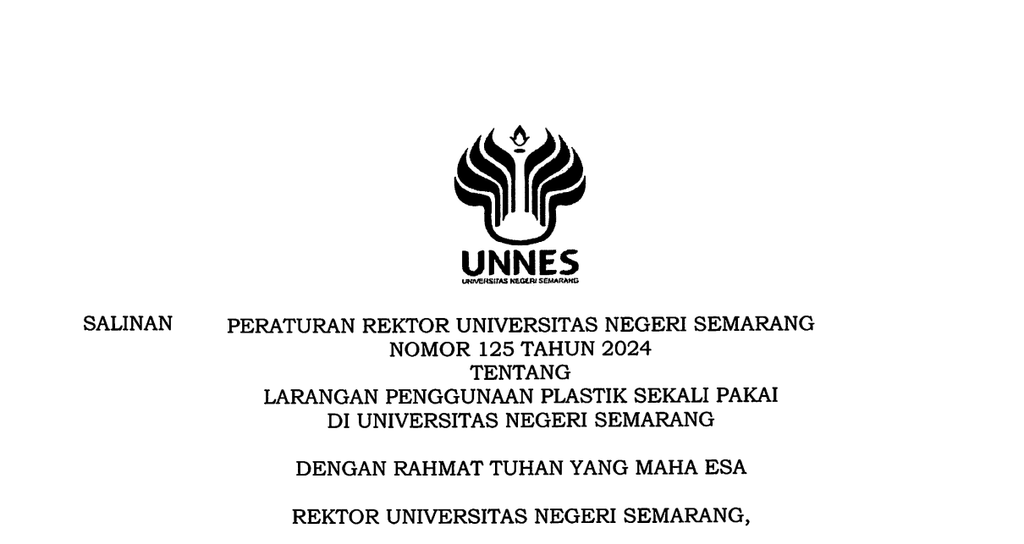
Semarang, Indonesia — Universitas Negeri Semarang (UNNES) has established a formal policy to reduce plastic waste across campus through Rector Regulation No. 125 of 2024 on the Prohibition of Single-Use Plastics. Adopted on 31 October 2024, the regulation replaces the university’s earlier Rector Regulation No. 21 of 2019, renewing its institutional commitment to limiting disposable plastic use. The official UNNES legal information system lists the regulation as being in force.
The policy applies to university staff, students, and visitors, with responsibilities extending to work units, campus canteens, and university events. It combines restrictions on disposable products with practical measures that support reusable alternatives.
A University-Wide Prohibition on Single-Use Plastics
The regulation identifies prohibited items, including single-use plastic drinking-water packaging, plastic bags, plastic food wrappers, plastic dining and drinking equipment, and plastic backdrops, banners, and promotional materials. These categories address plastic consumption associated with food services, meetings, events, and daily campus activities.
University work units are responsible for supporting, implementing, monitoring, and coordinating the prohibition. Campus canteens are prohibited from selling food and beverages in single-use plastic packaging, while large events must follow the university’s restrictions on disposable plastic materials.
The policy makes plastic reduction an institutional responsibility involving both campus management and individual users.
Reusable Alternatives and Drinking-Water Facilities
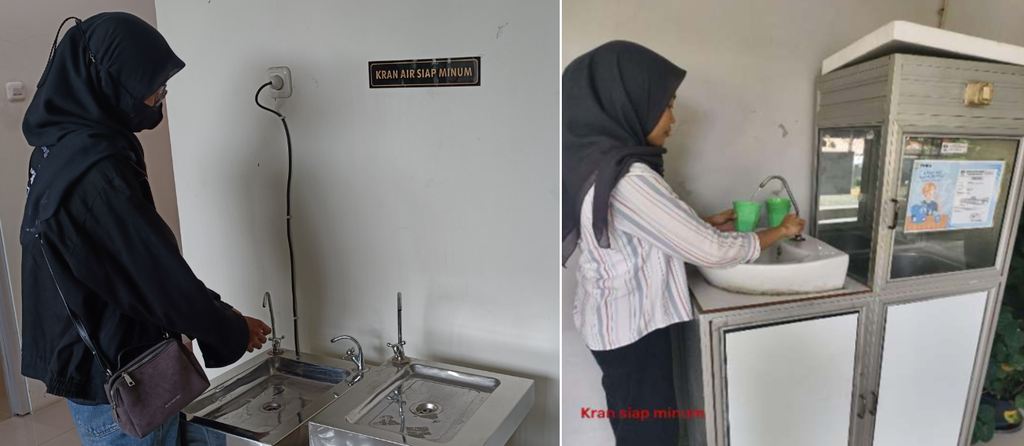
To support implementation, the regulation requires university units to provide accessible drinking-water taps or dispensers. Members of the university community are required to bring and use reusable drinking bottles, bags, or other containers.
These provisions connect the prohibition with facilities and habits that help users avoid disposable packaging. Refillable bottles can be used during lectures, meetings, and other campus activities, while reusable bags and food containers support changes in daily purchasing practices.
Implementation is monitored and evaluated through the Green, Clean, and Healthy Campus programme, known as H-BAT. Administrative warnings provide a mechanism for addressing violations.
Reinforcing the Policy through Institutional Guidance
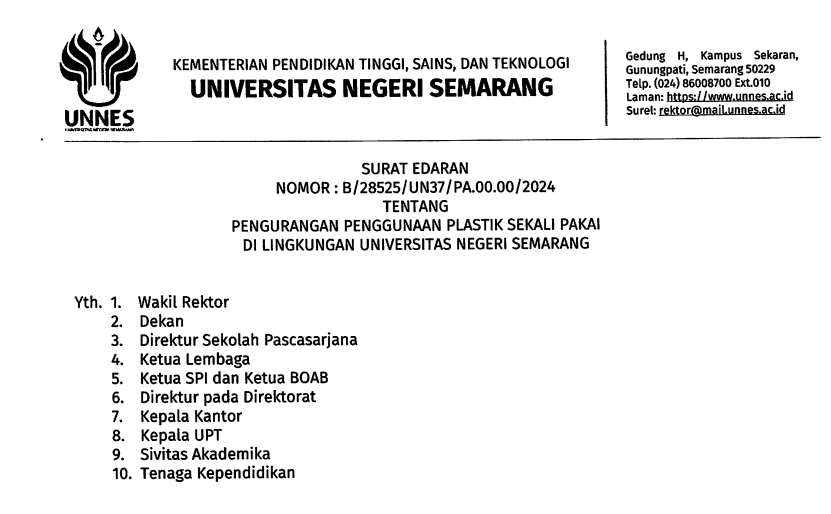
The regulation is reinforced by Circular Letter No. B/28525/UN37/PA.00.00/2024 on Reducing Single-Use Plastics at UNNES, issued on 4 December 2024. The circular provides additional institutional direction for reducing disposable plastic consumption.
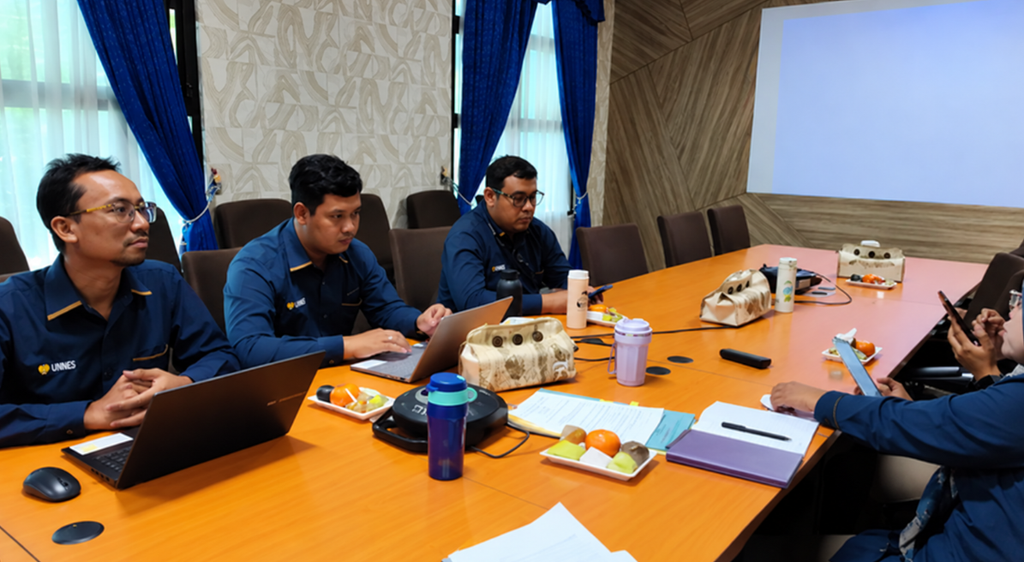
Its guidance promotes reusable shopping bags, refillable drinking containers, reusable food containers, and alternative packaging. University units are also directed to educate the academic community about excessive plastic consumption and encourage waste segregation.
Together, the regulation and circular connect restrictions, supporting facilities, education, and monitoring within a campus-wide framework.
Faculty-Level Waste Segregation and Monitoring
At the Faculty of Mathematics and Natural Sciences (FMIPA), waste sorting and processing are supported by Dean’s Decree No. 14497/UN37.1.4/HK/2022. The programme separates materials into categories including plastic, cardboard, leaves, branches, and glass, with periodic records and photographic documentation supporting monitoring.
The supplied FMIPA monitoring records estimate 812.7 kilograms of plastic waste collected in 2025. This figure was calculated from waste-bag quantities and an assumed bulk density, rather than direct weighing.
It therefore represents an indicative quantity of collected plastic waste. It does not measure the university’s total plastic waste generation or demonstrate a reduction compared with previous years. Its value lies in documenting collection activity and supporting further evaluation of faculty waste management.
Student Participation in Plastic Collection and Reuse
Student activities complement the institutional policy by encouraging participation in waste sorting and reusable alternatives.
On 1 October 2025, FMIPA’s Student Executive Board organised GAIA—Grafis Aksi Inspirasi Alam 2025, under the theme “A Green Environment, a Harmonious Life.” Its “One Piece of Waste = One Candy” activity invited students to exchange used plastic bottles for candy, encouraging collection and environmental awareness.
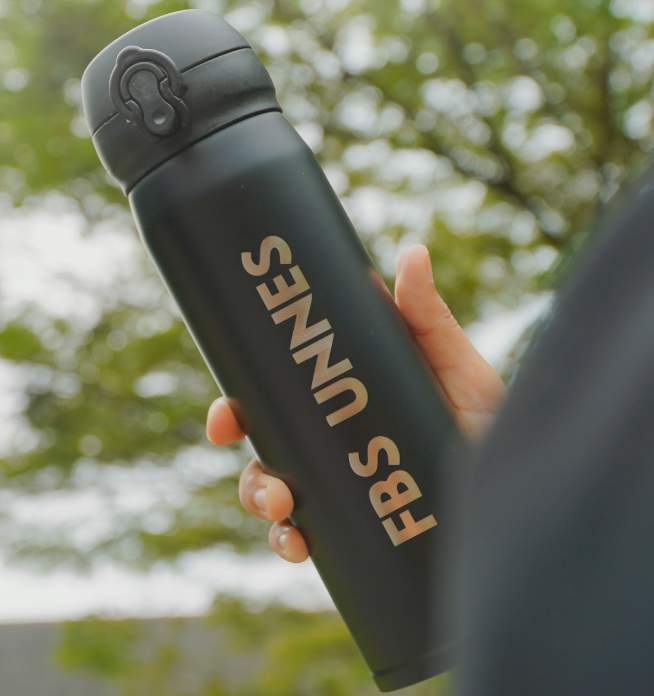
At the Faculty of Engineering, coursework on organic and inorganic crafts introduces opportunities to transform discarded materials, including plastic bottles and packaging, into useful products. At the Faculty of Languages and Arts, tumbler distribution activities encourage students to adopt refillable drinking containers.
These activities support the university’s policy through practical engagement in collection, material reuse, and alternatives to disposable products.
Embedding Plastic Reduction in Campus Management
UNNES’s plastic-reduction framework combines a formal prohibition with defined institutional responsibilities, drinking-water facilities, reusable containers, waste segregation, and educational activities. The regulation provides the primary evidence of university-wide policy, while faculty programmes illustrate supporting implementation.
By addressing plastic use in canteens, events, meetings, and daily campus life, UNNES makes waste prevention part of campus governance and its conservation mission.