The 2025 curriculum combines compulsory courses, specialised electives and field activities to prepare students for environmental and sustainable-development challenges.
SEMARANG, Indonesia — Universitas Negeri Semarang (UNNES) provides dedicated education on sustainability and the Sustainable Development Goals through its Bachelor of Environmental Science programme, offering a full degree that combines environmental science, sustainable development, resource management and community empowerment.
The 144-credit, eight-semester curriculum includes compulsory sustainability courses and specialised electives, supported by stakeholder input and opportunities for practical learning. Its structure enables students to develop foundational knowledge before exploring specific environmental challenges and applying their learning in professional and community settings.
A Degree Focused on Sustainable Environmental Management
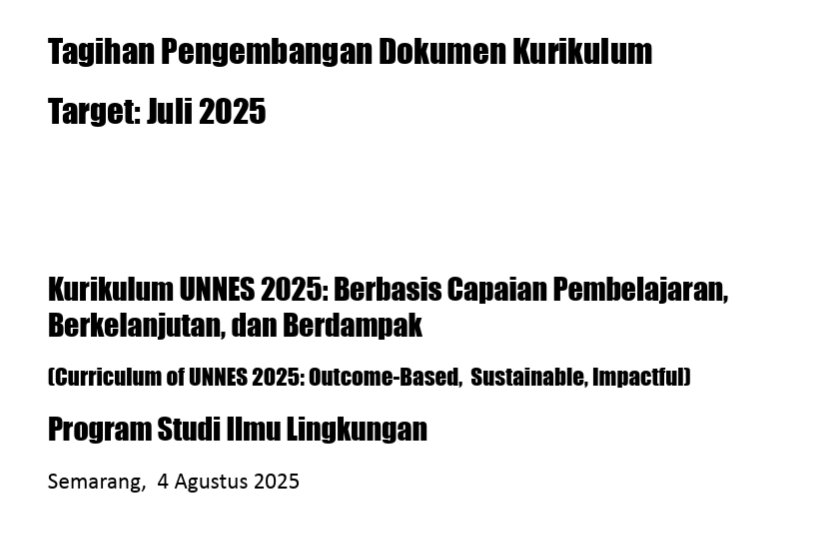
The programme’s 2025 curriculum follows UNNES’s Outcome-Based, Sustainable and Impactful framework. Within the curriculum document, sustainability is explicitly connected to the Sustainable Development Goals and the integration of social, economic and environmental issues into learning.
The framework also emphasises practical application through research, projects, internships and community engagement. Students are prepared to analyse environmental problems, apply scientific and technological approaches, work with stakeholders and contribute to sustainable environmental management.
One graduate profile is explicitly defined as “Agents of Change for Sustainable Environment and Community Empowerment.” This places environmental stewardship and community participation among the programme’s intended educational outcomes.
Dedicated Courses Connect Sustainability with Professional Knowledge
Students encounter sustainability through a sequence of courses covering climate change, planning, energy, conservation, environmental quality and resource management.
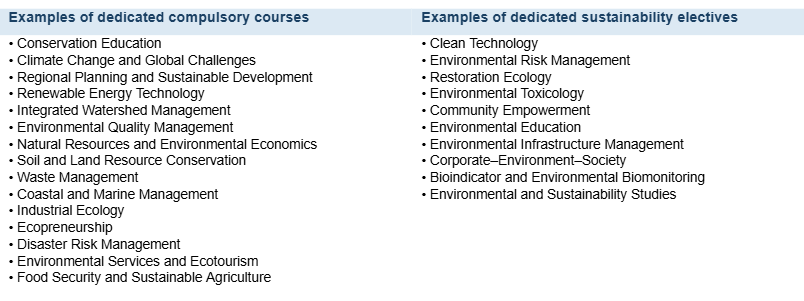
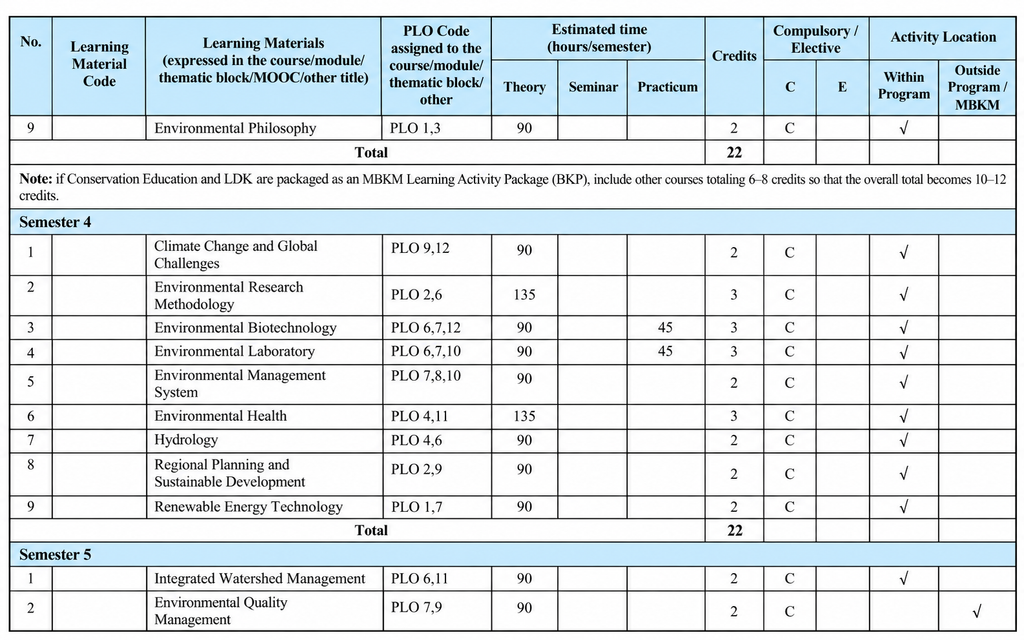
Compulsory courses include Climate Change and Global Challenges, Regional Planning and Sustainable Development, and Renewable Energy Technology, which appear in the fourth semester of the 2025 curriculum. These subjects connect environmental science with the challenges of responding to climate change, planning sustainable development and examining alternative energy technologies.
The curriculum also includes courses such as Conservation Education, Integrated Watershed Management, Environmental Quality Management, Natural Resources and Environmental Economics, Soil and Land Resource Conservation, and Waste Management.
Further areas of study include Coastal and Marine Management, Industrial Ecology, Ecopreneurship, Disaster Risk Management, Environmental Services and Ecotourism, and Food Security and Sustainable Agriculture. Together, these courses connect ecological knowledge with economic activity, public safety, food systems and the management of natural resources.
Electives Allow Students to Develop Specialist Expertise
The programme offers sustainability-focused electives that allow students to deepen their knowledge in areas relevant to their interests and professional goals.
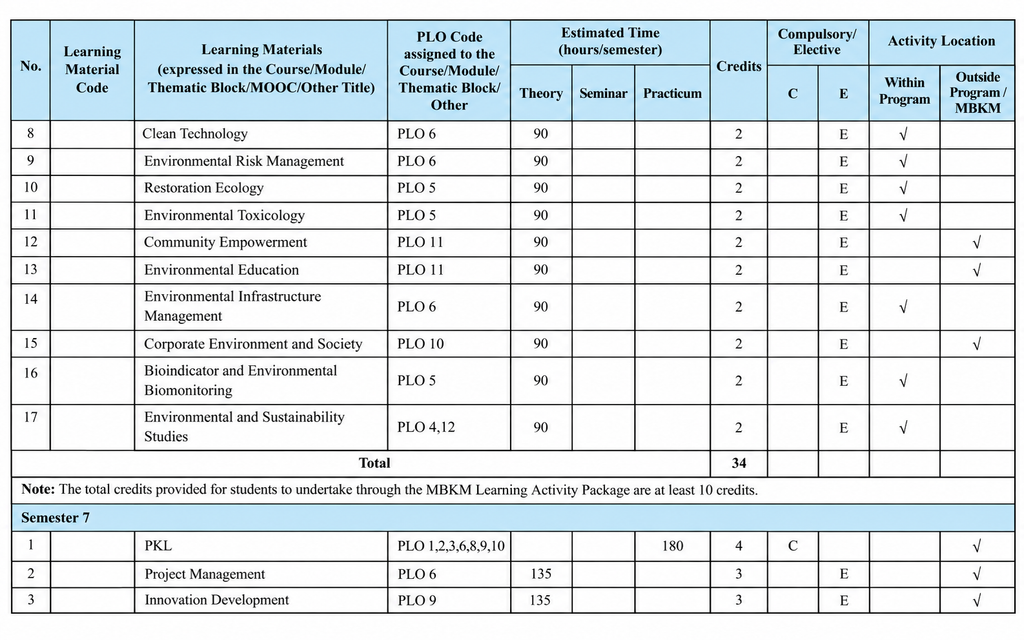
Options include Clean Technology, Environmental Risk Management, Restoration Ecology, Environmental Toxicology, Community Empowerment, Environmental Education, and Environmental Infrastructure Management.
Students can also explore the relationship between business and society through Corporate–Environment–Society, examine ecological assessment through Bioindicator and Environmental Biomonitoring, and broaden their understanding through Environmental and Sustainability Studies.
These electives provide opportunities to investigate particular sustainability challenges in greater depth, including ecosystem recovery, pollution risks, environmental monitoring and community participation.
Stakeholders Help Shape Curriculum Development
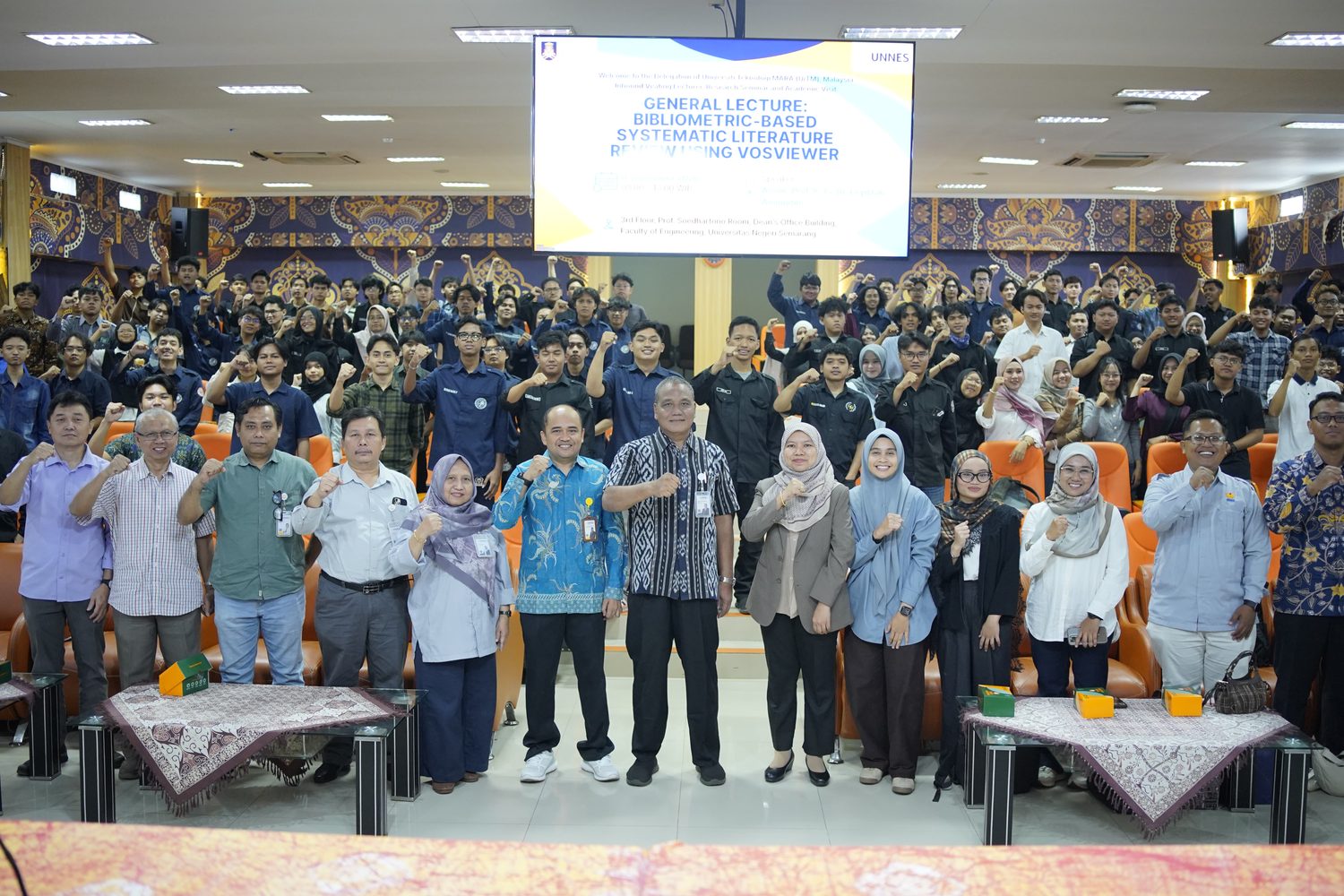
To connect the curriculum with professional and societal needs, the Environmental Science Study Program held a focus group discussion on 24 June 2025 involving government agencies, environmental consultants, academics, research institutions, nongovernmental organisations and alumni.
Participants reviewed graduate competency needs and discussed low-carbon and climate-resilient development, circular economy approaches, the triple planetary crisis, community empowerment, natural-resource conservation and environmental policy.
The discussion supported the implementation of UNNES’s 2025 curriculum and provided external perspectives on the knowledge and skills graduates need. It also helped connect course development with challenges encountered in government, industry, research and community work.

Students Apply Their Learning through Coastal Restoration
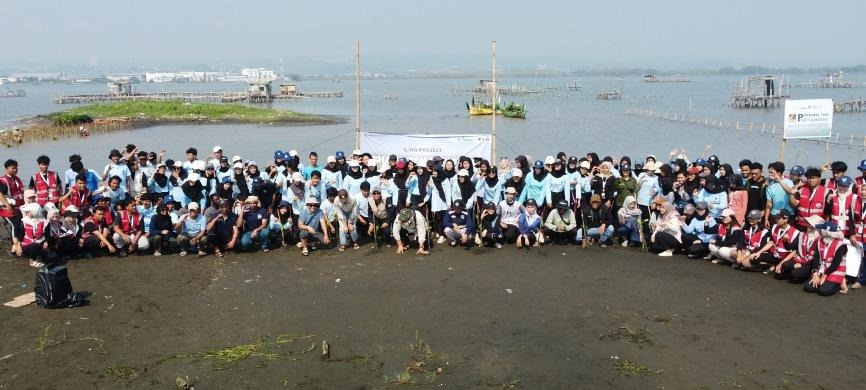
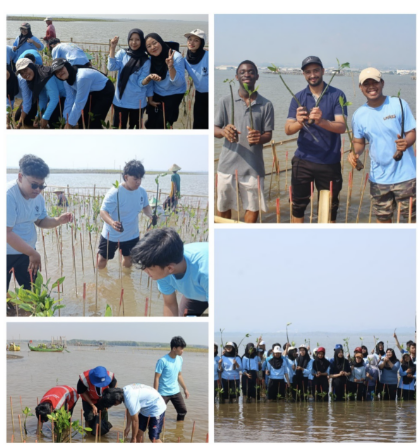
Field activities provide opportunities to connect sustainability education with environmental action. Through ILING PROJECT 2025, Environmental Science students participated in planting 7,000 mangrove seedlings at Mangunharjo Beach, Semarang.
The activity brought together students from Environmental Science and Science Education, international UNNES students from Ghana, Timor-Leste and Pakistan, Abrasea Indonesia, Universitas Ivet, industry supporters and a local mangrove farmers group.
The project connected student participation with coastal restoration and low-carbon, climate-resilient development. It provided an opportunity to relate classroom topics—including conservation, coastal management and community engagement—to a local environmental setting.
Working alongside external partners also exposed students to the collaborative nature of environmental management, where ecological knowledge must be combined with community participation and practical coordination.
Through its Environmental Science degree, UNNES offers a structured pathway for studying sustainability through a full academic programme, dedicated compulsory courses and specialised electives. Stakeholder-informed curriculum development and field activities further connect this education with the environmental and social challenges graduates will encounter beyond university.