

Campus planning requirements, tree inventories, and the retention of existing vegetation connect infrastructure development with biodiversity protection.
Semarang, Indonesia — Universitas Negeri Semarang (UNNES) incorporates biodiversity considerations into campus planning through institutional requirements for green buildings and green open spaces, supported by tree inventories and vegetation management. This approach connects the development of teaching facilities, pedestrian areas, and other campus infrastructure with the protection of existing ecological features.
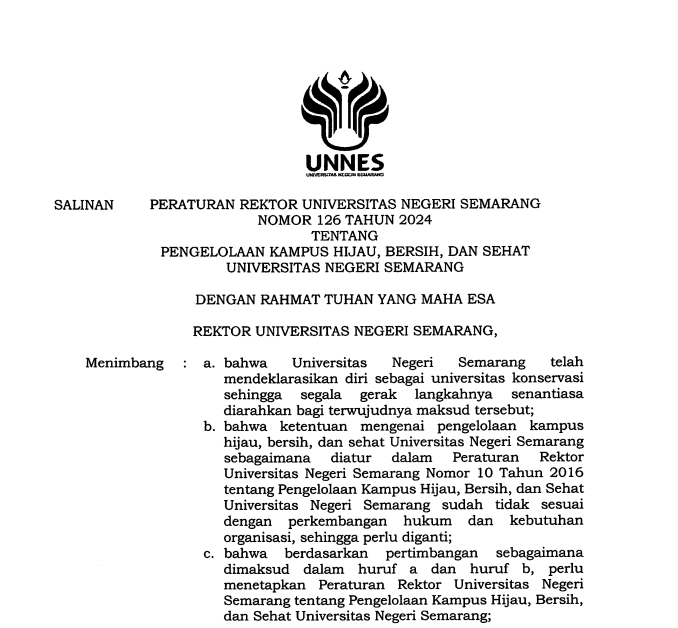
Rector Regulation No. 126 of 2024 on Green, Clean, and Healthy Campus Management provides the institutional framework. It requires new buildings to follow the university’s master plan and green building principles, while establishing a minimum campus green open space proportion of 40%. The regulation also provides for conservation areas, campus forests, gardens, tree inventories, and the planting of protected and rare plants.
Together, these provisions make vegetation and ecological functions part of the university’s approach to land use and infrastructure development.
Tree Inventories Provide Information for Campus Planning
Research published in the Journal of Environmental Science and Management in December 2024, entitled “Trees Spatial Distribution and Energy Awareness to Reduce Net CO₂ Emission at Universitas Negeri Semarang Campus, Indonesia,” documented 10,264 trees across the university campus. Its tabulated results reported green open space covering approximately 65.80% of the campus area.
The study examined the significance of tree distribution, species characteristics, and canopy size. These findings provide information relevant to decisions about building locations, landscape design, and the retention of existing vegetation. They offer a scientific basis for considering the ecological characteristics of campus land alongside its infrastructure needs.
The reported green-space proportion describes the conditions assessed in the study; it is separate from the minimum requirement established by the university’s regulation.
Retaining Mature Trees around Building Development
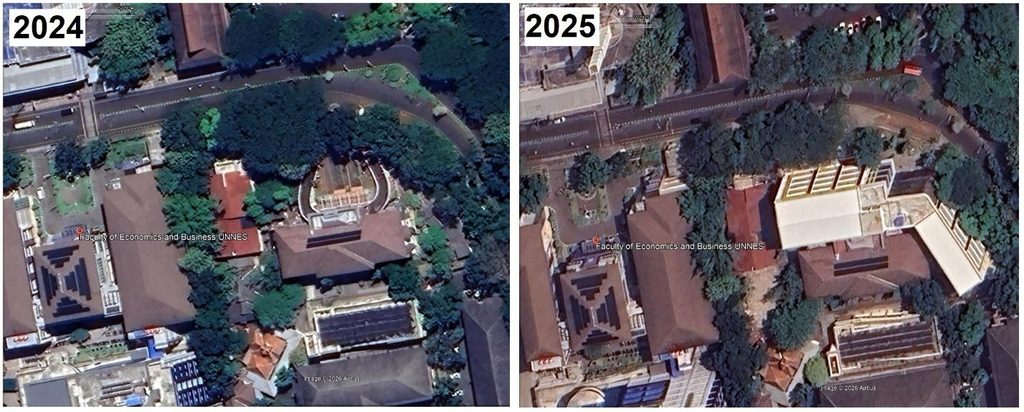
The FISIP building example described in the university’s project information illustrates how existing vegetation can be accommodated during campus development. Mature trees were retained within the development area, with surrounding spaces arranged to incorporate them into the building’s landscape.
The recorded trees include a Samanea saman individual with a diameter at breast height of 99 centimetres and a Swietenia mahagoni individual measuring 77 centimetres. Keeping established trees preserves existing canopy and vegetation structure within an area used for university activities.
This example connects biodiversity considerations with a specific development decision: accommodating mature trees within the developed site.
Research-Informed Landscape Management at FMIPA
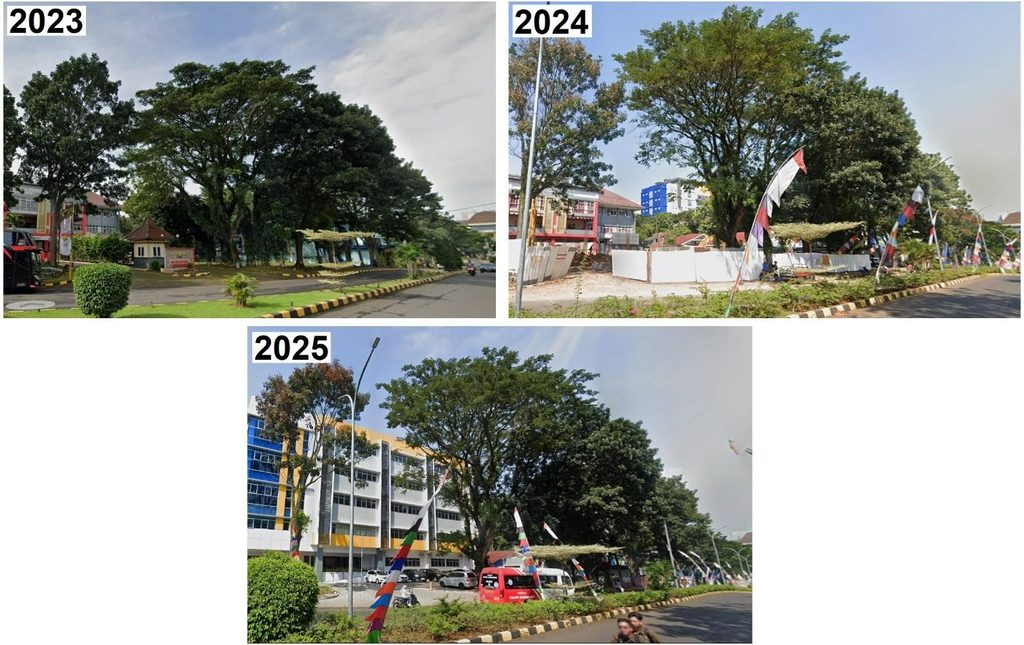
A further example is documented at the Faculty of Mathematics and Natural Sciences (FMIPA). A 2025 inventory recorded 318 trees belonging to 58 species, providing information on species composition and conservation status within the faculty’s grounds.
In an official report published on 25 November 2025, FMIPA linked these findings to its management of green open spaces. The faculty described routine vegetation maintenance, plant care, and landscape management that retained trees of conservation value as campus facilities developed. This provides a documented connection between biodiversity information and the management of an operational campus landscape.
The same landscape accommodates outdoor learning areas and accessible pedestrian routes. Existing vegetation therefore forms part of the spaces used for education, movement, and daily campus activities.
Integrating Plant Conservation into Campus Infrastructure
UNNES also reports plant conservation activities and collaboration with Taman Kehati as part of its broader campus biodiversity approach. Planting along newly developed pedestrian pathways provides another example of incorporating vegetation into infrastructure and landscape improvements.
The university’s approach combines planning requirements with information about existing trees and practical vegetation management. The regulation establishes expectations for campus development, while inventories and faculty-level landscape management help connect those expectations with the biodiversity present on university land.